Categories
Articles Ministries

THEY CAME, YOU GAVE!

In the months of May and June this year, we appealed to you, our parishioners and friends, to once again support the Santuario de San Antonio JPIC Scholarship Program by sponsoring young college applicants who successfully passed our intensive screening interviews.Through the Parish Bulletin, we individually presented the profiles of our new scholars, as well as our continuing college scholars from past years.

Our prayers to our dear Lord and St. Anthony were heard for your response was overwhelming! THEY CAME and YOU GAVE! Thank you from the bottom of our hearts for your kindness and generosity, for reaching out to so many needy but deserving youth who come to our parish for help to finish their studies in college. Because of you, their dreams for a better tomorrow for themselves and for their families are becoming a reality.

With great pride and joy, and because of your support, we have again grown in numbers. The SSAP JPIC Scholarship Program for 2013-2014 has a total of 83 scholars – 25 in college, supported by your generous donations, and 58 taking vocational and technical courses, supported by the parish from funds raised during Francisfest every year. To all our benefactors – big, medium and small – our heartfelt THANK YOU!

By Millette T. Ocampo/Menchu O. Bautista
SSAP JPIC Scholarship Program Committee

Categories
Articles Pastoral Team Reflections

“We have done no more than our duty”, Fr. Efren Jimenez, OFM

The person of faith becomes so much part of the world of God that even God is one of the family, a person whom one can address in perfect familiarity, even to the point of complaining. In faith, this is the expected, the ordinary, and the “natural.”

One of the fascinating characteristics of the scriptures is the constancy with which they come up with provocative statements. The reader, on reflection, has to ask hard questions. Is this really what God is saying? Howcan He allow the inspired author to make that statement? How can I possibly make this a part of my own life?

We have especially good examples of provocative statements in our first and third readings for this Sunday. The second reading contains a more sober observation that can serve as a summary response to the other two.

The prophet Habakkuk lived at a precarious time in Judah’s history. The mighty Assyrian empire had collapsed before the Babylonians in 609 B.C. and a new enemy had arisen to threaten God’s desperate people (the “Chaldea” of 1:6 refers to Babylon). The prophet was writing at a time when this threat loomed large. The first part of the reading reflects his anguish.

What is most provocative in these verses is the manner in which the prophet challenges God. “How long, O Lord? I cry for help but you do not listen!” Our traditional notion of piety would hardly recommend this kind of prayer. But there it is in the sacred scriptures, an accusation against God!

We do find examples of this kind of human questioning of divine wisdom in other books of the Bible. The most notable, of course, is the Book of Job, where the human protagonist challenges God to appear in a court of law with him. As far as we know, Habakkuk was the first to utter words of this kind to the God of Israel.

The saying about the power of faith is clearly provocative. While Jesus does not expect us to go around commanding sycamore trees to drown themselves in the ocean, one has to admit that it is a striking illustration.

Even more provocative but in a subtler way, is the parable about the servants. They are expected to go about their ordinary tasks in an unostentatious way. They are not to expect a handsome reward every time they pour their master a cup of coffee. Jesus’ disciples are to serve him in the same way: “We have done no more than our duty.”

This is provocative because, in a sense, serving Jesus is quite extraordinary. The total dedication to him, the acceptance of the cross, the serving of others in his name – these have always caught the attention of the world. How can they be said to be no more than duty?

The answer is faith. When one makes that total surrender to the Lord, the all else follows “naturally”. The extraordinary becomes ordinary. The unexpected becomes the completely expected. Saying “of course” to the difficult is the mark of the Christian disciple, the person of faith. Thus the joining of the saying of faith’s power to the parable of the servant-disciples is no accident.

The same explanation applies to the first reading. The person of faith becomes so much part of the world of God that even God is one of the family, a person whom one can address in perfect familiarity, even to the point of complaining. In faith, this is the expected, the ordinary, and the “natural.”

The Pauline author of the second reading had this kind of faith in mind when he tells Timothy to “stir into flame the gift of God…” We are to recognize our rich heritage whereby we can address God as our Father in a familiar way and can serve Jesus as easily and as readily as children of light.

as published on October 6, 2013 Parish Bulletin
About Fr. EJ and his Reflections

Categories
Articles Hospital Ministry

PGH Artist Awarding of Prizes

The winners of our September PGH Artist contest, where they depicted “Mama Mary in My Life” as a way to honor Mama Mary during her birth month, were Judellen Naparate and Rhia Marie Ruiz, elementary students of Silahis ng Kalusugan, and Jenny Contreras and Sherllan Mamiit, patients from the pedia wards. Unfortunately, Judellen was absent from school since she hasn’t been feeling well. Sherllan was also unavailable as they live in San Pablo, Laguna and it would have been a long commute for them just to get their prize. A parent representative received the prize for Judellen while we sent the prize to Jenny and her family.

Rhia and Jenny were very excited to receive their prizes as it included: 2 tickets to Kinder Zoo in Manila Zoo (which would allow them to go up close and pet the animals and join the activities) and 2 burger meals with fries and unlimited drinks to Wham Burger in Robinsons Place.

Though a simple prize, they are looking forward to enjoying it together and doing it as a family activity. It’s always very heartwarming to see how much joy you can give to them just by simple gestures like these and which they are very thankful and appreciative of.

Thank you to all the patients and students who took part in this activity/contest. We loved all your works and it was very hard to have to choose winners among you.

Thanks, as well, to all of you who helped in choosing our winners by voting/liking the pictures of the artworks.

Looking forward to seeing pictures of their Kinder Zoo trip! 🙂

Categories
Articles Health Care Ministry

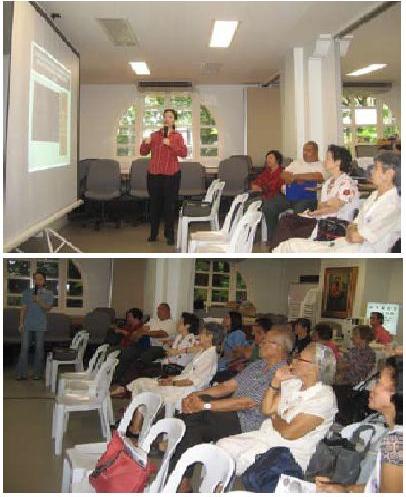
HCM holds Seminar on Stem Cell Therapy in Retinal Diseases and Age-related Eyes Diseases

HCMThe Health Care Ministry held a half-day seminar on Stem Cell Therapy in Retinal Diseases and Agerelated Eyes Diseases with free eye check-up and cataract screening for all attendees last Sept. 21 at the St. Bonaventure Room from 8:30 to 12:00 noon. The Pacific Eye and Laser Institute sent their 11-man team, including two of their top eye specialists, Dr.Pik Sha Chan-Uy, MD, who is the first graduate of the Pediatrics and Strabismus Program from the MEE Infirmary of the Harvard Medical School, and Dr. Franz Marie O. Cruz, MD, the first Filipina to finish the Neuro-Ophthalmology Program from the Wilmer Eye Institute of the Johns Hopkins Hospital.

They shared valuable information on Glaucoma , Cataract and other eye diseases, their prevention and mitigation and other topics related to eye care. They also gave away free pouch bags with eye drops from Alcon Laboratories, Inc.

By Chuchi Quevedo

Categories
Articles

“Building at Sixty”, by Letty Jacinto-Lopez

In 1951, on the far, distant side of a flourishing, booming town, a flurry of activities was reaching fever pitch. A family of landowners was laying down the cornerstone of what would become a place of worship to answer the spiritual needs and concerns of a new, emerging community. The family came from the clan of the Ayala/Zobel/McMicking and the church was Santuario de San Antonio in Forbes Park, Makati, an affluent district of the Province of Rizal.Historical Cache in the Time Capsule
In 1951, I was five years old, three years short of receiving the sacrament of Holy Communion and oblivious to the cares of the grown-ups and definitely unmindful of its exalted dreams and goals. Who would ever think that my tiny world would merge with this bigger world, sharing common values that organized religion provides?
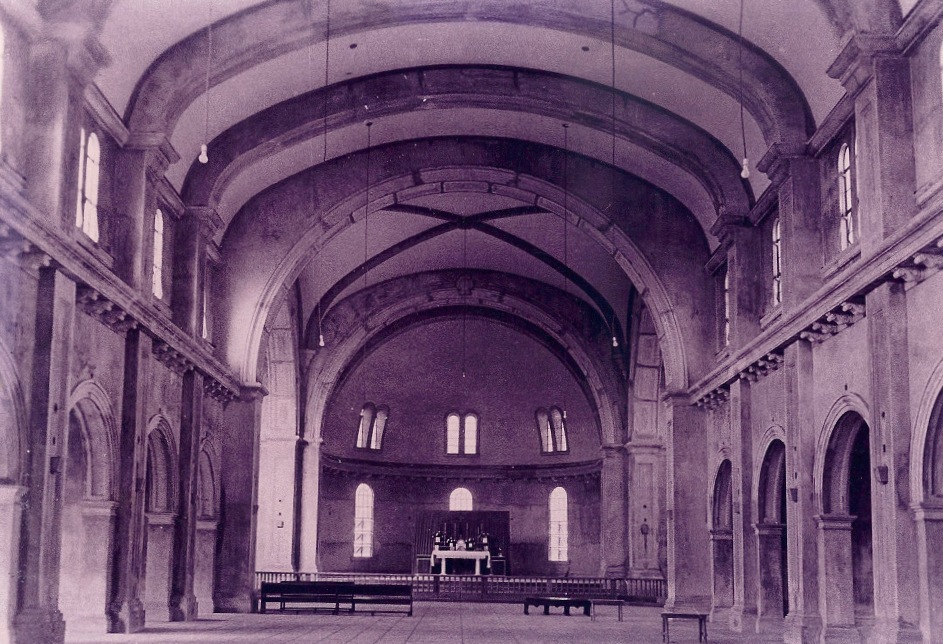
Archive Photo of Santuario de San Antonio Church
Santuario de San Antonio has always been that hallowed place of worship for Catholics. I grew up looking at this revered structure, as a special place to celebrate life’s significant events and milestones like the holy sacraments and of course every girl’s wishful dream of walking down the aisle as a blushing bride.

When our family relocated to Makati, we were welcomed into the family of Santuario de San Antonio as brothers and sisters, linked and related spiritually.

Similarly for Jeannie Bitanga. The settling period however became quite challenging for her after having lived abroad. She went from questioning and doubting her faith to strengthening, nurturing and growing it. Jeannie, encouraged by what she saw in the parish, took the initiative to re-learn her Catholic beliefs by reading the Bible and teaching Catechism to young children, one of the outreach ministries available in San Antonio.

“It was a breakthrough,” Jeannie said. Soon, her husband, Doy, joined the Men of the Sacred Heart, where its members promote devotion to the Sacred Heart of Jesus as well as serving as a lay minister of the Holy Eucharist. Jeannie’s participation in San Antonio’s various ministries expanded when the President of the Parish Council, Mike Limpe, asked her to create and manage a website and make it accessible to the public. Something vital in this age of Internet connection for the church to remain relevant keeping up with the technical development and progress of the times.

“My husband and I have, grown spiritually since those days of uncertainty. Santuario de San Antonio made us realize we had untapped potentials,” she remarked. “It was heart-warming to be welcomed in the family of Christ and meet some of the funniest and most dedicated people around the neighborhood.”

For Tina Teehankee, a secular Franciscan, she views life as a journey with its ups and downs. “With God’s grace and guidance, I find comfort in trusting in His grand plan, whether as a servant or as His child.” Parishioners with Tina Teehankee

Sadly, there are those who have relegated the role of the church in their lives as a minor concern, the last in the overall scheme of things, so to speak. I was therefore struck by a prayer that the faithful read in one Sunday service celebrated by our parish priest, Father Joel Sulse: “May no one among us feel so superior as to exclude others or feel so inadequate as not to contribute anything. Instead, may we be mutually enriched by one another”.

The lay community has a crucial importance in fulfilling the mission of the church. While there are many anonymous and faceless volunteers who work hard – silently – preparing each day to celebrate the Liturgy of the Eucharist, there are those who have bravely taken up the cudgels to keep things rolling and rolling. All in answer to God’s call to “Build My Church”.

The mission of the Franciscan Order has made an impact on the lives of the faithful (and the least, the last and the lost) because ordinary people devoted their time, energy, talents and material resources to reach out beyond their boundaries.

Among them,

The Prison Ministry headed by Steve Lopez, who visit the inmates at the Makati City Jail and host regular activities like sports, dance and medical clinics as well as reflective and meditative invocations to give hope and renew the faith of those who were lost and are journeying towards reconciliation, spiritually and socially.

The Scholarship Ministry where indigent or low-income students with great potentials are sponsored giving them the opportunity to excel in fields of learning and thus complete and graduate and have a better chance of making it into the world as an auto mechanic, in the Food and Beverage industry, in shipbuilding, care giving, and others.

The Hospital Ministry with Father Jesus Galindo as hospital chaplain, who visit those confined in hospitals attending to their spiritual, medical, physiological and emotional wellbeing.

The Marian Cenacle and Contemplative Ministries focus on the reach of the third degree of mercy – prayer. It is said that if one cannot show mercy by deeds or words, one can always do so by prayer. Prayer reaches out even there where one cannot reach out physically.

The Music Ministry with Amelita Guevarra. Voices are lifted through song and music engulfing the heart and spirit in a deep and fervent melodious worship to God.

The Catholic Women’s League headed by Betty Roxas-Chua, who sponsors mass baptism, holy communion and wedding every year apart from charitable projects that benefit the deprived and downtrodden.

Advocacies and ministries are in constant need of moral and financial support in order to function, and function well. Every year, Santuario de San Antonio honors the patron saint, San Antonio de Padova with a feast as well as raises funds to support and maintain the various ministries, including the Franciscan Mission.
Randy Limjoco, Fr. Joel, Lita Ascalon
In celebration of the 60th anniversary of the founding of Santuario de San Antonio in 1951, this year’s Francisfest will mount a musical variety show that chronicles Santuario de San Antonio’s evolution as a dynamic and spiritual center. Performers will come from the ranks of our talented parishioners, their family and friends like Joe Mari Chan, and artists on stage and cinema like Cocoy Laurel, Joel Trinidad, etc. Randy Limjoco, this year’s Chairman, promises an evening of entertainment and delight to be held in the main church on Thursday, October 3, 2013 at 8:00 p.m.
1005377_10201479009237679_1445458697_n
Recently, I attended a mass celebrated by Father Jade Licuanan. He spoke about Cardinal Gaudencio Rosales and his Theology of crumbs. Succinctly, “All God wants is small things. Small things put together can start up a miracle. The issue is the love for the poor. Goodness is never complicated.”

I kept repeating Cardinal Rosales’ theology as I left the church. Indeed, Love can be a way of life and not just a one-shot thing.

Francisfest has taken this noble cause to heart. “May the Church and her leaders strive for humble service and simplicity rather than for power, influence and wealth.”

Remember, we leave this world empty-handed.

Let us support Francisfest, heartily and magnanimously, hand in hand and brick by brick.

_______________

For info and tickets and/or donations to Francisfest 2013, please contact the Parish Office (63-2) 843-8830 to 31 or email ssap_info@yahoo.com.

*************

as published on September 29, 2013 The Philippine Star Sunday Magazine
About Letty Jacinto-Lopez and some of her published Articles

Categories
Articles Pastoral Team Reflections

“Make Friends with Dishonest Wealth” by Fr. Jesus Galindo

Make friends with those who, when one day you find yourself in trouble, that is, before God’s throne of justice, will defend and welcome you. These friends, we know, are the poor.

This Sunday’s Gospel presents us with a parable that in some respects has important contemporary relevance: the parable of the dishonest steward. The central character of the parable is the farm manager of a landowner, a well-known figure in our countryside when the sharecropping system was still in existence. Like all good parables, this one is like a miniature play, full of movement and scene changes. The actors in the first scene are the steward and the master and the scene ends with the master firing the steward: “You can no longer be my steward.” The steward does not even try to defend himself. He knows that he is guilty of what the master has discovered.

The second scene is a soliloquy of the steward, who is now alone. He has not yet accepted defeat. He immediately thinks about what he can do to get himself out of this situation and save his future.

The third scene — steward and tenant farmers — reveals to us the plan that the steward has devised. He asks the tenants, “How much do you owe?” “One hundred measures of wheat,” is one reply. “Here is your promissory note,” he says, “take it and write down eighty.” A classic case of corruption and falsehood that makes us think of similar situations in our own society, often on a much larger scale.

The conclusion may seem disconcerting: “The master praised the dishonest steward for acting prudently.” It is the master, not Jesus, who praises the steward’s shrewdness. We need to recall the particular nature of teaching in parables. The moral doctrine that is aimed at is not in the parable taken as a whole, in every detail, but only in that aspect of the parable that the narrator wishes to pick out. And the idea that Jesus intended to bring out with this parable is clear. The master praises the steward for his resourcefulness and for nothing else. It is not said that the master changed his mind about his decision to fire the man.

Indeed, given the initial conduct of the master and the quickness with which he discovers the new scam we can easily imagine the outcome, which the parable does not report. After having praised the steward for his astuteness, the master orders him to immediately restore the fruit of his dishonest transactions or pay it off in prison if he lacks the means.

It is cleverness that Jesus also praises, outside the parable. In fact, he adds: “The children of this world are more clever in dealing with their own generation than are the children of light.” That man, when he was faced with an emergency situation in which his whole future was at stake, showed a capacity for radical decision making and great resourcefulness. He acted quickly and intelligently — even if dishonestly — to save himself. This, Jesus observes to his disciples, is what you too must do, to save yourselves, not for a worldly future but for an eternal future.

Jesus is telling us Christians to be as quick and intelligent and resourceful in doing good as the “children of this world” (the corrupt) are in doing wrong. We are all God’s “stewards,” so we have to act wisely like the man in the parable.

The Gospel itself makes different practical applications of this teaching of Christ. The one that it insists the most on is the one regarding the use of wealth and money: “I tell you, make friends with dishonest wealth, so that when it fails, you will be welcomed into eternal dwellings.” In other words, do as that steward did; make friends with those who, when one day you find yourself in trouble, that is, before God’s throne of justice, will defend and welcome you. These friends, we know, are the poor.

We know this from what Christ says about his being the recipient of what we do for them. The poor, St. Augustine said, are, so to speak, our couriers and porters: They allow us to begin transferring our belongings now to the house that is being built for us in the hereafter. (R. Cantalamessa, ofm cap).

as published on September 22, 2013, Parish Bulletin

More about Fr. Jesus and his Reflections

Categories
Articles Pastoral Team Reflections

“The Parable of the Prodigal Father and The Two Lost Sons”, by Fr. Robert Manansala, OFM

All of us are in need of continuous homecoming to God who is unconditional in his love and who alone can lead us to proper relationships with him and with one another.

Today’s gospel pericope (Luke 15:1-32) is considered by many Biblical scholars as the heart of the gospel of Luke. If one gets the message of this passage, he gets not only the entire message of the Lukan gospel but also the entire message of Jesus Christ. The message is that God does not only love sinners or the lost unconditionally; he persistently seeks after them and welcomes them with joy.

Consisting of a trio of parables (the parable of the lost sheep, the parable of the lost coin and the parable of the lost son), the pericope is regarded as Jesus’ response to the criticism of the scribes and the Pharisees that those who are considered worthless and lost are actually the predilect of the Kingdom of God. The lost sheep, the lost coin and the lost son would have been judged not worth searching for by the scribes and the Pharisees. Patricia Datchuck Sanchez comments: “After all, what logical person would leave a herd of 99 sheep to search for a stray? And who would actually sweep clean a house to find one coin when they had nine others? And who would open him/herself to greater misery by seeking out a prodigal child who had disgraced the family name and disassociated himself from the sacred heritage when you have another fine and upright son at home?”

While the first two parables are given to set the stage for the increase of the pathos of the message of the pericope, all the three of them are actually intended to show the “illogical” ways of God and to challenge the readers to similarly open themselves to an unconditional and forgiving acceptance of and care for others, especially those considered the lost as well as the last and the least by the society.

The third parable has been traditionally called the parable of the prodigal son. This may not be a very appropriate title. The lost son in the story is only recklessly extravagant in wasting his inheritance, but the father is actually the one who shows limitless prodigality in his love for, forgiveness of and patience with both sons. Thus, the story, as some commentators say, may be better renamed as the parable of the prodigal father.

In this reflection, we prefer to call the third story the parable of the prodigal father and the two lost sons. The father’s unconditional love is never diminished by the faults of both sons. His love for his younger son remains despite his going wayward. It is a love that waits for, seeks, welcomes and rejoices at the homecoming of his lost son. His love for his elder son is appreciative and patient. While he recognizes his elder son’s fidelity for always being with him, he tries to lead him to a relationship with him that goes beyond the sense of filial duties and to a relationship with his younger brother that is more embracing, welcoming, forgiving and unconditional. “Son, you are always with me, and all that is mine is yours. It was fitting to make merry and be glad, for this your brother was dead, and is alive; he was lost, and is found.”

An in-depth reflection on the story reveals that both sons are actually lost and in need of conversion and that both need to return to their father and to one another. The younger son’s faults include leaving his father and brother and their home, asking for his inheritance prematurely as his father is still alive, squandering his inheritance and living a disrepute life away from home. The elder son’s faults include seeing himself more as a servant of his father rather than as a son, not truly recognizing his younger brother as his brother (“When this son of yours…”), harboring resentment against his younger brother and his return, and failing to rejoice with his father at the return of his brother.

In the story, the homecoming of the younger son to the welcoming embrace of his prodigal father is accomplished. He gets reconciled with his father who unconditionally and lavishly forgives, welcomes and reinstates him to his status as one of his two sons. We do not really know what happens to the elder son in relation to his father and to his younger brother. The parable is open-ended and is still being told. It continues to be a reminder of the need for everyone to always return to the compassionate God, as represented by the father, and to our brothers and sisters, as represented by the younger son. All of us are in need of continuous homecoming to God who is unconditional in his love and who alone can lead us to proper relationships with him and with one another.

as published on September 15, 2013, Parish Bulletin
About Fr. Robert and his reflections

Categories
Articles Pastoral Team Reflections

“Cost of Discipleship” by Fr. Baltazar Obico, OFM

Following of Jesus confronts us with hard choices and jars any notion that being a Christian leads to social enhancement and personal betterment. Carrying our crosses means to love others by denying ourselves, a life of self-sacrifice.

One of the ten commandments is to honour our parents. The entire Sacred Scriptures, especially the Old Testament, is full of admonitions to children to honour and respect their parents. We can also presume that as a son, Jesus held Mary and Joseph in high esteem. Jesus truly loved his relatives and even told us to love our enemies, so why not our parents? How are we going to understand Jesus’ demand to hate one’s parents?

There are those who think that today’s call for discipleship, with its radical demand of detachment from family ties and possessions, refers only to a group of professed religious and celibates, and does not pertain to all Jesus’ believers and followers. Our experience tells us that many priests, especially the diocesan ones have not left their parents literally and are living with them in the convents. Many relatives also of religious are employed in the institutions like school and hospitals.

GOSPEL: In today’s Gospel, Jesus speaks to the crowd who continues to follow him. It is not addressed to a select few. Luke says a great crowd was with Jesus. Therefore to the large crowd travelling with Him, Jesus delivers these sharp words about the demands and priorities of discipleship. If they are contemplating being more than hangers on and intend to be regular diners at Jesus’ table, they need to know what they are getting into and decide whether they can sign on for the long haul. Jesus is no demagogue, intoxicated with popular success, who incites the crowd to follow him blindly not knowing where he would lead them.

1.First, Jesus asks us to detach from family ties. Hating one’s parents is a Semitic hyperbole to mean preference at once deliberative, absolute and complete. It implies that our family ties need to be purified by making Jesus our priority. Our love for the members of our family must be purged by the self-emptying love of Jesus. We know that what ails us as a nation economically and politically is rooted in strong family ties, as the interest of the family is pursued at the expense of the common good. Foremost of which is graft and corruption. It used to be the husband, now it is the brother-in-law. Political dynasty is another. We here in Makati are not strangers to this political chimera. Another ill that afflicts us is the bloated government bureaucracy to give way to the long list of extended family members. The love of the family members should not be sought in themselves but in order that the love experience within the family should overflow into the greater society.

2. Secondly, Jesus asks us to renounce all material possessions. Material possessions have a seductive appeal that can turn them quickly from being servants to being masters. The whole issue that grips the nation today about pork barrel says it all. Billions of taxes are collected from ordinary people to finance the lavish lifestyle of some of our politicians. Money has a way of making us callous to the cries of the people. Our honourable legislators have brought disrepute to our revered institutions. Those who languished in shame before, look like angels with the magnitude of this pork barrel scam. This danger of possessions and wealth is not only happening in the corridors of power. It is also a danger in the inner sanctum of the Church. One Vat. II official was arrested because of money laundering. Charismatic groups have gone separate ways because of money matters.

3. Lastly, detachment from family and possessions can be summoned up in the invitation to carry our cross. Following of Jesus confronts us with hard choices and jars any notion that being a Christian leads to social enhancement and personal betterment. Carrying our crosses means to love others by denying ourselves, a life of self-sacrifice. There are fundamentalist groups and catholic charismatics preaching prosperity gospel seducing others by promises of riches at hand. A new generation today that calls itself, “SELFIE”, a new breed of young adults who pride themselves without financial dependents and whose typical two year priority is to splurge on lifestyle-related consumer items like gadgets and cars. It is a generation that has made selffulfilment, not self-denial as a goal in life. They are bound to be disappointed for we are creatures of the spirit and only spiritual realities can satiate us.

as published on Sept. 8, 2013 Parish Bulletin

About Fr. Tasang and his reflections

Categories
Articles Pastoral Team Reflections

“The Rude Guest” (Luke 14:1, 7-14) by Fr. Joel Sulse, OFM

…to enrich one’s self and not to think of others is also a crime that we should remind ourselves of every now and then. As Pope Francis said: “Mess yourself up for God!”

The gospel reading this Sunday is part of the critical 14th Chapter, where the action and the setting is mostly set on the Sabbath in the house of a leading Pharisee. The first verse sets the tone… they were watching Jesus closely. Hence, he was invited as a guest. But what type of a guest is he? Verse 3 of this account tells us that he challenged the lawyers and the Pharisees; he lambasted without hesitation those who would like to take the first seats (v.7); and even gave instructions to the host on whom to invite in the next meals (vs. 12-14). One writer says that by any standard, he can be considered as a rude guest.

The thousands of people who attended the “picnic” last Monday in Luneta, including ourselves in the parish, can be considered also rude guests like Jesus. We brought along with us, without hesitation, our firm stand about the issue. We aired out with our presence that enough is enough of the corruption happening in our country, and enough of the greed of those who participated in the horrific crime against our nation and our people. Our presence there is like that of Jesus reminding the Scribes and the Pharisees, but in our case reminding our politicians, to stop the whitewashed tomb prominence incessantly present in our economic, political and cultural systems.

Again, the setting in our gospel is a banquet. This has been part of our life, and is very important. Eating has been an essential element of our existence as human persons. Thus, if one is invited to an occasion, this means that the guest is important, legitimized by his being included in the guest list with a seat assignment. This is the spirituality behind the Sacrament of the Eucharist. Everyone is important in God’s eyes. Everyone has a seat, has a place in the holy banquet of the Lord. It is the only type of banquet where people, standing because the church has run out of pews, are given importance through the holy communion given them. Luke highlighted this meal narrative to give importance to the anticipated role of God inviting everyone “to eat in His Kingdom”. It is in this context that His table becomes an eschatological banquet, where everyone will have his fill, and will always enjoy a sumptuous meal.

There are four incidents that occur in this meal account: (1) the healing of the man with dropsy; (2) the finding of the Council of the Pharisee finding a place in a table; (3) Jesus’ suggestion whom to invite in the meal; and (4) the great dinner parable. Evident however in these incidents is the presence of God who heals, admonishes, exhorts and invites and assures hope to those who are willing to follow his path and his way of life. Jesus may sound like a rude guest but it is the only way to shake a system at hand, whose players are up in an active arena where everyone has a seat to enjoy a very important encounter.

The rude guest therefore has a purpose. It is into this realm of purpose that Jesus opens our minds and hearts into the real meaning of hospitality. That this value is not honorable alone to those who have the capacity to repay goodness with the same chance of inviting them to their future banquets as well. Rather to offer an opportunity to those who have no capacity to repay another person’s good deeds. The Rude Guest urges therefore a type of a social system without reciprocity! What is in the heart of this Guest? It is equality, justice and integrity. These, basically are the reasons why we invited ourselves to the “picnic” in Luneta last Monday. If all the people there will just continue to keep that beautiful and valuable attitude, then we can be like Jesus again, who challenges the social structure leading others to develop a transformative spirit that will bring about change in their lives.

Why did Jesus suggest that the poor, the blind, the crippled and the lame be invited to the banquet? Because they belong to the Kingdom of God! So if we displace them, we would owe God and them the remuneration that they justly should receive. It is like saying, “If we will not do something about the unjust system happening in our times, including that of the Pork Barrel issue, then we have to account for it before God so let us do something while it is not too late yet.”

Therefore, to enrich one’s self and not to think of others is also a crime that we should remind ourselves of every now and then. As Pope Francis said: “Mess yourself up for God!”

as published on September 1, 2013, Parish Bulletin
About Fr. Joel and his reflections

Categories
Articles Pastoral Team Reflections

Beneficiaries of the Annual Francisfest

The sole beneficiary of the annual Francisfest is the Santuario de San Antonio Parish Foundation Inc. (SSAPF). This was organized and registered as a donee institution on May 6, 1982 for the purpose of promoting the growth of Christian faith in the community, developing spiritual growth among its members and beneficiaries and giving assistance to every individual by promoting and sponsoring programs and projects. SSAPF supports the following ministries of the parish:
JPIC

SSAP JPIC SCHOLARSHIP PROGRAM
An Overview

Sometime in 1996, then parish priest, Fr. Romeo Abesamis, discovered some unused funds – about P400,000 – in the coffers of the parish. He mentioned this to some parishioners, and the idea to start a scholarship program for indigent youth who had finished high school but had no means to continue further studies, was born. After ground rules for the program were established, it was decided that the funds would be used to provide young men with one year vocational/technical skills so they could immediately earn a living for their families. With Don Bosco Technical Institute as our first partner school, 12 carefully selected indigent young men became our first batch of scholars, taking up Automotive, Electrical, Airconditioning & Refrigeration courses. Thus was born the Santuario de San Antonio JPIC Scholarship Program, an outreach program under the Justice, Peace and Integrity of Creation Ministry.

Through the years, the program has grown and developed to include ladies, ages 16 to 25, as long as they passed the intensive interviews given by the Scholarship Program committee members. Then the program was enhanced with monthly spiritual and moral values formation so that our scholars would become, not only economically self reliant, but also responsible Christian citizens living with dignity in society. Twice a month English tutorial class, conducted by two prominent English professors who are also parishioners, have greatly increased their command of the language, giving them further
edge when applying for jobs. Seventeen years after its birth, for school year 2013-2014, the SSAP JPIC Scholarship Program has increased to 85 the number of its scholars – 60 taking up vocational/technical courses, such as Fitter Machinery, Automobile Mechanics, Refrigeration & Air-Con Mechanics, and Electro-mechanical Technology at Don Bosco Technical Institute, and Heavy Equipment Technology and Industrial Office Management at Monark Institute. The ladies go to Punlaan School or Maligaya Institute (both Opus Dei institutions) to study Food & Beverage Preparation Service or Culinary Arts & Institutional Services. Those who have the aptitude for care-giving are sent to Our Lady of Guadalupe School for Care- Givers.We have 25 college scholars taking up various college degrees in the Metro- Manila.

Funds raised from Francisfest 1996 (the year we started the scholarship program), were allocated to the Scholarship Program. Since then, the yearly budget given by the parish for vocational/technical scholars, has come from Francisfest Fundraising events. Scholarship for College students are solicited by the SSAP Scholarship committee members, through letters to parishioners and friends and through appeals in the Parish Bulletin.

The SSAP JPIC Scholarship Program has, since 1996, graduated hundreds of scholars and many lives have been changed. Parents are oh so happy to attend graduation rites of their son or daughter, most of them for the first time ever. Jobs became possible, and finishing a vocational/technical course or college degree opened up better opportunities for them. The scholars’ dream of uplifting the lives of their families (“maiangat ang buhay ng aming pamilya”) has become a reality – food has been put on the table 3 times a day, siblings have been sent to school, their quality of life has greatly improved. Some who have worked as OFWs even own their own houses. Our scholars have many true-to-life stories to tell of their struggles and successes.

All these came to fruition because you – our parishioners and friends – listened and responded generously, with caring hearts and open hands, whenever appeals were made. We thank you from the bottom of our hearts! Proudly we can say that God’s words to St. Francis, “Come, build my Church” is alive here in Santuario de San Antonio Parish!

THE HOSPITAL MINISTRY (with the Health Care Ministry)

The Hospital Ministry was formed in 2011. It’s forerunner was the PGH Adopt-A-Child which started in 1990. The development came about when other hospitals were added to the list of beneficiaries. The first chairperson of the Hospital Ministry was the late Mr. Steve Lopez (1990 to 2013). At present, it is Mr. Vicente Pacheco who heads the ministry, which is a unification of the hospital outreach programs of the parish namely; PGH Outreach Program, Our Lady of Porziuncola Hospital Inc (OLPHI) in Samar both under JPIC and the Rizal Medical Center under the Health Care Ministry.

The mission of the Hospital Ministry is to identify through the Social Workers the poorest of the poor patients who have good prognoses to get well if given the proper medicines.

A.) PGH Outreach Program ( Adopt – A – Child) has been in existence for the last 23 years. It was started in 1990 with Mr. Steve Lopez, Mrs. Marrot Moreno, Maria Clara Canoy and the late Marisa Oreta as members. It serves Pediatric Charity Wards 9 & 11 and the Orthopedic Ward. PGH has recognized our ministry for its consistency of providing medicines to the poor by giving us yearly awards. The latest one “Katibayan ng Pagkilala” was given last August 14, 2013 at PGH Science Hall.

For 2013 it has served 171 patients with mortality rate of 7.6% and a budget of P977,341.75.

B.) Rizal Medical Center (RMC) was started in 2009 by Mrs. Susan Chung, then head of the Health Care Ministry with the concurrence of our then Parish Priest Fr. Tony Rosales, OFM. The pediatric ward receives both medical assistance and pastoral care. The Social Worker of RMC assists in identifying the most deserving patients (the poorest of the poor with good prognosis). The visit by the members is every Friday.

To date it has served 512 patients (2009 – 2012) spending
Php 1,550,941.85

C.) Our Lady of Porziuncula Hospital Inc (OLPHI) was started in 2011 and was recommended by Fr. Joel Sulse, OFM to JPIC Ministry under the Hospital Ministry. The project is primarily focused on the supply of medicines and cost of procedures prescribed by their physicians for indigent patients both adult and pediatrics. Patients served came from all over Samar. The Social Worker of OLPHI identifies patients who are in most need of medical assistance and then approved by Bro. Dennis Tayo, OFM, MD, the Hospital Director.

For 2013 it has served 27 patients and spent Php 112,712.29. We would like to thank all our DONORS for their continued support. We would like to encourage our parishioners to join the ministry. It is a venue where one can store up treasures in heaven by helping the poor and the sick. God bless.

For those who would want to be donors, please call parish office 843-8830/31 (Nimfa or Maela).

Health Care Ministry
By Barbie Young

Every Friday morning, the Hospital Ministry and the Health Care Ministry members of San Antonio commit their time and effort to the sick and needy patients in the pediatrics ward of Rizal Medical Center.

A typical morning starts with the compilation of all the records of the patients truly deserving of monetary aid. These patients were first screened and interviewed by the social workerin- charge, whose job is to gather all the information necessary for proper documentation and to assess the legitimacy of the needs. After all the necessary paperwork is in order, the group heads to the pediatrics ward to visit the patients in the list. The main purpose of the visit is to provide pastoral and spiritual care to the sick and disabled, and sometimes to the aged, following the footsteps of St. Francis. Spiritual direction is provided to the parents and guardians present. For example, if in the course of the conversation, it is discovered that the parents are not married, then advice is given on the importance of the sacrament of marriage in family life. Or, if the parents are uninformed or unaware of the natural family planning methods, then advice is given on the moral means to regulate birth such as the Billings Method, and on responsible parenthood. However, if upon seeing the patient and in consultation with his doctor, it becomes evident that financial assistance is necessary, then funds are provided to immediately purchase the medicines. The patient’s guardian is later accompanied to the nearby drug store. These funds are allocated by the church council at the beginning of every fiscal year, as part of the pastoral and mission programs of the parish.

Visiting the sick is a corporal work of mercy. Instructing the ignorant is a spiritual work of mercy. The Hospital and Health Care Ministry are both concerned with the human body as the temple of the Holy Spirit and a gift from God. But they also understand the important task of nourishing the
soul as well as the body.

Friendship LivelihoodST. FRANCIS FRIENDSHIP HOME LIVELIHOOD AND SPIRITUALITY CENTER
The twin projects Santuario de San Antonio Parish Foundation (SSAPF) built in September 10, 1991 Re: the St. Francis Friendship Home and the La Ermita de San Nicolas de Tolentino in West Rembo, Makati City has entered a new season of ministry with the inception of the St. Francis Friendship Home Livelihood & Spirituality Center on September 10, 2011. The Center, continues to be the venue where the Secular Franciscans and Parishioners of Santuario de San Antonio Parish and Parishioners of West Rembo and surrounding communities meet, a mix of rich and poor coming together, becoming the agent of change of one another. Our Almighty God has assigned St. Francis Friendship Home Livelihood and Spirituality Center to the Secular Franciscans and Parishioners of SSAP and the West Rembo surrounding residents to learn from each other about life’s never ending difficult lessons thus journeying in faith to become brothers and sisters in Christ, to care for one another, to spiritually grow.

The Center has opened its doors to residents of all ages from 4 years old to senior citizens, making St. Francis Friendship Home vibrant, with interactive community activities enriched with spiritual, physical and character values formation such as: free access to CCD National Book Store for Kids and Youth weekly Bible sharing, summer activities for kids and youth, read-along projects and free screening of movies with important life lessons to be learned, access to La Ermita de San Nicolas de Tolentino spiritual journey experience and daily prayer visitations, interactive fiesta celebrations, daily community prayer of the Angelus and 3 o’clock prayer habit, livelihood opportunities for Missionary Entrepreneurs, opportunities for job placement and counselling services, and opportunities to buy bargain goods at the New Kamalig Ukay-Ukay Thrift Shop. It’s amazing indeed, how our Almighty God continues to shape the St. Francis Friendship Home Livelihood & Spirituality Center to become a safe haven where the Parishioners of Santuario de San Antonio Parish and the West Rembo communities meet, praying, serving, working, playing, listening and resting, becoming friends of Jesus and St. Francis’ little friends.

THE FRANCISCAN MISSIONS
A Francisfest Beneficiary

By Fr. Joel E. Sulse, OFM

The Franciscan Missions here and abroad have been lauded because of the effects it has made on the lives of the people, whom the brothers serve and with whom they work. It has influenced a lot of communities as well, through the help of the lay faithful, who have been generous of their most valued time, material resources and best efforts, leading the Church into a realization that truly the Kingdom of God can be achieved through a unified action empowered by the Holy Spirit.

Records of the history of the Franciscan Missions, written by John Moorman on the History of the Franciscan Order (From Its Origins to the Year 1517) tell us that there was a time when,“Christendom was greatly troubled.” There were dangers that beset the Church –the heretical movements, invasion of the Moslems, Holy Land needing protection, among others. Many Franciscan brothers died. There were records even of Poor Clare sisters who were massacred. Despite the heavy loss of lives, they continued to organize the communities of the faithful. In the midst of uncertainties and great danger, they stood their ground and offered their lives in “building the Church” true to the commitment left by St. Francis, their inspiration.

One of this year’s Francisfest beneficiaries is the Franciscan Mission Parishes. The Province of San Pedro Bautista is doing its best in order to respond to the demands of the missions here and abroad. Having accepted new pastoral commitments in the various dioceses, we, Franciscans continue to respond to these demands despite the financial issues involved. Perhaps the spirit of the Lord is moving us to continue the sublime work done by the Order as commanded by the Lord to St. Francis, “Build the Church!”.

However, an urgent issue has to be faced. Despite our (Franciscans) willing spirits, our meager resources are not enough. Unlike the other religious communities, we don’t have enough economic backups to sustain us in continuing the missions. Our financial records show that every month, our Procuration’s office needs an average of 2.8M to run it. The share we get from Santuario de San Antonio (which responds to 95% of our needs in the congregation) is not enough. This is the reason why almost all of the other funds of the Province are depleted and a clear view of deficits becomes evident year after year. In a situation like this, how can we respond to the many demands in the missions?

We believe that the providence of God is there for us, in the same way that we have been taught how to be fully committed to the missions despite the difficult situations we will be facing. But while we have this spiritual inclination and energy, we are worried as well on the demands of the many impoverished communities who need our help. Most of our mission parishes receive an average collection of P900 a week. Seven years ago, we received a commitment in Dagat-dagatan in Malabon and Navotas. But until now we cannot even build a chapel. Thus, people celebrate the mass in a covered court.

While the brothers can sustain themselves with vegetables, fish and root crops generously offered to them by their parishioners, they are caught in a difficult situation on how they will implement the pastoral programs needed by the people. They have been very creative in their own ways, even going to the extent of giving talks and retreats outside the parish to be able to augment their finances. Some of them have experienced burn-out. Others have gone into a crisis and we don’t have the resources to help them regain their spiritual composure. Thanks to the wisdom of our Holy Father Francis, who was convinced that no brother should be left alone in the community, that there should always be two or three brothers who should be assigned to compose a community.

We, Franciscans, are forever grateful because of the generosity accorded to us by you, our parishioners. We are oftentimes not expressive of all these pastoral needs. Perhaps, our religious culture has something to do with it, or maybe St. Francis wants us to be so. But we are very thankful that as the parish celebrates the 60th Diamond Jubilee of the founding of our community here, you have chosen the Franciscan Missions as one of the beneficiaries.

Please sustain us in our missions and let us continue to work in building the Church of God, which the Lord said to Francis “ … is falling into ruin!” God bless you all for your generosity.

PRISON MINISTRY
A Francisfest Beneficiary

By Tricia Canapi

It was in 2011 when the Prison Ministry was introduced to the Single Young Adults (SYA) of Santuario de San Antonio. Steve Lopez was the Prison Ministry Head back then but he had a bad accident, which prevented him from continuing his service to the ministry. It was a surprising opportunity for the SYAers to serve a sort of
unpopular ministry. There were fears at the beginning, from sheer ignorance, of what serving the Prison Ministry meant.

We started with an activity with the inmates during the holy week, where we had about 6 groups headed by about 3 SYAers each, where they were asked to reflect on a Station of the Cross picture and share their reflection with the group. We also prepared some giveaways back then. The giving, the sharing and the whole Prison Ministry awareness during that time started the relationship of the Makati City Jail (MCJ) and SYA. I was tasked to head the ministry after Steve Lopez.

That year we had several fun activities such as soccer with the Philippine Team, dance lessons from a professional dance instructor, and a cooking contest which we called Master Chef sa MCJ where we had real chefs to judge them. Continuing with the service, we now host annual activities such as; Holy Week Cenaculo and Recollection in April, Flores de Mayo in May, St Anthony Fiesta in June, Medical and Dental Mission in September, Francisfest Activities in October, and Christmas Party and Christmas Gift Giving in December.

We also helped in their building of a chapel by providing 250 chairs and some paint for the structure. Beds and fans were also donated for the conjugal rooms.

It has not been easy to solicit for support, but in a really wonderful way, support was somehow always available at the exact time it was needed. Each smile, each high five, each hug, each tear of happiness has enriched me in several levels and I am sure that I am not the only one, who feels this way.

At this point, Jolly Gome continues to be the prime mover for projects to happen for the Makati City Jail inmates, Fr Joel Sulse and Nimfa Dumago continue to guide SYA Volunteers, I have been limited to actively participate in the activities as I have an auto-immune disorder called Myasthenia Gravis. Luckily, Prison Ministry is no longer the unpopular ministry to support. More SYAers have responded to the call of Prison Ministry service and there is a continuing effort to solicit for MCJ activities. Currently, SYA also leads a weekly Cathechism class of 100. We are grateful for the opportunity to love and to serve and it is my hope that SYA continues this loving service in the years to come.

Design a site like this with WordPress.com
Get started