Categories
Articles The ABC’s of Catholic Doctrine

Gossip is terrorism, The ABC’s of Catholic Doctrine By Lianne Tiu

7
They say women gossip more than men. Men, actually, gossip just as much except they do it better and call it “networking.” The difference is in the content of gossip.

Let’s admit it. We all enjoy the guilty pleasure of talking about others. We gossip about the latest scandals – who’s having an affair with whom, who got fired – juicy stories of celebrities and people we know. Harmless it may seem, we are actually damaging their reputation when we carelessly publicize people’s mistakes and bad deeds; more so when facts are false. Gossip becomes malicious when it is a lie or when the intention is to ruin people’s reputation.
6
Pope Francis said, “Gossiping is like terrorism because the person who gossips is like a terrorist who throws a bomb and runs away, destroying: with their tongue they are destroying and not making peace.”

First of all, we should not judge anyone because “the only Judge is the Lord.” Since we do not know the intentions of the heart, we assume ignorance and human weakness instead of malice and bad faith. Even in the worst of circumstances, we try to make excuses for those who commit mistakes or do something disgraceful.
9
We keep quiet if we cannot speak kindly of someone. Pope Francis advised us to bite our tongues whenever we have the urge to say things, which encourage division.

There are times when we have to warn others of danger: about a corrupt official or an unfaithful fiancé. An obligation of justice and charity may require us to reveal a mistake or fault only to the interested parties, to those who can remedy the situation, but not to the entire community.
3
With the advent of the internet, gossip can bring even greater damages. Spreading rumors is not limited anymore to the immediate community for a limited period of time. Gossip spreads faster and becomes available forever, 24 hours a day, and for the entire world to know!

To be forgiven from the sin of gossip, we have an obligation to make up for the harm done to the good name of the offended person. Oftentimes, it is difficult to take back what has already circulated.
5
We will always be tempted to gossip and to enjoy listening to it. We have to be reminded that, “taking pleasure in evil earns condemnation.” (Sirach 19:5) The important thing is to struggle so that we stop the cruel terrorism of gossip.

(Reference: “Pope Francis: Gossiping is like Terrorism” by Rosie Scammell (September 4, 2015 ); “The Faith Explained Today” by Fr. Joe Babendreier; Sirach 19: 5-17; “The Ultimate Guide to Internet Safety” by Victoria Roddel; “The New Word on Gossip” by Nigel Nicholson, Ph.D., professor of organizational behavior at London Business School )

Categories
Letty Jacinto-Lopez

Why We Give By Letty Jacinto-Lopez


In the pattern of daily work, we take many things for granted: A restful sleep, a bright new morning to jumpstart our wits and enthusiasm, plus re-energized vigor to tackle the day’s load. We focus on our own needs and priorities, shutting out the others, until we come across those who have made it their ‘business’ to take care of other’s ‘business.’ They come, full of hope and trust that with us holding their hand, any task will bear fruits. They are the Franciscans, OFM (Order of Friars Minor).

“They’re in urgent need,” said Jayme Blanco, a lay minister whom I met in Santuario de San Antonio Parish a couple of years ago. “Just as our world is growing in population and in years, the demand on their time and resources is steadily increasing,” he said.

When I turned the pages of the Parish Bulletin (www.ssaparish.com), I read the various ministries that remain at the core of the Franciscans’ drive: Hospital ministry, scholarship, prison, ecology, youth ministry, friendship home livelihood assistance, Basey Samar housing, the poor rural parishes in the Philippines and Sri Lanka, and many others. I find them closest in response to Jesus’ words that whatever you did for one of these least brothers of mine, you did for me. This is the very reason why the Parish of San Antonio mounts a charity event every year. (Year 2015 marks the ruby anniversary of the Parish).

Our men in brown, aware that they are not adequately equipped, seek help from others who are better adept to take charge of philanthropic undertakings. At the center of this appeal for funds, they remain grateful and appreciative to the Working Committee and their assembly of volunteers. A sense of appreciation that is further expressed through the distinctive personalities who are blessed with immense talent and are equally inspired to share and help the Parish in their own artistic way.

This year, we applauded Cecile Licad and the ABS-CBN Philharmonic Orchestra under the inspired baton of Gerard Salonga. In the realm of concert music, Cecile Licad makes the ebony and ivory keys take flight, carrying our passion with it.

In a film on the life of English author Charles Dickens (A Tale of Two Cities, Oliver Twist, David Copperfield, A Christmas Carol), there was one scene I found most compelling: 

The author was dining in a restaurant when a gentleman approached him, “Why is it we should help those who do not help themselves?” By those, he meant the many fallen women and their offspring, who rely on charity hospitals (similar to what we have around Manila).

Dickens replied, “These two grim nurses, Poverty and Sickness, bring these children before you and preside over their births, rock their wretched cradles, nail down their little coffins, and pile up the earth above their graves.
Their unnatural deaths form one third of the annual deaths in our great town.”

“But what of God?” the gentleman continued. “What of Him?” Dickens retorted. “I feel sure God looks leniently on all vice that proceeds from human tenderness and natural passion.”

God is always entitled to our best. The best in our craft, in writing, in singing, in dancing, in playing, especially in the choices we make and what we hold close to our hearts.

FrancisFest 2015 deserved our best.
In praise of God and for His glory.

Cecile Licad in Concert SOLD OUT! Sponsorships and donations are still accepted. Kindly contact Bernadette Andulte of SSAP Office at 843-8830/31.

Categories
Fr. Sergio Santos

RATED X (FOR ADULTS ONLY) – PG (PARENTAL GUIDANCE) SUNDAY GOSPEL REFLECTION 27TH SUNDAY IN ORDINARY TIME by Fr. Sergio Santos, OFM

This reflection is rated X-PG: Parental guidance for children is required as heard in many teleseries dramas nowadays. Why do many people, even today’s Christians like to watch them? One reason is possibly because the so-called bed scenes excites/stirs up sexuality/sensual desire/libido – seeing two naked persons performing sex. Usually the characters are not married yet either civilly or in Church but because of their passion (strong feeling of romantic love for each other), they grab the opportunity/right to consummate the physical act reserved for married couples!

First of all, there is an alarming increase of divorce rate in Western countries (USA and Europe); there are also increasing numbers of legal separations here in the Philippines.

In a course on Marriage, Family, Sexual and Crisis Counseling at the Graduate Theological Union in Berkeley, California, the professor states that DIVORCE IS NOT THE SOLUTION FOR MARRIAGE on the verge of failure. He further said that marriage of so short a term of three years is salvageable. Married couples could avail of marriage/psychological counseling and/or spiritual direction to save the marriage.

“Some psychologists are pointing out that divorce does not solve problems, but only opens up an avenue of temporary escape, an avenue with a dead end. They observe that after divorce, a trauma of failure remains, with loneliness and guilt as constant reminders of what might have been. Family counselors have long maintained that children need love and guidance of both parents, and they insist that divorce destroys a part of children’s birthright and jeopardizes their future happiness. There is growing awareness, among some at least, that the relaxation of divorce laws is a favor to no one.” (The Word Made Flesh by Fr. Charles Miller, CM) Jesus Christ in the Gospel takes a strong stand on marriage and divorce. “He clearly states that from the very beginning, God’s plan for marriage was that it should be a life-long unity of one man and one woman. Its purpose is the procreation of children and their education, as well as the mutual love and fulfillment of the husband and wife. These demand this life-long bond. Divorce, which tries to break this bond, breaks the law of the creator who decreed what was best for the temporal and spiritual welfare of the human race.” (The Sunday Readings by Fr. Kevin O’Sullivan, OFM)

It is important to mention here about the children. Jesus Christ loves the children; he told the disciples: “Let the children come to me, do not hinder them; for to such belongs the kingdom of God.” Married couples have the choice to practice true Christianity by following Jesus’ teachings/commandments in a child-like way: Humble, Receptive, and Grateful. A child is unselfconscious, happy and content to be dependent on the elders.

Married couples have a choice to practice true faith by the total acceptance of commitment to each other and to the covenant with God. They could act like adults with no parental guidance required!

About Fr. Serge and his reflections…..

Categories
Health Care Ministry

52100

5
What do these numbers represent?
Last September 5, 2015, the Health Care Ministry sponsored a seminar entitled, “FOLLOW YOUR HEART.” The guest speakers were Dr. Aurelia Leus, Dr. Milagros Yamamoto and Dr. Andrew Prieto.

Cardiovascular disease is a range of diseases affecting the heart and blood vessels. It affects all ages, including women and children. CVD is primarily caused by atherosclerosis. Atherosclerosis is the build-up of plaque of bad cholesterol in your blood vessels. It blocks blood flow to the heart causing heart attack and to the brain causing fatal stroke. Heart attack and stroke can occur without warning. CVD is due to risk factors that you can control—unhealthy diet including too fatty, too salty, or too sweet foods, lack of exercise and sedentary lifestyle, smoking (both first hand and second hand), and stress.

Obesity is linked to heart disease, hypertension, diabetes, and high cholesterol. Heart disease starts during childhood because of the bad habits we acquire while we are young. Children who are overweight are more likely to be obese when they are adults. Children who are exposed to parents who smoke are three times more likely to smoke. Since heart disease has its roots in childhood, prevention should start in the young.

To reduce the risk of having heart disease, the Philippine Hear Association is promoting the 52100 lifestyle: 5 servings of fruits and vegetables, 2 hours maximum of screen time (TV and computer), 1 hour of moderate physical activity, 0 to sugary, sweetened beverages, 0 to smoking. Eat right, watch less TV, move more, don’t smoke. Jump start your heart. Do the 52100 daily!

Categories
Articles

Sunday Gospel Reflection 26th Sunday in Ordinary Time By Fr. Reu Jose C. Galoy, OFM

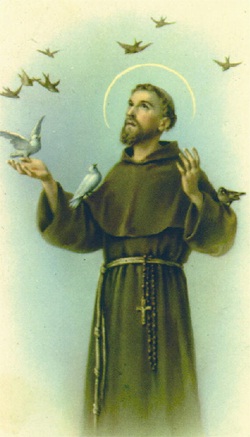
In preparation for the coming feast of St. Francis of Assisi, allow me to share with you this article that identifies the main messages ofLaudato Si – Pope Francis’s groundbreaking new encyclical on the environment.
1. The spiritual perspective is now part of the discussion on the environment.
The greatest contribution of Laudato Si, to my mind, is an overview of the environmental crisis from a religious point of view. Until now, the dialogue about the environment has been framed mainly using political, scientific and economic language. Now, the language of faith enters the discussion — clearly, decisively and systematically.
2. The poor are disproportionately affected by climate change.
The disproportionate effect of environmental change on the poor is strongly highlighted in almost every page of the document, and the Pope provides many baneful examples of the effects of climate change, whose “worst impact” is felt by those in developing countries (25).
3. Less is more.
Pope Francis takes aim at the “technocratic” mindset, in which technology is seen as the key to human existence. He also critiques an unthinking reliance on market forces, in which every technological advancement is embraced before considering how it will affect our world. Christian spirituality, by contrast, offers a growth marked by “moderation and the capacity to be happy with little” (222).
4. Catholic social teaching now includes teaching on the environment.
Against those who argue that a papal encyclical on the environment has no real authority, Pope Francis explicitly states that Laudato Si “is now added to the body of the Church’s social teaching” (15). It continues the church’s reflection on modern-day problems that began with Leo XIII’s encyclical RerumNovarum, on capital and labor, published in 1891.
5. Discussions about ecology can be grounded in the Bible and church tradition.
In Chapter Two, Pope Francis introduces “The Gospel of Creation,” in which he leads readers through the call to care for creation that extends as far back as the Book of Genesis, when humankind was called to “till and keep” the earth (67). But we have, sadly, done too much tilling and not enough keeping.
6. Everything is connected — including the economy.
Laudato Si is a “systematic” approach to the problem. First, the Pope links all human beings to creation: “We are part of nature, included in it, and thus in constant interaction with it” (139). But our decisions have an inevitable effect on the environment. A blind pursuit of money that sets aside the interests of the marginalized and the ruination of the planet are connected.
7. Scientific research on the environment is to be praised and used.
Pope Francis does not try to “prove” anything about climate change. Rather, his encyclical accepts the best scientific research available today and builds on it. SoLaudato Si draws on both church teaching and contemporary scientific findings from other fields to help modern-day people reflect on a contemporary crisis.
8. Widespread indifference and selfishness worsen environmental problems.
Pope Francis strongly critiques those who ignore the problem of climate change, and especially its effects on the poor. Why are so many of the wealthy turning away from the poor? Not only because “some view themselves as more worthy than others,” but because frequently because decisions-makers are “far removed from the poor,” with no real contact to their brothers and sisters (90, 49). Selfishness also leads to the evaporation of the notion of the common good.
9. Global dialogue and solidarity are needed.
Perhaps more than any other encyclical, Laudato Si draws from the experiences of people around the world, referencing the findings of bishops’ conferences from Brazil, New Zealand, Southern Africa, Bolivia, Portugal, Germany, Argentina, the Dominican Republic, the Philippines, Australia and the United States. The pope invites into dialogue and debate “all people” about our “common home” (3).
10. A change of heart is required.
This encyclical, addressed to “everyone living on this planet” calls for a new way of looking at things (3). We face an urgent crisis, when the earth has begun to look more and more like, in Francis’s vivid image, “an immense pile of filth” (21). Still, the document is hopeful, reminding us that because God is with us, all of us can strive to change course. We can move towards an “ecological conversion” in which we can listen to the “cry of the earth and the cry of the poor” (49). To use religious language, what the Pope is calling for is conversion.

James Martin, SJ, is a Jesuit priest, editor at large at America and author of Jesus: A Pilgrimage. This is an abridged version of an essay appearing today in America.

About Fr. Reu and his reflections…..

Categories
Francisfest

Francisfest 2015 Beneficiary: Franciscan Mission

1Our San Pedro Bautista Province (SPBP) continues to send Filipino friars on missions outside the country. There are now 25 friars of SPBP working in different forms of missionary activity around the world. We help in the formation of Franciscan candidates in Sri Lanka, and provide spiritual assistance to Filipino migrant workers in Libya and the Holy Land. We help in the task of promoting Christian presence in places where the great majority of the local population belong to other faiths/ideology: in Sudan, Morocco and Libya (Muslim); in Sri Lanka (Buddhist); and in China (communist/atheistic). We also help in various local church activities in some areas of Papua, New Guinea and in the United States where we also respond to the needs of the Franciscan Order.

Let us not forget the local missions. Much of our resources (personnel, time, and finances) are spent for the formation of our Franciscan candidates (about 100 of them in various stages of initial formation) and spiritual assistance to the many SFO fraternities and Poor Clare monasteries under our care. While the post-novitiate friars are living in communities inserted among the poor, a number of us are also engaged in the promotion of Justice, Peace and Integrity of Creation through advocacy of the rights of the disadvantaged, such the indigenous peoples and that of Mother Earth.

In the past few years, the leadership has been conscious of the mission mandate. It has accepted pastoral commitments in needy dioceses in Luzon, such as Palanan Parish (Isabela), Pope Pius X Mission Church (Catanduanes), Sta. Clara Mission Community (Caloocan), and San Jose Tagapagtanggol Parish (Novaliches). There is also the Franciscan Lay Missionary Program (FLMP) with activities such as formation sessions on mission issues today, summer camps and skill-training on participatory social investigation.

Subditi omnibus. Ire inter gentes. These are mission captions from St. Francis of Assisi. Be subject to all. Go among peoples. This is the mission principle that we Franciscans try to live in our lives and mission.

Categories
Letty Jacinto-Lopez

“The Poor, you will always have with you” by Letty Jacinto-Lopez

Lazarus and the rich man dressed in purpleShe was waiting in the wings, dressed in rags, hesitant to approach me, but when I caught her eye, she put on this most disconsolate face and begged, “Help me. I suffer from Hypertension and I can’t buy my medicine.”

She took out a piece of paper containing a prescription, “The doctor in our barangay health clinic warned me, ‘Buy this medicine, quantity good for one month, or else, your condition will worsen and lead to cardiac arrest, stroke or even death.’”

I took her aside and replied, “I can’t give you cash. But, see the pharmacy just across from where we are? We can get your medicine now.”

At the pharmacy, I showed the prescription to the lady behind the counter. “Everything in this paper?” she asked. I nodded. “Yes, and please triple it so that she’d have medicine for the next three months.”

The sick woman squirmed and gave me an antsy look. “There you are,” I said. “I hope you’d feel much better, soon.” She couldn’t speak, as if lost for words at the sudden surplus of medicine.

The following day, I saw her again. This time, she was standing at the other side of the grounds, still disheveled and desolate. I stopped and watched her. She approached an elderly woman, holding the same prescription in her hand. She was about to reenact her rehearsed lines when she saw me from the corner of her eye. Poof! She was gone.

I saw her a couple of times more. Each time, she’d run off in a scurry of confusion.

Was I the great sucker? I sure felt like one. I was even angry, until I remembered the prayer to the Divine Mercy, “Help me, O Lord, that my heart may be merciful so that I myself may feel all the sufferings of my neighbor. I will refuse my heart to no one. I will be sincere even with those who, I know, will abuse my kindness.”

A point of challenge: How far would you go? How deep is your faith?

If you see the poor, desperate and needy, do you get harassed? Do you ignore them? Do you wish that the Social Welfare would do their job and round them up, out of sight and out of mind? Do you feel pity and extend a hand to help out? For how long and how often?

In any economy, the poor cannot be eliminated. Even in the richest of countries, there will still be the problem of the poor, whether they are natives or new immigrants escaping a cruel or despondent life.

Do they serve any purpose in the grand scheme of things?

The poor becomes a School. They teach us:
Compassion – opening our hearts to understand and be moved by their impoverished condition. We extend help, in kind, through monetary means, or making it possible for them to go to school and be taught. With knowledge come opportunities that open new horizons, thus, reducing poverty in a positive way;

They deepen our Faith in our merciful God who would never abandon them or any of His children;

They challenge us to be kind, teaching us the virtue of Humility. Furthermore, God uses His other children as His conduit, His bridge to bring comfort and relief to His other sons and daughters who are deprived of brotherly love.

A friend kept complaining about his compadre who fell into hard times. He kept borrowing enormous amount of money from him. He was eroding his patience and wanted to drop him as a friend. Another compadre set his mind in perspective. “Isn’t it better that you are in a position to give help rather than beg for help? Which side would you rather be? Isn’t a true friend one who holds your hand in good times and in bad?”

Outside the church grounds, there was a man who gingerly appeared, murmuring something inaudible. My husband reached into his pocket and slipped a note to him. He smiled softly and returned to a shady corner.

“You know why he needs help?” my husband said. “He lost his nose, his fingers, his toes and maybe, other parts of his body because of an infectious disease. Do you think anyone would bother to hire him in his disfigured condition even if he is eager to work?”

I thought of the parable of Lazarus, the poor man covered with sores who waited for scraps from the table of the rich man dressed in purple.

In the afterlife, Lazarus was brought up to Heaven where he received mercy and compassion.

Let us learn from the poor.

They bring a deep sense of value that can never be measured in human or worldly terms.

Categories
Fr. EJ

SUNDAY GOSPEL REFLECTION 25th Sunday in Ordinary Time by Fr. Efren Jimenez, OFM

The ninth chapter of Mark’s gospel is alive with visionary wonders. It begins with the narrative of the transfiguration in which Peter, James and John behold Christ with new eyes – yet Jesus orders them not to tell anyone what they have seen –Jesus is teaching the disciples about the coming passion, but they are fearful and fail to see what he means.

Meanwhile in Capernaum, they are arguing on the way about who among them will be the greatest! But this is normal, isn’t it?”I don’t want to a basketball player, I want to be the greatest basketball player!” and we also think of other ambitions of life when we want to succeed greatly, and it does not seem problematic to want to fulfil one’s human abilities and gifts to the best of our abilities.

So what is the problem with arguing, “I am not just one of the twelve, I am the greatest apostle?”

Here Jesus is presenting to his apostles a spiritual world in which greatness is measured not by human striving or boundless ambition but by servanthood. This is a gift and an ability that does not rely on pre-eminence or superiority, but on presence for those in need.

Notice the text moves swiftly from passion prediction through teaching about servanthood to receiving a child in Jesus’ name. It is a movement from death through confronted ambition to a new insight into what it means to be a follower of Jesus. And it is the child in Jesus’ arms who incarnates this lovely truth about discipleship.

In taking the child, Jesus incarnates his teaching. In his reception of the child Jesus models openness, vulnerability and humility to which we are invited. The deep wisdom of God is at work here, for we are all children of God, dependent at all points in our lives on the service of others in varying and different ways.
To recognize that we are called disciples of Jesus is to be at the service of others, especially children and all others who are vulnerable, marginalized and otherwise forgotten.

Servanthood orients our relationship with others, for when our desires are out of order, as James writes, our relationships become disordered: “Those conflicts and disputes among you, where do they come from? Do they not come from your cravings that are at way within you?”

About Fr. EJ and his reflections…..

Categories
The ABC’s of Catholic Doctrine

“Abortion remains a grave and serious wrong.” The ABC’s of Catholic Doctrine By Lianne Tiu

9Abortion is one of the greatest evils in the world. In fact, a Catholic is automatically excommunicated (even without the Church’s intervention) the moment he/she commits abortion. The mother who asks for the abortion, the father who pays for it, and anyone who encourages the woman to do it – besides being guilty of mortal sin – are excommunicated for deliberately and knowingly committing this sin. This includes doctors and nurses who perform the abortion. Their crime is even more heinous because they are the ones who kill the baby.
3
To be excommunicated does not mean that one is banned from church or he/she is not a Catholic anymore. It means that the excommunicant is still obligated to attend Mass but is deprived of all the sacraments (except the sacrament of confession). He/she cannot receive Holy Communion or be confirmed until he goes to confession and the excommunication is lifted by a competent authority (the local bishop or priests to whom the bishop has delegated this power).
7
Pope Francis recently declared Dec. 8, 2015 (Feast of the Immaculate Conception) to Nov. 20, 2016 (Feast of the Sacred Heart) as the Extraordinary Jubilee Year of Mercy. During this year, all priests will be allowed to absolve those who have committed abortion and who, with contrite heart, ask for forgiveness. News went viral regarding this, and some even mentioned that the Pope has shown “more understanding” regarding abortion. We have to be clear that the Pope’s gesture does not mean that abortion has become a lesser evil.
6
The Pontiff wrote that because of the contraceptive mentality of our time, many people are unaware of the extreme harm of what they are doing; such as when they take contraceptive pills which are abortifacient, or when they fail to realize that life begins at the moment of fertilization. He is also aware of those women who felt that they had no other option and were pressured to undergo an abortion. The Holy Father’s compassion toward those who suffer the scar of abortion, however, does not stop him from being firm to the Church’s sacred teachings. Abortion remains a grave and serious wrong.
8
(The Faith Explained Today by Fr. Joe Babendreier; “Understanding Pope Francis’ gesture rightly ” by Archbishop Socrates Villegas; Pope Francis’s Year of Mercy Letter; “Catholicism: Excommunication and Other Penalties” For Dummies)

Categories
Parish Bulletin Supplemental articles

Parish Bulletin Supplemental Articles

RANDOM THOUGHTS
Voices from yesterday and today . . .
Little Known Facts About St. Francis

by Peachy Maramba2
PART 5

Coming Home

Poor Francis, though still a young man (in his early forties) his “brother body” (as he fondly referred to his physical person) was worn out. Having a naturally frail constitution since his youth Francis made matters worse by the vigorous demands and abuses he made on his poor body. Besides the pain from ulcer, malaria and trachoma, he now suffered the open Stigmata on his body. Read the full story….

_________________________________________________

CATECHISM OF THE CATHOLIC CHURCH CATECHISM IN A YEAR
1

OCTOBER 4, 2015
IN HONOR OF ST. FRANCIS OF ASSISI

How should we treat animals?
Animals are our fellow creatures, which we should care for and in which we should delight, just as God delights in their existence. Animals, too, are sentient creatures of God. It is a sin to torture them, to allow them to suffer, or to kill them uselessly. Nevertheless, man may not place love of animals above love of man.

How should we treat the environment?
We fulfill God’s commission with regard to creation when we care for the earth, with its biological laws, its variety of species, its natural beauty, and its dwindling resources, as a living space and preserve it, so that future generations also can live well on earth. In the book of genesis, God says, “Be fruitful and multiply, and fill the earth and subdue it; and have dominion over the fish of the sea and over the birds of the air and over every living thing that moves upon the earth” (Gen 1:28). Having “dominion over the earth” does not mean having an absolute right to dispose arbitrarily of animate and inanimate nature, animals, and plants. Because man is created in God’s image, he should care for God’s creation as a shepherd and steward. For the first book of the Bible also says, “The Lord God took the man and put him in the garden of Eden to till it and keep it” (Gen 2:15).

_________________________________________________

Gossip is terrorism.
The ABC’s of Catholic Doctrine

By Lianne Tiu<6

They say women gossip more than men. Men, actually, gossip just as much except they do it better and call it “networking.” The difference is in the content of gossip.

Let’s admit it. We all enjoy the guilty pleasure of talking about others. We gossip about the latest scandals – who’s having an affair with whom, who got fired – juicy stories of celebrities and people we know. Harmless it may seem, we are actually damaging their reputation when we carelessly publicize people’s mistakes and bad deeds; more so when facts are false. Gossip becomes malicious when it is a lie or when the intention is to ruin people’s reputation. Read more…..

Design a site like this with WordPress.com
Get started