Categories
Reflections

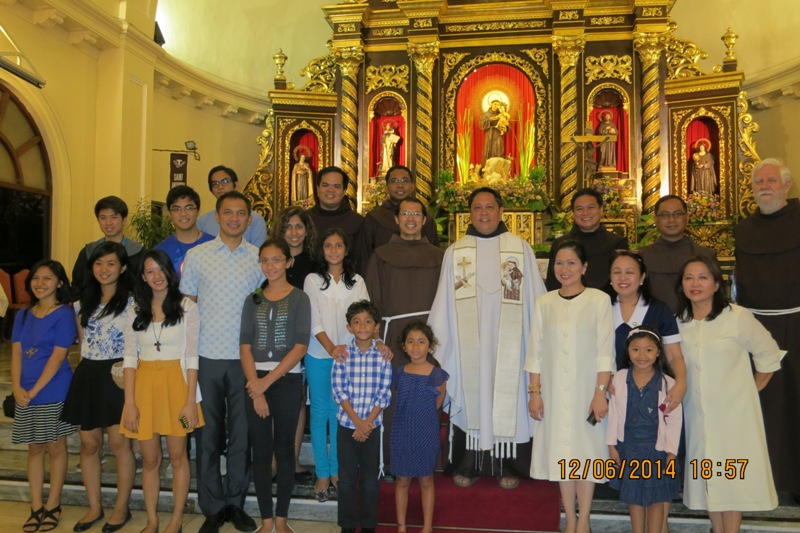
“WHO DO YOU SAY THAT I AM?” Sunday Gospel Reflection, 21st Sunday in Ordinary Time A, by Fr. Jesús Galindo, OFM

10169189_683427541725134_2414622394060069874_n
Jesus did not suffer from identity crisis, nor was he “image conscious,” as many of our politicians and movie stars are. When he asked his disciples, “Who do people say that the Son of Man is?” he was not conducting a survey or a popularity poll. He knew well enough what people thought of him. It was his way of striking a conversation with his disciples. His real interest was in their answer to his second question, “Who do you say that I am?” Today’s gospel passage is part of the private instruction, which Jesus imparted to his disciples in order to reveal himself to them–and to them alone. Hence the injunction to strictly tell no one that he was the Christ.

What people were saying about Jesus was not bad at all; in fact it was very good. He was mistaken for great and holy people: John the Baptist, Elijah, Jeremiah or one of the prophets. (Of course, the apostles did not tell Jesus the negative things some people were saying about or against him; for instance, that he was out of his mind; that he was a glutton, a drunkard, and a friend of tax collectors and sinners; that he was possessed by Beelzebul, etc.). The people’s regard for Jesus, as told by the apostles, high as it was, ran short from reality: Jesus is much, much more than John the Baptist, Elijah, Jeremiah or any of the prophets.

Jesus then asked his apostles the same question: “Who do you say that I am?” Now it was Peter, inspired by the Spirit, who gave the right answer: “YOU ARE THE CHRIST, THE SON OF THE LIVING GOD.” Notice how, to the first question, all the apostles answered; but to the second, more personal question, only one did. It is always easier to talk about what others say and do than to talk about oneself.

Peter was richly rewarded for his right answer. This was definitely Peter’s finest moment: 1) He was praised and blessed by Jesus. 2) He was given a new name, signifying a new role or mission; before he was Simon, now he is Peter, meaning Rock—upon which Jesus will build his Church. 3) He was given the keys to the kingdom of heaven, that is, the power to govern the Church and the authority to bind and to loose, namely, to declare what is right and what is wrong, what is allowed and what is forbidden. This is called the Magisterium of the Church, now exercised by the successor of Peter, in the spirit of service to the flock. Awesome powers given to a man—a simple fisherman at that! But then, the vigor of the Church comes, not from the strength or talent of Peter and his successors, but from Jesus’ firm promise: “The gates of the netherworld shall not prevail against it.”

Today, Jesus’ question is addressed to each one of us: “Who do you say that I am?” Who indeed is Jesus for me? What role does he play in my life, in my plans, in my decisions? What kind of relationship do I have with him? Do I relate to him as my Big Boss, my Lord, my King? Or do I rather relate with him as my Brother, my Friend, my Confidant?

The kind of answer we give to these questions is important; it may even determine the kind of spiritual life we live. If Jesus is for us an authority figure, then chances are that our Christian and spiritual life will be marked by respect, submission and fear. (One of the saddest things is to see very old people, who have been attending Mass and receiving the sacraments regularly for decades, being now tormented by the fear of hell.) However, if Jesus is my Brother, my Friend and my Confidant, then my spiritual life will be marked by joyful love. I will go to Mass, Sunday or no Sunday; obligation or no obligation. I will go even daily, if possible, because I enjoy being with my Brother and my Friend, talking and listening to him.

About Fr. Jesus and his reflections.

Categories
Articles

Suicide Notes By Letty Jacinto-Lopez Originally published by Philippine Star

Robin Williams, who played the role of Genie in Aladdin,
died by suicide on August 11, 2014

The story of Anastasia: The daily news bared all the painful details of her death. She drank turpentine. It didn’t work. She slashed her wrist but the blade was not sharp enough to completely sever the veins. She made a lasso and tied the rope on the lone chandelier. With the aid of a chair, she stood right under the chandelier, wrapped the knot around her neck and made a quick leaping motion to destabilize the chair. She died after ten minutes. It was her third attempt. No one in her family suspected the torment she was going through. In the end, her only means of coping was to take her life.

The story of Dante: He was suffering from schizophrenia. His family tried everything to make him well. Hypnotism, group therapy, drugs, and the controversial and the cruelest of clinical procedures, the electric shock treatment.

He would come out of the treatment dazed, glassy-eyed and thirsty but calm and placid. This would be followed by good days when his mind seemed to bounce back to his creative, productive self. He could work. He was lucid. He could laugh, interact and be gentle with his wife and his son. He was again the man of the house. But as quick as it came, it would disappear and he would revert to a state of limbo where he could not form any opinion much less decipher one. That’s when sleep eluded him. He would throw the sleeping pills in frustration. The voices would come back and dominate him. They taunted, tormented and despised him. In the end, they became too much for him to bear. He put a gun in his mouth and shot himself. He suffered for 23 years.

The story of Adolfo: He was packing up to migrate. He saw an old, unlicensed gun in one of the top drawers and was surprised to see that it was hidden there all these years. He made up his mind to sell it but first he thought of giving it a good buff. Pulling out a polishing cloth, he rubbed it vigorously when suddenly the gun went off. It sounded like a thunderclap. He trembled uncontrollably at the thought that the gun was loaded. Whirling from the shock, he turned to his wife, Teresa, who was sleeping in their bed. Horror gripped him when he saw blood oozing from her head. His mind went blank. Another shot was heard and he fell lifeless on the floor.

Anastasia, Dante and Adolfo committed suicide. They were people we knew and in each tragedy, we saw the anguish etched in the faces of those they left behind.

How does one handle pain of this magnitude?

Anastasia’s mother was a mirror of sorrow. Being a pious and devoted Catholic, she only asked one question, “Would God take pity on my daughter and give her rest; will she see heaven?”

Dante’s family lived with the fear that he would someday take his own life. It was an ordeal his wife and son faced every day and when it finally happened, their spirits were so broken that there was nothing left to feel.

At the wake of Adolfo and his wife, Teresa, they were dressed in the same barong tagalog and piña gown they wore at their wedding. Even in death they were inseparable.

There was a time when suicide in the family was handled under a veil of darkness. We were not equipped to deal with death this way because we were more comfortable to follow a de kahon, well laid out and predictable life line: marriage, birth, milestones, sickness and lastly, death. A pat phrase like “she lived a good, long life” was easier to understand and accept.

In suicide, the family suffers double grief: Losing a loved one and coping with the cruel and baseless talks on the circumstances surrounding the death. Where will they find comfort? Who could throw some light into this dark abyss of grief?

At a recent memorial service, the priest seemed to shed some light on this mystery. He said, “We should not burden ourselves with the circumstances of how our beloved departed left their mortal bodies. It wouldn’t matter to God. What is important is He promised us the forgiveness of our sins and that someday, He will lift us up to our permanent home where there is no pain, no sorrow, only joy and clemency.” He went on to say that man has no control over the manner of his death. It could happen by accident, by a sudden and fatal heart attack, a prolonged suffering, even by violent death or suicide. While there will be those who would peacefully and easily give up the ghost, there will be those who would suffer until their last breath. The important thing is God’s promise that He will not abandon us. He closed his homily by urging the mourners to leave their dearly beloved in the hands of God. “There, he will be safe.”

I was clearly surprised and appeased by what the priest said. If we view death in this manner, it could ease the tension and remove the stigma associated with it. Painful questions could be laid to rest and more importantly, those left behind could find the road to forgiveness, healing and acceptance.

The next time you pray The Apostle’s Creed, pray slowly and reflect on each line. When you reach that part that says, “I believe in the forgiveness of sins, the resurrection of the body, and life everlasting.” Take it to heart and believe.

Postscript to Anastasia’s story: Palo Alto, California. Sixteen years had passed and one day, Anastasia’s mother ran excitedly to her husband, “Anastasia is in heaven!” “How do you know that?” asked her husband. She replied, “You know how I’ve never stopped praying to Mama Mary? This morning, I prayed again and I asked her to heal the pain that is in my heart. If Anastasia has been forgiven and is now with God, I asked Mama Mary to send me a sign: white roses and a dozen of them.”

That day, Anastasia’s mother went about her daily chores. While busy in the kitchen, the doorbell rang. “Can someone please get the door?” she yelled. No one responded so she rushed to open it with her mind still preoccupied with the boiling pot in the kitchen.

Before her stood an awkward, harassed young man scratching his head and stammering, “Madam, ah, I’m sorry to bother you. You will find this hard to believe but I am the delivery boy of the florist shop next to the town plaza. I found an extra order of long-stemmed roses in my van but I could not find the delivery receipt. This has been a particularly tiring, long and hot day; the roses will simply wilt if I returned them back to the shop. Can I give them to you for free?”

Anastasia’s mother was clearly in doubt. She asked, “Why did you ring my doorbell and not the other ones in the complex?” The boy answered, “Again, you won’t believe this but your door was the first one I saw and I thought, “Hey, who wouldn’t want to be surprised with flowers?’”

Still worrying about her pot of boiling stew, she smiled and opened her arms to accept the roses. Placing them down near the foyer, she rushed back to the kitchen to switch the flame to low. With her face all steamed up from the cooking pot, it suddenly occurred to her, “Wait a minute, did I just receive roses? Could this be a sign?”

She hesitated and thought, “Oh, but that’s impossible. I asked for white roses and they are definitely not in bloom this time of the year.”

Being convinced that she was probably getting excited over nothing, she began to ascend the stairs. She felt her heart skip a beat before it began to thump faster and faster. She turned on her heels and ran down to the foyer.

The bundle of flowers was there, still tied up with ruffia, in white cellophane with butterfly prints. Trembling now, she slowly unwrapped the package…the roses were white, all 12 pieces of them.

A Prayer When A Loved One Dies By Suicide
By Naomi Levy
(From her book entitled Talking to God, Alfred A. Knopf, New York, 2002)

Help me God. Give me strength to carry on. Heal my anger and shame. Ease the burden in my heart. Teach me to believe that I am not to blame. Lead me back to life and hope and joy. I know the pain became too much for him. Death was his only hope for release from his suffering. Life offered him no such promise, no relief.

Let him rest now, God. Free from all that haunted him. Peace, at last. Watch over him. Be his comfort. Grant him the serenity that he so longed for in life. Let his death be his healing. Amen.

Categories
The ABC’s of Catholic Doctrine

The ABC’s of Catholic Doctrine by Lianne Tiu

Do you see Jesus in your housemaids and drivers?

Maids and drivers come in all shapes and sizes. They help us lighten our work; but at times, they can be a burden. As Christians, how should we treat them? Here are some suggestions:
-Give them a fair salary. Amounts can be based on the rates (more or less) offered by recruitment agencies. They can vary depending on each situation, such as if they have dependent spouses and children. Release their salaries on time, as agreed.

-Check on their basic needs. Are their sleeping quarters comfortable and well ventilated? Is there separation for the male and female quarters? Do they have enough and nutritious food? Do they eat and sleep at the right time?

-Be courteous to them. Use words like “Salamat,” “Good Morning,” “Paki—“ (Please). Call them by their names, not “Hoy!” or “Psst!”

– Control your temper when they make mistakes. Do not shout at them. Correct them in private and not in front of others. Explain to them why they are wrong. Be patient with their mistakes and defects. They wouldn’t be working for you with their low salaries if they had better opportunities. Stop criticizing, scolding, and belittling them. Compliment them for a job well done.

-Educate them. Allow them to attend classes on values, home-training skills or catechism. Enroll them in a part-time school if you can afford. Your motive should be to help and not for selfish reason of detaining them. Teach them to dress modestly, to choose wholesome radio/TV programs and magazines, to avoid familiarity with married people, and to have a marriage sanctioned by the church. Teach them proper hygiene.

-Get to know them. Talk with them about their families, interests and problems. Give them advice on their problems.

-Make them a part of your family. Remember their birthdays (give them gifts or prepare a small celebration), help them find good spouses, ask them to pray for your intentions (a small favor which they enjoy doing) – believe me, their prayers are powerful!

-Put yourselves in their shoes. Treat them the way you want to be treated. Are they allowed day-offs or a little self-indulgence like nail polish and make-up (for the maids)?

-Pray for them. Thank God for giving them to you. Allow them to attend Sunday Masses.

-Do not be too sensitive when your kindness is not acknowledged or repaid with gratitude. Rather, dwell on the fact that God is pleased with your good deeds. When they abuse your kindness or go overboard, let them know that they might get dismissed.

-Remember that they deserve equal rights and dignity. They are there to help you, not to be your slaves. Their humble work is not to be looked down. Their work, as long as it does not oppose God’s law, is good and noble, just like any “big time” job.

-Love them, with their flaws. See Jesus in them. By loving them, you are loving Him.

(Reference: St. Josemaria Escriva’s teachings on the value of work)

Categories
Health Care Ministry

WHEELCHAIR DONATION

Wheelchair Donation to RMC 004

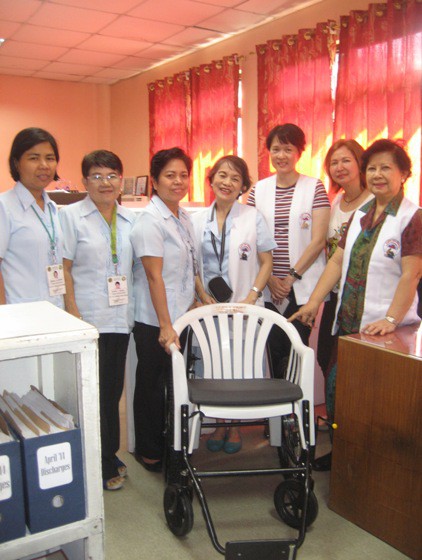
A wheelchair donation was made on August 14 by the AGFO Ladies to the Rizal Medical Center Out-Patient Department, through the Health Care Ministry of SSAP. The wheelchair was actually the second donation by the AGFO Ladies to the same hospital. The wheelchair is imported from the USA and noted to have excellent maneuver ability. It can also be used by patients while bathing because its parts are all rubber and plastic. The turnover of the wheelchair to the Social Service Department was done by Barbie Young, Mercy Dauz, Chuchi Quevedo and Gina Trinidad.

Categories
Reflections

Faith Sharing of the Virtues of St. Anthony of Padua For Fiesta Novena Mass Day 9

1IMG_3635

Comforting and Respecting the Elderly
by J’net B. Zulueta

A humble good evening to the Franciscan community, my fellow Parishioners and to St. Anthony. By sharing this recent journal entry I attempt to cover the three topics of– respect for elders, the Ministry of Catholic Women’s League and a personal encounter with Christ. Let me then tell you this story. It is the last hour of Saturday June 7th 2014, the end of a hot summer day. In the parish grounds, as early as 5AM, so many elderly, to the very young, from near and far, mostly arriving by foot, waited patiently for the start of the 8:30AM medical mission.

Over 850 patients were attended to by 120 volunteer doctors. We in the circle of CWL sisters were so busy assisting in the surgery, medical, dental, optha, x ray, ultrasound, pharmacy and food area. In celebrating fiesta week we saw the completion of the group baptism, confirmation and wedding. For four Saturdays prior to the conferment of these sacraments, we taught the candidates basic catechism, instilling in them your loving presence in their lives, Lord.

In the yearlong scholarship and medical clinic programs of our league we recognize your presence in each person we reach out to. You are our Creator, You are our strength, our eternal healer. I remember how you were my healer too, Lord, in October a few years back. With no notice I suffered a seizure due to a brain tumor. There I was lying unconscious floating with your wind and moving towards your peaceful voice. Then I caught a glimpse of my family who were hopelessly crying. I begged to return. With no hesitation you sent me back even with the possibility of being handicapped. The journey back home was very dark. But you provided me the confidence because I knew for sure you were by my side I would like to share how it felt during that time of temporary after life.

There is not even a split second shift between our existence now and the eternal life. Our lives are at the same time, physical and divin. As your beloved children, dear God, you have endowed us with this extraordinary gift. I believe that in the stillness of our lives, in our soul dwells the kingdom of the Lord. How could we even think that you are sometimes remote when you truly live in the temples of our soul?

A story goes that St. Anthony when he preached could gather a crowd of thousands. It was St Francis who recognized this gift of eloquence. One day St Anthony’s talk was on the topic of caring for the elderly. A man in the crowd, Leonard, was so upset with his mother, whom he actually kicked. Arriving home Leonard cut off his foot because St Anthony preached earlier that everything from jealousy, bad temper and rebellion against one’s parents should be discarded. But then our gentle saint heard the story and rushed to Leonard. Upon seeing the amputee St Anthony miraculously joined back the foot.

In the spirit of respect for elders, we are so familiar with two bible stories. The first is about the elderly saints Ann and Joachim whom God chose as parents of Mama Mary. Therefore, Jesus had a lolo and lola who were not too young. The second is about Mama Mary, when already carrying Jesus in her womb, visited and cared for her elderly cousin Elizabeth. In our parish on Palm Sundays we remember seeing the CWL ladies selling palms to raise funds for the Franciscan seminarians. This activity is really a humble way of expressing help and appreciation to the Franciscan community.

In ending, and most importantly as we respect the elders in our homes and in our community, we wish to extend our respect especially for the priests in this parish. Though younger in age than some of us, we profoundly and respectfully regard our priests as our elders in faith.

This evening we greet you dear pastors with sincere gratitude as we say “Maraming Salamat Po!” for all your generosity. Dear Lord as I end this journal entry my prayer is that we your living stones continue the Church of Christ in the way of St. Anthony’s humility and with gratitude to You forever. We offer our gratitude for all that we are, with Your many blessings. We are grateful for You have opened our eyes to the precious gifts of serving and humbly giving back, to You, O Lord. A happy Fiesta to all.

This concludes our series of faith sharings – essays for the feast of St. Anthony of Padua. Next week, we will resume our regular Sunday Gospel Reflections.

Categories
Prison

Jail Time by Marco Joson Merencillo

It was gloomy today as I got near the huge gray gates surrounded by equally tall walls. This barrier was well built to contain the people inside. Then as the steel doors opened, guards clad in black clothes stopped me for inspection. Upon getting clearance to move on, I walked a little further and I saw them… the people in yellow shirts… the prisoners.

I was within the premises of the Makati City Jail… and it was my first time inside a prison.

Why did I end up here? No, I did not commit any crime. Rather, I volunteered to serve the criminals here with my SYA friends from Santuario San Antonio Parish and the Prison Ministry.

Upon my first glimpse of the inmates, they were not locked up in their cells. Instead, they were inside a chapel attending a catholic mass during a Saturday afternoon. As I heard the word of God was being read, I entered and took a seat beside these dangerous people.

I have to admit that I didn’t feel at ease being around these lawbreakers… after all, they did something evil to be put behind bars. Did they rob an employee in a crowded mall? Did they rape a girl walking in a dark alley? Did they kill someone in broad daylight? Questions such as these filled my mind.

However as my eyes roamed around, I noticed that the physical features of these people varied greatly. Some were scrawny while others were brawny. There were males, females, gays and lesbians. A lot were Filipinos but some were foreigners. Most of them looked clean and did not stink.

What’s my point? At first glance, you wouldn’t know that they were criminals unless you see them inside this prison.

During the Holy Eucharist, I observed that the detainees were also the readers of the bible passages and some were members of the choir. All throughout the mass, they were well behaved as they listened carefully to the priest. Their actions showed their devotion to Jesus by solemnly praying and gleefully singing to honor Him.

After the concluding rites, an officer-in-charge ordered the male convicts to go outside the chapel. They moved out to gather as a group while the warden made a headcount.In contrast, a female officer tallied the women who were left behind. The detainee near me said that counting usually occurs every three hours. According to her, so far there have not been any attempts to escape among the regular attendees of the mass.

As the prisoners returned to their seats, my SYA friends and I gave them some popcorn and juice.We held a film showing entitled “Ekstra” starring Vilma Santos.

The movie revolves around the life of a bit player (ekstra) named Loida Malabanan who is a single mom that wants to provide a better future for her daughter. She is a professional bit player whose role is to be part of a crowd in most Filipino soap operas. The movie shows the numerous hardships that bit players undergo to earn a small amount of money.There are no changing rooms, no toilets and no sleeping beds that are provided for an “ekstra.”But as a whole, everyone involved in producing a telenovela has some sort of adversity to overcome even if he is a director or a staff.

When the film ended, one of the prisoners volunteered to share his insights on the film. He said that: “Katulad sa pelikula, lahat sa atin dito ay may iba’t ibang antas sa buhay. Merong mayaman, mahirap at yung iba ay taga ibang bansa pa. Pero tayo ay lahat nandidito sa loob ng kulungan kaya dapat mahalin at irespeto natin ang bawat isa.”

The audience applauded and afterwards, my SYA friends started to distribute some soap to the detainees as they fell in line to return to their cells.

Since this was my first MCJ experience, I was astounded that the prisoners were calm all through out. There were no signs of greediness or rowdiness. I did not expect this orderliness from them. I always thought that the people inside this institution were war freaks. I was wrong.

So I asked the guy in yellow beside me, “Bakit hindi kayo magulo dito?” He smiled a bit and answered, “Hindi kami basta mga preso, kami ay pamilya.”

Thank you Father God for the opportunity to serve today. I was really glad to have spent my time with the prisoners. I am blessed to be part of the SYA Family.

Categories
Articles

Five Tips for Parishes from Pope Francis:

3Everything Pope Francis says is always so heartfelt, so quotable, so real. Reading through all of the speeches, homilies and messages that he gives is a real treat. If you don’t already, I recommend reading up on his activities at the Vatican website. Or check out news on Vatican Radio, News.Va or get the free Pope App.

Whatever way you choose to do it, it is worth reading Pope Francis’s direct words instead of getting what he says second-hand from the media. There are so many treasures, most of which are not filtered down to us through other news sources.

One such treasure is the words that Pope Francis has given us on parish life. He has real, applicable advice and it is based on his inspiring vision of a Church that goes out of itself, a Church that is missionary, a Church that is merciful and a Church that evangelizes, even in its everyday activities.

I thought I would share some of the gems I have found in my perusal of the Vatican web site.

1. DON’T Be Like A Custom’s Office:
Pope Francis is pretty clear in this, Jesus “instituted seven sacraments” it is not the place of the parish office to institute an eighth sacrament – “the sacrament of the pastoral customs office.” In other words, the parish office should not close doors for people.

And yet most of us can think of times when we have felt more like we are at the DMV rather than our parish office because of the way we were treated or the business-like approach that was used. Attitudes like this attempt to “control faith rather than facilitating it.” Instead, Pope Francis prays that “all who approach the Church find doors open to encounter Jesus’ love”.

2. DON’T Be Tarantulas:
Pope Francis says that when people go to their parish, they should feel like they are entering their mother’s home. He says, “Being parish secretary means opening the front door of the mother’s home, not closing it! And one can close the door in many ways. In Buenos Aires there was a famous parish secretary: they called her the “tarantula”… I’ll say no more! To know how to open the door in the moment: welcome and tenderness.”

3. DO Put Those Who Are “Distant” First:
I have often heard grumbling about families who only come to their parish for baptisms, weddings and funerals. These people are often treated like a last priority, but Pope Francis urges us to put those distant from the Church first. Why? Because we want these people to become regulars.

Pope Francis says, “It is about assuming missionary dynamism in order to reach everyone, putting first those who feel distant and the most vulnerable and forgotten people. It means opening the doors and letting Jesus go forth. Many times we keep Jesus closed inside the parishes with us, and we do not go out and we do not let Him leave! Open the doors so He can go out, at least Him! It is about a Church which “goes forth”: a Church which always goes forth.”

4. DO Get the Laity Involved:
Pope Francis is pretty clear on this, the laity need to be involved in their parishes. Parishes do not belong to priests or to the parish office, they belong to everyone. This is why parishes need laity on councils, advising and helping in the running of everyday matters. In fact, Pope Francis very sternly has said that “a parish that does not have a pastoral Council and a Finance Council, is not a good parish: it lacks life.”

5. DON’T Gossip Or Cause Division:
If only our parishes were exempt from ordinary, sinful human behavior. Alas, they are not. But we can examine our part in making a parish a place of unity and communion or creating division.

Pope Francis urges us, “Let each one ask him- or herself today ‘do I increase harmony in my family, in my parish, in my community or am I a gossip. Am I a cause of division or embarrassment? . . . Gossip does harm! Gossip wounds. Before Christians open their mouths to gossip, they should bite their tongue! To bite one’s tongue: this does us good because the tongue swells and can no longer speak, cannot gossip. Am I humble enough to patiently stitch up, through sacrifice, the open wounds in communion?’”

– See more at: http://www.ignitumtoday.com/2014/08/02/5-pieces-advice-parishes-pope-francis/#sthash.VehrK8s2.dpuf

Categories
Articles

Pope Francis Reveals 10 Secrets to Happiness

8Pope Francis has offered several tips for finding happiness in life.

During his conversation with Argentinian weekly “Viva” to commemorate the anniversary of his early pontificate, the 77-year-old pope of the Catholic Church said that one should let everyone be themselves and it’s the first step peace and happiness, the Huffington Post reported.

He said that people should give themselves tirelessly to others, and if one gets tired, one runs the risk of being egoistic and stagnant water is the first to be corrupted and people should also walk softly.

According to Pope Francis, one should be available to their kids and family, and even though consumerism has led to the anxiety of losing, which has pushed people to spend less time at home and more time pursuing wealth, people should invest more time in “healthy leisure”.

He added that people should spend their Sundays or any other day of rest with their family, work toward empowering young people, care for the environment, move on after negative experiences, respect others’ opinions and actively strive for peace.Washington, Aug 4 (ANI)

Categories
Reflections

The Homily

The Homily of the Most Rev. Deogracias Iniguez, DD, Bishop Emeritus of Caloocan during the Rite of Dedication of Our Lady of the Angels of Porziuncula Chapel:

This slideshow requires JavaScript.


“ The dedication of this chapel is significant as every year it will become a part of this Christian community. It is a solemnity every year of the dedication of Our Lady of the Angels of Porziuncula. This is a place where the proclamation of God’s word is made, where the Eucharist will be celebrated. This is a significant place of our worship. The structure of the material church is a very important symbol of the living church, of the community of faith. It is a symbol of the living stones together with Jesus Christ the living stone. This communion with God takes place in the church, when we accept Jesus as our savior. The church is us. The sprinkling of holy water not only on the material church but on the people and the anointing of chrism done on the altar and the walls of the structure and on us also – baptism is confirmed, the sending of the Holy Spirit. Sacraments left to us by Jesus. We celebrate the Eucharist here. It is the greatest expression of our unity and bond with Jesus and wit one another. We the people of God, the living church, are called to be aware of our special place in the saving love of God. This is God’s gift to us.”

Categories
CWL

CWL INDUCTION OF OFFICERS AND NEW MEMBERS

This slideshow requires JavaScript.

The newly elected officers and Board members of the Catholic Women’s League of SSAP were recently inducted into office by Blessie Flores, the Vicariate Supervisor of Our Lady of Guadalupe parish of which SSAP is a member. Fr. Reu Jose C. Galoy OFM, CWL spiritual director, officiated.

The Officers Inducted are:
President: J’net B. Zulueta
1st Vice President: Myrna Jurilla
2nd Vice President: Judy So
Secretary: Marilou Consing
Assistant Secretary: Karen Limpe
Treasurer: Joy Concepcion
Assistant Treasurer: Menchu Concepcion
Auditor: Chit Montoya

Board Members Inducted are:
Mercy Cedo, Wilma Huang, Tessie Kabigting, Rose Galvez, Zari Poe, Clare Quesada, Nena Mewshaw

Design a site like this with WordPress.com
Get started