Categories
Articles Lectors and Commentators

LeCom’s Official Writer

RachelleA special thanks to Rachelle Wenger, who has agreed to be the Lectors and Commentators (LeCom) Ministry’s first official writer for all our Lecom activities!

Aside from being lector/commentator at San Antonio, Rachelle is also a CCD Confirmation teacher and derives greatest pleasure from being a wife to Thomas and mother to Justin & Curtis. Thanks, Rachelle!

LeCom Ministry Starts the Year Right
By Rachelle Wenger

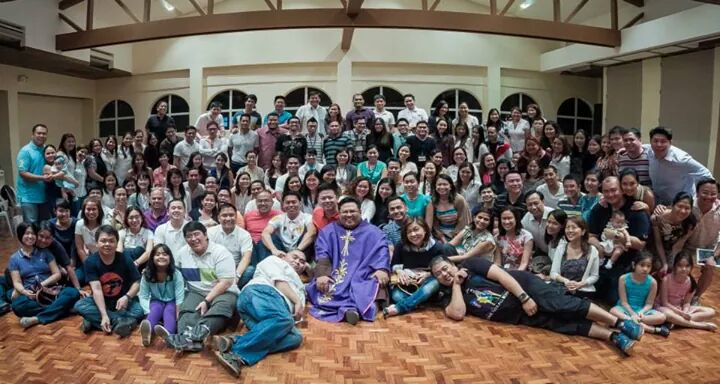
To start the year right, members of the LeCom Committee gathered at the St. Bonaventure conference room in the Parish Convento to hold its first meeting for 2014. Our new chairperson, Dee Chan, led the opening prayer for grace. Discussed during the meeting was the calendar of activities for the year, welcoming of new members, reminders, appeals for specific tasks, and lastly an enlightening talk by guest priest, Fr. Jesus Galindo. To close the meeting formalities, a prayer was said thanking our Lord for another fruitful get-together and of course, what meeting would be complete without the sharing of food. It was definitely a great start to the year and an optimistic vision for what’s in store for the months ahead.

***

We also have a newbie, who wrote about her first Lecom meeting experience. Thanks for your contribution, Marie Tycangco! READ ARTICLE

Categories
Articles Pastoral Team Reflections

“Not on Bread Alone Is Man to Live” by Fr. Jesus Galindo, OFM

Lent is not mainly about “giving up,” rather it is about “growing up.” It is a time to enrich and strengthen our faith and to reinforce our weak spots—where temptations are more likely to get through; it might be anger, unforgiveness, addiction to gambling, alcohol or drugs, pride or infidelity. The aim is to get rid of the idols in our life, so as to worship and serve God alone.

Every year, on the first Sunday of Lent, we read at Mass one of the gospel accounts of Jesus’ temptations (this year, Matthew’s). We are reminded that, during the Lenten season, we must gather up strength to be able to fight against the power of evil. For that, we need to intensify our prayer life and our acts of penance and charity. In the Philippines, this Sunday is marked every year as “National Migrants’ Day.” Is it, perhaps, because migrants are easily exposed to temptation? That seems to be the implication, since in the Prayer of the Faithful we are invited to pray, “that the families of migrant workers may remain steadfast in the face of temptation, resist the lure of materialism and strive to stay united in prayer.” (Sambuhay)

When we pray the Our Father and say, “… lead us not into temptation,” we are not asking God to keep temptations away from us, but rather to help us not to give in, or to fall into, temptation. Temptations are part and parcel of human life. They afford us an opportunity to show how strong or how weak our love for God is. If overcome, temptations become a source of merit and grace. The strength of iron is tested by fire. We discover the worth of true love and friendship when they are tested. Likewise, we prove our love for God when we fight and overcome temptations. “The absence of temptation is the absence of virtue.” (Goethe)

Temptation is an invitation to take the easy road and to deviate from God’s commands. This is particularly clear in the account of the temptations of Jesus. He had just begun his public ministry and had committed himself to do the will of the Father by submitting to John’s baptism of repentance. But Satan comes around telling him to take it easy: “Why go hungry? You have the power to turn stones into bread; use it. Show ‘em who you are.” It is an invitation to be selfish, to use power for his own good. Jesus would experience this sort of temptation again and again in his life. For instance, when Peter told him, after the first announcement of his passion: “God forbid, Lord! No such thing shall ever happen to you.” Jesus told Peter, “Get behind me, Satan! (Mt. 16:22- 23) Or when, after the multiplication of
the loaves, the people wanted to make him king. (Jn. 6:15) Jesus withdrew to the mountain alone. Or when people asked him for a sign from heaven—so they could believe in him (Mt. 16:1; Mk 8:11)
Jesus simply refused.

Perhaps Satan’s fiercest attack on Jesus took place when Jesus was hanging on the cross and Satan put in the mouth of people the same old mantra, “If you are the Son of God…” First, “Those passing by reviled him… If you are the Son of God, come down from the cross.” (Mt. 27:39) Next, “The chief priests and the scribes mocked him and said, ‘Let him come down from the cross now and we will believe in him… for he said: I am the Son of God’.” And then, “One of the criminals hanging there reviled Jesus, saying, ‘Are you not the Messiah? Save yourself and us.’” (Lk. 23:39) The temptation of power and greed haunted Jesus up to the very last moment of his life. But he came out victorious by staying on the cross, doing the Father’s will.

Notice how Jesus quotes Scripture passages (Dt. 8:3; 6:13 and 6:16) in order to fend off the devil’s ploys. The Word of God is a powerful source of grace and strength against temptation. But then the devil also quotes a Scripture passage himself. (Ps. 91: 1, 2) Indeed the Word of God can be used in the wrong way and for the wrong purpose too. Discernment is needed before lending credence to any “bible babbler.”

Last Wednesday we started the Lenten season with the imposition of ashes. Lent is not mainly about “giving up,” rather it is about “growing up.” It is a time to enrich and strengthen our faith and to reinforce our weak spots—where temptations are more likely to get through; it might be anger, unforgiveness, addiction to gambling, alcohol or drugs, pride or infidelity. The aim is to get rid of the idols in our life, so as to worship and serve God alone.

About Fr. Jesus and more of his reflections

Categories
Articles JPIC Prison Ministry

“Being Called to God’s Mission” by Maevie Ortiz

Every Friday night young adults like me would just like to relax, grab a drink and rant about epic failures of the week. Normally, after these Friday night-outs with friends, I would extend my sleep the next day. But when asked by one of my friends, what my agenda will be this Saturday…I proudly said I will be visiting friends from MCJ (my 2nd time). Lo and behold judgments came after my statement. One of my friends said, “I’d rather go on an outreach with orphans or old folks than sinners”.

Instead of defending the residents I’ve encountered in MCJ, I just asked if they would want to try it themselves so that their perspective towards these “least brethren” would be different than the usual stereotyping. I’m not sure how I handled that awkward situation but I knew in my heart that tomorrow’s experience would be something worthwhile. Initially, I was a bit swayed by the idea of extending my sleep. I was still deliberating before going to bed until finally I woke up early the next day with a 6am text message. Thanks to one of my SYA friends who texted me to be reminded of the extra red shirt she requested and informed me that she is already on her way to our agreed meeting place. Besides this anonymous guardian angel from SYA, the recent learning I gained from Thursday’s prayer meeting certainly gave me that push and natural high to obey God’s call to do His mission.

And so we arrived in MCJ that Saturday morning. What kept me curious is the thought that this has been an on-going contest 3 times in row. Being an avid Master Chef fan, I wondered how it would look like if I am physically present, witnessing the thrill of cooking and (best part) tasting.

For this year, 12 cell groups participated. Specific ingredients were distributed per table and a communal area was provided for other condiments/supplies that all groups might need as they prepare their sumptuous meals. It was an exciting sight seeing them strategically dividing their group members in the preparation of their three entries: appetizer, main dish and dessert. I assumed the role of an “all-around” runner and I LOVED every single part of the experience. No one dictated or even limited me to do certain tasks and I just followed what I thought seemed appropriate given a certain situation. I willingly assisted in the fair distribution of ingredients while joyfully giving words of encouragement to the residents. At the same time, I was injecting humor through dancing to the groove while the cooks and prepare their appetizing meals.

These maybe simple gestures that were left unnoticed, I am not even sure if they remembered who I was. But regardless, what mattered most was that I left the place with a full heart. I knew right at the moment I stepped out of MCJ that “going beyond the usual Saturday” and going beyond my comfort zone was definitely well worth it. My trust and commitment towards service worked and I thank God for the experience of His mission through my experience of what it is like to willingly share time, talent and treasure without even waiting to be acknowledged or thanked. I am truly grateful to God for this beautiful experience of community. Cheers to more service! 

Categories
Articles Pastoral Team Reflections

“Who Do You Serve? God or Mammon?” by Fr. Robert Manansala, OFM

Our God is a demanding God and He demands absolute loyalty. Jesus
highlights this in the Gospel passage by declaring categorically that one cannot serve two masters (God and mammon) and that wealth can compete with our commitment to God.

The word mammon is from the Greek word mamonas and it refers to earthly wealth. In the New Testament, only Jesus utters the word to contrast earthly goods with heavenly realities. However, this does not speak of Jesus’ negative attitudes and opposition to possessions in themselves but of the inordinate attachment to them and their materialistic character. Indeed, the problem is not about material goods per se but about our selfish, hedonistic and greedy attachments to them.

Jesus does not deny our human and basic need for food, drink, clothing, shelter and other material support. He does not also espouse passivity, laziness and apathy in the face of our duty to work in support of ourselves, our families and other people. But we must know our priorities in life and in this world. Our first priority is to “seek the Kingdom of God and his righteousness.” (Mt 6:33)

We must recognize our noble place and unique value in the natural world. Jesus says that we are more important than the birds and wild flowers. (Mt 6:26) We must put our trust and confidence in the providential goodness of God. Jesus says that if God takes care of the birds in the sky and the grass in the field, “will he not much more provide for you, O you of little faith?” (Mt 6:30) Our heavenly Father knows what we need even before we ask for it from Him. (Mt. 6:32)

Following the Wisdom teachers and to drive home his important
points regarding material goods, Jesus instructs his listeners through the use of two examples from nature. First, he compares the human need for food with that of the birds. In the scheme of things, although according to their nature, the birds do not sow, reap and gather in contrast to humans, God still takes care of them. We must trust that God will provide for us as we live according to our nature as human beings.

Second, Jesus also compares the human need for clothing with the raiment of the field flowers. They too follow their nature, which clothes them magnificently and in a way more beautiful than the royal splendor of Solomon. Likewise, as in the case of the need for food, we must trust that God will care for us as we live according to the nature fashioned for us by God.

Using the Jewish rabbinical argument “from the lesser to the greater,” Jesus then puts a challenge to the disciples’ faith. If through their respective natures God provides for the birds and the flowers and other creatures, for that matter, how much
more God will provide for us through our nature.

What we have in the gospel passage is one of Jesus’ Wisdom teachings. It is about putting our trust and confidence in God and living according to our nature as human beings.

But is this really what we see around us? How come some people, for example, seem to be more provided with material goods than the others? While we see so many people living in dehumanizing poverty and destitution, we also see others living in luxury and opulence? Is worrying not justifiable in the midst of uncertainty?

The gospel passage suggests a clue to the possible root cause of the problem: we do not really live according to our nature. Hoarding, greed, insensitivity, selfishness, apathy, laziness, among others, are not according to the nature God has fashioned for us.

The Social Teaching of the Church speaks of responsible stewardship, the universal destination of goods and solidarity with others, especially the poor and the needy. God has given us the goods of the earth for our proper use and not abuse. They are for our wellbeing and not for accumulation for the sake of profit and selfish interests. They are meant for sharing and equitable distribution according to the needs of people, not according to their wants. But this does not take place if we serve mammon more than we serve God and other people, especially the least, the lost and the last.

About Fr. Robert and his reflections

Categories
Articles SYA

“SYA Weekend-First Step to a Wonderful Journey” by Alexandra Li

SYA WeekendWhen I was asked to join a Single Young Adults (SYA) weekend in 2008, I didn’t know what to expect. All the while, I thought I wouldn’t get a lot out of the weekend since I had lived a healthy and balanced lifestyle. I had firm goals in life and was on track to achieving them. I was spending just the right amount of time for God, family, work and leisure. Mondays to Fridays are mostly spent working. Occasionally, I would hang out with friends after work. Saturdays are mostly spent playing sports or going on short trips out of town. Sundays are definitely reserved for church and family.

However, a few weeks before the weekend, the life that I once knew fell into pieces. Work became too busy which made meeting with friends more difficult. Friends turned against each other. My relationship with my mom was getting shaky.

As the weekend approached, questions about life started to pile. Questions like—“Do I bother myself with these problems or do I turn my back on them?”, “How do I piece myself and my relationships back together?”, and “Where is God amidst all the chaos”?

Finally, the weekend came. I was surprised how 3 days can put things in perspective. It was a great way to reflect on all aspects of life. The weekend facilitated self-rediscovery, finding our identity—which is mostly drowned or taken over by what we do versus who we really are,our relationship with our family and friendsand how we—as Catholics—fit into the big picture. Unknowingly, it was what I needed and more. I was in the company of people going through the same uncertainties in life. I was not alone. All participants were moved by the talks and sharings, and as time went by, we have all grown closer to one another and had been each other’s confidants.

After the weekend, SYA had continually inspired me to see God in everything I do. The community is a place I know can always fall back on with no judgments and no hesitations. As I had been a prodigal son who had left and returned, SYA had always been the family who was glad to see me back.

Joining SYA had been one of the best decisions in my life. I thank God everyday for allowing me to take my journey together with a loving community. It is a group that always provides me opportunities to keep my faith strong—through various church activities like prayer meetings, birthday masses, and service at Makati City Jail and Philippine General Hospital. It is a group that continues to help me find God in the center of all things. I have never felt more purpose in life than when I found God in my center.

The 28th Single Young Adults weekend will be from September 12 – 14, 2014 (Friday evening to Sunday) at the 2nd floor of the Santuario de San Antonio Parish Center. Registration Fee is P1,000. Informational brochures are available at the Parish Office. You may also contact Jonathanat 09178367374 or jona.dcruz@gmail.com for more information.

Categories
Articles Pastoral Team Reflections

“Vengeance, Violence …Love, Holiness” by Fr. Joel Sulse, OFM

Browsing through my files while preparing my reflections for this Sunday, I asked to reprint this reflection of mine about Mt. 5:38-38. Paving our way to the road of the Lenten season, I feel that the thoughts here will help focus ourselves with the beauty of the Law and human relationships. It goes with the rewards that await us if we just anchor ourselves into the ways of God.

Injury is the force why people and nations cause harm and inflict pain on one another. A person may look physically all right but injury may have piled-up from within. Down through the years, a person may have tolerated it but the pain still remains. How can one overcome this? And what is the better option?

Judaism tries to moderate all forms of vengeance. It teaches one not to hate an enemy but to love one’s neighbor. Matthew affirms this in Jesus dismissing the Jewish teaching as narrow legalism. Jesus raised it to a higher degree of understanding introducing the Law of Love.

“An eye for an eye, a tooth for a tooth.”(v.38) This implies that punishment cannot exceed the injury done. God’s purpose actually is to show mercy and not to injure. Thus, Jesus pacifies their thoughts by giving them the guidance they need – not to retaliate nor seek vengeance but to go out of our way to forgive. This is not easy but the price is worth the heavens.

If someone strikes you on the right cheek, turn the other. (v. 39) As a follower of Jesus, we were taught on how we can maintain our composure in front of a trial. He taught us not to be vengeful, nor to hold a grudge against a person, but to forgive. A slap in the face may mean criticism, insult, abuse, malice of any kind, threat, rumor, even physical and verbal abuse. Again, to forgive is the way to reach the heavens.

If someone takes your tunic, give your cloak. (v. 40) This is about “property injury.” As followers of Jesus, He advised us not to be consumed with fighting over property and rights. He knows very well that we cannot take them to our deathbed, nor to the heavens. He wants us to forget self and our property rights and focus on how we can attain our own salvation and the salvation of others. The more therefore that we give our property for the greater glory of God in service to others most especially the less fortunate, the more that He will open His door for us accompanying us to a reserved room for us in the heavens.

Forced to go one mile? Go with him two miles. (v.41) Remember Simeon of Cyrene in Mt. 7:32? Jesus is telling us that we should rather preoccupy ourselves in relieving others of their burdens. If we are therefore the criticizing and the complaining type, or the bitter and the resentful type, or the begrudging and the self-pitying type, then we have to do something and really ask ourselves, “Do I have the original nature of a good person created in God’s image and likeness?”

Give… and do not turn away.(v.42) Christian charity is a very good virtue rooted in Jesus himself who gave His life as a ransom for many. This is the highly valued Christian ethic, that we need to help those who are in need, and we really have to help. Is my help tied up with some other motivations? Am I trumpeting to the world what I have given? Is the help coming from within the very core of my inmost being? Am I really eager to give, even the most valued possession all for the glory of God? Am I tied up with the thought that I don’t want my family to experience hunger in the end? God knows more than we do. But the greatest consolation is “heaven is our reward!”

Love your neighbor…love your enemies and pray…(v.43-44) The fatal mistake committed by Israel is to interpret “neighbors” to only be their friends and those close to them. Another mistake is to “hate their enemies.” Jesus steered them to the right understanding of the Law- “TO LOVE.” Loving one’s enemy is against human nature because our tendency is to react and strike back. Jesus wants to take away that bitterness in us and preserve our heart to be like His. He wants us to recognize the side of compassion and mercy, His Spirit of love expressed in accepting the person for who he/she is. Prayer is of great help if we want a person to change into God’s image of love. We need to accompany them and bring them with us to heaven.

Be perfect as your Father is perfect. (V.48) Following the holy precepts of Jesus and His divine guidance on how we can live the fullness of life in accordance with His will, we will surely be transformed into his perfect image. Following Him consistently in our life will bring us the fulfillment we aspire for -HEAVEN. Perfection is fulfilling the commandment to love, for GOD IS LOVE.

On our roads leading into this coming season of Lent, let the holiness from deep within us burst forth!

About Fr. Joel and his reflections

Categories
Articles Pastoral Team Reflections

February 16, 2014 Sunday Reflection by Fr. Efren Jimenez, OFM

“Before men are life and death, good and evil, whichever he chooses shall be given him. Immense is the wisdom of the Lord; he is mighty in power, and all-seeing.”
–(Book of Sirach, 15:15-20)

St. Augustine said that the freedom of choice is man’s ticket to heaven, and not otherwise due to his / her tendency to sin.

These are amazing words! Profound and endearing words to us who take the path of objective moral values in life to God. There is nothing arbitrary about God’s Law and therefore it is not a transient set of values. It reflects the wisdom of creation itself. The passage from the Wisdom of Sirach argues that within the great Wisdom of God’s creation, human persons have freedom of choice in shaping their lives, and their society. St. Augustine said that the freedom of choice is man’s ticket to heaven, and not otherwise due to his / her tendency to sin. God is never responsible for human sin, and destruction, nor does it constitute a license to sin and destroy. Life and sin are before us. God sees all, and He guides us. But we are responsible for our actions. This passage is stark in its insistence on human responsibility for the consequences of one’s actions and decisions.

It is easy to assume, on the one hand, to conclude that St. Paul’s mind in understanding of God’s Law from the Book of Wisdom are simply the same. He also writes of God’s wisdom, hidden in a secret purpose, which will complete our understanding of our own life story to fulfilment. We live in a confusing world, at times chaotic and dysfunctional, but time will come and all will come to truth.

The Gospel speaks of the completion of the law; the secret purpose of redemption in Christ clearly does not mean that the law is abrogated in favour of license. God’s law is from the beginning and it will last to the end because it is not arbitrary but the very wisdom of creation. In Jesus, the law touches reality to guide and fulfil the good purpose of every human being, and when the law touches the substance of human life, Jesus interprets the traditional prescriptions far more demandingly than most of us would have expected. He does not reduce the law, but bring it to its fullness and completion.

Thus, the beginning of violence and destruction is not murder but includes the many ways of putting one another down, of hurting, excluding or despising another, of holding grudges and unwillingness to discuss problems. Likewise, personal insecurity and breakdown of families come about not only through sensational adulteries, but through each person’s commitment and enduring fidelity in personal relationships. The lustful eye that sees another as less than a person, as an instrument for pleasure, profit, is at odds with the reality of God’s Kingdom. And also with breaking oaths, or forms of many lies, deceits and evasion that make oaths necessary in human society.

Jesus is teaching here the meaning of a transforming new attitude. He is asking us to go beyond the law, to observe the spirit of love and justice, and responsibility arising from a sense of what is right.

About Fr. EJ and his reflections

Categories
Articles

“A Newbie In The Lecom Ministry” By Marie Austin C. Tycangco

Lectorship and Commentating is nothing new to me as I’ve read for Mass even when I was in school, but it is only now that I realize that being part of this committee entails a lot of responsibility.
Last January 18, I attended the Basic Formation Seminar at the Arzobispado de Manila Chapel in Intramuros, together with other future members of the LeCom ministry.

After the seminar, I can now say that I have more respect and admiration for lectors and commentators. It is no longer just about reading in front of the community, but rather delivering God’s message to the parishioners, loud and clear, in and out of the Church. All of a sudden it becomes a mission.

During the seminar, the priest said that by being lectors and commentators, we somehow become public figures. People will start recognizing us, which means that whatever we do outside the House of God will somehow be magnified and could have an impact on other people without us knowing. I think that this new role brings about positive pressure on me to become a better person inside, out.

With this in mind, I am now ready to embark in my mission to serve. I think this year, 2014, which has been named as the Year of the Laity, with the primary thrust to evangelize, is the perfect timing for me to be called to bring more people closer to the Church.

MarieMarie has been a member of the Single Young Adults since 2012. She enjoys traveling, trying out new restaurants, and playing sports like badminton and boxing.

Categories
Articles Pastoral Team Reflections

“Being Salt and Light: We are sent into the World”, Mt 5:13:16, by Fr. Baltazar Obico, OFM

The Lord is the source of strength, power and inspiration, transcending anything, which we can see and understand.

Do you still remember the communion veil? The tall wall of most convents? Women’s veil everytime they go to church? These are expressions of how the church saw herself prior to Vatican II. In 1870, Vatican I defined the church as a self-sufficient, supernatural society; she saw herself as an institution that does not need the world, and as someone opposed to the world. During Vatican I, the church was besieged by the hostile world such as the forces of rationalism, the French monarchy, and therefore she retreated into her own cocoon, effectively withdrawing herself from the world. The resulting spirituality is called “Fuga Mundi” or flight from the world; the more one is withdrawn from the world, the more one fulfills her vocation as a believer.

Gospel

In Vatican II, the church has turned around 180 degrees; instead of withdrawal, one is called to involvement in the world. The world is not a place of hostility but one of engagement. The Vatican II document of the church for her self-understanding is called “Lumen Gentium” or Light of the Nations. It is the image predicated to the disciples by Jesus to stress the missionary character of our vocation; that the church is essentially missionary in character. The emphasis is on the word “essentially” to mean, to lose its missionary character is to lose its reason for being. It is like salt that loses its flavor and has to be trampled underfoot, or a light hidden in a bushel basket.

The gospel presents two powerful images for the Christian community – salt and light. Though small and common, both images are forcefully developed. Salt is one of the most precious elements of the earth. It is a sign of purity, it is a preservative and gives flavors to others. Light is destined to be seen by all.

Both images show that the essence of their being is their relationship with others. Secondly, both salt and light have to lose themselves in order to fulfill their function in the world. Both echo the self-effacing character of their life.

Word

The liturgy exhorts us to enflesh our missionary calling, to honor our interrelatedness with all reality. The danger of today’s consumerist and materialistic generation is the pursuit of passing pleasure and a covetous heart. When our life becomes caught in our interests and concerns, there is no longer room for others. God’s voice in our hearts is silenced and the joy and wish of doing good for others, especially the poor, is drowned in the feverish search for one’s fulfillment.

St. Francis in his peace prayer captures the paradox of what happens to salt and light if it becomes faithful to its nature. “It is in giving that we receive.” Life’s joy is experienced when it is given away. Conversely, it is weakened when not shared. When the church summons us to mission, she is leading us to authentic fulfillment. For as Pope Francis says…”here we discover a profound law of reality: that life is attained and matures in the measure that it is offered in order to give life to others. This is what mission means.” Salt and light fulfill themselves by giving themselves away.

Lastly, while mission demands sacrifice, generosity and steadfastness on the part of the missionary, it would be foolhardy to see it as a heroic, individual undertaking; for first and foremost it is the Lord’s mission, not ours. The Lord is the source of strength, power and inspiration, transcending anything, which we can see and understand. In every missionary endeavor, the glory belongs to God who has honored us by calling us to cooperate. The danger is to arrogate the honor and glorify ourselves.

About Fr. Tasang and his relections.

Categories
Articles Reflections

“Feast of the Presentation of the Lord” by Fr. Reu Galoy, OFM

the gospel tells us that we can only recognize the Messiah in our midst with the eyes of faith and with a soul wrapped in prayer.

All commentaries on this Sunday’s gospel say that Joseph and Mary’s presentation of the child Jesus in the temple is in obedience to the law – first, the purification of Mary after giving birth and second, the consecration and presentation of Jesus as the firstborn son. We see in this ritual being performed by Joseph and Mary the offering of their son – a gift from God back to God. Every child belongs to God.

In different cultures, there are rituals of presenting children to the community or to the society and these are considered milestones in the child’s life. But few would speak about a child being presented and consecrated to God. When the firstborn son of Prince William and Kate was first presented to the public, it made news all over the world, there was even a live telecast. We could only imagine how many photos were taken of this royal family. When we present a young daughter to “society” in a ritual called “debut,” we organize the best party and invite significant people.

Jesus is presented and consecrated in the temple with two young pigeons, the offering of the poor. No cameras, no klieg lights, no events coordinator, no music, no influential people, no applause. It did not make news all over the world, neither in the temple. The story of Christmas is consistent up to this point – a story of humility, fragility and solidarity with humankind.

BUT two persons noticed – two prayerful persons did notice that there in the temple was being offered the future messiah. Of the many people who might be there in the temple that day, Simeon and Anna noticed this obscure, ordinary family doing an ordinary ritual according to the law. It is said that Simeon and Anna never left the temple and prayed day and night. This detail in the gospel tells us that we can only recognize the Messiah in our midst with the eyes of faith and with a soul wrapped in prayer.

The Messiah is presented. In turn, God receives and claims the beloved Son. God, through Simeon and Anna, comes close, making once again the presentation ritual a manifestation and an encounter of the human and the divine. In the liturgical season, Christmas ends today. Yet we know that Christmas – the divine-human encounter — goes on to this day.

Today, let us welcome our Savior, the fragile baby offered in the temple, the light of the world. May we share his light to everyone we meet and may we recognize him in the many ways he comes to us every day.

About Fr. Reu and his other reflections.

Design a site like this with WordPress.com
Get started