Categories
Articles

What is tithing? By William J. Byron, S.J.

Tithing is a word that simply means one-tenth. Historically, it has been associated with financial support of the Church and Church-related charities. The tithe looks back to the ancient practice of offering to God a small portion of the harvest or the sacrifice of a young animal to express gratitude on the part of those who enjoy the fruits of the harvest and animal life around them. The sacrifice was also an acknowledgment of the people’s dependence on the Creator for what was needed to sustain life.

You don’t hear much these days about what used to be taught as the “precepts of the Church.” These precepts are disciplinary; they do not contain doctrinal pronouncements. They emerged from time to time in the early history of the Church as a means of guiding the faithful to live good Catholic lives — e.g., hearing Mass on Sundays and holy days, contributing financially to the support of the Church, receiving the Eucharist, confessing one’s sins. These precepts have varied in number from country to country and century to century in the life of the Church.

Strictly interpreted, the precept of tithing would mean pledging one-tenth of one’s income to the support of the Church. Few Catholics do this today, nor are any obliged to meet the 10 percent standard. There is, of course, a moral obligation to help the poor and provide support at an appropriate level to the Church and Church-related charities. And this obligation does not end at age 65.

To respond to your point about multiple earners in a family, the obligation falls on each. Although 10 percent would be an ideal, it is not a law. It would be wonderful if Catholic families — in the spirit of the tithe — would budget an agreed-upon percentage of family income to be distributed annually to good causes.

It is encouraging to see that young Catholics these days are notably generous in their commitment to community service. As they grow older, their Church just might resurrect and reconstruct the tithe — 10 percent — and break it down to 5 percent of income and five hours a week of community service. This adds up to an apples-and-oranges total of 10.

If, as the old saying reminds us, “It is in giving that we receive,” a revival of the tithe would produce a nice return on that investment to all who give with the certain knowledge that the Lord will never be outdone in generosity.

CATHECISM OF THE CATHOLIC CHURCH
http://www.vatican.va/

PART THREE
LIFE IN CHRIST
SECTION TWO
THE TEN COMMANDMENTS
CHAPTER TWO
“YOU SHALL LOVE YOUR NEIGHBOR AS YOURSELF”
VI. LOVE FOR THE POOR

2443 God blesses those who come to the aid of the poor and rebukes those who turn away from them: “Give to him who begs from you, do not refuse him who would borrow from you”; “you received without pay, give without pay.”232 It is by what they have done for the poor that Jesus Christ will recognize his chosen ones.233 When “the poor have the good news preached to them,” it is the sign of Christ’s presence.234

2444 “The Church’s love for the poor . . . is a part of her constant tradition.” This love is inspired by the Gospel of the Beatitudes, of the poverty of Jesus, and of his concern for the poor.235 Love for the poor is even one of the motives for the duty of working so as to “be able to give to those in need.”236 It extends not only to material poverty but also to the many forms of cultural and religious poverty.237

2445 Love for the poor is incompatible with immoderate love of riches or their selfish use:

Come now, you rich, weep and howl for the miseries that are coming upon you. Your riches have rotted and your garments are moth-eaten. Your gold and silver have rusted, and their rust will be evidence against you and will eat your flesh like fire. You have laid up treasure for the last days. Behold, the wages of the laborers who mowed your fields, which you kept back by fraud, cry out; and the cries of the harvesters have reached the ears of the Lord of hosts. You have lived on the earth in luxury and in pleasure; you have fattened your hearts in a day of slaughter. You have condemned, you have killed the righteous man; he does not resist you.238

2446 St. John Chrysostom vigorously recalls this: “Not to enable the poor to share in our goods is to steal from them and deprive them of life. The goods we possess are not ours, but theirs.”239 “The demands of justice must be satisfied first of all; that which is already due in justice is not to be offered as a gift of charity”:240
When we attend to the needs of those in want, we give them what is theirs, not ours. More than performing works of mercy, we are paying a debt of justice.241

2447 The works of mercy are charitable actions by which we come to the aid of our neighbor in his spiritual and bodily necessities.242 Instructing, advising, consoling, comforting are spiritual works of mercy, as are forgiving and bearing wrongs patiently. The corporal works of mercy consist especially in feeding the hungry, sheltering the homeless, clothing the naked, visiting the sick and imprisoned, and burying the dead.243 Among all these, giving alms to the poor is one of the chief witnesses to fraternal charity: it is also a work of justice pleasing to God:244

He who has two coats, let him share with him who has none and he who has food must do likewise.245 But give for alms those things which are within; and behold, everything is clean for you.246 If a brother or sister is ill-clad and in lack of daily food, and one of you says to them, “Go in peace, be warmed and filled,” without giving them the things needed for the body, what does it profit?247

2448 “In its various forms – material deprivation, unjust oppression, physical and psychological illness and death – human misery is the obvious sign of the inherited condition of frailty and need for salvation in which man finds himself as a consequence of original sin. This misery elicited the compassion of Christ the Savior, who willingly took it upon himself and identified himself with the least of his brethren. Hence, those who are oppressed by poverty are the object of a preferential love on the part of the Church which, since her origin and in spite of the failings of many of her members, has not ceased to work for their relief, defense, and liberation through numerous works of charity which remain indispensable always and everywhere.”248

2449 Beginning with the Old Testament, all kinds of juridical measures (the jubilee year of forgiveness of debts, prohibition of loans at interest and the keeping of collateral, the obligation to tithe, the daily payment of the day-laborer, the right to glean vines and fields) answer the exhortation of Deuteronomy: “For the poor will never cease out of the land; therefore I command you, ‘You shall open wide your hand to your brother, to the needy and to the poor in the land.'”249 Jesus makes these words his own: “The poor you always have with you, but you do not always have me.”250 In so doing he does not soften the vehemence of former oracles against “buying the poor for silver and the needy for a pair of sandals . . .,” but invites us to recognize his own presence in the poor who are his brethren:251

When her mother reproached her for caring for the poor and the sick at home, St. Rose of Lima said to her: “When we serve the poor and the sick, we serve Jesus. We must not fail to help our neighbors, because in them we serve Jesus.252

Catholic Digest Magazine

Categories
Articles

Santuario de San Antonio Parish Justice, Peace, and Integrity of Creation Ministry – JPIC Scholarship Program (SY 2014 -2015)

JPIC-logo1

VISION:
A Committee under the JUSTICE, PEACE AND INTREGRITY OF CREATION – JPIC MINISTRY
of the SSAP Parish Foundation, Inc.,
dedicated to provide EDUCATION, SPIRITUAL and MORAL VALUES FORMATION
through SCHOLARSHIP and GUIDANCE
to indigent youth in order to develop them into
responsible CHRISTIAN FILIPINO CITIZENS (Kristianonong Mamamayan).

MISSION:
To contribute to the training of indigent young Filipino men and women and
to provide them with technical skills to become economically self-reliant
so that they can LIVE and WORK with DIGNITY in society,
with JESUS CHRIST as their MODEL and as the CENTER of their lives.

CORE VALUES:
JUSTICE, PEACE and the INTEGRITY OF CREATION (JPIC) are truly FRANCISCAN values and help to keep the program focused and grounded – truly apropos for our Parish’s Outreach Programs, formerly called Social Services.

PRAYER – We start and end our meetings and get-togethers with a Prayer, led by one of our scholars or Committee members. The development of our scholars’ spiritual lives are a primary focus. A collateral benefit is that our spirituality grows alongside theirs.

We are grateful for the support of our Parish Priests who support the Program and who act as the Program’s
Spiritual Adviser, provides the presence of a Religious and gives inspirational talks on the Ten Commandments, the Eucharistic Celebration, The Holy Rosary, Advent, Lent, Easter etc. As Fr. Reu reminded us, we are a parish that shares and cares, because we pray together.

BACKGROUND:
God’s grace inspired the inception of the JPIC SCHOlarship Program during the 1996 FrancisFest when then Parish Priest suggested that a Scholarship Program be established in order to help children of marginalized families. Our thanks to him, and the succeeding parish priests who supported and continue to support this Program, and to the Scholarship Committee who set up and proceeded to provide scholarships for the initial twelve scholars. Some of the founding members continue as members of the current working Committee. A common denominator shared by all volunteer members is a commitment to keep this Program as beneficial as possible to its scholars, while maintaining a responsible accountability to its sponsors and benefactors.

WHAT WE DO:
Assistance with Tuition – Academic and Vocational/Technical Training, Food and Transportation Allowances
and most importantly, the Spiritual Moral/Values Formation of our JPIC Scholars.
Theme: Kristianiong Mamamayan! One of our Committee members conducts a workshop on how to be a better Christian citizen
 at home, in school, at work, in their parish, in their community / our country.
 Maka- Diyos, Maka-Tao, Maka-Bayan.

JPIC SCHOLARS:
Good young men and women, strongly motivated, open and joyful in spite of the many challenges in their lives. Many are driven so they can help their aging parents and their younger siblings finish school. During our kick-off activity, the Orientation, we meet their parents – decent and responsible persons who work hard to keep their children in school and off the streets. Unfortunately, some are sick or ailing, while many families may have lost their father or mother at an early age to sickness, or miss them during their overseas employment. Many have limited means to continue further studies or finish, and therefore will have difficulty finding jobs and establish a life-long profession.

We strive to help provide a Career path – not merely jobs — with a strong Christian work ethic, and try to provide a shift from hand-to-mouth existence to a more secure, stable and balanced life. Our scholar graduates enter the work force with heads held up high with dignity and are encouraged and urged to strive to be the best!
We remind our scholars that the blessings should not stop with them and their immediate families.
They are urged to share whatever knowledge and positive experiences they have learned with others, thus creating a far-reaching ripple effect.

PARTNER SCHOOLS:
Don Bosco Technical Training Institute, Makati; Punlaan School, San Juan; Maligaya Institute for Culinary Arts and Residential Services, Manila; Monark Institute and Foundation, Sta. Rosa, Laguna; Assumpta Technical High School, San Simon, Pampanga (Mother Rosa Memorial Foundation) ; and the Lyceum of the Philippines University, Manila and Cavite.

COURSES AVAILABLE:
1) Vocational / Technical Programs:

For men: Fitter Machinists / Ship Mechanics, Automotive Technology, Electrical Technology, Electronic Technology, Automotive – Light and Heavy Equipment

For women: Industrial Technology, Food and Beverage Preparation/Dual Technology Course,
Culinary Courses (Hot and Cold Kitchen), Caregiving, Medical Transcription

2) College: For men and women: usually 3rd or 4th year College – Highly recommended are service-oriented courses such as Education, Social Service, Accountancy, Law, Nursing, Engineering. Occasionally, exceptions are made to accept exceptional scholars in the first year of college provided there are sponsors.

ANNUAL CALENDAR OF ACTIVITIES:
• Last Monday Monthly Planning Meetings
• 1st and 3rd Saturday Monthly Meetings with JPIC Scholars,
• Twice a Month English Tutorials with our JPIC SCHOlarship Committee Teacher-Mentors — Excellent Mentoring and Tutorials to improve their skills and proficiency in the English language which will give them more confidence and an edge as they seek job placements and move up the career ladder.
• Seminars and Workshops on Kristianong Mamamayan, Time Management, Financial Management, Goals, Commitment, Perseverance, Good Conduct, Courtesy and Good Manners, proper Dress Code,
Health and Hygiene, Good Work Ethics, How to write a Resume and apply for a Job, Care and Love for the Environment – tied in to ECOlogy and the Integrity of Creation.
• Monthly Parish Involvement (8-10 hours per school year) are volunteered by our JPIC Scholars to give them a sense of giving back and to discourage a mendicant attitude.
• Annual Recollection in November, Christmas Party in December, Graduation Picnic in February.
• Continuing Newspaper Drive (Please drop off newspapers, cartons – Container Van in the Parking Lot to the right side of the Adoration Chapel).
• Matched Contribution Grant – Family Counterparts
• Application Period, Interviews with Applicants, Deliberation meetings to finalize List of accepted Scholars for the coming school year.
• Pre-Orientation with Incoming JPIC SCHOlars
• Orientation with JPIC SCHOlars, their Parent or Guardian and Partner School Representatives,
Signing of Kasunduan.

We are most appreciative of the Single Young Adults (SYA) partnering with us – in particular for conducting the 3rd Saturday Monthly Catechism sessions, JPIC SCHOlars’ Annual Recollection and helping with the JPIC SCHOlars’ Christmas Party.

Our JPIC Socio-Pastoral Worker (a licensed Social Worker) monitors our scholars on a weekly basis in school while distributing weekly allowances based on their attendance and during 1st and 3rd Saturday meetings in the Parish. Acts as the Liaison between the Committee, Partner schools and scholars.

JPIC SCHOLARSHIP BUDGET:

We are most grateful to the SSAP Foundation Inc. and to the Parish for the annual allocation of Php1.2MM which covers approximately 30 scholars enrolled in Vocational/Technical courses and 2 College scholars in their last year of College.

School Year 2014-2015: 53 scholars. Last School Year 2013-2014: 83 scholars.

The cost for each Vocational/Technical scholar per School Year (SY) is approximately Php45,000.00. College expenses vary depending on the tuition. The assistance our Program gives goes a long, long way — Tuition assistance, a minimal food allowance to ensure they have a hot meal during the day, and a transportation allowance that will hopefully help minimize dropping out due to lack of funds to get to and from school from the distant places where many of them live.

AFFIRMATION and FAR-REACHING EFFECTS:

And so it is this helping hand that allows our young men and women move a step up, and their families with them. Their future is now filled with hope.

While the material assistance is crucial, Spiritual Moral/Values Formation is a focus. Personal interaction with the scholars is equally important. We hear from our scholars how time spent with them during our Cluster groupings mean so much to them. We have been told, that just by listening to them, we help them find their
voices and give them the affirmation that allows them to improve their lives because they know that other people, aside from their immediate families, believe in them, care for them, and want to see them succeed.

Our lives have been touched and we and our families are truly blessed! As our involvement with our Ministry fills our lives with much fulfillment and hopefully allows us to be better Christians, we accompany our scholars in prayer and in their life’s journey.

OUR HEARTFELT THANKS:

Our deepest thanks to our parish and benefactors for their untiring generosity.

God’s grace inspires a parish community that is so abundantly blessed in human and material resources to extend a helping hand to our less-privileged sisters and brothers, touching and transforming their lives.

God’s grace has allowed our program to grow over the years – in terms of what we have to offer to our scholars, the number of beneficiaries, volunteer members of the JPIC SCHOlarship Program Committee, guest resource persons and the growing number of regular and generous sponsors and donors.
HOW CAN I HELP?
HOW CAN I MAKE A DIFFERENCE?

JOIN the JPIC – SCHOlarship Ministry!
Your involvement is appreciated – time, talent, resources, suggestions.

Please SUPPORT our scholars – partial or full scholarships are accepted.
Your contributions are welcome all year round. No amount is too big or too small.

PRAY.
Please continue to pray for the JPIC SCHOlarship Program that we love so much and for our JPIC scholars, past, present and future.

We implore the Lord’s continuing grace to allow the JPIC SCHOlarship Program to continue for many years to come, centered in Christ, always moving forward in a positive manner.

May our Blessed Mother continue to guide us to do what is best for the Program and for our scholars.

May the Holy Spirit continue to inspire our Parish to do what it does so well — help, reach out and transform lives!

ONE Faith, ONE Parish, ONE Family!
JPIC SCHOlarship Program Committee (9.2014) / Mariza V. del Rosario / Menchu O. Bautista

*** For more information, please call JPIC Socio-Pastoral Worker Ms. Jackie – SSAP Office 843-8830.

Categories
Articles

The Pope’s 10 tips for Happiness By Jay Parini Reprinted from CNN Aug. 5, 2014

3

Just when I thought my amazement with Pope Francis had run its course, he did it again. In a long interview with an old friend who was writing for an Argentine magazine, the pope put forward a 10-point plan for happiness. From where I sit, it seems, well, pretty good if not perfect. Here are Pope Francis’ tips for a happy life and my comments on them:

1. Live and let live. It’s an echo of the Pope’s earlier remark on gays: “Who am I to judge?” Moreover, it’s what Jesus said in the Sermon on the Mount: “Judge not, unless you want to be judged yourself.” (Matthew 7:1)

2. Give yourself to others. That is, give your money and your time to those in need. Don’t just sit around like stagnant water. Give all you have and then some.

7

3. Move quietly in the world. The Pope quotes from a favorite novel by an early 20th-century Argentine writer, Ricardo Guiraldes, in which the novelist writes that in one’s youth, a person is “a rocky stream that runs over everything,” but as one gets older, one becomes “a running river, quietly peaceful.” It’s very like the Native American suggestion that one should walk “in balance and beauty” on the ground, making the least disturbance.

4. Enjoy leisure. The Pope says that consumerism has brought with it unbearable anxieties. So play with your children. Take time off. And don’t spend all your time thinking about your next acquisition. Spend your time well, not your money.

5. Sunday is for families. This is actually one of the Ten Commandments. Honor the Sabbath. (Exodus 20:8) Once a week, give a whole day to meditation, worship, family life, tending the needs of the spirit. This is healthy living.

6. Find jobs for young people. Who would have guessed that job-creation would be on a list for happiness? But the Pope is right. Honest, simple work for young people is essential to their well-being. Somewhat surprisingly, in this moment in the interview, the Pope connected job creation to the degradation of our environment: “the tyrannical use of nature.” He links the lack of good jobs to the lack of respect for ourselves and the Earth itself.

5

So creating jobs doesn’t mean ruining the environment. It doesn’t mean, as the politicians chant, “jobs, jobs, jobs.” Good and productive labor is valuable, and it doesn’t mean you have to have a fancy job description. You don’t have to become rich. You can be ordinary. Happiness lies there. Do good work, create good work for others.

Writer: ‘What would Jesus do in Gaza?’

Pope Francis to visit U.S. in 2015

Pope meets death sentence Christian
7. Respect nature. This follows from No. 6. “Isn’t humanity committing suicide with this indiscriminate and tyrannical use of nature?” the Pope wonders. Not surprisingly, this is what Henry David Thoreau, a founding father of the environmental movement, said. “Most people live lives of quiet desperation,” he said. He went into the woods, to Walden Pond, because he wanted “to live deliberately” and to “front only the essential facts of life.”

A proper respect for nature means that you can’t pollute the air, poison the rivers and chop down the forests indiscriminately without suffering greatly. I suspect that a huge amount of the anxiety and suffering that we see around can be closely traced to our wanton misuse of our resources. Just look at any garbage dump and see what is wasted. In a sense, we’ve wasted our souls.

8. Let go of negative things quickly. The Pope tells us not to complain about people who annoy or frustrate us, to let go of things as rapidly as we can. I have an old friend who used to say, “Put the bad things in your back pocket and leave them there.” This may sound like escapism or putting your head in the sand, but it’s more interesting than that. Life throws rotten things our way each day. People say nasty things to us, often about others. This stuff makes them miserable, of course. It makes us miserable, too. Flush it.

9. Don’t preach your religion too forcefully. Proselytism brings on paralysis, the Pope tells us. Wow. I’m a Christian myself, and I don’t mind saying so. But each person sees the world before them in his or her own way. The Pope says this. As a teaching, it seems to run counter to the so-called Great Commission (Matthew 28:16-20). Jesus said to get out there and spread the word. But the Pope takes a relaxed view of this activity, preferring that we should teach by example. Perhaps that really is what Jesus would do?

10. Work for peace. The Pope has preached this message from the beginning of his time as pontiff. He has gone to Jerusalem and worked to bring together Jews and Palestinians. He has prayed for peace and worked for peace. He has listened closely to Jesus, who said, “Blessed are the peacemakers.”

The Pope asks us to take in refugees, to think innovatively about how to create peace in the world. Jesus, of course, invites us to turn the other cheek when struck. This is a complex teaching. But it’s essential to Christian faith. The Pope, once again, calls on us to take the teachings of the Sermon on the Mount seriously. This is very hard but crucial work.

Pope Francis has, in this unlikely venue, given us his own Sermon on the Mount, his Ten Commandments for happiness and inner peace. One can only be grateful for his wisdom, which is rooted in a sincere faith, in hard-earned wisdom, and a very practical knowledge of human needs and potentials.

Editor’s note:Jay Parini, a poet and novelist, teaches at Middlebury College in Vermont. He has just published “Jesus: The Human Face of God,” a biography of Jesus. Follow him on Twitter @JayParini. The opinions expressed in this commentary are solely those of the author.

Categories
Articles

All About Mary By Letty Jacinto-Lopez

She’s beautiful but never uses beauty to impress anyone except perhaps to make one aware of one’s own beauty. Whenever I catch the sweet scent of roses, I remember her. It makes me wonder whether she’s having a nice day as she works ever so gently to make afflictions easier to bear.

Meet Mary, daughter of Joachim and Anne, cousin to Elizabeth, auntie to John, wife to Joseph, mother to Jesus, and ours, too. Through her many apparitions and icons, she strengthens our faith to trust in her Son. Mary is:

1)  Our Lady of Czestochowa

Our Lady Of Czestochowa, Poland: The icon of the Black Madonna is enshrined since 1382 on the Jasna Gora (hill of light), a monastery run by Pauline fathers in Poland. The painting was damaged with a sword by thieves. The marks can still be seen on Mary’s face to this day. In the years under the Communist rule, the shrine became a rallying point for the Polish people who were persecuted for their faith.

2a)  Our Lady of Guadalupe feast day

Our Lady Of Guadalupe, Mexico: On 9 December 1531, the Blessed Virgin appeared to Juan Diego, a native Indian convert, on the Tepeyec Hill, three miles outside of Mexico City. She asked for a shrine to be built there. When Juan relayed this message to Bishop de Zumárraga, he didn’t believe Juan, instead he asked for a sign. The Virgin appeared before Juan again and told him to gather roses with his tilma or cloak even if December was not the season for roses. The bishop was astounded. Juan’s tilma was not only filled with roses but also bore the image of the Lady. Pope Pius XII declared the Lady of Guadalupe as the Patroness of the Americas.

3)  Our Lady of the Miraculous Medal

Our Lady Of The Miraculous Medal, France: This devotion was begun by Catherine Laboure, a French sister of the Daughters of Charity in the 1820s. In one of her apparitions, Catherine saw a picture of Mary standing on a globe with light streaming from her hands. Around the Virgin were the words ‘O Mary conceived without sin, pray for us who have recourse to you.’ Mary asked Catherine to strike a medal made with this picture. As people begun wearing the medal, miracles started happening. The medal soon was called The Miraculous Medal.

4) Our Lady of Knock stampita

Our Lady of Knock, Ireland: The apparition at the small village of Knock, County Mayo, took place on 21 August 1879. Mary McLoughlin and Mary Beirne were walking in the rain and took the backside route past the town church. There, against the wall of the church, the Blessed Virgin Mary appeared with St. Joseph, St. John the Evangelist, and an altar with a lamb and a cross on it. Flying around the altar were several angels. Many more witnesses saw the beautiful woman garbed in white and wearing a large brilliant crown. Her hands were raised in prayer. There were reports of inexplicable healings associated with visits to the church.

Knock gradually gained official support from the Church culminating in the 1979 Papal visit. The symbolism of the lamb, cross and altar has been seen as pointing to the sacrificial death of Christ and the holy Mass, with Mary as our mediator.

5)  Our Lady of Fatima

Our Lady Of Fatima, Portugal: Mary appeared in May 1917 to three peasant children Lucia, Francisco and Jacinta Marta near Fatima. They saw the figure of a lady brighter than the sun, standing on a cloud in an evergreen tree. They were granted six apparitions. When Lucia asked the Lady who she was and what she wanted, she replied, “I am our Lady of the Rosary. I wish to have a chapel in my honor on this spot. Continue to recite the Rosary every day.”

6)  Our Lady of Perpetual Help

Our Lady Of Perpetual Help, Rome: This title is connected with a Byzantine icon which was stolen from Crete, brought to Rome and according to tradition – upon the instructions of the Lady – was placed in the Augustinian Church of Saint Matthew. After the destruction of the church in 1798, the image was given to the Redemptorists and placed in the church of Sant’Alfonso di Liguori built on the same site. The inscription in Greek above our Lady means, Mother of God; above the child, Jesus Christ; above the angels with the instrument of the Passion of Christ, Michael and Gabriel. The Child Jesus looks with fear at the instruments of his future passion while tightly holding on to the hand of His Mother.

Mary understands our wishes and dreams, even the pain and loneliness of the heart. When you talk to her today, ask her to stay near and to hold your hand, “Intercede and pray with me, Mama Mary. Never let go.”

She won’t.

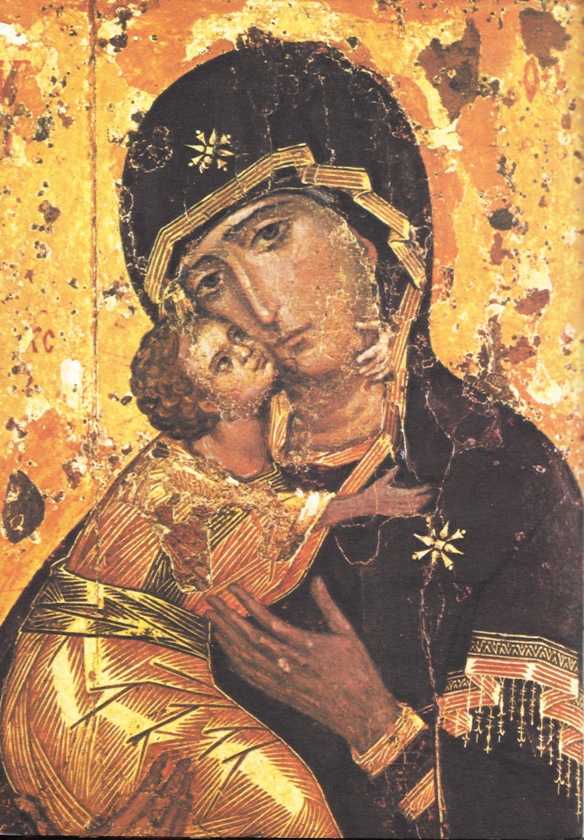
7)  Our Lady of Vladimir

Our Lady Of Vladimir is one of the more beautiful icons where Mary is shown with the Christ Child snuggling up to her, cheek to cheek, symbolizing the tenderness exchanged between Mother and Child.

It was first seen in Kiev in 1155 in the city of Vladimir. It became famous for miracles and was venerated as Russia’s most sacred image.

Several times, the invading Tartars were beaten back under its inspiration and it was carried to critical places in times of distress, the last being at the battlefront during World War I. Until the Russian revolutions, all the tsars were crowned and patriarchs installed in the presence of this image.

The latest representation of this icon also known as Theotokos, is found at the Tretyakov Gallery in Moscow. (A trivia: film producer Mel Gibson used a detail of the Virgin’s left eye and nose for his company’s Icon Productions).

The Russian calendar commemorates the feast of our Lady of Vladimir on 21 May.

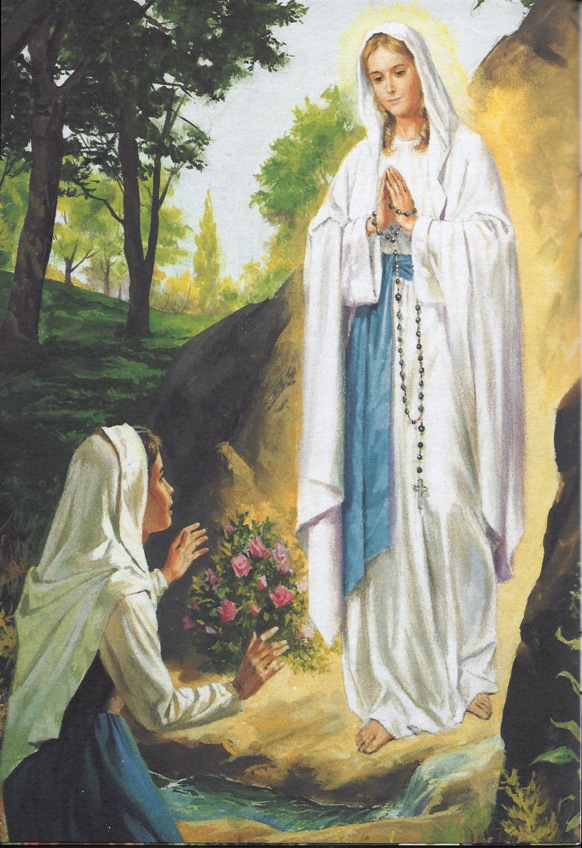
8)  Our Lady of Lourdes

Our Lady Of Lourdes, France: The Virgin appeared 18 times to a young girl named Bernadette Soubirous, in a cave on the edge of a mountain stream. On the ninth apparition, the Lady asked Bernadette to drink from a spring; none was visible so she scooped away sand at the back of the cave, knelt and drank of the water that welled up. The next day, a spring was flowing that produced abundant supply of water to this day. Mary asked for prayers and penance for the conversion of sinners. A chapel was built at the Grotto in 1862 fulfilling Mary’s request. Many miraculous cures were attributed to the spring water from Lourdes.

9) Our Lady of Lasalette

Our Lady of Lasalette, French Alps: On 19th September 1846, the feast day of Our Lady of Sorrows, the Virgin Mary appeared in a small village at LaSalette, located 1800 metres above sea level, about 35 kilometres from Grenoble in France. Melanie Calvat and Maximin Giraud were at the Mont sous-les-Baisses, urging four cows up the mountain, “Our cows were lying down placidly chewing cud,” she said. “Suddenly I saw a beautiful light, much brighter than the sun and felt full of tremendous wonder and respect. In that light I saw a very beautiful woman with her head resting in her hands. The lady stood up and said, ‘Come nearer children, do not be afraid, I am here to tell you great news.’ She looked very sad and had tears streaming down her cheeks. She folded her arms over her breast and said, ‘If My people do not obey God, I shall be forced to let go of My Son’s Hand.’ This statement points to the end of the world.

9a)  Weeping Lady of Lasalette in bronze

The children were moved by the Lady’s tears and her sad expression, “She asked for prayers to save the world, to confess our sins, turn away from our evil ways, and to do penance. She pointed out the great blessings and mercy of the holy rosary and begged us: ‘Be reconciled with God’.”

10a)  Close up of the Lady of Akita

Lady of Akita, Japan: The extraordinary events began on 12 June 1973 when a frail and deaf nun, Sister Agnes Katsuko Sasagawa, saw brilliant mysterious rays emanating suddenly from the tabernacle. Shortly afterwards, a cross-shaped wound appeared on Sister Agnes’ left hand that bled profusely and caused her much pain. When she was praying, Sister Agnes heard a voice coming from the 3-feet tall statue of the Blessed Virgin Mary in the chapel. (The statue was carved from a single block of wood from a Katsura tree). On the same day, a few of the sisters noticed drops of blood flowing from the statue’s right hand. On four occasions, this act of bleeding was repeated. The wound in the statue’s hand remained until 29 September, when it disappeared. The sisters noticed the statue had now begun to sweat on the forehead and neck.

In June 1988, Joseph Cardinal Ratzinger Prefect, Congregation for the Doctrine of the Faith (eventually elected as Pope Benedict XVI), declared that the apparition in Akita was reliable and worthy of belief.

The church of the Lady of Akita was built in typical Japanese design, with scented wood, sliding doors and green surroundings. In this idyllic setting, Father Jerry Orbos celebrated mass for our small group of pilgrims, “Do you remember the image of our Lady with her head slightly tilted to one side? That’s because one ear was listening to you while the other ear was attuned to God.” I thought it was nice to be reminded that our Lady calls each one of us her irreplaceable daughter (and son).

11)  Mary is crowned Queen of Heaven and Earth

In all the apparitions of the Virgin Mother, it is to be understood that the Virgin Mary is not God. “She has no power of her own, but she is (and always) the mother of the most powerful Person who ever walked the earth.” When she was assumed body and soul to heaven, she was crowned Queen of Heaven and Earth and of all Angels and Saints. Sometimes, she comes to earth as a heavenly messenger, sent by her Son.

“She brings no new messages, nothing that is not contained in the biblical teachings of her Son, Jesus. She calls on us to avoid sin, to repent and return to God.”

To our heavenly mother, we pray: Dearest Mama Mary, Strengthen our faith on the mercy and love of God and His promise of our own resurrection made possible by the precious blood that His Son, Christ Jesus spilled for us. Amen.

These are just a few of the known Marian apparitions. Online reference material was used for this article as well as the author’s personal notes. Some parts were lifted from an article originally published at Philippine Star

Categories
Articles CWL

CWL Inducts New Members

This slideshow requires JavaScript.

The Catholic Women’s League (CWL) inducted 4 new members: Mary Ann Cedo, Carla Lesaca, Beryl Lim and Jehan Rodriguez. Leading the ceremonies were CWL National President Amparo Lim and CWL-SSAP President J’net B. Zulueta together with the other members of the league. Fr. Baltazar ‘Tasang’ Obico, OFM presided over the induction ceremony.

Categories
Articles

Pope cautions against being envious or mean-spirited By Carol Glatz, Catholic News Service

untitled
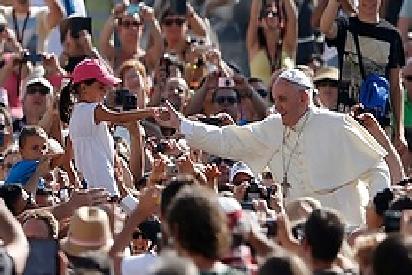
Pope Francis greets a girl before the general audience. (CNS photo/Paul Haring)

Envy, jealousy and meanness are human instincts, but they are not Christian, since the division they cause among believers is the work of the devil, Pope Francis said.

“Instead, God wants us to grow in the ability to come together, forgive each other and love each other in order to be ever more like him,” he said at his weekly general audience Aug. 27.

A strong breeze and temperatures around 80 degrees made it possible to move the weekly event from the indoor air-conditioned Vatican audience hall to St. Peter’s Square, where more than 12,000 people gathered for the pope’s catechesis and blessing.

The Creed describes the Catholic Church as being “one and holy,” the pope said, yet its members are sinners, who “experience, every day, their own fragility and wretchedness.”

“That’s why this faith we profess impels us toward conversion, to have the courage to live in unity and holiness every day,” he said.

“If we are not united, if we are not holy, it’s because we are not being faithful to Jesus,” who is the source of all unity and holiness, the pope said.

Divisions are manifested not only in schisms or major rifts among Christians; they also frequently occur on the local level, as “parochial sins,” in Catholic parishes, schools, communities and organizations, Pope Francis said.

“Sometimes, in fact, our parishes, which are called to be places of sharing and communion, are sadly marked by envy, jealousy, resentment.”

“This is human, but it is not Christian!” the pope said.

“How much gossip (goes on) in parishes,” the pope lamented. “We mustn’t do it! I won’t tell you to cut off your tongue. No. Not that. But do ask the Lord for the grace to not do it, all right?”

The refusal to gossip, in fact, is such an outstanding Christian virtue, it should make a person a saint overnight, the pope said.

He recalled the sterling reputation of an elderly woman who used to work in a parish in his former Archdiocese of Buenos Aires, Argentina.

People remembered her as someone who “‘never talked badly of others, never gossiped, was always with a smile.’ A woman like that can be canonized tomorrow! This is beautiful, this is a great example,” he said to applause.

Conflict arises when people judge others; look only at others’ defects, not their gifts; give more weight to differences than common ground; make themselves the top priority; and follow their own ambitions and points of view, he added.

“In a Christian community, division is one of the gravest of sins because it turns it into a sign not of God’s work, but of the devil, who, by definition, separates, ruins relationships and instills prejudice.”

The pope asked people to examine their consciences and sincerely repent “for all the times in which we caused division or misunderstanding in our communities.”

He asked people pray for the grace to better reflect the “beautiful and joyful” unity of Jesus and the Father, and the grace “to not talk badly about others, not criticize, not gossip, and to love each other.”

“This is the holiness of the church: in recognizing in each other the image of God,” who calls for continual conversion in everyone.

Despite the faults of his followers, “Jesus never leaves us by ourselves, he doesn’t abandon his church. He walks with us, understands us, our weaknesses, our sins and forgives us,” inspiring people to forgive each other, too.

Source: AmericanCatholic.org
Published: Thursday, August 28, 2014

Categories
Articles

Suicide Notes By Letty Jacinto-Lopez Originally published by Philippine Star

Robin Williams, who played the role of Genie in Aladdin,
died by suicide on August 11, 2014

The story of Anastasia: The daily news bared all the painful details of her death. She drank turpentine. It didn’t work. She slashed her wrist but the blade was not sharp enough to completely sever the veins. She made a lasso and tied the rope on the lone chandelier. With the aid of a chair, she stood right under the chandelier, wrapped the knot around her neck and made a quick leaping motion to destabilize the chair. She died after ten minutes. It was her third attempt. No one in her family suspected the torment she was going through. In the end, her only means of coping was to take her life.

The story of Dante: He was suffering from schizophrenia. His family tried everything to make him well. Hypnotism, group therapy, drugs, and the controversial and the cruelest of clinical procedures, the electric shock treatment.

He would come out of the treatment dazed, glassy-eyed and thirsty but calm and placid. This would be followed by good days when his mind seemed to bounce back to his creative, productive self. He could work. He was lucid. He could laugh, interact and be gentle with his wife and his son. He was again the man of the house. But as quick as it came, it would disappear and he would revert to a state of limbo where he could not form any opinion much less decipher one. That’s when sleep eluded him. He would throw the sleeping pills in frustration. The voices would come back and dominate him. They taunted, tormented and despised him. In the end, they became too much for him to bear. He put a gun in his mouth and shot himself. He suffered for 23 years.

The story of Adolfo: He was packing up to migrate. He saw an old, unlicensed gun in one of the top drawers and was surprised to see that it was hidden there all these years. He made up his mind to sell it but first he thought of giving it a good buff. Pulling out a polishing cloth, he rubbed it vigorously when suddenly the gun went off. It sounded like a thunderclap. He trembled uncontrollably at the thought that the gun was loaded. Whirling from the shock, he turned to his wife, Teresa, who was sleeping in their bed. Horror gripped him when he saw blood oozing from her head. His mind went blank. Another shot was heard and he fell lifeless on the floor.

Anastasia, Dante and Adolfo committed suicide. They were people we knew and in each tragedy, we saw the anguish etched in the faces of those they left behind.

How does one handle pain of this magnitude?

Anastasia’s mother was a mirror of sorrow. Being a pious and devoted Catholic, she only asked one question, “Would God take pity on my daughter and give her rest; will she see heaven?”

Dante’s family lived with the fear that he would someday take his own life. It was an ordeal his wife and son faced every day and when it finally happened, their spirits were so broken that there was nothing left to feel.

At the wake of Adolfo and his wife, Teresa, they were dressed in the same barong tagalog and piña gown they wore at their wedding. Even in death they were inseparable.

There was a time when suicide in the family was handled under a veil of darkness. We were not equipped to deal with death this way because we were more comfortable to follow a de kahon, well laid out and predictable life line: marriage, birth, milestones, sickness and lastly, death. A pat phrase like “she lived a good, long life” was easier to understand and accept.

In suicide, the family suffers double grief: Losing a loved one and coping with the cruel and baseless talks on the circumstances surrounding the death. Where will they find comfort? Who could throw some light into this dark abyss of grief?

At a recent memorial service, the priest seemed to shed some light on this mystery. He said, “We should not burden ourselves with the circumstances of how our beloved departed left their mortal bodies. It wouldn’t matter to God. What is important is He promised us the forgiveness of our sins and that someday, He will lift us up to our permanent home where there is no pain, no sorrow, only joy and clemency.” He went on to say that man has no control over the manner of his death. It could happen by accident, by a sudden and fatal heart attack, a prolonged suffering, even by violent death or suicide. While there will be those who would peacefully and easily give up the ghost, there will be those who would suffer until their last breath. The important thing is God’s promise that He will not abandon us. He closed his homily by urging the mourners to leave their dearly beloved in the hands of God. “There, he will be safe.”

I was clearly surprised and appeased by what the priest said. If we view death in this manner, it could ease the tension and remove the stigma associated with it. Painful questions could be laid to rest and more importantly, those left behind could find the road to forgiveness, healing and acceptance.

The next time you pray The Apostle’s Creed, pray slowly and reflect on each line. When you reach that part that says, “I believe in the forgiveness of sins, the resurrection of the body, and life everlasting.” Take it to heart and believe.

Postscript to Anastasia’s story: Palo Alto, California. Sixteen years had passed and one day, Anastasia’s mother ran excitedly to her husband, “Anastasia is in heaven!” “How do you know that?” asked her husband. She replied, “You know how I’ve never stopped praying to Mama Mary? This morning, I prayed again and I asked her to heal the pain that is in my heart. If Anastasia has been forgiven and is now with God, I asked Mama Mary to send me a sign: white roses and a dozen of them.”

That day, Anastasia’s mother went about her daily chores. While busy in the kitchen, the doorbell rang. “Can someone please get the door?” she yelled. No one responded so she rushed to open it with her mind still preoccupied with the boiling pot in the kitchen.

Before her stood an awkward, harassed young man scratching his head and stammering, “Madam, ah, I’m sorry to bother you. You will find this hard to believe but I am the delivery boy of the florist shop next to the town plaza. I found an extra order of long-stemmed roses in my van but I could not find the delivery receipt. This has been a particularly tiring, long and hot day; the roses will simply wilt if I returned them back to the shop. Can I give them to you for free?”

Anastasia’s mother was clearly in doubt. She asked, “Why did you ring my doorbell and not the other ones in the complex?” The boy answered, “Again, you won’t believe this but your door was the first one I saw and I thought, “Hey, who wouldn’t want to be surprised with flowers?’”

Still worrying about her pot of boiling stew, she smiled and opened her arms to accept the roses. Placing them down near the foyer, she rushed back to the kitchen to switch the flame to low. With her face all steamed up from the cooking pot, it suddenly occurred to her, “Wait a minute, did I just receive roses? Could this be a sign?”

She hesitated and thought, “Oh, but that’s impossible. I asked for white roses and they are definitely not in bloom this time of the year.”

Being convinced that she was probably getting excited over nothing, she began to ascend the stairs. She felt her heart skip a beat before it began to thump faster and faster. She turned on her heels and ran down to the foyer.

The bundle of flowers was there, still tied up with ruffia, in white cellophane with butterfly prints. Trembling now, she slowly unwrapped the package…the roses were white, all 12 pieces of them.

A Prayer When A Loved One Dies By Suicide
By Naomi Levy
(From her book entitled Talking to God, Alfred A. Knopf, New York, 2002)

Help me God. Give me strength to carry on. Heal my anger and shame. Ease the burden in my heart. Teach me to believe that I am not to blame. Lead me back to life and hope and joy. I know the pain became too much for him. Death was his only hope for release from his suffering. Life offered him no such promise, no relief.

Let him rest now, God. Free from all that haunted him. Peace, at last. Watch over him. Be his comfort. Grant him the serenity that he so longed for in life. Let his death be his healing. Amen.

Categories
Articles

Five Tips for Parishes from Pope Francis:

3Everything Pope Francis says is always so heartfelt, so quotable, so real. Reading through all of the speeches, homilies and messages that he gives is a real treat. If you don’t already, I recommend reading up on his activities at the Vatican website. Or check out news on Vatican Radio, News.Va or get the free Pope App.

Whatever way you choose to do it, it is worth reading Pope Francis’s direct words instead of getting what he says second-hand from the media. There are so many treasures, most of which are not filtered down to us through other news sources.

One such treasure is the words that Pope Francis has given us on parish life. He has real, applicable advice and it is based on his inspiring vision of a Church that goes out of itself, a Church that is missionary, a Church that is merciful and a Church that evangelizes, even in its everyday activities.

I thought I would share some of the gems I have found in my perusal of the Vatican web site.

1. DON’T Be Like A Custom’s Office:
Pope Francis is pretty clear in this, Jesus “instituted seven sacraments” it is not the place of the parish office to institute an eighth sacrament – “the sacrament of the pastoral customs office.” In other words, the parish office should not close doors for people.

And yet most of us can think of times when we have felt more like we are at the DMV rather than our parish office because of the way we were treated or the business-like approach that was used. Attitudes like this attempt to “control faith rather than facilitating it.” Instead, Pope Francis prays that “all who approach the Church find doors open to encounter Jesus’ love”.

2. DON’T Be Tarantulas:
Pope Francis says that when people go to their parish, they should feel like they are entering their mother’s home. He says, “Being parish secretary means opening the front door of the mother’s home, not closing it! And one can close the door in many ways. In Buenos Aires there was a famous parish secretary: they called her the “tarantula”… I’ll say no more! To know how to open the door in the moment: welcome and tenderness.”

3. DO Put Those Who Are “Distant” First:
I have often heard grumbling about families who only come to their parish for baptisms, weddings and funerals. These people are often treated like a last priority, but Pope Francis urges us to put those distant from the Church first. Why? Because we want these people to become regulars.

Pope Francis says, “It is about assuming missionary dynamism in order to reach everyone, putting first those who feel distant and the most vulnerable and forgotten people. It means opening the doors and letting Jesus go forth. Many times we keep Jesus closed inside the parishes with us, and we do not go out and we do not let Him leave! Open the doors so He can go out, at least Him! It is about a Church which “goes forth”: a Church which always goes forth.”

4. DO Get the Laity Involved:
Pope Francis is pretty clear on this, the laity need to be involved in their parishes. Parishes do not belong to priests or to the parish office, they belong to everyone. This is why parishes need laity on councils, advising and helping in the running of everyday matters. In fact, Pope Francis very sternly has said that “a parish that does not have a pastoral Council and a Finance Council, is not a good parish: it lacks life.”

5. DON’T Gossip Or Cause Division:
If only our parishes were exempt from ordinary, sinful human behavior. Alas, they are not. But we can examine our part in making a parish a place of unity and communion or creating division.

Pope Francis urges us, “Let each one ask him- or herself today ‘do I increase harmony in my family, in my parish, in my community or am I a gossip. Am I a cause of division or embarrassment? . . . Gossip does harm! Gossip wounds. Before Christians open their mouths to gossip, they should bite their tongue! To bite one’s tongue: this does us good because the tongue swells and can no longer speak, cannot gossip. Am I humble enough to patiently stitch up, through sacrifice, the open wounds in communion?’”

– See more at: http://www.ignitumtoday.com/2014/08/02/5-pieces-advice-parishes-pope-francis/#sthash.VehrK8s2.dpuf

Categories
Articles

Pope Francis Reveals 10 Secrets to Happiness

8Pope Francis has offered several tips for finding happiness in life.

During his conversation with Argentinian weekly “Viva” to commemorate the anniversary of his early pontificate, the 77-year-old pope of the Catholic Church said that one should let everyone be themselves and it’s the first step peace and happiness, the Huffington Post reported.

He said that people should give themselves tirelessly to others, and if one gets tired, one runs the risk of being egoistic and stagnant water is the first to be corrupted and people should also walk softly.

According to Pope Francis, one should be available to their kids and family, and even though consumerism has led to the anxiety of losing, which has pushed people to spend less time at home and more time pursuing wealth, people should invest more time in “healthy leisure”.

He added that people should spend their Sundays or any other day of rest with their family, work toward empowering young people, care for the environment, move on after negative experiences, respect others’ opinions and actively strive for peace.Washington, Aug 4 (ANI)

Categories
Articles Random Thoughts by Peachy Maramba

RANDOM THOUGHTS: Voices from yesterday and today . . .by Peachy Maramba

Our Family Prayer to St. Anthony of Padua

Dear Saint Anthony, hear the prayer, which I offer you for my family and for the Great Family of those devoted to you throughout the world.

Intercede for each one of us and obtain the blessings of heaven upon our labours. Help us in our moment of weakness. Be our defense against sickness and dangers of body and soul; support us in the sufferings and trials, which God in His Wisdom deems fit to send us. Allow us not to falter in our Faith. Obtain for us from the Lord goodness of heart so that we may share God’s bounty with the poor and suffering.

Hear our prayers, oh Saint of Wonders respond favorably to the trust we place in your powerful intercession before God. Amen.

Design a site like this with WordPress.com
Get started