Categories
Photo Gallery Special Events

Francisfest with David Benoit Photo Gallery

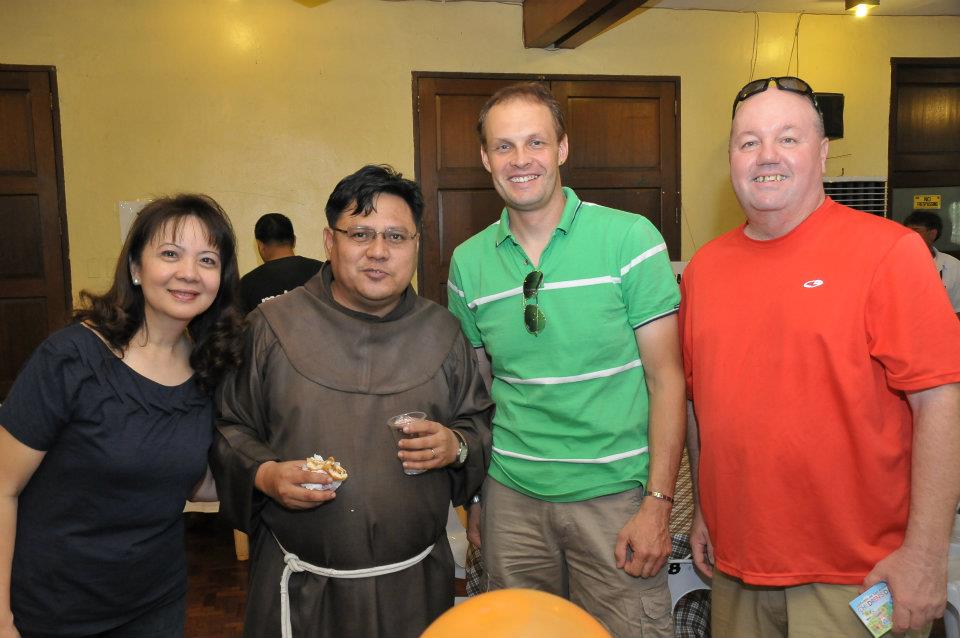
Welcome dinner thrown by Francisfest Committee Chairperson, Petrona Lim on October 2, 2012

This slideshow requires JavaScript.

CONCERT NIGHT at Resorts World Manila, Oct. 3, 2012

This slideshow requires JavaScript.

OH, WHAT A NIGHT!
FRANCISFEST with DAVID BENOIT

“Francisfest with David Benoit” Concert was held at the Newport Performance Art Theater in Resorts World Manila, October 3, 2012, where a sumptuous buffet of appetizers, salad, sushi, pasta, pizza, chicken barbecue, cheesecake, welcomed the VIP and Premium ticket holders at the reception hall, before the show.

Retro band, Mulatto, opened the show with some popular 70s and 80s favorites with crooner, Thor, rendering James Ingram’s, “There’s Just No Easy Way” to set the mood for the night. It was followed by PPC President and Producer of the Concert, Mike Limpe, who gave a welcome speech, thanking everyone who came and the generous support of the sponsors. Then, Santuario de San Antonio’s Parish Priest, Fr. Joel Sulse, OFM, gave a short background on the life of St. Francis and to say the opening prayer while Chairperson of the Francisfest 2012 Committee, Petrona Lim, briefly spoke about the beneficiaries of SSAP Foundation, who would gain so much with the help of the Francisfest.

Just when the main show was about to begin, the 1,340 people in the audience were not aware that the star of the show was suddenly pulled out, backstage, to have a meet and greet with the President of the Philippines. President Aquino, who was viewing the show from a private box, above the Theater, was not sure he could stay throughout the show and wanted to make sure he meets David Benoit, personally. Mr. Benoit felt very privileged that he lost track of how much time he was chatting with the President. So Director/Producer, Doy Bitanga, had to get the escorts to bring him back on stage.

The jazz pianist was still abit flustered when he came on stage. Once he started playing the piano, the delay was all forgotten. Benoit made it an intimate evening, humbly confiding to the audience about the tough selection of songs chosen by the Director/Producer, which he hadn’t been asked to play, live, before. Afterall, he has recorded 500 songs in his career of 35 years. Once he got himself warmed up on the piano, the audience can feel his excitement building up with the rest of the songs, jumping from his seat a few times and even dancing while playing the synthesizer.

Saxophone player, Michael Paulo, also wowed the audience. 2 of the 20 songs Benoit performed, “Chichi’s Eyes” and “Rainbows” were accompanied by a ballet dance, performed beautifully by 7 of ACTS Manila’s best dancers, choreographed by their directress, Chelo Gemina. 4 of the songs were performed with the lead vocals of Mulatto, Joey Bautista, Anna Jomeo and Jonathan Tamayo, individually, while 1 was performed with Thor. Migi Domingo lent his voice to do the voice-over for the night. It was a show like no other! It sure was a night to remember.

FRANCISFEST is the annual fund raising event of Santuario de San Antonio Parish. Beneficiaries of this event funds the different programs and projects of the Parish Foundation like PGH and Rizal Medical Hospital Ministry, the educational scholarship program of SSAPF, the poor and elderly amongst the little Friends of St. Francis in the Friendship Home and Friends of St. Anthony in our parish and the Prison Ministry.

Our deepest gratitude to all who supported this event!

Categories
Parish Bulletin Pastoral Team

Hallelujah by Fr. John Muscat, OFM

The greatest joy we can have is to encounter the living Lord and to know him personally.

Early Sunday morning the women went to the tomb to pay their last tribute to a dead body. The disciples thought that everything had ended in tragedy. No one was ready to see an empty tomb and hear the angel’s message, “Why do you seek the living among the dead”?(Luke 24:5) Mary Magdalene is the first to report the startling news of the empty tomb! She assumed that Jesus’ body had been stolen! She was not yet prepared to meet the risen Lord, who would reveal himself to her while she later lingered in the garden near the tomb (John 20:11-18).

What is the significance of the stone being rolled away? It would have taken several people to roll away such a stone. And besides, the sealed tomb had been guarded by soldiers! This is clearly the first sign of the resurrection . Peter Chrysologus, Church father, remarked: “To behold the resurrection, the stone must first be rolled away from our hearts”. It is significant that the disciples had to first deal with the empty tomb before they could come to grips with the fact that scripture had foretold that Jesus would die for our sins and then rise triumphant. They disbelieved until they saw the empty tomb.

John, the beloved disciple of Jesus, wrote his gospel as an eye-witness of the Word of God, who became flesh and dwelt among us, and who died and rose for our salvation. John was the only apostle, along with the women who stood with Jesus at the foot of the cross, who witnessed Jesus’ death on Good Friday. Now John is the first of the apostles, along with Peter, to see the empty tomb on Easter Sunday morning, after the women returned and gave their report. What did John see in the tomb that led him to believe in the resurrection
of Jesus? It was certainly not a dead body. The dead body of Jesus would have disproven the resurrection and made his death a tragic conclusion to a glorious career as a great teacher and miracle worker. When John saw the empty tomb, he must have recalled Jesus’ prophecy that he would rise again after three days. Through the gift of faith John realized that no tomb on earth could contain the Lord and giver of life.

John in his first epistle testifies: What we have seen, heard, and touched we proclaim as the word of life which existed “from the beginning” (l John 1:1-4). John bears witness to what has existed from all eternity. This “word of life” is Jesus the word incarnate, but also Jesus as the word announced by the prophets and Jesus the word now preached throughout the Christian Church for all ages to come. One thing is certain, if Jesus had not risen from the dead and appeared to his disciples, we would never have heard of him. Nothing else could have changed sad and despairing men and women into people radiant with joy and courage. The reality of the resurrection is the central fact of the Christian faith. Through the gift of the Holy Spirit, the Lord gives us “eyes of faith” to know him and the power of his resurrection. The greatest joy we can have is to encounter the living Lord and to know him personally. Do you celebrate the feast of Easter with joy and thanksgiving for the victory which Jesus has won for you over sin and death?

“Lord Jesus Christ, you have triumphed over the grave and you have won new life for us. Give me the eyes of faith to see you in your glory. Help me to draw near to you and to grow in the knowledge of your great love and victory over sin and death.”

published April 8, 2012 Parish Bulletin
More on Fr. John and his reflections

Categories
Parish Bulletin Pastoral Team

“ Child, your sins are forgiven” by Fr. Jesus

Today’s gospel discloses something more about Jesus: he is not only a healer of bodies; he is the “Son of Man, “with power to heal the soul.

If a person who knows nothing about Jesus Christ read the gospels of the last four Sundays, he would most probably think that Jesus was a doctor or a faith healer by profession. For the fourth consecutive Sunday now, we read a gospel story about Jesus’ healing activity. First, it was a possessed man in the synagogue of Capernaum; then, it was Simon’s mother-in-law and many others that he cured; last Sunday it was a leper whom Jesus touched and healed; and today, it is a paralytic that he cures. Today’s gospel discloses something more about Jesus: he is not only a healer of bodies; he is the “SON of Man,” with power to heal the soul.

The Church does not tire telling us that healing was the most important part of Jesus’ ministry, by which he not only showed his love and compassion, but also revealed that God’s kingdom had come and that Satan’s kingdom was on the way out: “The kingdom of God is at hand.

At first, today’s gospel story elicits a smile of amusement. Try to visualize the scene: Four men carry a paralyzed man on a stretcher. Unable to get near Jesus due to the crowd, but determined to do so, they dismantle the roof and lower the stretcher right in front of Jesus. But then, amusement gives way to admiration for the paralytic and his four friends. We admire, above all, their faith. In fact, that’s the first thing Jesus saw-not the hole on the roof: “When Jesus saw their faith … “ They were fully convinced that Jesus could, and would, do something about their plight, that he would not let them down. And he did not.

Then comes the big surprise. After all the trouble they went through to bring the paralytic right before Jesus, hoping for a cure, Jesus, instead of telling the man, “Take your mat and walk,” he tells him, “Child, your sins are forgiven.” We can imagine the expression of surprise and disappointment written on the face of the paralytic and his friends, as if they wanted to say, “Sir, that’s not what we came here for. We want this man to walk again!”

Now, here is a good point for our reflection. Like the paralytic, we very often ask the wrong favors from the Lord: a safe trip, good health, success in business or in exams, and the like–all material concerns. We fail to see our deeper needs, our spiritual paralysis, and our need for spiritual healing. Jesus knows our needs better than we do ourselves. And he offers more than we ask for– complete healing of body and soul.

The Church carries on the healing ministry of Jesus–of both body and soul. Jesus endowed the Church with two sacraments of healing, namely, reconciliation and anointing of the sick. Through the sacrament of reconciliation, the wounds of our soul, inflicted by sin, are cured. Like the paralytic, we hear Jesus telling us, “Child, your sins are forgiven.” Through the sacrament of anointing we are strengthened both in body and spirit.

Unfortunately, these two sacraments are now in crisis and are not duly appreciated. As for the sacrament of reconciliation, many Catholics, influenced by fundamentalists or born-again Christians, prefer to confess directly to God, rather than to a priest. Thus they deprive themselves of the great joy of hearing Jesus’ words, “Child, your sins are forgiven.” As for the sacrament of anointing, many Catholics believe that it is meant only for those who are on the brink of death–like a gentle push into eternity; hence they postpone its reception until the sick person slips into unconsciousness, thus rendering the sacrament next to useless.

This coming Wednesday, February 22, the Lenten season will start; it is a time to renew our faith and to strengthen our relationship with the Lord. Hopefully we will come to rediscover and to experience his presence and healing power in these sacraments.

published February 19, 2012 Parish Bulletin

Categories
Parish Bulletin Pastoral Team

“Discipleship is Following Jesus on the Way of the Cross ( Mk 8: 27-35)” by Fr. Joel

The prophet Isaiah tells us that a true follower of God is a servant. A servant is a son or a daughter of God who works in accord to His ways.

The context of the gospel this Sunday is on the thematic teaching of Jesus on his suffering through the way of the cross. It is structured through the Paschal Mystery, that is the Passion, Death and Resurrection that He, Himself will experience. Jesus made the prediction in all these happenings in His life but He was misunderstood by the disciples. In the end, He corrected their misunderstandings by offering them an option for living.

Who do people say that I am? (v. 27) This query of Jesus to his disciples about the impression of people about Him is His way on testing and evaluating their faith in Him. While He is interested on what the beneficiaries of His word will tell about Him, it is a strong reminder and an evaluation too on the part of the disciples as regards their responsibility in assisting Jesus in the missionary task in spreading the Good News. Have we ever thought in reading the bible and sharing His words to others? Other denominations in Christian faith has strong inclinations in this, thus, they continue to immerse themselves in the Word of God.

But who do you say that I am? (v.29) The shift in Jesus’ query is highly noticeable. This time he goes personal, “But who do you say that I am?” He is like saying “How much have you known me? Do you really know my mission? Do you know the reason why I call you? Is your life consistent to the witnessing I show you? Jesus is giving his disciples here a guided retreat in order to help them know Him more and help them understand the true value in following his way of life, that is, the essence of His Paschal Mystery. Peter had the best reflection when he answered “You are the Messiah!”. And Jesus affirmed him in his answer for truly, it is the Father who revealed it to him. And since His time has not yet come, He ordered them not to tell anyone who he is.

Get behind me Satan, for thou dost not mind the things of God, but those of men. (v. 33) A great shift happened in this part of the dialogue. It was a shift from Peter’s affirmation of Jesus as the Messiah which by authority, he was given the keys of heaven BUT after a minute of conversation, he was exorcising the presence of Satan in Peter. Jesus reminds us of the vulnerability of the human person especially those in authority. Thus, constant discernment is very must but the challenge is for all on how we can be mindful of our words and actions.

“If anyone wishes to come after me, let him deny himself, and take up his cross, and follow me. (v. 34) This verse summarizes on the desire of Jesus on how we can wholeheartedly share on the mission entrusted to Him by the Father. It is through this way of life that a disciple of Jesus can truly embrace and lived with meaning the value in following his footsteps.

St. Francis made this as the rallying point in his life. He humbled himself and accepted in total authenticity the way of life of Jesus. (This became the spiritual vision of Francis-the love of the passion aside from the humility of Incarnation.) Having embraced the same, He received the Stigmata in Mt. Alverna, the holy wounds that Jesus received in the Calvary, imprinted in his body. For Jesus, true discipleship is taking up His cross. And everything in us follows.

So what should be the way of life of an authentic disciple of Jesus?
The prophet Isaiah tells us that a true follower of God is a servant. A servant is a son or a daughter of God who works in accord to His ways. The Letter of James reminded us on the importance of faith in action when he said: “Say to whoever challenges you, “Have faith and I have good deeds; show me your faith apart from actions and I, for my part, will show you my faith in the way I act.” (V.18)

In the most recently concluded 12th Franciscan Pastoral Conference in Baguio City H.E. Most Rev. Renato Mayubga,D.D. challenged the Franciscan friars and lay leaders on the importance in knowing Jesus through the Bible, the only source that gives on the ministerial life of Jesus. He said that for us Catholics, we value the Word of God and the Tradition of our Church, taking into consideration as well the saints and the Saints in our Church. He believes and affirms the faithful in their profound experiences of concretizing the Word of God. But he dare say that it will become all the more inspiring and meaningful if we read and study His Word, deepen it in our day to day life through our constant witnessing, and keeping Him in our mind and in our hearts through our faith.”

As we celebrate the National Laity Week this September 23 to 29 with the theme: “Building Up the Body of Christ and Strengthening our Faith through New Evangelization” and honoring San Lorenzo Ruiz and Blessed Pedro Calungsod, Patron Saints of the Catholic Laity of the Philippines, let us follow them as they themselves followed Jesus on the Way of the Cross. The mark of the true disciple is on how one finds meaning in the midst of suffering because it is only through the Passion and Death that one will experience the Resurrection.

published on September 16, 2012 Parish Bulletin

Categories
Parish Bulletin Pastoral Team

“Give Us This Bread Always” by Fr. Jesus

They were looking for him, not because of their faith and love for him but because he fed them. (We might pause right here for a while to reflect on our own motivation in following Jesus, in coming to mass, in joining church activities, etc.)

For five consecutive Sundays, we will be reading almost in its entirety chapter 6 of the Gospel of John which deals with the holy Eucharist. (This insertion of John 6 is done because Mark’s gospel is too short to cover all the Sundays of Year B). Last Sunday, we heard the account of the feeding of five thousand men with only five barley loaves and two dry fish. Today’s gospel tells us how Jesus, after feeding the crowd, masterfully led the people from seeking material bread to the bread of life. Let’s do a little text analysis.

The people began by asking Jesus, “Rabbi, when did you come here?” Perhaps they were surprised to see that he had left them so soon after feeding them. Jesus ignored their question-a mere curiosity-and went straight into the heart of the matter: “Amen, amen, I say to you, you are looking for me not because you saw signs but because you ate the loaves and were filled.” Right off, Jesus tells them to their face that their motivation in following him was tainted with selfishness. They were looking for him, not because of their faith and love for him but because he fed them. (We might pause right here for a while to reflect on our own motivation in following Jesus, in coming to mass, in joining church activities, etc.)

Then comes an invitation: “Do not work for food that perishes but for the food that endures to eternal life.” This is the turning point in the gospel story. Jesus begins to speak of another kind of food, one that does not grow stale but rather endures for ever-for eternal life. This means that there must be another kind of hunger which only that bread can satisfy. At once, that deeper hunger begins to surface in the people’s mind as they ask: “What can we do to accomplish the works of God?” How quickly has Jesus changed the people’s outlook!

Now that he has brought the people’s attention away from material
food unto the things of God, Jesus goes on to impart his intended instruction on “the bread which comes down from heaven and gives life to the world.” It doesn’t take long for him to convince the crowd. At once the people express their newly-felt hunger for the newlyfound bread: “SIR, GIVE US THIS BREAD ALWAYS.” What a wonderful catechist Jesus was. Step by step, he prepared the people to listen to his most startling revelation: “I am the bread of life; whoever comes to me will never hunger and whoever believes in me will never thirst.”From a simple hi-hello to the discovery of the life-giving bread.

Unfortunately, the gospel story does not end on this happy note. Succeeding events will show that the people’s interest in and hunger for the living bread were more apparent than real, as we will see in the forthcoming Sundays. For the moment, however, let us reflect on today’s gospel passage.

There is no denying that physical hunger is a serious problem in the world, aggravated by the current global economic crisis and by the relentless increase of the price of prime commodities. Attached to this reflection is a chart showing some figures on the extent of the problem of hunger in the world. Keeping a printed copy of that chart posted near our dining table might easily arouse in us a sense of gratitude to the Lord for the food set before us-of which millions of people are deprived. As followers of Christ we must do our very best to alleviate, if not to overcome, this problem.

At the same time we must realize that there are deeper and more important kinds of hunger being felt by the people, such as hunger for justice, for peace, for freedom, for equality, for respect and for acceptance. And, yes, hunger for God. These forms of hunger, perhaps more subtle but in no way less real, must be addressed too. We who feed regularly on the living bread of Christ’s body must commit ourselves to become bearers of life and hope to others.

The world hunger problem:
Facts, figures and statistics

• In the Asian, African and Latin American countries, well over 500 million people are living in what the World Bank has called “absolute poverty”
• Every year 15 million children die of hunger For the price of one missile, a school full of hungry children could eat lunch every day for 5 years
• The World Health Organization estimates that one-third of the world is wellfed, one-third is under-fed one-third is starving- Since you’ve entered this site at least 200 people have died of starvation. Over 4 million will die this year.
• One in twelve people worldwide is malnourished, including 160 million children under the age of 5. United Nations Food and agriculture
• The Indian subcontinent has nearly half the world’s hungry people. Africa and the rest of Asia together have approximately 40%, and the remaining hungry people are found in Latin America and other parts of the world. Hunger in Global Economy
• Nearly one in four people, 1.3 billion – a majority of humanity – live on less than $1 per day, while the world’s 358 billionaires have assets exceeding the combined annual incomes of countries with 45 percent of the world’s people.
UNICEF
• 3 billion people in the world today struggle to survive on US$2/day.
In the U.S. hunger and race are related. In 1991 46% of African-American children were chronically hungry, and 40% of Latino children were chronically hungry compared to 16% of white children.
• The infant mortality rate is closely linked to inadequate nutrition among pregnant women. The U.S. ranks 23rd among industrial nations in infant mortality. African-American infants die at nearly twice the rate of white infants.
• One out of every eight children under the age of twelve in the U.S. goes to bed hungry every night.
• Half of all children under five years of age in South Asia and one third of those in sub-Saharan Africa are malnourished.
• In 1997 alone, the lives of at least 300,000 young children were saved by vitamin A supplementation programmes in developing countries.
• Malnutrition is implicated in more than half of all child deaths worldwide – a proportion unmatched by any infectious disease since the Black Death
• About 183 million children weigh less than they should for their age
• To satisfy the world’s sanitation and food requirements would cost only US$13 billion- what the people of the United States and the European Union spend on perfume each year.
• The assets of the world’s three richest men are more than the combined GNP of all the least developed countries on the planet.
• Every 3.6 seconds someone dies of hunger
• It is estimated that some 800 million people in the world suffer from hunger and malnutrition, about 100 times as many as those who actually die from it each year.

as published on August 5, 2012 Parish Bulletin

Categories
Parish Bulletin Pastoral Team

Parables of the Two Seeds by Fr. Greg Redoblado, OFM

Everything belongs to God, “the giver of growth and the sole determiner of the time for harvest.”

We have two seed parables in our Gospel today. The first is about the seed growing secretly and the second is about the mustard seed, a tiny seed that can grow big. Both are parables that speak to us about the Reign-Kingdom of God. In the first parable, the role of the farmer is apparently disregarded. In fact, it speaks of the farmer sleeping and rising only while the seeds grow and bear fruit. This is a wholesome reminder that the final fulfillment of God’s reign is not based on human effort but on God alone. We are simply instruments of God’s liberating work and mission.

Sometimes, there is a tendency in many of us pastors and die-hard Catholics to work hard, making one project after another, building communities, doing pastoral and evangelizing activities, involving ourselves with charitable concerns and many others. In so doing, we forget that this is not our mission, but that we are only sharers of God’s mission in the establishment of His reign. It is not about our activities, our successes and/or failures – everything belongs to God, “the giver of growth and the sole determiner of the time for harvest.”

This is also a real comfort to us, who work so hard for the establishment of the reign of justice, peace and love. We are all simply to put our trust in the Lord. Yes, we have to do and give the best we can but let us also leave the rest to the hands of God. In seeming hopeless situations, where we feel we are still in the dark tunnel, this Gospel parable is good news to us. God will never leave us or give up on us. As in the first reading from Ezekiel, He assures us with this words: “…I will make the withered tree bloom…I, the Lord, have spoken, so will I do.”

The second parable is about the mustard seed, one of the smallest seeds but when sown and grown, it can become the largest of all plants where birds of the sky can take shade on.

This parable reminds us of God’s way of lowliness and humility. Jesus came into this world but the world did not recognize Him. He was insignificant. He was nobody. He came to the world in the most ordinary of circumstances. But in such ordinariness, we see the greatness of His heart. This is the reign-kingdom of God. It is not
about power and control. It is not about grandeur and fanfare but the way of the heart.

God calls us into His Reign of love. Let us turn our hearts towards the Lord and so His reign will reign in the hearts of all. God calls us to littleness – to personal conversion and the transformation of our lives. As Jesus said himself, “No one can enter the kingdom of God unless we become like children” – lowly and humble of heart. Indeed, members of God’s reign are those whose hearts are lowly like
children.

We are also invited by this Gospel to discover God in His ordinariness. Sometimes, we look for him in the most ordinary of human experiences. We desire to find something grand and magical. We want to see apparitions and we want the sun to dance, but God tells us that in the mustard seed, we can see Him. Yes, we can find the Lord in our family, in our children, in our neighbors, in the poor and the neglected. Yes, we can find the Lord in the most ordinary of human experiences.

as published on June 17, 2012 Parish Bulletin
About Fr. Greg and a few of his Reflections

Categories
Parish Bulletin Pastoral Team

Ephphatah! by Fr. Greg Redoblado, OFM

God’s love is open to all, so that even the deaf may be able to hear his words and then proclaim aloud his deeds of healing and compassion.

Allow me just to dwell on the following observations on some interesting details in the Gospel-story of the healing of the deaf-mute man. From these observations, we can also bring out our reflections:

First, the healing happened in Tyre, a largely pagan territory north east of Ancient Israel, presently, a part of Lebanon. It is presumed that the deaf and mute is a non-Jew but Jesus, without commenting, opened his ears and made him speak. God’s love is open to all, so that even the deaf may be able to hear his words and then proclaim aloud his deeds of healing and compassion. We find in our second reading from James that he criticized the Christians, who discriminate against the poor who comes in their community prayers. The Gospel fittingly reminds this people that if Jesus embraces the Gentiles, then we should show no partiality for anyone but love them just the same.

Another detail is that Jesus did a lot of acts before healing the deaf and mute person. Greco-Roman stories of healing may include these elements. Jesus by doing these rituals somehow adapted himself to the culture of the people he was with: He took him off by himself away from the crowd; he put his finger into the man’s ears and, spitting, touched his tongue and looked up to heaven and groaned, and said, “Ephphatah!” (Be opened). I believe this also highlights the human touch and loving kindness of Jesus. He was very personal by taking the man off by himself. The blind man was considered special in spite of being also a pagan. He was not just one among the many who were sick but was treated with kindness. The human touch reminds us of the very act of the incarnation – God’s love made real in the person of Jesus. But, it was by the finger of God that Jesus healed the deaf and mute.

A final detail is the role of the nameless crowd, who brought the deaf and mute to Jesus. They too were pagans but they believed in the healing power of Jesus. They were courageous enough in the midst of unbelieving people to persist in their desire to help the deaf and mute to recover his hearing and speech. After the healing, they also announced the good news of Jesus’s loving kindness and healing, in spite of being warned not to do so. They even affirmed that “Jesus has done everything well”. The nameless crowd refers to the new Church who has heard loudly of God’s marvelous deeds and proclaimed with joy and fervor his healing words.

The deaf speaks about us, who do not want to listen to God’s challenging invitations and call to conversion and the mute in us, is our forgetfulness of God’s love and goodness in our midst. The deaf and mute in our Gospel must have been overwhelmed with joy. Hearing and speaking are primary senses for communication and being healed of such affliction is but happiness beyond measure. In today’s culture of an accelerated level of communication, how terrible it is to be deaf and mute.

Let us then ask God to heal us from spiritual deafness and dumbness. In most cases, we listen and speak only when it is convenient. We shut our ears out when something we hear is a truth that hurts. We close our mouth when the message we proclaim, even if it is true,will put us in danger. Let us therefore groan and pray, Ephphatah so that we may be open and free from fear that paralyzes. Let us open our hearts for all humanity and free ourselves from all kinds of discrimination and exclusion. Let us open our ears to hear and be overwhelmed by God’s superabundant love, so that like the deaf-mute and the crowd, who were astounded by God’s healing love, we may fearlessly and joyfully proclaim His word to all nations!

as posted on September 9, 2012 Parish Bulletin
About Fr. Greg and a few of his Reflections

Categories
Articles Pastoral Team

“Honoring God with the Heart”, by Fr. Jesus

In today’s gospel, Jesus argues with the Pharisees and the scribes, inviting them to look beyond the letter of the law and to discover the spirit of the law. He explains to them, and to us too, that true religion does not consist in the mere performance of external rituals and external cleanliness; rather it is a matter of internal righteousness. Having clean hands and clean attire is fine; but it is by far more important to have a clean heart.

A newly-installed bishop who held a doctorate in Canon Law gave his first talk to the priests of his diocese. He told them: “From now on, this diocese will be ruled by Canon Law.” An old priest who was hard of hearing leaned towards a younger priest sitting beside him and asked, “What did he say?” Raising his voice for everybody to hear, the priest replied, “The bishop says that henceforth this diocese will be ruined by Canon Law.”

Rules and laws are good and helpful so long as they remain a means to achieve an end. Once they become ends in themselves, laws and rules can indeed ruin people. And that is precisely what happened to the Scribes and the Pharisees: They turned rules and traditions into absolutes–to be observed blindly, no matter what. For them, religion consisted in faithful and blind compliance with the letter of the law.

In today’s gospel, Jesus argues with the Pharisees and the scribes, inviting them to look beyond the letter of the law and to discover the spirit of the law. He explains to them, and to us too, that true religion does not consist in the mere performance of external rituals and external cleanliness; rather it is a matter of internal righteousness. Having clean hands and clean attire is fine; but it is by far more important to have a clean heart.

Jesus often berated the scribes and Pharisees because of their superficiality, that is, for remaining at the level of externals. He called them “whitened sepulchers,” clean on the outside but full of rottenness within. In today’s gospel, he applies to them the words of prophet Isaiah 29:13: “This people honors me with their lips but their hearts are far from me.”

These words of prophet Isaiah invite us all to do some soul-searching. Are we not in many respects like the Scribes and Pharisees? Our religion is a Sunday morning affair. Once we are done with our Sunday “obligation,” we go back to do our own thing. There is a story about some hold-uppers preying on bus passengers. While they were divesting the passengers of their valuables, the bus passed in front of a church; when the hold-uppers saw it, they made the sign of the cross.

Our celebration of the sacraments, especially weddings, has become a mere social affair, a fashion show of sorts, rather than an encounter with the Lord. The Church is much to blame for allowing this to happen. We bless our new homes, of course, but then we turn them into a venue for holding mahjong sessions or drinking sprees. We bless our new car, but then we show no respect for traffic rules. We have endless superstitions, particularly those connected with the dead; for instance, when bringing their remains to the church for blessing, we argue about which should go first, feet or head; and yet, when they were alive, we never encouraged them to go to church.

We could go on and on listing the inconsistencies of our so-called “split-level Christianity” that cause some people to ask: How come our country, the only Catholic country in Asia, is so full of graft and corruption, violence, scandals, pornography, drug addiction, etc.? Obviously, because our religious practices remain at the level of externals and have no bearing on our life and values. “This people honors me with their lips, but their hearts are far from me.”

May these words of Jesus help us realize that true religion consists, not in the performance of certain external rituals but, above all, in forging a personal relationship with the Lord—one that shapes and permeates our core values and our behavior, our personal as well as our professional undertakings.

Categories
Articles Pastoral Team

“Lord, to Whom Shall We Go? You have the Words of Eternal Life”, by Fr. John

A true Christian, who realizes and appreciates what the Son of God has done and is still doing for him, will try always to make himself less unworthy, for not even the greatest saint was worthy to partake of this act of divine love.

Last Sunday we read of the murmurs of objection among the multitude,
the ordinary people. “How could this man,” they had said, “give us his flesh to eat?” They looked on him as a man who was promising to give them his human flesh, as it then was, to eat. “Who could accept this?”, they asked. Christ did not explain, he simply went on to demand “faith in his word.” He had come down from heaven, he was more than mere man, he had the words of eternal life.

Today we read of objectors among his “disciples,” the outer band of followers who had been continually with him for sometime now. They were a group distinct from the Apostles. Their reason for objecting was the same as that of the multitude – they thought he was a mere man. He knew of their lack of faith and told them so: “some of you do not believe,” but he made no attempt to remove this obstacle. He simply referred again to his divine origin and the divine knowledge he possessed.

The “disciples”, who murmured, evidently saw nothing but a man in Christ. It was very natural, therefore, what they could not accept his saying that they should eat his body and drink his blood. Thus, it seems most probable that when Christ says they lacked “faith,” he had given them sufficient proofs that he was more than a man. These individuals among the disciples, however, refused to open their minds to these proofs, therein was their guilt. Their minds were earth-bound and were determined to remain earth-bound. Faith is a gift of the Father, as Christ says to those disciples: “no one can
come to me unless it is granted him by the Father,” but the Father has offered them this gift and they have refused to accept it, otherwise they would not be guilty.

No one who accepts Christ for what he is, the Son of God in human
form, has any difficulty in believing that he left us himself in the Eucharist as a sacrifice and a sacrament. This does not mean that we understand this gift of Christ in all its details. It was an act of divine power and as such beyond full human comprehension. However, we can understand enough about the actuality of the Eucharist because we accept the words of Christ, who “has the words of eternal life,” even though its innermost nature escapes us. We are doing no violence to our intelligence when we accept as fact from a trustworthy witness, what we cannot prove or confirm for ourselves.
No more trustworthy witness than Christ ever existed. In Galilee he
promised to give his body and blood—in the Eucharist—to be our spiritual nourishment—communion—and our means of offering an absolutely pleasing sacrifice to God every time his body and blood are made present by the words of his ordained ministers.

He fulfilled that promise at the Last Supper. He gave to his Apostles and their successors the power to repeat this act of divine love when he said, “Do this in memory of me.” When Simon Peter answered Christ’s challenge—”will you too go away?”—he spoke not only for his fellow-Apostles that day with, “Lord to whom shall we go? You have the words of eternal life,” but for all Christians who really believe that Christ was the incarnate Son of God. Peter, be it noted, made his act of faith before he was fully convinced of the divinity of Christ, but he was already convinced that Christ was close to God and spoke nothing but the truth.

Many of us may need to examine ourselves as regards the full and
effective use we make of that gift. Every time we attend at Mass do we realize that Christ is offering himself to his Father for our sanctification and the sanctification of the world? Do we realize that we, through his minister at the altar, are offering infinite thanksgiving, infinite atonement, infinite adoration, infinitely effective petition, to our Father in heaven through the sacrifice of his divine Son in the Mass? Are we always worthy to act this part?

Are our consciences fit to allow us to partake of this sacrifice in Holy Communion? A true Christian, who realizes and appreciates what the Son of God has done and is still doing for him, will try always to make himself less unworthy, for not even the greatest saint was worthy to partake of this act of divine love.

Categories
Photo Gallery Special Events

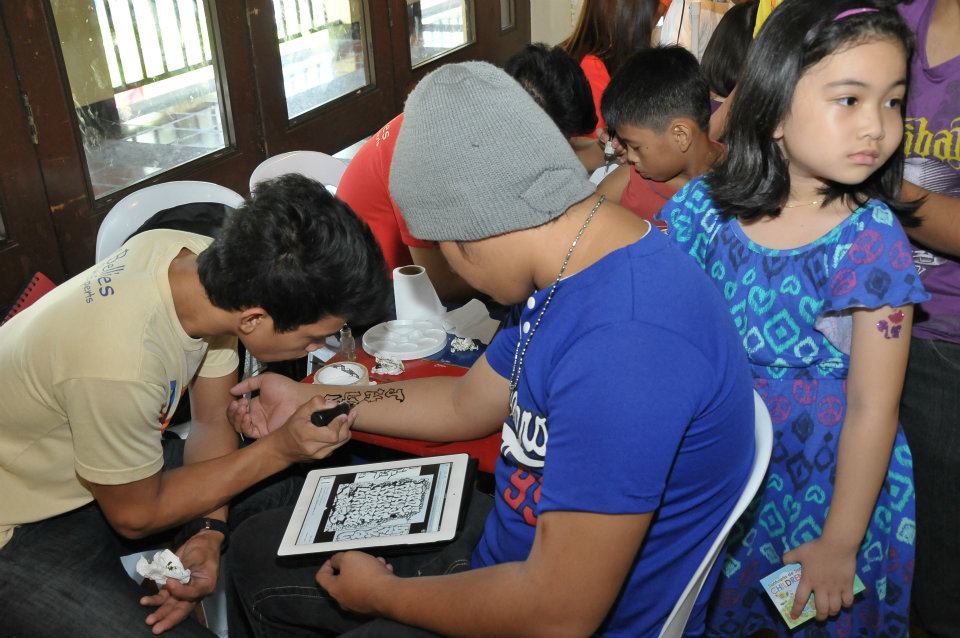
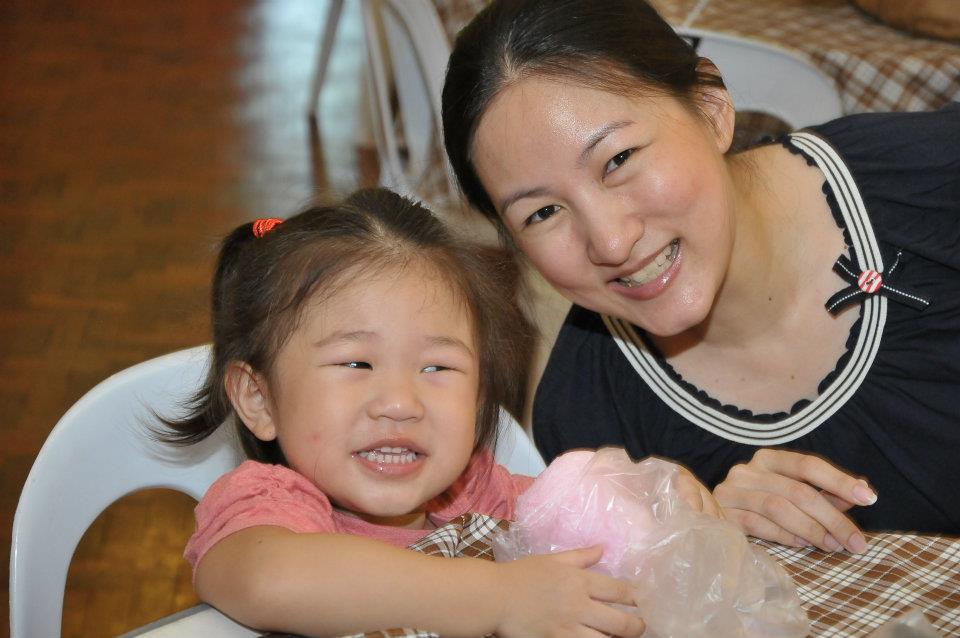
2012 Fiesta Children’s Day

Thanks to Rose Lopes, Melissa Martel, Chris Tordesillas, Chino Gracia and the Luke and Antioch Communities for the success of the Fiesta’s Children’s Day.

Design a site like this with WordPress.com
Get started