Categories
Articles

Suicide Notes By Letty Jacinto-Lopez Originally published by Philippine Star

Robin Williams, who played the role of Genie in Aladdin,
died by suicide on August 11, 2014

The story of Anastasia: The daily news bared all the painful details of her death. She drank turpentine. It didn’t work. She slashed her wrist but the blade was not sharp enough to completely sever the veins. She made a lasso and tied the rope on the lone chandelier. With the aid of a chair, she stood right under the chandelier, wrapped the knot around her neck and made a quick leaping motion to destabilize the chair. She died after ten minutes. It was her third attempt. No one in her family suspected the torment she was going through. In the end, her only means of coping was to take her life.

The story of Dante: He was suffering from schizophrenia. His family tried everything to make him well. Hypnotism, group therapy, drugs, and the controversial and the cruelest of clinical procedures, the electric shock treatment.

He would come out of the treatment dazed, glassy-eyed and thirsty but calm and placid. This would be followed by good days when his mind seemed to bounce back to his creative, productive self. He could work. He was lucid. He could laugh, interact and be gentle with his wife and his son. He was again the man of the house. But as quick as it came, it would disappear and he would revert to a state of limbo where he could not form any opinion much less decipher one. That’s when sleep eluded him. He would throw the sleeping pills in frustration. The voices would come back and dominate him. They taunted, tormented and despised him. In the end, they became too much for him to bear. He put a gun in his mouth and shot himself. He suffered for 23 years.

The story of Adolfo: He was packing up to migrate. He saw an old, unlicensed gun in one of the top drawers and was surprised to see that it was hidden there all these years. He made up his mind to sell it but first he thought of giving it a good buff. Pulling out a polishing cloth, he rubbed it vigorously when suddenly the gun went off. It sounded like a thunderclap. He trembled uncontrollably at the thought that the gun was loaded. Whirling from the shock, he turned to his wife, Teresa, who was sleeping in their bed. Horror gripped him when he saw blood oozing from her head. His mind went blank. Another shot was heard and he fell lifeless on the floor.

Anastasia, Dante and Adolfo committed suicide. They were people we knew and in each tragedy, we saw the anguish etched in the faces of those they left behind.

How does one handle pain of this magnitude?

Anastasia’s mother was a mirror of sorrow. Being a pious and devoted Catholic, she only asked one question, “Would God take pity on my daughter and give her rest; will she see heaven?”

Dante’s family lived with the fear that he would someday take his own life. It was an ordeal his wife and son faced every day and when it finally happened, their spirits were so broken that there was nothing left to feel.

At the wake of Adolfo and his wife, Teresa, they were dressed in the same barong tagalog and piña gown they wore at their wedding. Even in death they were inseparable.

There was a time when suicide in the family was handled under a veil of darkness. We were not equipped to deal with death this way because we were more comfortable to follow a de kahon, well laid out and predictable life line: marriage, birth, milestones, sickness and lastly, death. A pat phrase like “she lived a good, long life” was easier to understand and accept.

In suicide, the family suffers double grief: Losing a loved one and coping with the cruel and baseless talks on the circumstances surrounding the death. Where will they find comfort? Who could throw some light into this dark abyss of grief?

At a recent memorial service, the priest seemed to shed some light on this mystery. He said, “We should not burden ourselves with the circumstances of how our beloved departed left their mortal bodies. It wouldn’t matter to God. What is important is He promised us the forgiveness of our sins and that someday, He will lift us up to our permanent home where there is no pain, no sorrow, only joy and clemency.” He went on to say that man has no control over the manner of his death. It could happen by accident, by a sudden and fatal heart attack, a prolonged suffering, even by violent death or suicide. While there will be those who would peacefully and easily give up the ghost, there will be those who would suffer until their last breath. The important thing is God’s promise that He will not abandon us. He closed his homily by urging the mourners to leave their dearly beloved in the hands of God. “There, he will be safe.”

I was clearly surprised and appeased by what the priest said. If we view death in this manner, it could ease the tension and remove the stigma associated with it. Painful questions could be laid to rest and more importantly, those left behind could find the road to forgiveness, healing and acceptance.

The next time you pray The Apostle’s Creed, pray slowly and reflect on each line. When you reach that part that says, “I believe in the forgiveness of sins, the resurrection of the body, and life everlasting.” Take it to heart and believe.

Postscript to Anastasia’s story: Palo Alto, California. Sixteen years had passed and one day, Anastasia’s mother ran excitedly to her husband, “Anastasia is in heaven!” “How do you know that?” asked her husband. She replied, “You know how I’ve never stopped praying to Mama Mary? This morning, I prayed again and I asked her to heal the pain that is in my heart. If Anastasia has been forgiven and is now with God, I asked Mama Mary to send me a sign: white roses and a dozen of them.”

That day, Anastasia’s mother went about her daily chores. While busy in the kitchen, the doorbell rang. “Can someone please get the door?” she yelled. No one responded so she rushed to open it with her mind still preoccupied with the boiling pot in the kitchen.

Before her stood an awkward, harassed young man scratching his head and stammering, “Madam, ah, I’m sorry to bother you. You will find this hard to believe but I am the delivery boy of the florist shop next to the town plaza. I found an extra order of long-stemmed roses in my van but I could not find the delivery receipt. This has been a particularly tiring, long and hot day; the roses will simply wilt if I returned them back to the shop. Can I give them to you for free?”

Anastasia’s mother was clearly in doubt. She asked, “Why did you ring my doorbell and not the other ones in the complex?” The boy answered, “Again, you won’t believe this but your door was the first one I saw and I thought, “Hey, who wouldn’t want to be surprised with flowers?’”

Still worrying about her pot of boiling stew, she smiled and opened her arms to accept the roses. Placing them down near the foyer, she rushed back to the kitchen to switch the flame to low. With her face all steamed up from the cooking pot, it suddenly occurred to her, “Wait a minute, did I just receive roses? Could this be a sign?”

She hesitated and thought, “Oh, but that’s impossible. I asked for white roses and they are definitely not in bloom this time of the year.”

Being convinced that she was probably getting excited over nothing, she began to ascend the stairs. She felt her heart skip a beat before it began to thump faster and faster. She turned on her heels and ran down to the foyer.

The bundle of flowers was there, still tied up with ruffia, in white cellophane with butterfly prints. Trembling now, she slowly unwrapped the package…the roses were white, all 12 pieces of them.

A Prayer When A Loved One Dies By Suicide
By Naomi Levy
(From her book entitled Talking to God, Alfred A. Knopf, New York, 2002)

Help me God. Give me strength to carry on. Heal my anger and shame. Ease the burden in my heart. Teach me to believe that I am not to blame. Lead me back to life and hope and joy. I know the pain became too much for him. Death was his only hope for release from his suffering. Life offered him no such promise, no relief.

Let him rest now, God. Free from all that haunted him. Peace, at last. Watch over him. Be his comfort. Grant him the serenity that he so longed for in life. Let his death be his healing. Amen.

Categories
Articles

“Francisfest 2013: Music of the Heart, Grateful and True” by Letty Jacinto-Lopez‏

The heavy, massive doors were flung open and I stepped inside a chamber with billowing smoke gathering under my heels. Tina Teehankee broke my gaze, “Letty, do you know where you are seated?” Standing a few steps away, Randy Limjoco, chairman of Francisfest 2013, greeted each parishioner who came to watch the show. When I looked up, the high ceiling reflected a soft glow.

“I’m seated at the 13th pew, from the main altar,” texted my husband. The rest of the pews were filling up. Barbara Go and Tessie Luz sat in front of us while Marilou Senn sat a few rows away. When parish priest, Father Joel Sulse, stood by the steps of the main altar, everyone rose and bowed in silence, “Thank you Lord for gathering us tonight to celebrate the many blessings you have bestowed on Santuario and our community,” he prayed.

The main altar was the focal point of the entire production. The set designer made good use of its beautiful and imposing structure which was very appropriate to bring alive the saga of St. Francis of Assisi.

Franco Laurel begun, “A young Giovanni nicknamed Francesco by his father, (a wealthy silk merchant), searched for conversion in San Damiano, an ancient church near Assisi. Francesco saw the figure of Christ crucified come alive, saying to him, ‘Francis, don’t you see my house is crumbling apart? Go, then, and restore it!’” (Saint Francis took action to repair San Damiano although he eventually realized that God’s message to him was to restore the Church as a whole rather than literally repair churches.)

That was the cue. Coro de San Antonio together with the OFM Friars and OLAS Seminarians appeared from different parts of the stage and formed a two-tier lineup. They sang with voices, smooth and flowing. “Come build my Church, give stones and mortars, tell of His mercy, sing of His love”. To compliment this song, Nonon Baang sang “Corner of the Sky” from the Broadway musical, Pippin.

Aside: There is a hip-hop, rap version of this song, conceived by young Franciscans, with a simple query, “Sino ba si Kiko bago nagbago?” (Who was Francis or Kiko before his conversion?)

Santuario de San Antonio was completed in 1953 to replace the one destroyed in 1945 in the walled city of Intramuros. “So, in a continuing sort of way, Santuario was likewise built by St. Francis himself,” said Franco Laurel.

Coro soloist, Renabel Baquero and Santuario’s own singing sensation, Edmund Lim, sang “At the Beginning” with support narrations from the Youth of San Antonio – Leandro, Arianna, Josh, Mitzie and Christopher.

The Youth lit the stage in their black and red outfits. When they sang in perfect harmony, Beautiful City and Seasons of Love, the long practices and late hours paid off handsomely. The 2nd song was from the musical, Rent, a runaway favorite with the younger set, “Five hundred twenty five thousand six hundred minutes, measure your life in love.”

To introduce the construction phase of Santuario de San Antonio, another young music scholar, Gaby Vasquez, took center stage. Gaby sang “One Voice” about the power of one and its rippling effect.

She was followed by the elegantly dressed group of the Vocalismo who enthralled the audience with their version of “Total Praise” and “This is the Moment” from the musical, Jekyll and Hyde. I fell in love with this song on Broadway and still am. The Vocalismo revived that sweetest, greatest moment of them all.

There was a throwback scene on the first parish priest, Father Hugh Zurat, and we listened to the anecdotes shared by Menchu Bautista and other members of her family who recalled how Father Hugh inspired churchgoers with his humble and truthful demeanor. One time, he knelt before the altar and made a public confession. He showed strength of character yet greatness in humility that many of us have aspired for. That period was also the time when relationships formed and slowly, Santuario turned into something more than a parish; it blossomed into a family.

Cocoy Laurel sang the Prayer of St. Francis, baring a heart moved with deep emotion, a fitting reminder to live in charity and compassion. George Yang, tenor, in his distinct and crystal-clear range, sang poignantly “I Dreamed a Dream” from Les Miserables while Koro Ilustrado made their appearance singing “Ave Maristella”, alluding to the loving and gentle presence of Mama Mary in our lives.

Before anyone could yield to sweet nostalgia, the Health Care Ministry’s Danzercise group filled the stage in a blazing outburst of red as they moved to the rhythm and beat of “We are Family”. It prompted the audience to hail and clap, if not tap their feet, in time. These big-hearted ladies call themselves the Young Once but they showed off their cache of vim, verve and vitality to keep the young ones on their toes if not running, to keep pace.

The Coro de San Antonio sang the double medley of “I Believe and Ave Maria”, a favorite arrangement that never fails to move the heart every time it was sang during Easter vigils. The original song “Nanay” sang tenderly by the Filipino Tenors produced a dewy-eyed response from the audience touched by motherly, nurturing love.

Scene 14 focused on the WESTY principle that described the works of the respective ministries in San Antonio: Worship, Education, SocialService, Temporality (Finance) and Youth. This part of the program brought to the fore the full performing energy of the Laurel Family represented by David and Ruby, Susie, Lynnie, Denise and Cocoy. Their upbeat and infectious song-and-dance routine of “Jesus, you are so good” reminded the audience of the unrelenting love and kindness of Christ that bring sunshine even through overcast moments.

I clapped with delight when I saw the familiar faces of our pastoral presidents who consistently dedicated a great part of their time and effort for Santuario. From Patrocino Dayrit to Imelda Cojuangco through to Mike Limpe. The various chairmen of Francisfest through the years were also flashed on the church dome, a lovely beam of light on generous and staunch supporters, from Petrona Lim, Joey Soriano, through to Ruthy Vera, etc.

A tribute to the departed Franciscan priests who served the parish followed. As the images of Franciscan Father Urban, Father David, Father Ike and Father Jerome flooded the church dome, a collective prayer of thanks was raised paying homage to these dedicated stewards of San Antonio.

What followed next summed up what the parish aims to achieve: To be a continuing, encouraging presence in the lives of the Christian community. Tina Teehankee, JJ Yulo, Micki Poe, Betty Roxas-Chua, Carina Lebron and Edmund Lim, representing the various ministries, reiterated this commitment that Soprano Reynabel Baquero lifted in a song, “Your Heart Today”.

The penultimate number gathered Coro de San Antonio – resplendent in shimmering gold, Vocalismo – in deep, royal and powder blue, Koro Ilustrado – garbed in a cool pink and lime green barong, the Youth of San Antonio-vibrant in red and black and the OLAS Seminarians – in earth brown tones, singing “Umagang kay Ganda”. Indeed, a promise of many more sun-filled tomorrows as beautiful as the next. Did anyone spot Father Joel Sulse in this power-packed assembly of songbirds?

When I checked the program and realized that we were in the Finalé, the lineup was packed with voices supreme. It came as a surprise to hear Franco Laurel announce that the new song composed by Joe Mari Chan will be sang by his better version, Jose Antonio. The young Jose Antonio didn’t disappoint. He carried the song in wings of the nightingale, moving the heart to accept Pax et Bonum in its maiden performance. Peace and all that is Good be with you. Composer, Joe Mari, stood up to acknowledge the shouts of cheer of an ecstatic audience.

“Smooth and perfect synchronization,” whispered my husband when he realized that two hours had passed effortlessly.

This astounding production would not have been made possible without the staff and crew who worked behind the curtains led by the writer and director, Joel Trinidad and the music director Onyl Torres. I spotted Onyl leading the musical ensemble in the Finale, standing in front of the video camera, but obscured by the shadows. I didn’t see Director Joel. He must have worn an invisible cloak because despite his absence (blame my dwindling eyesight), everything ran like clockwork – a sign that it was a well-thought out, well-mounted and well-put on performance. Clearly, a swelling of swell(s).

Joel, won’t you tell me how you conceived of the luminaire-illumination that captured the brilliance of the night in a symmetrical or asymmetrical way? The spectacle of music bathe in a spectrum of colors was simply entrancing.

It got me wondering why we never made use of the church dome as another medium to honor and celebrate the glory of God…until now?

To all who made Francisfest 2013 a five hundred twenty five thousand six hundred measure of a work filled with love. Maraming salamat po.

About Letty Jacinto-Lopez and some of her published articles

Categories
Articles

“Building at Sixty”, by Letty Jacinto-Lopez

In 1951, on the far, distant side of a flourishing, booming town, a flurry of activities was reaching fever pitch. A family of landowners was laying down the cornerstone of what would become a place of worship to answer the spiritual needs and concerns of a new, emerging community. The family came from the clan of the Ayala/Zobel/McMicking and the church was Santuario de San Antonio in Forbes Park, Makati, an affluent district of the Province of Rizal.Historical Cache in the Time Capsule
In 1951, I was five years old, three years short of receiving the sacrament of Holy Communion and oblivious to the cares of the grown-ups and definitely unmindful of its exalted dreams and goals. Who would ever think that my tiny world would merge with this bigger world, sharing common values that organized religion provides?
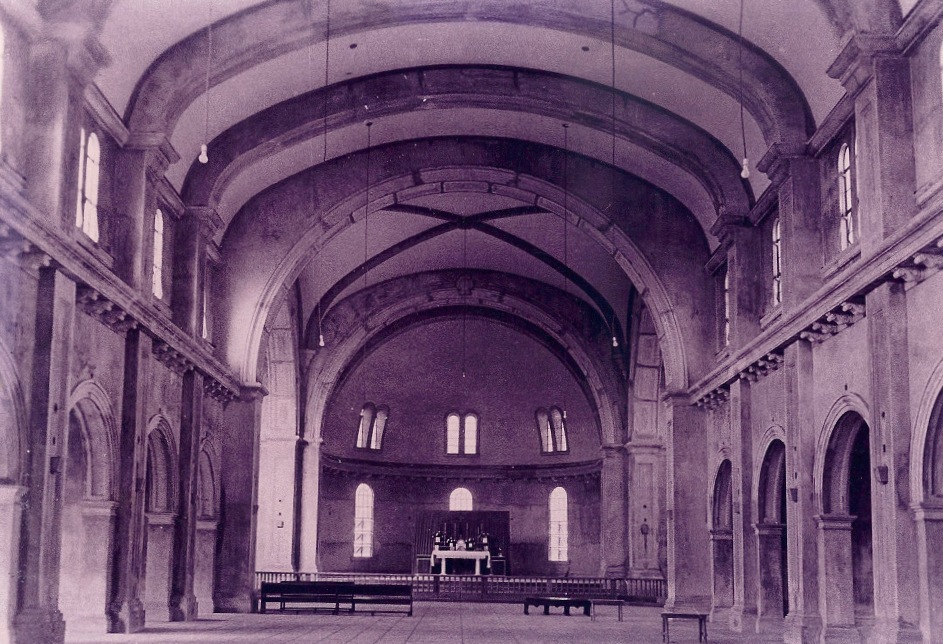
Archive Photo of Santuario de San Antonio Church
Santuario de San Antonio has always been that hallowed place of worship for Catholics. I grew up looking at this revered structure, as a special place to celebrate life’s significant events and milestones like the holy sacraments and of course every girl’s wishful dream of walking down the aisle as a blushing bride.

When our family relocated to Makati, we were welcomed into the family of Santuario de San Antonio as brothers and sisters, linked and related spiritually.

Similarly for Jeannie Bitanga. The settling period however became quite challenging for her after having lived abroad. She went from questioning and doubting her faith to strengthening, nurturing and growing it. Jeannie, encouraged by what she saw in the parish, took the initiative to re-learn her Catholic beliefs by reading the Bible and teaching Catechism to young children, one of the outreach ministries available in San Antonio.

“It was a breakthrough,” Jeannie said. Soon, her husband, Doy, joined the Men of the Sacred Heart, where its members promote devotion to the Sacred Heart of Jesus as well as serving as a lay minister of the Holy Eucharist. Jeannie’s participation in San Antonio’s various ministries expanded when the President of the Parish Council, Mike Limpe, asked her to create and manage a website and make it accessible to the public. Something vital in this age of Internet connection for the church to remain relevant keeping up with the technical development and progress of the times.

“My husband and I have, grown spiritually since those days of uncertainty. Santuario de San Antonio made us realize we had untapped potentials,” she remarked. “It was heart-warming to be welcomed in the family of Christ and meet some of the funniest and most dedicated people around the neighborhood.”

For Tina Teehankee, a secular Franciscan, she views life as a journey with its ups and downs. “With God’s grace and guidance, I find comfort in trusting in His grand plan, whether as a servant or as His child.” Parishioners with Tina Teehankee

Sadly, there are those who have relegated the role of the church in their lives as a minor concern, the last in the overall scheme of things, so to speak. I was therefore struck by a prayer that the faithful read in one Sunday service celebrated by our parish priest, Father Joel Sulse: “May no one among us feel so superior as to exclude others or feel so inadequate as not to contribute anything. Instead, may we be mutually enriched by one another”.

The lay community has a crucial importance in fulfilling the mission of the church. While there are many anonymous and faceless volunteers who work hard – silently – preparing each day to celebrate the Liturgy of the Eucharist, there are those who have bravely taken up the cudgels to keep things rolling and rolling. All in answer to God’s call to “Build My Church”.

The mission of the Franciscan Order has made an impact on the lives of the faithful (and the least, the last and the lost) because ordinary people devoted their time, energy, talents and material resources to reach out beyond their boundaries.

Among them,

The Prison Ministry headed by Steve Lopez, who visit the inmates at the Makati City Jail and host regular activities like sports, dance and medical clinics as well as reflective and meditative invocations to give hope and renew the faith of those who were lost and are journeying towards reconciliation, spiritually and socially.

The Scholarship Ministry where indigent or low-income students with great potentials are sponsored giving them the opportunity to excel in fields of learning and thus complete and graduate and have a better chance of making it into the world as an auto mechanic, in the Food and Beverage industry, in shipbuilding, care giving, and others.

The Hospital Ministry with Father Jesus Galindo as hospital chaplain, who visit those confined in hospitals attending to their spiritual, medical, physiological and emotional wellbeing.

The Marian Cenacle and Contemplative Ministries focus on the reach of the third degree of mercy – prayer. It is said that if one cannot show mercy by deeds or words, one can always do so by prayer. Prayer reaches out even there where one cannot reach out physically.

The Music Ministry with Amelita Guevarra. Voices are lifted through song and music engulfing the heart and spirit in a deep and fervent melodious worship to God.

The Catholic Women’s League headed by Betty Roxas-Chua, who sponsors mass baptism, holy communion and wedding every year apart from charitable projects that benefit the deprived and downtrodden.

Advocacies and ministries are in constant need of moral and financial support in order to function, and function well. Every year, Santuario de San Antonio honors the patron saint, San Antonio de Padova with a feast as well as raises funds to support and maintain the various ministries, including the Franciscan Mission.
Randy Limjoco, Fr. Joel, Lita Ascalon
In celebration of the 60th anniversary of the founding of Santuario de San Antonio in 1951, this year’s Francisfest will mount a musical variety show that chronicles Santuario de San Antonio’s evolution as a dynamic and spiritual center. Performers will come from the ranks of our talented parishioners, their family and friends like Joe Mari Chan, and artists on stage and cinema like Cocoy Laurel, Joel Trinidad, etc. Randy Limjoco, this year’s Chairman, promises an evening of entertainment and delight to be held in the main church on Thursday, October 3, 2013 at 8:00 p.m.
1005377_10201479009237679_1445458697_n
Recently, I attended a mass celebrated by Father Jade Licuanan. He spoke about Cardinal Gaudencio Rosales and his Theology of crumbs. Succinctly, “All God wants is small things. Small things put together can start up a miracle. The issue is the love for the poor. Goodness is never complicated.”

I kept repeating Cardinal Rosales’ theology as I left the church. Indeed, Love can be a way of life and not just a one-shot thing.

Francisfest has taken this noble cause to heart. “May the Church and her leaders strive for humble service and simplicity rather than for power, influence and wealth.”

Remember, we leave this world empty-handed.

Let us support Francisfest, heartily and magnanimously, hand in hand and brick by brick.

_______________

For info and tickets and/or donations to Francisfest 2013, please contact the Parish Office (63-2) 843-8830 to 31 or email ssap_info@yahoo.com.

*************

as published on September 29, 2013 The Philippine Star Sunday Magazine
About Letty Jacinto-Lopez and some of her published Articles

Categories
Articles

“Faith Etched in Wood” by Letty Jacinto-Lopez

My friend, Rebecca Agoncillo, was well into the late second half of a wonderful, fulfilling, independent and charmed life when she sprang a surprise on me – she got engaged!  Another shock followed.  “For my wedding gift, I want a face of Christ carved by the master artists at Talleres de Maximo Vicente, ” she cajoled.

I didn’t have the heart (nor the largesse!) to disappoint her so with her dream wedding gift, I tucked a piece of my pained humor coupled with a word of warning: “Every inch of this image chewed a big chunk out of my retirement bourse so you’d better stay put in this marriage!”   It was worth it.  My “Jill-come-lately” friend will likely be one of the last few and proud owners of a Maximo Vicente original.

Having been spooked by my own doom-and-gloom prediction, I quickly asked my former classmate, Meldy (Hernandez) Gabriel-Merchan, if the story could be told of the only remaining, authentic taller in the Philippines, makers of religious images, holy crosses and hand-embroidered garments and vestments and builders of altars, church pews and silver carrozas, by the second generation and the heirs of the master craftsman himself (Maximo Vicente, Sr.), her uncle Maximo Vicente Jr. and her aunt, Soledad Hernandez-Vicente.  The response came back quickly.

The first thing that struck me about Talleres de Maximo Vicente was how its trade sign looked so outdated among the others next to it in a discreet, shady section of Malate, Ermita; it was the only one written in Spanish.  The shop was quiet like a monastery, broken only by the sound of an oscillating floor fan dispersing warm, recycled air.  It resembled a curio shop without the fancy trinkets, only images in wood with soft, pensive and gentle features.  Looking around, more statues lined each wall that served as samples of the fine craftsmanship that has differentiated the shop from any other similar shops over the past nine decades.  Some of the sculptures have actually acquired a patina of age just by being there.  One life size statue of the Virgin of the Assumption, however, was genuinely old. The owners kept it mainly for sentimental reasons; it was lovingly carved by the patriarch himself, Maximo L. Vicente, Sr. in 1908, the same year that the shop first opened for business.

Soledad Hernandez-Vicente (“Call me Tita Sol”) reclined in her lounge chair while Maximo Vicente Jr. or Tito Max, sat nearby and smiled as he stirred old memories.  He began, “When Manila was surrounded by lush and wild rain forests, my father, Maximo, Sr., spent his childhood in Bulacan with an uncle who was a scout ranger.”  (I didn’t know such a profession even existed in the Philippines).  It was natural for the young Maximo to feel an affinity to plants and trees that grew abundantly in their extended backyard.  He decided to try his hand at making something out of wood and for some reason, he chose a crucifix.  The parish priest was so impressed by the finished product that he offered to buy it with a promise to order more.  That inspired Maximo Sr. to return to Manila, confident that he finally found his true calling.  He set up Talleres de Maximo Vicente and invited his half siblings, the Santiago brothers Luciano, Felix, Rafael, Dionisio and Roberto, to be his associates.  It proved to be a wise and profitable venture.

“During the good old days,” Tito Max reminisced, “The shop was a bee hive of activities.  We were chiseling and carving wood almost around the clock to meet job orders.  The most popular wood used was the baticulin because it was fine-grained, resistant to anay or termites and it didn’t easily crack, chip or break.”  They also got lots of orders for images carved from ivory and marble.  (Today, aside from the traditional medium, fiberglass has also been used).  Tito Max continued, “Because of my father’s exacting standards, practically every major church in Manila had at least one or two images bearing the hallmark of Talleres.  My profession as an architect came in handy, too, as I was asked to design and build churches and altars.”

Tita Sol continued, “We employed full-time wood carvers, carpenters and embroiderers or bordaderas who were kept very, very busy.”  Tita Sol’s expertise in the fine art of needlepoint and embroidery proved to be an ideal tandem to her husband’s profession.  She not only took charge of the day-to-day management but split her time between buying or scouting for the material and accessories and teaching bordaderas how to embroider and set a high standard of quality for themselves – what she called their “personal best.”  Only the finest of material were used for these vestments: precious gems, gold thread, gold crowns, cut glass, crystals and the smoothest, most exquisite velvet, satin, silk and laces from exclusive houses of accessories in Europe and Asia.  It was not unusual, in fact, to have clients who changed the vestments of their images to correspond to the various church feasts and family anniversaries.

 Making a “curio” tour of some of the old and exclusive homes in Metro Manila, I found that there was always a Talleres opus gazing down at me.  However, a commissioned statue doesn’t come cheap.  Talleres raised the art of carving wood to the no compromise, no short cuts, meticulously European artisan level.  It takes anywhere from three to twelve months or longer to complete one job order with no two images ever the same.  It was therefore easy to understand why each statue has been delicately and lovingly passed on from one generation to the next.  You get an heirloom from the very start.  If the price, however, is beyond the reach of one’s household budget, one can still enjoy their many works by visiting some of the magnificent churches or places of worship around Manila and provincial cities.  Among them:  The Santuario de San Antonio Church in Forbes Park, Makati, The Church of Mount Carmel in Broadway, New Manila (designed, built and supervised by Tito Max), the Santo Niño image found at the San Beda Chapel in Mendiola, Manila (built by Max Sr. at a princely compensation of P40), the chapel and the statues found at the Assumption Convent in San Lorenzo Village, Makati, the Alfonso de Liguori Church in Magallanes Village, South Superhighway, as well as those found at the Cathedral of Lipa City, Batangas, and many more.

For Tito Max, what started out as a sterling legacy from his father blossomed into a lifetime commitment of keeping religious art alive and available.  Their strong affiliation to the church made it so.

 Having made a name in this highly specialized trade, it was interesting to read through several of the published interviews and pictorials on some of the shop’s famous clients from the caviar and champagne circle.  Former first lady, Madame Imelda Marcos either owned a Maximo Vicente or received them as gifts.  When the much-venerated image of the Infant Jesus of Tondo was stolen in the early1970’s, Mrs. Marcos immediately brought back the recovered pieces to Talleres for restoration.  She knew that she was dealing with the best.  Another client (a government official convicted of assault and abduction) maintained a devotion to the Virgin Mother.  He commissioned three of his favorite saints from Talleres and had them delivered to his prison cell.

What about those religious groups who criticize and don’t believe in keeping statues and other holy images?  Tito Max has a gentle reminder, “Our images are not icons or idols to replace God.  They are meant to inspire the devotees to keep their faith strong and steadfast.”

 Sadly, it is not business as usual for Talleres.  Wooden, hand-carved images are not that much sought after anymore.  There are plenty of santos made out of wood, resin or plaster that have been mass-produced by small-to-medium-sized factories, therefore cheaper and affordable.  There is also the alarming issue of the dwindling supply of the wood baticulin.  Add to this the ironic but amusing observation that Tita Sol made: “Our statues were so well-made that they outlive the original owners.  We therefore don’t get repeat orders from the same clan!  The younger ones merely come back to the shop to have their inherited statues cleaned, repaired or restored.”  

Despite these setbacks, this gentle and retiring couple is not discouraged.  They have made the difficult choice of staying open, for now.  Tito Max remarked, “Even if business is soft, as long as there is that far-fetched desire for a hand-carved image, we will be here to make it.”

 But for how long?  “We honestly don’t know.  My wife and I are way past 40 karats, you know!”

Are we seeing the sunset days of the only remaining, honest-to-goodness taller in the Philippines?  Secretly, I made a wish:  May there be more unexpected and happy surprises like what my bosom friend got herself into.  Maybe that would dispel the worry and prove me wrong. 

Originally published by Philippine Star in 2001

______________

Note: Talleres de Maximo Vicente designed and built the beautiful altars, the pulpit and and the pews of Santuario de San Antonio, including some of the holy images in it. Tito Max and Tita Sol have completely retired after closing Talleres in the second decade of the new millenium. 


This slideshow requires JavaScript.

For more articles by Letty Jacinto-Lopez>>>>>

Categories
Articles

“Send Me No Flowers”, by Letty Jacinto-Lopez

Three men I knew passed away within the same month that left me believing the old folk superstition that “bad things come in threes.” It was spot on. All three suffered from lingering illnesses that were inoperable, that restricted their mobility and their capacity to communicate while their bodies steadily deteriorated. I saw the effects of these on the immediate families. The families, raw with emotion, swung like a pendulum from one extreme to the other. They hang on to a renewed hope that the body would improve, but on other times, surrendered to a helpless acceptance of the inevitable.

At the vigil, I was astounded by the abundance of flowers, beautiful exquisite flowers that must have cost a bundle. It got me wondering. “Why didn’t anyone think of sending him a small pot of fresh plants or flowers for no apparent reason, and not wait to spend thousands of pesos for flowers that he wouldn’t be able to see, much less appreciate?” (One could maybe send instead a bottle of his favorite Shiraz or a cheese platter or Italian antipasto or a decadent chocolate cake). The Canadian recording artist Celine Dion, said that in Quebec, the nuns gather these floral wreaths and dry them. They then wet, roll and form balls out of the petals to make rosary beads that one can give to friends and relatives as a lasting tribute.

It was so sad to see these beautiful flowers being dumped and piled high on the hearse. Mourners tried to save as many of them by pulling them out from the arrangement to drop them on the casket before the tomb was completely sealed.

With that image still fresh on my mind, I was determined to stop this practice by making a questionnaire or list of things that I’d like to be followed when the inevitable time comes around. I was going to share this list with my friends so that they too can prepare now. I called it a “living workshop” but gave it a cooler title: “When I croak….” (Sic).

“Why ‘croak’,” asked friend no. 1. “It’s in reference to a frog that when it croaks, it was time to say goodbye and jump from the lily pad,” I replied. And to spark the enthusiasm in the minds of these confirmed “drama queens”, I gave my personalized list as an example.

In brief, the list covered everything that surviving relatives would need to know if by chance, they failed to take note or listen closely during the lifetime of this departed relative.

When my friends arrived, I gathered them in a round table – like King Arthur and his knights – and gave them a copy of the list.

Friend No. 2 popped her eyes, “Oh this is great! I’ve been thinking about this but haven’t sat down to seriously do it.” (Author’s Note: Now, she has no more excuse not to complete her list.)

Friend No. 3 remarked, “I haven’t made up my mind what to wear.” I replied, “Choose now lest they wrap you in your floral sheet.”

Friend No. 4 thought deeply and said, “I want a solemn celebration. When they come to my wake, it shouldn’t be purely to socialize or use it as a reunion. They must remember that they are there to pray for me. I want each one to pray the rosary and to hear mass. VERY IMPORTANT!” she exclaimed.

Friend No. 5 laughed and said, “I want everyone to eat well so I’m going to book my favorite caterer to feed all of you.” (Author’s Note: Hmm, for sure, she’s going to have a full house of hungry but mourning friends.)

Friend No. 1 interjected and said, “Do you know that I already have prepared an Obituary? Complete with my favorite photo with a gumamela on my hair? It was a candid shot but one that turned on my hidden charm that hubby’s camera captured, miraculously!” (Author’s Note: Ladies, choose your favorite photos now, where you are at your ravishing best, remember.)

While they were writing down the details, I played a medley of love songs starting with Elvis Presley’s “I’ll remember you.” Friend No. 5 suddenly swooned, “Awww, Elvis. I want this song to be played.”

Suddenly, the music switched to “I Loved the Night Life” and two of the ladies stood up and began to shimmy and shake. “Can we have a jam session too?” “If you like,” I said.

Barry Manilow next sang, “I’m out of work, out of my head, out of self-respect, I’m under-loved and underfed, I wanna go home!” (Author’s Note: Yes, in good time.)

After accomplishing the list, in between laughs, teasing and pushing, we all sat down to an afternoon repast of chicken pie and their favorite bacalao with freshly baked baguettes. Friend No. 2 turned to me and asked, “What flowers do you want?” I replied, “I don’t want flowers.”

I told them of the beautiful flowers in the wakes I attended and how it was too late to have them at my funeral. “If we don’t stop to talk now, if we don’t call each other or do kind deeds to each other now, how are we then when we hear of someone’s death? Don’t feel guilty or obligated and send flowers that will never be seen or enjoyed by me.”

“You’re so right,” agreed friend No. 3 as she turned on the TV to watch a well-known talk show host shed buckets of tears, again.

The following day, I received a bouquet of flowers from friend no. 6. She wrote, “I’m thinking of you and you’re not dead.”

Hah! Not just yet but I’m preparing for it, now.

“What the caterpillar perceives is the end, to the butterfly is just the beginning.”

originally published August 14, 2010, PHILIPPINE STAR

Living Bouquets
by Mabeel Easley

When I quit this mortal shore
and mosey ’round this earth no more,
Do not weep and do not sob;
I may have found a better job.
Don’t go and buy a large bouquet
for which you’ll find it hard to pay,
don’t mope around and feel all blue;
I may be better off than you.

Don’t tell the folks I was a saint
Or any old thing that I ain’t.
If you have jam like that to spread,
Please hand it out before I’m dead.
If you have roses bless your soul,
Just pin one in my buttonhole
While I’m alive and well today;
Don’t wait until I’m gone away.


When I croak….

1) CREMATION or Traditional Burial? Your preferred choice must be clear to your loved ones.

2) BURN WITH ME THE FOLLOWING: At the cremation, do you want anything you value personally to be included? (Rosary, favorite prayer, souvenir, etc.)

3) MY ATTIRE: (What do you want to wear?): Do you want to wear your favorite jeans, blouse, dress or wedding gown?

4) MAKE UP: For those who will opt for the Traditional Burial, do you wish your favorite make up artist to do your make up?

5) ONE-DAY VIGIL (or more) and INTERNMENT: (Venue) Specify the venue whether Church, memorial chapel, at home, etc.

6) PORTRAIT OR PAINTING TO BE USED: (To be displayed at the wake or vigil) Choose your favorite photo and have it enlarged.

7) DRESS CODE: (Do you want your sympathizers to wear a particular color?)
 One friend wants everyone to come in white shirt and blue jeans.

8) FLOWERS: (What colors or kind of flowers do you like to be displayed at the wake to be arranged by your chosen florist)

9) PHYSICAL ARRANGEMENT AT VIGIL/WAKE: (Any lay out that you prefer?) In one vigil, the favorite typewriter of the deceased was displayed together with his desk and books.

10) AUDIO VISUAL: (Do you want a video of your favorite photos and music?) You may have celebrated a milestone that was recorded in an audiovisual presentation. Do you want to use this? Or would you like to have a new one made?

11) MUSIC: (classical, hits of your generation, love theme songs, kundimans, etc.) Do you want a church choir or a band to play during the wake and at the memorial mass?

12) MASS or SERVICES: (Catholic rites or other denomination?)

13) PRIESTS or MINISTERS/PASTOR: (Do you have a favorite priest or minister who will say mass or preside over the last rites for you?)

14) ROSARY and NOVENA: Any particular novena to your favorite saint, etc.?

15) EULOGY: (Choose who will speak at the mass or gathering from your family, relatives, BFFs, colleagues, etc.)

16) PROGRAMME COORDINATOR: (Designate your children, friends, colleagues to plan the last rites)

17) THANK YOU STAMPITAS/SOUVENIRS: (To be distributed at the end of the mass or ceremony). When my brother in law passed away, his daughters distributed a children’s book on Alzheimer’s Disease (“Ang lihim namin ni Inciong”) together with a novena to the Infant Jesus of which he was a devotee.

18) FOOD/MENU: (choose menu). Your favorite food to be served.

19) DONATIONS: (If your family gets donations, do you want this to be given to your favorite charity, church or any individual?)

20) BY THE WAY:

a) Do I owe anyone money? If in case you have outstanding IOUs

b) Who owes me money? Hopefully, this won’t be necessary if those who owe you are straightforward and sincere in paying you back.

c) Pending stuff: Acknowledge household staff who have been faithful, loyal and kind to you. And for other special wishes, write them down here.

For more articles by Letty Jacinto-Lopez>>>>>

Categories
Articles

“Ode to Forgetfullness”, Letty Jacinto-Lopez

Our senior bunch still plays and listens to Beatles music so you can imagine how I laughed like a drain to find a 2-minute YouTube music video on forgetfulness sang by an elderly looking bloke, MackDry Den, not sure whether this is his real name. He sang it to the tune of the Beatles’ Do you want to know a secret? (Listen, do you want to know a secret, do you promise not to tell, oh woh o woh….)

It brought me to that evening when I was dining with friends. We laughed ourselves silly as we exchanged anecdotes on growing old:

Rita Dy said, “A friend from our Travel Club told me that she was going up the stairs but got distracted when her grand daughter rushed up the staircase zooming past her. She held to the banister, paused, looked up and looked down and thought, ‘Wait a minute, was I going up or going down?’”

Betty Nelle related, “An elderly woman was going to be interviewed live on TV so she made sure that she went to the beauty salon for her hair and makeup and came dressed in her vintage finery; she also brought along her caregiver to assist her in the interview so she won’t forget anything. She sat in a cushioned chair and the interview begun, ‘Madame Castro, tell me of the time that you were growing up in Bacolod,’ said the host. She beamed and said, ‘Oh those were beautiful days. During summer, we would welcome visitors from Manila and we would go to the waterfall and bathe and then enjoy a spread of fresh seafood and appetizing desserts.’ The host smiled and while checking his notes for the next question, the elderly woman waited but was slowly, slowly veering to the left side of her chair, about to doze off. Her caregiver quickly propped her straight and she woke with a start. When the host asked another question, she smiled and recounted more of her halcyon days. But then again, the host turned to his notes and that created a lull in the interview. Without making a fuss, she slowly, slowly veered to the right. The caregiver and the host kept propping her up throughout the interview.”

This made us howl and giggle, not at the story, but at the thought that someday, we’d be propped up to sit straight like this elderly lady. Oh dear, much later in life, we hope. “Better make sure we have loving and caring caregivers surrounded by friends, children and grandchildren who’d do that for us,” I said.

Fe Wanner replied, “I keep going to the kitchen looking for something but only not to remember what I was looking for.” “Huh!” I exclaimed. “When that happens, I retrace my steps and repeat what I was doing. And sure enough, I would remember, but not right away.” Hmm, this situation is occurring a lot more these days.

Maree Olney said, “I always lose my pair of reading glasses; oftentimes, it’s right under my nose or on top of my head.” “That’s so real and I solved it,” replied Celia Silang Cruz, “By carrying several pairs. I visited a friend in fact who was convalescing in the hospital and she had 3 pairs of glasses hooked to her hospital gown.”

What about that time when there was a leak in the bathroom and I was frantically calling out the name of my children and I could not remember which one so I simply hollered, “Anak!” My son came dashing up the stairs, pushed open the door and replied, “Are you all right, Ina?” Oh dear, what’s his name again?

If you are young and haven’t started misplacing things or being absent-minded, don’t be too smug about it. Your time will also come, or as my friend succinctly remarked, “Tatanda ka din.” Here is the Beatles’ “Do you want to know a secret?” with lyrics changed by senior citizen MacDry:

You’ll never know how much it really bugs you. You’ll never know until your brain is impaired….

Listen do you want to know a secret, forgot what I was going to say, heyeh yey yey….

It’s maddening, tell me why I’m in the kitchen, now my mission isn’t clear, it just disappeared.

Listen, I get my children’s names all wrong, so scary, my coffee cup hides from me, it runs around when I can’t see, like my memory.

Got 2 pairs of glasses in every room, my car keys are in the loon….

Listen, do you want to know a secret, forgot how to end this song. Sorry, I somehow knew I’d get it wrong, its here one minute now its gone… in the O-zone. Oh woh oh woh oh woh….

And do you know why I love to wear denim jeans? It serves as a cool and hip reminder that my memory will fade (or is fading) just like my crushed, stone-washed, tie-dyed, stretched and slim-fit pair of jeans. Thank goodness for our friends and family who help us with humor to keep us young and in good spirit.

My high school mate, Pichina Abila-Pena, sent me this anecdote: A young man approached an elderly woman and said, “Lola, bumili ka na ng payong” (Old woman, please buy an umbrella). The woman looked up to a bright and sunny sky. “Bakit? wala namang ulan?” (Why? There’s no rain.) The young man replied, “Umuulan kayo ng ganda!” (You’re raining with beauty!)

Remember that the key word is growing.

It can be fun and funny to grow old.

Originally published, March 26, 2011 PHILIPPINE STAR

For more articles by Letty Jacinto-Lopez>>>>>

Categories
Articles

“Touched by Padre Pio’s Guardian Angel”, by Letty Jacinto-Lopez

It was 1965. My brother and sister-in-law (“sis” for short) had wanted to have a baby in the first five years of their married life but all attempts failed. Anxious and getting desperate, my sis agreed to travel to a then-sleepy town called San Giovanni Rotondo — about a five-hour drive from Rome, Italy — to meet Padre Pio, the Capuchin friar who bore the nail wounds of Jesus on the cross.

She said, “I waited for three hours at the confessional room. Finally, Padre Pio motioned to me to speak. I was holding my knees to keep them from shaking. My confession was brief but I felt that he knew that I was there for something more important. After giving me the Absolution, he looked up and whispered, ‘Next year, you will have a baby boy.’”

“Wow!” my sis exclaimed. “He closed his eyes and made the sign of the cross on my forehead. Immediately, I felt a warm glow, both calming and comforting.”

The following year — as promised by Padre Pio — my sis gave birth to a healthy boy and she named him – you guessed it – Pio. My nephew, Pio, is now 47 years old, happily married and a loving father to two kids.

All the time, one teeny question kept popping into my head: “How did my sister-in-law and Padre Pio communicate? She didn’t speak a word of Italian, nor did Padre Pio speak English. Simple. Padre Pio’s guardian angel had acted as his translator and spokesman. “You don’t say!” I yelped. “Yes,” said my sis. “I heard Padre Pio speak to me in English!”

Still, I was not completely convinced. Maybe there was a hidden booth somewhere with UN-trained translators. That is, until I read a similar incident written by Father Alessio Parente, author of the book on Padre Pio entitled Send Me Your Guardian Angel. Here is an excerpt:

“A little American girl was brought to Padre Pio so that he could hear her first confession. Since she didn’t speak Italian, an American religious sister by the name of Mary Pyle, who was close to Father Pio, brought the little girl to him. ‘Father, I’m here to help you as this little girl doesn’t understand any Italian at all.’

‘Mary,’ said Padre Pio, ‘You can go, as the little one and I will take care of this.’ Mary Pyle waited outside and when the little girl emerged from confession, she asked her, ‘Did Padre Pio understand you?’ ‘Yes,’ came the reply. Mary, a little surprised, asked one more question: ‘Did he speak in English?’ ‘Yes, in English,’ said the little girl.”

If you enter the area called Ricordi di Padre Pio in San Giovanni Rotondo, you will walk into a room containing some of Padre Pio’s memorabilia. You will see thousands of letters from devotees all over the world encased in glass cabinets. It was a known fact that Padre Pio could only read, write and speak in Italian yet he was able to reply to these letters. How? He counted on his multi-lingual guardian angel and kept him busy and on his toes, in his “translation booth,” so to speak, all the time.

Padre Pio kept an active and vivacious relationship with all guardian angels — including his own — fulfilling a promise he made long ago to all his spiritual children that “If you are too busy to see me, send your guardian angel!” (Note: A special liaison that Padre Pio promised to continue even after his death.)

For example, there was a woman who never failed to attend the daily Mass celebrated by Padre Pio. One day, she was running late so she sent her guardian angel to Padre Pio to “delay” the Mass so she wouldn’t miss it. As a sign that her guardian angel would do this task for her, she told him to hide the skullcap of Padre Pio. When she reached the church, there was Padre Pio, indeed a little late, but ready to say Holy Mass. The woman confessed to Padre Pio what she did. Nonchalantly, Padre Pio replied, “I know that. Your guardian angel hid my skullcap and I could not find it in the usual place and only pointed me to where he kept it after a few minutes.” This guardian angel had played “hide and seek” with Padre Pio in complete obedience to his ward.

A Capuchin brother used to hear Padre Pio talking to himself in his private cubicle. This got him very curious so he asked Padre Pio, “Who were you talking to?” Padre Pio replied, “Guardian angels. They came with petitions and requests and they kept me up late again last night.”

Mind you, Padre Pio was physically beaten up and tormented by the devil, but he remained unyielding, thanks to the encouragement and protection of his personal guardian angel.

There are many more amusing stories of Padre Pio’s interaction with guardian angels and when I finished reading these inspiring stories, I was struck by Padre Pio’s consistent reminder not to forget the Virgin Mother. In the thick of all these amazing “save and rescue” operations, we must remember that our beloved Mary is the Queen of all Angels. They would not have made any move without her stamp of blessed approval (or is it blessed conspiracy?)

Incidentally, Padre Pio also had something to say about our tears. “Your tears are collected by the angels and are placed in a gold chalice and you will find them when you present yourself before God.” Now, who wouldn’t want to cry me a river or gather a bucket of tears or let the floodgates (of tears) open?

After a full day of touring San Giovanni Rotondo which included a private Mass in the same church where Padre Pio said Mass, watching videos on Padre Pio’s ministry, shopping for some religious souvenirs and posing for a group photo, Father Dave Concepcion, our tour chaplain, gave us something to think about.

“You will notice that all the saints manifest three deep loves in their lives: the love for God, the love for the Holy Eucharist, and the love for Mama Mary.”

I turned to my co-pilgrims and said, “Hey, doesn’t that apply to us as well? Could it be possible that we can also become saints, someday?”

They all laughed – nervously – but maybe hopefully, too.

This slideshow requires JavaScript.

Originally published by PHILIPPINE STAR. Other articles written by Letty>>>>>

Categories
Articles

“The Dignity of Death”, by Letty Jacinto-Lopez

It was one of those “when-women-lunch” affairs that brought together old and new friends alike. I saw an old acquaintance from school, Nini Valdez, so I waved at her and she approached my table. “Ay naku Letty, what’s happening to your batch? So many are dropping like flies!” I grinned sheepishly. It surely felt that way. When I made a statistical count, we were averaging 1.3 fatalities per month in a period of eight months. There was also a bizarre pattern where my late schoolmates suffered from illnesses that were undetected and no aggressive treatment could arrest or reverse their conditions. Wakes and funerals had become so common that like an old uniform, I was automatically reaching for the same black shirt or white dress in my closet.

I’ve noticed however, that our grief was cushioned by a consoling thought that made it easier to move on and begin the process of healing. Our departed friends had found the dignity in dying.

What is that? Father Domie Guzman of the Society of St Paul’s explained, “It was Jesus on the cross who taught us about death.” Father Domie gave three measures: “Death becomes meaningful IF –

*You have lived your mission. What is our mission in life before giving up the ghost? I still am wrestling with mine although the most obvious is my mission toward my children and those left under my care. We had been taught that every gift from God has its corresponding responsibility that moves us to nurture and put each one to good use.

If you are a mother like me, you try to raise your child to find his worth and use his beauty and strength to be the mirror of God’s grace. My mother raised us to have a healthy fear of God and spread love that reflected the love we have for God and each other. We should avoid a life of hate and envy, greed and injustice because they only lead to perdition.

What happens to those guilty of leading wicked lives full of treachery, indulgence and self-aggrandizement? Will they see the writing on the wall? What would it take to have a change of heart and let the goodness in them take control of their lives? When I hear comments like “He had three close calls yet he’s still alive! He cheated death again.” Is this person being given the chance to finish his mission? Should we not take stock of how far we’ve come to fulfilling our own missions?

*You have entrusted or you are leaving something beautiful behind. Father Domie said, “In death, Jesus left someone beautiful and most precious to him: his own mother, Mary.”

In our case, what legacy are we leaving behind? Do our children keep a healthy fear of God so that they will not do anything to hurt or offend God? This will include the value they set to follow God’s plans and how they treat others; is it with kindness and mercy? Do our children keep faith in God? No matter how much we fail, God will never give up on us. Hard as it seems, we must try our best to imitate Christ.

When loved ones talk and reminisce about you like in the good old days, would they remember you for the humility and child-like innocence that brought them closer to God? Definitely, not for any form of notoriety.

*You are coming home…to God, our Father. Lift the veil of gloom. Death is not frightening; it’s a celebration, a party and a song-and-dance extravaganza that one could not begin to imagine. That’s because our long journey on earth will culminate in a grand homecoming in heaven. That is God’s promise.

Remember too that in order for us to see and be with God, we need to become a spirit, like Him. This gives the most plausible explanation why the physical body needs to be left behind. It’s our spirit – invisible and free – that will enjoy a non-stop, permanent state of happiness.

For the one who died, it would be his reward; he is reaping honor and respect for living a life patterned after giving and spreading kindness. For those left behind, it’s a wake up call. Knowing that his dearly departed is now safe and happy in heaven will help ease the emptiness and take the sting out of letting go. Of course, you will continue to miss him but it’s a tiny sadness in this otherwise grand, victorious, and ticker-tape celebration.

Last December, a dear friend, Rosette Herrera-Hebron, succumbed to cancer. Before she died, I made a last and whimsical request. “Please Sette,” I begged, “Promise me you’ll come back and tell me what heaven is like.” She laughed and with a lilt in her voice replied, “If God would allow me.”

A few nights ago, I had a dream. Rosette and I were relaxing in lounging chairs facing the calm, blue ocean. I turned to her and asked, “Sette, how is your new home?” She raised her arms full of delight and cried out, “Ang ganda-ganda, ang sarap-sarap!” (It’s incredibly beautiful and so nice). Being lighthearted, I answered something gibberish, “The children will just have to like it, right?” Rosette laughed, “Oh yes! But not yet; in time, they will.”

That’s when she vanished and logic kicked in. Rosette couldn’t have been with me because she was dead. But, could it be? Did she return to give me a sneak preview of heaven?

I woke up crying.

Rosette kept her promise to me, and God allowed her. “Thank you God,” I whispered.

When my number is up, my loving family, as well as three darling amigas – Chiqui Recio, Jopee Gueco and Rosette – will be dancing and shrieking by the pearly gates creating a riot and making me blush. “Letty, see how we’ve kept your lounging chair warm?”

Yey! That is the life.

My seat warmers with wings: Rosette Hebron and Jopee Gueco

Letty's Seat Warmers

*************

Originally published at Philippine Star, December 2011. Other articles written by Letty>>>>>

Categories
Articles

“Congress on Liturgical Renewal”, by Letty Jacinto-Lopez

Dateline: SM Arena, May 18, 2013. Getting up with the pigeons was not easy but then eight thousand other sleepyheads did it to be at the liturgical Congress organized by the Archdiocese of Manila with the theme, Faith Celebrated and Lived.

There were three speakers:

His Eminence, Chito Cardinal Tagle began with a question: “What is a giveaway sign that you are growing old?” Answer: You always refer to the past as better than today. You love to retell your glorious past with comments like Mabuti pa noon or noong aming kabataan, etc. It was harking back at a life simple and serene.

Life indeed has become challenging and complicated especially for families plagued by migration and its harmful effects: Breakup of family depriving the children of parental care and guidance, loneliness, abuse, precious moments lost and guilt compensated by material goods.

However, if you peer past the gloom, there is a glimmer of light: Filipinos working overseas have unwittingly played a significant role in spreading and reviving the Catholic faith. Churches that were once closed have reopened and Filipinos have become a major influence for conversion and renewal of enthusiasm. It was proof that the Lord has not abandoned his children but has constantly opened opportunities to them. In an evolving world, the word of God has lost nothing of its value or brilliance.

While in the past, parents asserted their authority by skirting issues through an imperious stand – Basta! You obey – resulting in children complying but only out of fear or coercion, they grow up not fully convinced of their faith or religion. This too had to change. The youth must be inspired through a clear explanation of the teachings of Jesus that still resounds with the power: “Do not labor for the food which perishes, but for food which endures to eternal life.”

Reverend Father Genaro Diwa spoke of the reforms tackled by the Council of Vatican II held in Rome in 1962 during the papacy of Pope John XXIII. It addressed the relationship between the Roman Catholic Church and the modern world.

Time was when Holy Mass was celebrated in Latin. The priest had his back turned away from the faithful, driving home the point that he was the sole celebrant while everybody else was to remain passive and silent in their pews. Lay ministers were unheard of.

That was fifty years ago and Vatican II in the Sacrosanctum Concilium moved to change this through,

1) Active Participation of the Lay Community in the celebration of the Liturgy. It brought meaning and fulfillment below the pulpit as lay people were made to participate in the Liturgy making it relevant to their daily lives.

Active Participation is the gift of self – you are physically there! It becomes rooted in the expression of your interior faith, and its external manifestations.

But, how would this filter down to me? As a LecCom, when you stand in front of the community, make an effort to read audibly, clearly, and slowly, pausing if you must,so that the community hears, listens and is eventually moved by every word you read from God.

2) Use of the Vernacular Language. Latin was not the favored language. Other native tongues could equally express beauty in the worship of God. In fact, certain sentiments and feelings acquired a deeper meaning when spoken in the vernacular language.

Any language expressed in faith is heard by GOD.

3) In-Culturation. The diversity in forms and expressions from other culture and heritage also celebrate, worship and honor God. Their existence has been part of history and legacy, not something new or created only today.

H.E. the most Reverend Teodoro C. Bacani spoke on Faith and Liturgy drawing attention to the Mystery of Faith that we the faithful recite after the Offertory, Christ has died…has risen…will come again.

It is not a mystery because it is reality imbued with the presence of God. We believe because God revealed it and God being God always speaks the truth, never deceives, never lies. We therefore hold the word of God even if our reasoning is limited. We rely and put our trust in God. His word is indisputably true.

Every time we celebrate mass, our faith becomes the magnet that enables us to touch reality, a faith that enables us to accept for example, that the wafer and the wine have truly been transformed to the body and blood of Christ.

Obedience is part of faith. Whenever we pray, we extend an invitation to God to come into our lives in humble supplication, Tuloy po kayo Panginoon.

Although meditative prayer has its merits, there is value in connecting with our peers and our community through external manifestations, “The more we express our faith, the more it grows,” Bishop Bacani said.

He also enjoined all lay ministers to show(your faith), pray aloud, sing, praise,and burn with enthusiasm, including in the external act of paying forward, sharingand donating your blessings.

“Let us be responsible for one another because we believe that we belong to one family in Christ,” concluded Bishop Bacani.

To cap the Congress, Holy Mass was celebrated by H.E. Gaudencio Cardinal Rosales.His prayer rang loud for the Lord to increase our faith. Guide me, lead me, let my faith catch fire, deepen it, so that I may become a beacon of light to lead others to Christ.

photo(1)

published on June 2, 2013, Parish Bulletin. Other articles written by Letty>>>>>

Design a site like this with WordPress.com
Get started