Categories
The ABC’s of Catholic Doctrine

The ABC’s of Catholic Doctrine: Who is your female role model? by Lianne Tiu

4
Is she Taylor Swift, Kate Middleton (Duchess of Cambridge), Blessed Teresa of Calcutta, Audrey Hepburn, Maria Sharapova, Tessie Sy-Coson, your teacher, your “lola,” or your mother? Sometimes, we will be dismayed to learn that the generation today reveres celebrities who dress around half naked, who are involved in drugs, in pre-marital sex and extra-marital affairs. Our society values status and beauty above true success and values.

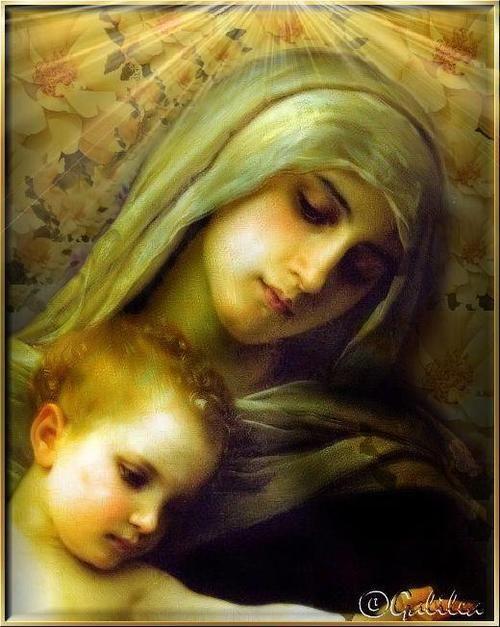
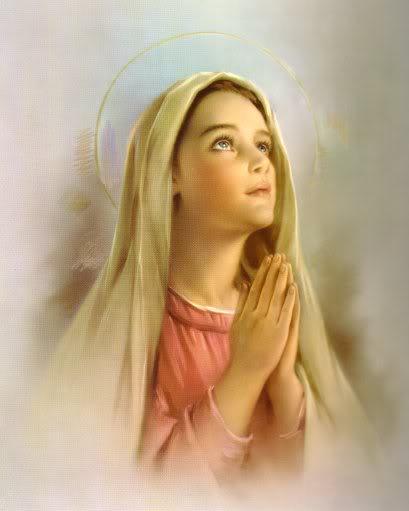
A true role model is one who possesses the qualities that we would like to imitate in our lives. And who would be more perfect for that title than the Blessed Virgin Mary? She is the perfect spouse, parent, friend, and relative. She is a woman of substance as she possesses outstanding virtues such as humility, obedience, detachment, charity, purity, … (name them all). Mother Teresa called Our Lady, “the most beautiful of all women, the greatest, the humblest, the most pure, the most holy… a model for all women.” In fact, one of her great secret of sanctity was her closeness to Mary whom she loved so much. She wrote: “Cling to Mary and ask her to teach you how to love Jesus more and more since no one did the will of God as completely as she did.”

Mary inspired admiration and emulation. She did not gossip. She was serene and at peace in the face of sufferings. She was obedient; unlike many of us “Cafeteria Catholics” who chose what we wanted to believe and what we wanted to disregard on the Church’s teachings. In a twentieth century setting, Mary is not the type who will post a selfie on social media, but who only wants our attention on Jesus. We cannot imagine her wasting so much time on long phone conversations, soap operas, computer games, and some social networking services. Her choice of clothes will be something elegant and modest, avoiding low neckline and short skirts.

We cannot go wrong in choosing Mary as our role model for today’s generation. By imitating and loving her, we have the key in our quest for sainthood. She will lead us straight to her Son, Jesus.

(Reference: “Mother Teresa’s Lessons of Love & Secrets of Sanctity” by Susan Conroy; “Catholic Truths for Our Children” by Patti Armstrong; “You can become a Saint!” by Mary Ann Budnik)
3

Categories
The ABC’s of Catholic Doctrine

The ABC’s of Catholic Doctrine by Lianne Tiu

Do you see Jesus in your housemaids and drivers?

Maids and drivers come in all shapes and sizes. They help us lighten our work; but at times, they can be a burden. As Christians, how should we treat them? Here are some suggestions:
-Give them a fair salary. Amounts can be based on the rates (more or less) offered by recruitment agencies. They can vary depending on each situation, such as if they have dependent spouses and children. Release their salaries on time, as agreed.

-Check on their basic needs. Are their sleeping quarters comfortable and well ventilated? Is there separation for the male and female quarters? Do they have enough and nutritious food? Do they eat and sleep at the right time?

-Be courteous to them. Use words like “Salamat,” “Good Morning,” “Paki—“ (Please). Call them by their names, not “Hoy!” or “Psst!”

– Control your temper when they make mistakes. Do not shout at them. Correct them in private and not in front of others. Explain to them why they are wrong. Be patient with their mistakes and defects. They wouldn’t be working for you with their low salaries if they had better opportunities. Stop criticizing, scolding, and belittling them. Compliment them for a job well done.

-Educate them. Allow them to attend classes on values, home-training skills or catechism. Enroll them in a part-time school if you can afford. Your motive should be to help and not for selfish reason of detaining them. Teach them to dress modestly, to choose wholesome radio/TV programs and magazines, to avoid familiarity with married people, and to have a marriage sanctioned by the church. Teach them proper hygiene.

-Get to know them. Talk with them about their families, interests and problems. Give them advice on their problems.

-Make them a part of your family. Remember their birthdays (give them gifts or prepare a small celebration), help them find good spouses, ask them to pray for your intentions (a small favor which they enjoy doing) – believe me, their prayers are powerful!

-Put yourselves in their shoes. Treat them the way you want to be treated. Are they allowed day-offs or a little self-indulgence like nail polish and make-up (for the maids)?

-Pray for them. Thank God for giving them to you. Allow them to attend Sunday Masses.

-Do not be too sensitive when your kindness is not acknowledged or repaid with gratitude. Rather, dwell on the fact that God is pleased with your good deeds. When they abuse your kindness or go overboard, let them know that they might get dismissed.

-Remember that they deserve equal rights and dignity. They are there to help you, not to be your slaves. Their humble work is not to be looked down. Their work, as long as it does not oppose God’s law, is good and noble, just like any “big time” job.

-Love them, with their flaws. See Jesus in them. By loving them, you are loving Him.

(Reference: St. Josemaria Escriva’s teachings on the value of work)

Categories
The ABC’s of Catholic Doctrine

The ABC’s of Catholic Doctrine by Lianne Tiu

Marriage, like diamond, is forever.

Most videographers capture the most important part of the wedding rite when the bride and groom express their consent in church, “…for better, for worse, for richer, for poorer, in sickness and in health, until death do us part.”

As years go by, the “happily ever after” seems to exist only in fairy tales, but not in real life. We realize that loving someone for one’s entire life can actually be difficult. These difficulties, which come in all shapes and sizes, may be an aspect of the other’s personality that gradually emerged when the knot is tied, differences in beliefs, priorities, and value systems, different ways of dealing with conflict, changes in mind and body as we age, etc.

Today, there is prevalence of marital infidelity and extra-marital affairs, of marriages ending in separation or divorce (especially in the Western world). The blame is not entirely with the couple, however, but with the narcissistic society that promotes the violation of marital vows, which is no longer pleasurable or easy to fulfill. The media and a “Me” generation contribute to a kind of mind-set, which seeks a life that is free from pain, discomfort, boredom, or unhappiness. Short-term affairs or extra-marital affairs become normal; while divorce becomes acceptable, and even commendable.

It’s about time we lovingly remind people of the word “commitment” – that we honor a marriage vow for life. In the present age, people are getting used to trendier terms, like “freedom,” ”choice,” and “having it our way.” Commitment, however, is to stay married because we vowed we would. It requires self-giving to continue when we don’t always “feel like it.” It entails patience to bear with each other’s faults until death. It needs loyalty to be faithful as long as we live. It requires humility and forgiveness to continue when there are hurt and anger. And most of all, commitment needs help from God, the author of marriage, to continue being one in flesh through prayers and the sacraments.

Our family, which we claim we truly love, is worth the struggle in spite of the obstacles and differences. Our children and grandchildren may gather some fortune and fame from us, but they will definitely inherit an immeasurable trust through our examples of faithfulness and commitment.

Pop star Rihanna sings about shining bright like a diamond. Marriage is like this precious diamond, which comes the Greek word adámas meaning “unbreakable”. It is a beautiful partnership; it is a lifetime commitment.

(Reference: “Raising Catholic Children” by Mary Ann Kuharski; “Marriage is Love Forever” by James Socias; Catechism of the Catholic Church; Wikipedia)

Categories
The ABC’s of Catholic Doctrine

“Suffering is a Gift of God”, The ABC’s of Catholic Doctrine By Lianne Tiu

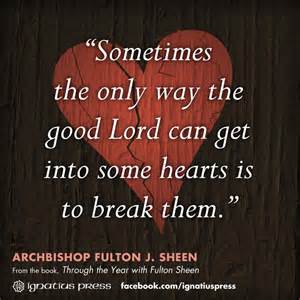
abcA death in the family, a broken marriage, an incurable sickness, … we can only cry like Jesus, ”My God, My God, why hast thou forsaken me?” At times like this, it is hard to see God’s love and providence.

Life on earth is a journey, a pilgrimage to heaven. It is not always easy. All of us experience suffering; even Jesus and Mary are not exempted. It is only in heaven that we can find true happiness.

It’s difficult to believe what St. Josemaria wrote, that man’s treasures on earth are hunger, thirst, heat, cold, pain, dishonor, poverty, loneliness, betrayal, slander, prison, … or what Blessed Teresa of Calcutta wrote: “Suffering, pain, humiliation – this is the kiss of Jesus.” Once she told this to a suffering lady who replied, “Tell Jesus not to kiss me-to stop kissing me.”

“Suffering is a gift from God,” Mother Teresa would add. This is because something good can come from an evil through God’s intervention. Suffering can change us for the better; it can help us earn merits; it can be used to atone for our sins; it can benefit those for whom it is offered (such as a conversion or a quick entry into heaven for souls in purgatory). No one wants this gift; but when it comes, we look at it in a new way, accept it as God’s will, and let Him do great things with it.

At times when we do not see the light at the end of the tunnel, let us remember that Jesus is also in the tunnel. He is with us.

We are not alone in our pain and suffering. He wants us to stop worrying and to trust in Him. What He chooses for us is what He knows is best for our salvation. He may shield us from suffering, or He may provide us with unfailing strength to
bear it.

The way to heaven and eternal happiness has always been the way of the Cross. The joy of Christ’s Resurrection cannot be accomplished without His passion and death. Suffering with faith-filled acceptance and love has always been a path to holiness and a way to save souls. But we need prayers; we need God. There is a big difference when we try to look at suffering in a positive light and when we embrace it rather than reject it. It becomes less painful when accepted. As St. John Vianney would say: suffering in serenity is no longer suffering.

(Reference: “Mother Teresa’s Lessons of Love & Secrets of Sanctity” by Susan Conroy; “The Way” by St. Josemaria Escriva; totus tuus blogspot “Christ’s Compassion for the Suffering”; “In Conversation with God” Vol. 1 by Francis Fernandez; “I Choose to be Free” by Jack Philip)doctrine

Categories
The ABC’s of Catholic Doctrine

“The Humble Work of a Homemaker,” The ABC’s of Catholic Doctrine By Lianne Tiu

Many full-time housewives, when asked what they do, feel belittled and give a humble answer “I’m just a housewife.” They fear being stereotyped as being overweight, under-educated, uninformed, and boring. They dread being labeled as homemakers who spend most of the time watching TV soaps or game shows, playing “candy crush” game, having body or hair treatment at beauty spas, shopping, and checking on “facebook.” We have to realize that not everyone who devote themselves to motherhood and full-time homemakers are like that.

In fact, many of them are talented and accomplished women. Although their work may be financially unrewarding and sometimes monotonous, they know that their commitment to their families is very important. Chopping onions, changing diapers, vacuuming carpets, tutoring a son, preparing clothes for the husband may not be as “glamorous” as the outside-of-home-work. But their rewards are the smiles, embraces, and love of their families.

A famous conductor of an orchestra was asked which instrument was the most difficult to play. He answered, “Second fiddle. I can get plenty of first violinists. But to find one who can play second fiddle with enthusiasm – that’s the problem. And if we have no second fiddle, we have no harmony!” First violins are often the stars of the show; they get the melody lines; they get to sit next to the audience. Behind them are the second violins who are hardly seen. They play a supporting role; they play the harmony to the first violins. Without them, the orchestra would sound incomplete.

The work of a homemaker may be compared to that of a second fiddle. It is actually the hardest role to play as it appears unfulfilling by world standard. We should not look down on the humble work of the home because God wants to bestow this unique role on married women. No work is unimportant when it is done and offered up for God. We just have to work intensely behind the scene without seeking applause or admiration. Jesus notices our continuous exhausting work and our little sacrifices (done cheerfully and without show). He sees them and gives His blessings. St. Josemaria said: “Never expect men to thank you for your work. Do not seek human compensations. Always work for love of Jesus Christ.”

We ask Mother Mary to help us play our best as second fiddle. She is THE EXPERT in this very important humble work of the home.

{This article is not meant to offend mothers who MUST work outside the home to provide for their families. They deserve our prayers and support. This is about those full-time career mothers who are in the work force not because of need but because of greed and prestige.}

(Reference: Raising Catholic Children by Mary Ann Kuharski; http://meetingintheclouds.wordpress.com )

Categories
Articles The ABC’s of Catholic Doctrine

The ABC’s of Catholic Doctrine: Is the novena a superstitious prayer? by Lianne Tiu

Novena, which comes from the Latin word “novem” meaning nine, is a nine-day public or private prayer for some special intention or occasion. Its purpose may be to adore God directly (such as the novena to the Sacred Heart of Jesus) or to venerate Mary, St. Anthony, or other saints. Why nine? It followed the time when Mary and Jesus’ first disciples spent nine days together in prayer between our Lord’s Ascension and Pentecost Sunday.

The novena is a legitimate form of devotion, which a Catholic may wish to observe. It is a sign of faith and trust in God’s love for us as we present our petitions, praise and thanksgiving before God. Some novenas are highly indulgenced by the Church.

A problem arises when the comments contained in the printed cards or papers meant to spread the novena prayers lead to attitudes bordering on the superstitious. For example: “Say this prayer to St. So-and-So for nine mornings for anything you desire. It has never been known to fail.” “This novena prayer is so effective; but one has to be sure that he really wants what he asks for (no changing of mind) before making the novena.” It becomes superstitious when we think that we can somehow automatically control our future through the use of “guaranteed” novena prayers or by carrying out certain acts, independently of God.

When we say the novena prayer of Our Lady of Perpetual Help, for example, we ask for the assistance of Mary (our Mother who is always ready to intercede with her Son on our behalf) so that God will grant us our request. We believe in His providence and goodness; we believe that He hears our prayers. Should our petitions not be granted, it is because He foresees that they will not lead to our ultimate good.

(Reference: “Towards Certainty” by Fr. M. Guzman)

Categories
Articles The ABC’s of Catholic Doctrine

“Is it wrong to undergo cosmetic surgery?” The ABC’s of Catholic Doctrine By Lianne Tiu

Cosmetic surgery, which refers to an operation carried out to improve one’s physical appearance, is in itself legitimate. Some examples are nose job, face lift, breast reconstruction, eyelid surgery, and liposuction. There are varied reasons why people undergo aesthetic surgery: to remove congenital deformities (such as an extra 6th finger), to remedy physical anomalies resulting from accidents, to enhance beauty (especially for those who have low body image). Modern society places a high value on beauty of the human body. Thus, an attractive physical appearance is important to get a job, to win a sale or business contract, to maintain or boost a career (as in the case of TV and movie personalities), to improve self-esteem, and to find a husband.

We have to be reminded, though, not to be overly concerned with our looks and how others view us. What we should be more “obsessed” with is the care of our soul. When we lose it, we lose God and everlasting happiness. Some surgeries to maintain and enhance our soul’s great dignity and beauty are: prayers and the sacraments, especially the Eucharist and Confession.

(Reference: “Towards Certainty” by Fr. M. Guzman; “My Catholic Faith” by Most Rev. Louis LaRavoire Morrow; “The Media and Influence on Body Image and Beauty” by Timothy Hexton (Yahoo Contributor Network Apr 6, 2006)

Categories
Articles The ABC’s of Catholic Doctrine

The ABC’s of Catholic Doctrine: “I have been changed for the better.”

Many of us attend Mass more than once a week, pray the Rosary regularly, and have great devotion to the Sacred Heart of Jesus. We say many prayers; yet people notice our bad tempers, our sharp tongues, our gloomy or touchy dispositions. What went wrong? Aren’t we supposed to be more holy?

Grace may actually be taking effect on our souls; although we are not aware of it as we appear to have many defects.

It could be that we do not have the right or the best intentions. We pray out of routine that we even forget that God is present while in Mass or in our visit to the Blessed Sacrament. Or we do it for show or out of obligation. Or we pray just to twist God’s arm for what we want, to ask for a litany of requests. The amount of grace that we will receive, therefore, will be little because it will depend on our intentions and dispositions.

It could be that God is giving us abundant graces through these forms of prayers; but we are not cooperating with them because of our pride, sensuality, love of comfort, or laziness. Rather than using the grace to mortify our tongues, we prefer to gossip or to shout at our house helpers. Or we could be in the state of mortal sin; since no matter how many hundreds of rosaries we may say, they do not have value in God’s eyes as we are not in union with Him. This, however, should not discourage us from praying and performing good deeds, because God may decide to pour us with actual graces (those spurts of spiritual energy that can lead us to return to Him through confession).

We have to realize that all prayers and spiritual practice (including reading the Gospels, praying the Angelus, going to confession) are means to help us become saints. They can help us change for the better, in fact, become “perfect as our heavenly Father is perfect” (which is God’s will for us). When we pray, it is important that we always cooperate with His graces by doing good and avoiding evil, by doing His will and not our wills. Thus, “our behavior and our conversation will be such that everyone who sees or hears us can say: This man reads the life of Jesus Christ.” (St. Josemaria Escriva)

(Reference: The Way by St. Josemaria Escriva; “You Can Become a Saint!” By Mary Ann Budnik; “The Faith Explained” by Leo Trese)

Categories
Articles The ABC’s of Catholic Doctrine

The ABC’s of Catholic Doctrine

WINNING SOULS FOR CHRIST:

How many people (Catholics and non-Catholics) did we bring closer to our faith in 2013? During the past years? During our lifetime? Many of us, Catholics, think that this missionary job belongs to priests and nuns. This, however, is not true.

We have seen and experienced the overly aggressive Protestants trying to win souls to their faith. They have infiltrated Catholic schools and brought thousands of Catholics to their churches. We feel saddened that our daughter does not attend Sunday Mass anymore but enjoys going to some Protestant fellowship, or that a friend threw or burned all the images of Mary and the saints in his home. They may have become better persons; for all religions contain some truth. But we are Catholics. We have been baptized and confirmed. We possess the whole truth of faith: the sacraments, the Scriptures, the Sacred Tradition, and the Magisterium . We have the surest means to be saved and to go to heaven; so what is stopping us from spreading our faith?

We may have contributed generously to mission collections, and we may be praying everyday for the missions. These are good and essential acts. Yet they are just a part of our missionary vocation. Some reasons why we are not sharing our faith with others may be due to a mistaken feeling of inferiority. We are afraid that we do not know our religion enough to discuss it with a non-practicing Catholic or a non-Catholic. In this case, we should do something – such as read the “Catechism of the Catholic Church,” attend catechism classes in order to dispel our ignorance. Our reluctance to share our faith may also stem from human respect. We fear being laughed at or criticized when we mention religion to others.

Two friends from the University of the Philippines were determined to convert one another to their faith. One was a Catholic and one was a Protestant. We would bet that our separated sister won the battle as they have more aggressive tactics to convert people; but with God’s grace, our Catholic sister converted her Protestant friend, who is now actively involved in Catholic apostolic works.

With our ingenuity, we will find many ways to bring non-practicing Catholics or non-Catholics closer to God. We should not be afraid. We will be sharing with them God’s own truth, not our own theory or opinion. We just have to remember that God will be more interested than us in the conversion. And at every step of the way, He will bombard them with abundant graces to bring them closer to Him.

In 2014, let us try our best to win at least one soul for Christ. We can imagine what the kingdom of God will be like if each one of us were to bring just one person closer to God each year.

(Reference: Seventeen Steps to Heaven by Leo Trese)

Design a site like this with WordPress.com
Get started