Categories
Pastoral Team

IMPORTANT NOTICE FROM THE PASTORAL TEAM

Novenas for Our Mother of Perpetual Help and the Sacred Heart of Jesus

For decades now, we have been praying the novena to Our Mother of Perpetual Help after the 7:30AM mass and before the 6:00 PM mass on Wednesdays, with a short exposition of the Blessed Sacrament at the end. Before Vatican Council II, it was rather common to have novenas with exposition of the Blessed Sacrament. Novenas, in those days, were held mostly in the afternoon. No masses were then held in the afternoon and evening. Hence, the exposition of the Blessed Sacrament served as a kind of substitute for the masses.

After the liturgical reform of Vatican Council II, however, masses are held daily in the morning, afternoon and evening. Hence, there is hardly any need for having the exposition of the Blessed Sacrament, in as much as the holy mass is celebrated right after the novena. We noticed that the novena booklet (Perpetual Help Novena)
page 19, says, ”Benediction or Holy Mass,” not “Benediction and Holy Mass.” In churches or chapels where no masses are held on weekdays, the exposition of the Blessed Sacrament is right.

In view of this, the pastoral team has decided that, if the mass is to follow the novena prayers in honor of the Mother of Perpetual Help, no exposition of the Blessed Sacrament will be held.

As for the First Friday devotion of the Sacred Heart of Jesus we need to keep in mind the norms laid don by the church regarding holy hours. In the Second Instruction “Tres Abhinc Annos” 4 May 1967, on the implementation of the Constitution on the Sacred Liturgy, it says: It is necessary that when the exposition of the Blessed Sacrament is solemn and prolonged, it should be begun at the end of the Mass in which the host to be exposed has been consecrated.

Thank you.
Pastoral Team

Categories
Pastoral Team Special Events

Thanksgiving Dinner & Celebration of the Holy Eucharist by Newly Ordained Franciscan Priests, by Cristina Teehankee

This slideshow requires JavaScript.


On behalf of Fr. Reu Jose Galoy, OFM Parish Priest and his Pastoral Team and the Parish Pastor al Council, headed by Jayme Blanco, President and Edmund Lim, Vice President, we congratulate the Order of Friars Minor, Franciscan Province of San Pedro Bautista, Philippines for their three newly ordained Priests: Rev. Fr. Emerson F. Bumagat, OFM from Camiguin Island, Calayan, Cagayan, Rev. Fr. Fernando B. Radin, Jr. OFM from Camotes Island, Cebu City and Rev. Fr. Angelo M. Dizon, OFM from Sampaloc, Manila.

Santuario de San Antonio Parish was fortunate to be one of the Parishes visited by the newly ordained priests for their Thanksgiving Mass, held Monday, May 4, 2015. A Thanksgiving Dinner celebration immediately followed at the Convent Garden attended by Parishioners who have journeyed with them through the years in Spirit . . . in prayer . . . and assistance. Although the Parishioners did not get to know much about the newly ordained priests, their smiles, kind words, prayer and diligent work, sparkled as sons of light.

Categories
Fr. Laurian Janicki

Love is beyond “Friendly” Friendship. St. John 15:9-17, 6th SUNDAY OF EASTER SUNDAY GOSPEL REFLECTION By Fr. Laurian Janecki, OFM

Being religious or being spiritual is not necessarily the same as having faith and a life in the church, and being friendly is not the same as friendship. Last week we talked about branches connected to the vine and bearing fruit. There, Jesus told the disciples that to bear fruit we must remain connected to him.

Today Jesus makes it clear that this means remaining in his love – actively continuing in his love. If we keep his commandments, we will remain in his love, loving one another as he has loved us. What is important is that the focus of the command is to the disciples (us) and the church.

We cannot be left on our own in matters of love. Love cannot be a matter of warm, fuzzy and natural feelings towards others. Strangely it comes to us as a command. The question is, “But what good is a command to love someone?” We associate love with passions and feelings, affections rising within us based on likes and dislikes. We certainly say, “If I love someone, it won’t be because somebody gave me a command to do so.”

Jesus’ command to love is more than feelings and inclinations. Christ loves us when we are ugly; he loves us when we lack courage, when we behave hatefully, when we crucify him. When all this can be said about us, Jesus still loves us with the mercy only God can give us.

Husbands and wives are to love one another not just when they like it, but with constancy and fidelity that seeks the other’s good every day. Many have failed at this profoundly but it still remains the vision and demand of marriage. Feelings are never an adequate excuse or reason for not loving – our love must be “acting on behalf of the other’s well-being.” This love says, “I am for you.” Why? Because that is how God in Christ has loved us precisely when we are un-loveable.

This is the love that we should have available to everyone because we learn it from Jesus. The command is to: “Love one another as I have loved you.” This is how we are to love. He commands love from us, but not as a master who commands servants or a general of his soldiers. Jesus makes us his friends. The strength of this command is that it comes to us in extraordinary ways: Jesus made us his friends, and he lets us in on what he himself knows. He includes us in such a way that we share something with him that commands love of us. “For all that I have heard from my Father I have made known to you.”

Christ had made us his friends and therefore he can command us to love one another. How? Loving as he loved us. Our friendship with him makes us friends of one another. Being in him, we are brought together to accomplish what we cannot and would not accomplish on our own.

We Christians believe that friendship is essential to virtuous, good and decent living. We are to see and understand ourselves now through friendships, through Jesus’ friendship and the community of friends to which we belong because of our baptism.

We must learn to live as Christ’s friends and in friendship with him, to become like him. We are learning to love with him, to enjoy loving with him in his friendship – forgiveness, trust, counting on one another, fidelity, telling the truth.

Friends will seek the other’s good event at a cost to themselves. “No one has greater love than this, to lay down one’s life for one’s friends. You are my friends if you do what I command you.”

In the church, a friend of Jesus should be our friend, my friend and your friend. Jesus commands us to love him and one another with the fidelity with which he has befriended us. So we embrace each other with the peace which is his peace regardless of arguments and sentiments of the likes or dislikes. And when we do, it is the Holy Spirit in us and Christ’s command of friendship living in us.

“It is risky to be open to God, realizing how our thinking and acting might be challenged. We need courage to be Christ’s Body and announce to the world the joy of Easter, hope of the Resurrection. With courage in the Risen Lord, we can imagine a better world and cooperate with God in his coming.” Maya Angelou.

“In the Spirit: I Wouldn’t Take Anything for my Journey Now.” Random House, NY, 1993.

We must draw upon the power of the Spirit for our courage and be the light of Christ for a world in need. The Holy Spirit is the creative living memory of the church. God’s spirit unites us and energizes us as we come together to share, relive and learn from the memory of the Risen Christ. Jesus, the wise rabbi, the compassionate healer, the friend of the rich and the poor, the saint and the sinner, the obedient and humble Servant of God – is a living presence among us, a presence that makes us a community of faith, calling us together to offer Christ’s love, support and compassion to one another.”

“This is my commandment: love one another as I love you.”

About Fr. Laurian and his other reflections…

Categories
Fr. Reu Galoy

“Love one another as I have loved you.” A Sunday Reflection, 5th Sunday of Easter B By Fr. Jesus Galindo, OFM

During the early centuries of the Church, when Christians were being persecuted and martyred, some of them offered to die in place of others (just like St. Maximilian Kolbe did during World War II in the concentration camp of Auschwich). The pagans were amazed at this and remarked, “See how they love one another.” Reading today’s papers or watching the news on TV, all we can say is, “See how they kill one another. See how they cheat one another. See how they insult one another.” (Wait till the electoral campaign begins.)

The great Mahatma Gandhi, when asked to express his views about Christianity, said: “ I have great respect for Christianity. I often read the Sermon of the Mount and have gained much from it. I know of no one who has done more for humanity than Jesus. However, the trouble is with you, Christians. You do not being to live up to your own teachings.”Another Hindu monk who read the story of Jesus in the gospel said to a Christian: “If you can live what is taught in this book, you will convert the whole of India in five years.”

Of course, not everything is dark and negative about us. There are also some good things going for us. Fr. Joseph Dau Vu, SVD, chaplain to Vietnamese refugees in Morong, Bataan, tells how the “boat people” were abused, robbed and even killed by fishermen from neighboring countries. But when Filipino fishermen spotted them, they offered them food and shelter. Why – they wondered? Because they are Christians. (Cf. Bel San Luis, SVD, Word Alive, Year C. p. 57)

“I give you a new commandment: love one another.” Jesus made this pronouncement in his farewell discourse, during the Last Supper. Hence, it is his last and most urgent wish. As if he were saying: “I am going now. You might forget all the other things I did and said. Just don’t forget this one. This is the summary of everything I have told you.” And so it is indeed; for this is what our final “exam” will be about: Not about doctrines, not about catechism, not about the Bible, but about LOVE: “I was hungry and you gave me food. I was thirsty and you gave me drink.” Etc.

Why is this commandment called new? What is new about it? Love of neighbor is found in the Old Testament: “You shall love your neighbor as yourself.” (Lev.19:18) All other religions (Hinduism, Buddhism, Islam) teach about love also. What, then, is new in Christ’s commandment? “As I have loved you,” that’s what is new. Our love has to be like Christ’s, that is, sacrificial. Not emotional, not romantic, but self-sacrificing – to the point of death.

Love means different things to different people. It is perhaps the most used and abused word in the dictionary. In the name of love, young lovers elope, or steal. In the name of a newly-found “love” some spouses abandon home and children. That might be passion, infatuation or lust; but certainly not Christ’s love.

“This is how all will know that you are my disciples, if you have love for one another. ”We usually recognize people by their uniform or attire, by which we can tell whether a person is a doctor, a policeman or a security guard. In church we wear habits, pins or crosses. We know well, however, that these external symbols can be quite deceiving. We often hear stories about truants disguised as priests, policemen, collectors etc. whose sole purpose is to extort money.

Christ did not choose any external mark or symbol to identify his followers. Love is, or should be, the mark of our identity, our uniform and our habit. We may wear crosses or pins, recite rosaries and novenas, receive holy communions, etc. If then we go home and abuse or insult our household help, our yayas, our drivers…we simply are not true disciplesof Christ. Discipleship is not a matter of external attire; it is a matter of a loving heart.

About Fr. Jesus and his other reflections…

Categories
Fr. Baltazar Obico Reflections

Good Shepherd, SUNDAY GOSPEL REFLECTION 4th Sunday of Easter By Fr. Baltazar Obico, OFM

The English language uses the word “herd mentality” – it comes from the pastoral setting of tending the sheep. It means a mindless grouping/congregation of people very similar to our political phenomenon called HAKOT system, where people are grouped together in a place not knowing why they are there in the first place, except that everybody is there. The basic disability of the sheep is its lack of vision, hence it is almost half blind. Therefore their security is being together. Their sense of smell is their source of action. No other reason except vulnerability and survival instinct put them together.

Today the fourth Sunday of Easter, the image of the shepherd and the sheep dominate the readings from Psalm 100 to the second reading: Revelation 7 from the gospel acclamation as well as the very short gospel proclamation John 10:27-30. The early church has no symbol including the cross more prominent than the Good Shepherd. There is no better image to illustrate the intimate nature of our relationship with God than the image of shepherding.

When the image of the sheep is applied to us it signifies dependence, that we are weak and in need of help. Sheep are not endemic to us except those who get to eat roast lamb in fine dining places. It may not occur to us that the sheep are the dumbest of all animals. They go to the gullies, become entangled in brambles, fall into ditches and wander into predators’ territory. It is because they do not know any better, they could hardly see. No domesticated animal is as defenseless. A dog has enough intelligence to find his way home. (Remember Japan’s Hachiko.) It has some acute sense of smell and hearing to find food; it can defend itself against other animals or run away from one if need be. A cat is a loner with enough cunning to take care of the worst situations. It has been said that cats have nine lives (Harold Buetow).

It is neither of those ways with the sheep. It is so trusting that he mistakes anybody as his shepherd including the marauders. It can be beaten black and blue, bloodied without giving a fight or signs of pleas for help. Hence we hear the expression “like a lamb led to the slaughter.” No groan, no sigh, only tears in its eyes when it is being slaughtered. This is how vulnerable the sheep is with out a shepherd to guide him to the grazing lands and protect him from the predators.

For us to admit that we are sheep is to put our trust completely, unreservedly in Jesus, the Good Shepherd. The relationship between this kind of shepherd and his sheep is a power of connectedness, of empathy. The relationship between the Good Shepherd and his sheep is so intimate that it is an extension of the relationship between the Father and the Son. The Father’s omnipotence is the guarantee of Jesus’ promises; his promise of eternal life, that we shall not perish, that no one can take us out of his hands as promises to his flock that can be fulfilled by the Father. With him we shall not only “never perish,” not only protected from danger and harm, but will be led to eternal life where we would not want anything for God is the only necessity in our life.

1. Like sheep, we are almost half blind. We would not be able to see what lies beyond the horizon that awaits us. Neither can we see the dangers around us trying to exploit and mislead us. It is Jesus alone who can lead us to the eternal pasture. The grind of daily life can lull us to contentment and we lose sight of the beyond. We can get so engrossed with daily cares and concerns that we are not able to see the marvelous future ahead of us.
2. Jesus is not only content in giving us the vision. Aside from images of security of giving us the basic necessities, he leads us to the right paths, to mean all danger averted. At the moment of greatest danger, God still provides, thus the Psalmist can say “fear no evil.” God’s scepter/rod connotes royal authority hence his guidance and provision are reliable because God is sovereign. Jesus as Good Shepherd will put his life at risk in the face of danger.
3. The caring and tending of the sheep includes knowing the sheep personally, each by name. An intimate relationship between the Good Shepherd and the sheep binds them in an inexplicable way, The shepherd knows each one. Who is missing, who is sick, who has no appetite. There is no stranger in the flock. We are all known. None should feel she/he is unrecognized. But more than recognition, knowing means involvement in our lives.

In this age where many communities, neighbors are strangers to one another, whose neighbors scarcely know the name of those living next door and when many in fact seek anonymity, let us put away our isolation and alienation. Let us start hearing the voice and follow the Good Shepherd that we may become one flock where one knows and is known in the process.

About Fr. Tasang and his reflections…

Categories
Fr. Reu Galoy

THANK YOU FROM FR. REU

This slideshow requires JavaScript.

With the culmination of the Lenten and Easter Celebrations, Fr. Reu would like to thank the following that helped in the preparations and implementation of our activities:
1.) Mike Julian and Alvin Lacambacal for organizing our Parish Visita Iglesia.
2.) Crissy Castillo and Grace Padilla for organizing our Seder Meal; the Galvez Family for agreeing to be the Head family and Nonon Baang for being our Cantor during the meal.
3.) CWL for organizing the palms sold during Palm Sunday.
4.) Our volunteer apostles during the Washing of the Feet.
5.) SYA heads and members for supporting our priests during the Chrism Mass.
6.) Javier Gomez for arranging the prayers during the Thursday Vigil.
7.) All the Ministries and their members who participated in the Thursday Vigil.
8.) Arch. Anton Mendoza for donating flowers and decorating the Altar of Repose.
9.) Sharers from the JPIC, OFS, CWL, Prison & Hospital Ministries and the CCD.
10.) Mrs. Entang Carballo for Organizing our Village Stations of the Cross on Good Friday Morning and Jun Rodriguez & Family for leading the songs and prayers.
11.) Mrs. Dora Cantada for organizing the Good Friday procession in Dasmarinas Village; Danny Dolor for the flowers in the Mater Dolorosa Carroza, Ramon Pastor of San Ramone flower shop for the Carroza of the Sto. Intierro and Gili Gallego for the flowers in the Mary Magdalen Carroza used in this procession and to Fely Kintanar for Sponsoring the refreshments provided at the end of the procession.
12.) To Alli and Alla Raval for organizing the SSAP Stations of the Cross at the Taguig City Jail
13.) Lester Delgado, Karen Blanco and our Family Life Ministry for teaching and organizing our little angels for the Easter Salubong.
14.) Maria Tanjuatco for the flowers in the carroza of the Risen Christ, Carmen Garcia for flowers in the Mater Allegria; Mia Cabawatan of Bloomwoods Flowershop for the flowers in our Church Altar during Easter and Mr. John Carovich for the flowers at the side altar.
15.) Our very own Mother Butler Mission Guilds for providing the clean linens and cloth used in our services.
16.) Our altar servers who participated during the Holy Week.
17.) The hard working ladies in the Altar environment ministry especially heads Wilma Huang and Zari Poe for all the decorations and arrangements during our Holy Week services.
18.) All the Titas who although have retired from active ministry work continued to support and guide us especially Mrs. Auring Villanueva, Mrs. Lulu Goquingco from the Altar Environment ministry and Mrs. Babing Abella for writing the guide book on our Liturgical activities used by the Worship Committee for the year.
19.) Mrs. Amelita Guevara and Coro de San Antonio for providing the music during all the services in Holy Week and to all our music ministers, accompanist, choirs and song leaders who sang on Easter Sunday.
20.) All EMHC Lay ministers and Lector & Commentator members who served during the Holy week as well as our PPC president Jaime Blanco for helping organize the events.
21.) Mrs. Dee Jalandoni Chan and Mrs. Amelita Guevara for combing through the liturgies from Palm Sunday all the way to the Saturday Vigil and making sure it went smoothly.
22.) Bernadette for taking care of all the important back room work
23.) All the members of the Worship Committee and its head Mr. Edmund Lim who is serving his last year as our Worship Coordinator this liturgical year.
24.) The Pastoral Team members Fr. Serge, EJ, Fr. Tasang and Fr. Laurian

And special thanks to all of you for participating in our Lenten and Holy Week observations.

Fr. Reu Jose C. Galoy, OFM

Categories
Fr. Reu Galoy

SUNDAY GOSPEL REFLECTION By Fr. Reu Jose C. Galoy, OFM

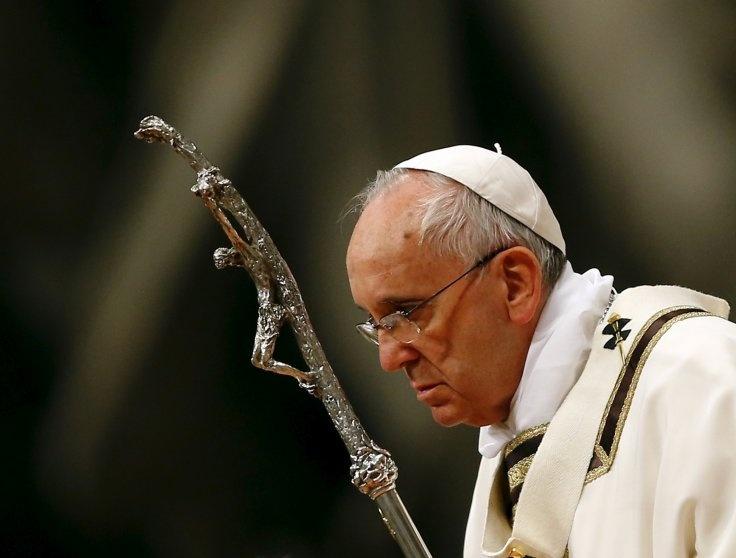
untitledAs We Celebrate the Feast of Divine Mercy, Let Us Listen to the Top 10 Mercy Quotes of Pope Francis:
1. I think we too are the people who, on the one hand, want to listen to Jesus, but on the other hand, at times, like to find a stick to beat others with, to condemn others. And Jesus has this message for us: mercy. I think — and I say it with humility — that this is the Lord’s most powerful message: mercy.

2. It is not easy to entrust oneself to God’s mercy, because it is an abyss beyond our comprehension. But we must! … “Oh, I am a great sinner!” “All the better! Go to Jesus: He likes you to tell him these things!” He forgets, He has a very special capacity for forgetting. He forgets, He kisses you, He embraces you and He simply says to you: “Neither do I condemn you; go, and sin no more” (Jn 8:11).

3. Jesus’ attitude is striking: we do not hear the words of scorn, we do not hear words of condemnation, but only words of love, of mercy, which are an invitation to conversation. “Neither do I condemn you; go, and do not sin again.” Ah! Brothers and Sisters, God’s face is the face of a merciful father who is always patient. Have you thought about God’s patience, the patience He has with each one of us? That is His mercy. He always has patience, patience with us, He understands us, He waits for us, He does not tire of forgiving us if we are able to return to Him with a contrite heart. “Great is God’s mercy,” says the Psalm.

4. In the past few days I have been reading a book by a Cardinal … Cardinal Kasper said that feeling mercy, that this word changes everything. This is the best thing we can feel: it changes the world. A little mercy makes the world less cold and more just. We need to understand properly this mercy of God, this merciful Father who is so patient. … Let us remember the Prophet Isaiah who says that even if our sins were scarlet, God’s love would make them white as snow. This mercy is beautiful.

5. God’s mercy can make even the driest land become a garden, can restore life to dry bones (cf. Ez 37:1-14). … Let us be renewed by God’s mercy, let us be loved by Jesus, let us enable the power of his love to transform our lives too; and let us become agents of this mercy, channels through which God can water the earth, protect all creation and make justice and peace flourish.

6. Together let us pray to the Virgin Mary that she helps us … to walk in faith and charity, ever trusting in the Lord’s mercy; He always awaits us, loves us, has pardoned us with His Blood and pardons us every time we go to Him to ask His forgiveness. Let us trust in His mercy!

7. In today’s Gospel, the Apostle Thomas personally experiences this mercy of God. … Thomas does not believe it when the other Apostles tell him: “We have seen the Lord.” … And how does Jesus react? With patience: Jesus does not abandon Thomas in his stubborn unbelief … He does not close the door, He waits. And Thomas acknowledges his own poverty, his little faith. “My Lord and my God!” with this simple yet faith-filled invocation, he responds to Jesus’ patience. He lets himself be enveloped by Divine Mercy; he sees it before his eyes, in the wounds of Christ’s hands and feet and in His open side, and he discovers trust.

8. Let us … remember Peter: three times he denied Jesus, precisely when he should have been closest to him; and when he hits bottom he meets the gaze of Jesus who patiently, wordlessly, says to him: “Peter, don’t be afraid of your weakness, trust in Me.” Peter understands, he feels the loving gaze of Jesus and he weeps. How beautiful is this gaze of Jesus — how much tenderness is there! Brothers and sisters,let us never lose trust in the patience and mercy of God!

9. I am always struck when I reread the parable of the merciful Father. … The Father, with patience, love, hope and mercy, had never for a second stopped thinking about [his wayward son], and as soon as he sees him still far off, he runs out to meet him and embraces him with tenderness, the tenderness of God, without a word of reproach. … God is always waiting for us, He never grows tired. Jesus shows us this merciful patience of God so that we can regain confidence and hope — always!

10. God’s patience has to call forth in us the courage to return to Him, however many mistakes and sins there may be in our life. … It is there, in the wounds of Jesus, that we are truly secure; there we encounter the boundless love of His heart. Thomas understood this. Saint Bernard goes on to ask: But what can I count on? My own merits? No, “My merit is God’s mercy. I am by no means lacking merits as long as He is rich in mercy. If the mercies of the Lord are manifold, I too will abound in merits.” This is important: the courage to trust in Jesus’ mercy, to trust in His patience, to seek refuge always in the wounds of His love.

Source:http://www.thedivinemercy.org/news/story.php?NID=5380

About Fr. Reu and his reflections…
Categories
Articles Fr. Robert Manansala

“THINK, FEEL, DO” A Lenten Recollection By Javier Luis Gomez

untitled

“The only tragedy in life is not to be saint.” – Léon Bloy

At this year’s Lenten Recollection, Fr. Robert Manansala, OFM delivered a stirring reminder of the message of Pope Francis and how we can each internalize the Holy Father’s teachings. The message he focused on was Francis’ call to use the threefold human language of the mind, the heart and the hands. As Christians, we need to be able to strike this threefold balance in order to authentically live out our calling.
Fr. Robert
Fr. Robert starts out by saying that the wisdom of Pope Francis is as ancient as the Church itself. According to our Lord, the greatest command is to “love the Lord your God with all your heart, and with all your soul, and with all your strength, and with all your mind; and your neighbor as yourself.” (Lk 10:27) In that statement, we can already see the idea of the necessity of the mind, the heart and the hands – to think, to feel and to do.

But how are we supposed to apply this pattern of “think – feel – do” to our lives? Fr. Robert suggests that we can understand this from the background of Pope Francis as a Jesuit – rooted in the teachings of St. Ignatius on discernment. In his writings, Ignatius emphasized the necessity of these three faculties in order to effectively carry out the will of God.

The first step is to think: In other words, to use our intellect to understand the situation that is presented before us. To consider all the possibilities, the risks, the benefits, the consequences all one or more situations.

Thinking is not enough though, we are also called to feel. In this step Ignatius says that we are to pay attention to the stirrings in our heart. He believes that God can speak to us through the deep emotions we feel. If thinking about a situation fills us with consolation, then it may be that is what God desires for us as well.
1
The final step is to act! Ignatius with his military background was a man of action, and he applied this to the spiritual life as well.

It is not enough to strategize and plan all day. As in battle, there must necessarily come a time for execution. Once we have considered the possibilities and reflected on our inner stirrings, we are to act – trusting that we are responding to the will of God.

Categories
Fr. Laurian Janicki Reflections

PALM SUNDAY, A Sunday Gospel Reflection By Fr. Laurian Janicki, OFM

When I was a kid, this was always a busy week, clean-up week. There was planning for the big meal next Sunday – Easter. Would it be ham or lamb? Some years, I’d have a new suit – usually a couple sizes too big, so I could grow into it. My mother would be cleaning our home for company. There were eggs to dye and chocolate to look forward to, and lamb cake – pound cake shaped as a lamb.

For a lot of us, it can still be time for planning. But before we get too caught up in next Sunday, we need this Sunday. We need to remember.

Remember that the crowd that cheered Jesus also condemned him. Remember that the voices praising him, also called for his death. Remember that those who love him and promised loyalty also abandoned him, denied him and betrayed him.

And if you want to know who did that, just look at the palm branches in our hands. We are guilty.

While we may not want to admit it, Christ’s passion goes on today. Our betrayal of him continues in ways large and small.

How often do we praise God on Sunday…and damn him on Monday. How often do we shrug him off when things become too difficult or the rules too hard or the demands of the Christian life too taxing? How often do we treat love as just sentiment for greeting cards, and not a command for living?

Jesus continues to bleed and weep and cry out: “Why have you abandoned me?” He cries out today to us. Whatever you do to the least, he said, you do to me.

What do we do? We encounter Jesus on the MRT, step over him on the sidewalk, and go out of our way to avoid him when we feel like he might make demands on our time. At the office, we make jokes of someone, spread gossip about someone at the water cooler. We suck up to people who are more popular, or attractive, or influential at work – and barely give the unimportant person who answers the phone the time of day.

Whether we realize it or not, we see Jesus every day, read about him in the newspapers, hear about him in the news. He is everywhere where there is someone who is small, or neglected, or disrespected, or discarded. He is with the unwanted and unloved, the bullied and abused. Why have youabandoned me?

Do we hear him?

We find ways to justify our choices. But it can’t be denied. Whenever we choose death over life, sin over the gospel, popularity over integrity, indifference or disdain over love – in short, whenever we have turned away from Christ – we who claim to believe in him have, instead, betrayed him.

We have said, “Give us Barabbas.” We have said, in effect, “Crucify him.” And we have done it with palm branches in our hands and the echoes of “Hosanna” in the air.

We need this Sunday to remember that. And we need these branches as a reminder – and a challenge.

They remind us that we re called to be heralds of Christ – to celebrate him the way they did that day in Jerusalem. And these palms challenges us to keep crying “Hosanna,” to keep proclaiming the Good News – even when the world attempts us to do otherwise, even when it seems like it would be easier to go with the crowd and simply choose Barabbas.

These palms challenge us not to turn our back and walk away. They challenge us to not step over Christ or ignore him. And they challenge us not only to remember what we have done to him, but what he has done for us.

This is what this Holy Week is about.

Before we look ahead to next Sunday, Easter, and the big plans and a big meal, look back. And look within your heart… And look to these palms. Look at what we are called to do…and who we are called to be.

About Fr. Laurian and his other reflections…

Categories
Fr. Jesus Galindo Reflections

“It Is In Dying That We Are Born To Eternal Life”, A SUNDAY GOSPEL REFLECTION for the 5th Sunday of Lent B By Fr. Jesus Galindo, OFM

Those words from the Peace Prayer of St. Francis very aptly express the message of today’s gospel. The incident in today’s gospel took place right after Jesus’ triumphant entry into Jerusalem (which we will recall next Sunday). The authorities were greatly disturbed by the event. “We are getting nowhere; the whole world has gone after him,” bemoaned the Pharisees (Jn 12:19). As if to prove them right, today’s gospel tells us that some Greeks, pagans at that, showed interest in seeing Jesus. They did it in a way very familiar to us: They approached somebody who could help them.

We don’t know whether they actually got to see and talk to Jesus or not; the gospel does not satisfy our curiosity. We don’t know either whether Jesus’ words are addressed to them or not. But we do know that Jesus’ words are valid and relevant for all – including ourselves: “Unless a grain of wheat falls to the ground and dies, it remains just a grain of wheat.” What a simple image, yet so rich and profound.

Jesus was speaking for himself. He was just a few days away from his passion and death, and he understood fully well that he had to give up his own life in order to give life to the whole world. It was not easy. The gospel describes the inner crisis Jesus went through, and how he struggled with the specter of death: “I am troubled now. Yet what should I say? ‘Father, save me from this hour.’ But it was for this purpose that I came to this hour.”This inner struggle is John’s equivalent of Jesus’ agony in the Garden of Gethsemane recorded in the Synoptic Gospels. It was not easy for him, but he submitted to the Father’s will.

The words of Jesus (“unless the grain of wheat…”) remind us, first of all, that we are the fruit and the harvest of other people’s toil and death, both as a nation and as individuals. We are what we are because of the death of the many unknown soldiers and unsung heroes;because of the sweat and toil of our ancestors. They died so that we might live. (See story of the bamboo.)

In the same manner, our toil and self-denial will bring about new and better life for others. Dying does not have to be taken literally, in the sense of losing one’s life. It can also mean dying to pride, selfishness, hatred, drinking, drugs, gambling etc. People “die” to different things for different reasons: Some people “die”to excessive eating and drinking for a better health. Students “die” to leisure and recreation for the sake of honors. Athletes “die” to comfort and pleasure for the sake of honors. And so on.

There was a married young man who had a drinking habit. He spent more time with his drinking buddies than with his family. Eventually, his marriage broke up and he lost his job. As life without his wife and children was unbearable for him, he sought to reconcile, but his wife would agree only if he stopped drinking and got a job. Swallowing his pride, he set on the path of recovery. He took all sorts of odd jobs to earn some money. Little by little he was able to rebuild his life and his marriage. It was by dying to his pride and to his vice that he brought new life to himself and his family.

The only way for us to make our life meaningful and fruitful is to spend it at the service of others. It takes great faith and courage to understand this – and even greater courage to put it into practice. But that is the way it is. That is the way the Lord Jesus did it. And that is the way he wants us to do it! This is what he meant when he said: “Whoever loves his life loses it, and whoever hates his life in this world will preserve it for eternal life.”

About Fr. Jesus and his other reflections…

Design a site like this with WordPress.com
Get started