Categories
Articles Holy Days Special Events

“Seven Last Words of Christ” by Javier Luis Gomez

“For as in one body we have many members, and all the members do not have the same function, so we, though many, are one body in Christ, and individually members one of another.“

Rom 12:4-5

As we enter into Holy Week, we approach the summit of the liturgical year. It is a time that draws us in to the very heart of the Christian mystery. Through the Triduum the saving love of God continues to manifest itself in our lives today.

To help us enter more fully into the mystery, we invite everyone to attend a meditation on the seven last words of Christ. Friday is the day that Jesus died on the cross. It was on this day that his body was beaten, persecuted, scourged, spat on and crucified. Today, Christ’s body is still tortured, persecuted, discriminated and killed. Beyond the borders of the Philippines, Christians all over the world continue to participate in the sufferings of Christ.

This unique meditation will bring to us sharers from different backgrounds and different cultural milieu. They will share with us their experiences of being Catholic in different parts of the world, and how in their experiences they find solidarity with Jesus Christ.

From Malaysia, Peter Toyat shares with us his experiences living in a country that is a melting pot of different faiths and cultures. Peter is actively involved in Christian-Muslim dialogue and interreligious dialogue in his home country.

Ian Monsod is from our parish and has recently returned home after living in the America for many years. He brings to us a story of struggling to keep his faith in a culture that is becoming increasingly secularized.

Sister Luz Mariais a Columbian sister who has been in the Philippines for many years, working at the Holy Family Home is Taguig. She compares her Latin-American roots to our own Filipino context and how there is much we can learn from each other.

Sr. Mary Vanaja, MCJ (Vana) is an Indian sister shares with us the history of the Indian church and how it has deep Christian roots that come out of the period of great missionary evangelization. The Church in India today faces many struggles that are shared by many Asians across the region.

Fufu Widjaya is a wife and mother of three young children. She has lived in Manila for almost ten years now, after having grown up in Indonesia. She shares with us her experiences growing up as a minority Catholic in a country that is mostly Muslim – and how that experienced has shaped her today.

Father Rey Legayadahas recently spent much time stationed with the Franciscans in Spain. Over his time there he has seen many of the changes that the Church in Europe has undergone and he shares his own insights on that reality.

Mara Eala spent some time after her studies to volunteer with the Assumption sisters in east Africa last year. She traveled around Tanzania and Kenya helping the sisters with their ministry. She shares with us what she has seen from the Church in Africa.

Each of the sharers will share with us their experiences with the universal church. As we contemplate on the sufferings of Christ, let us also meditate on the sufferings the body of Christ continues to experience today.

The Seven Last Words takes place on Good Friday – 1:30pm to 3pm.

***
1509061_10152007647942408_1072999357_n
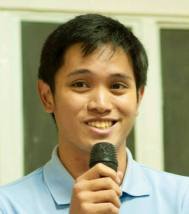
Javier teaches at the Ateneo de Manila University and is the head of the Evangelization Ministry at Santuario de San Antonio. He continues to work with young people both in and out of the parish.
Categories
Articles Family and Life Ministry

Deepening Spirituality through Prayer, Sacrament and Service

IMG_5190
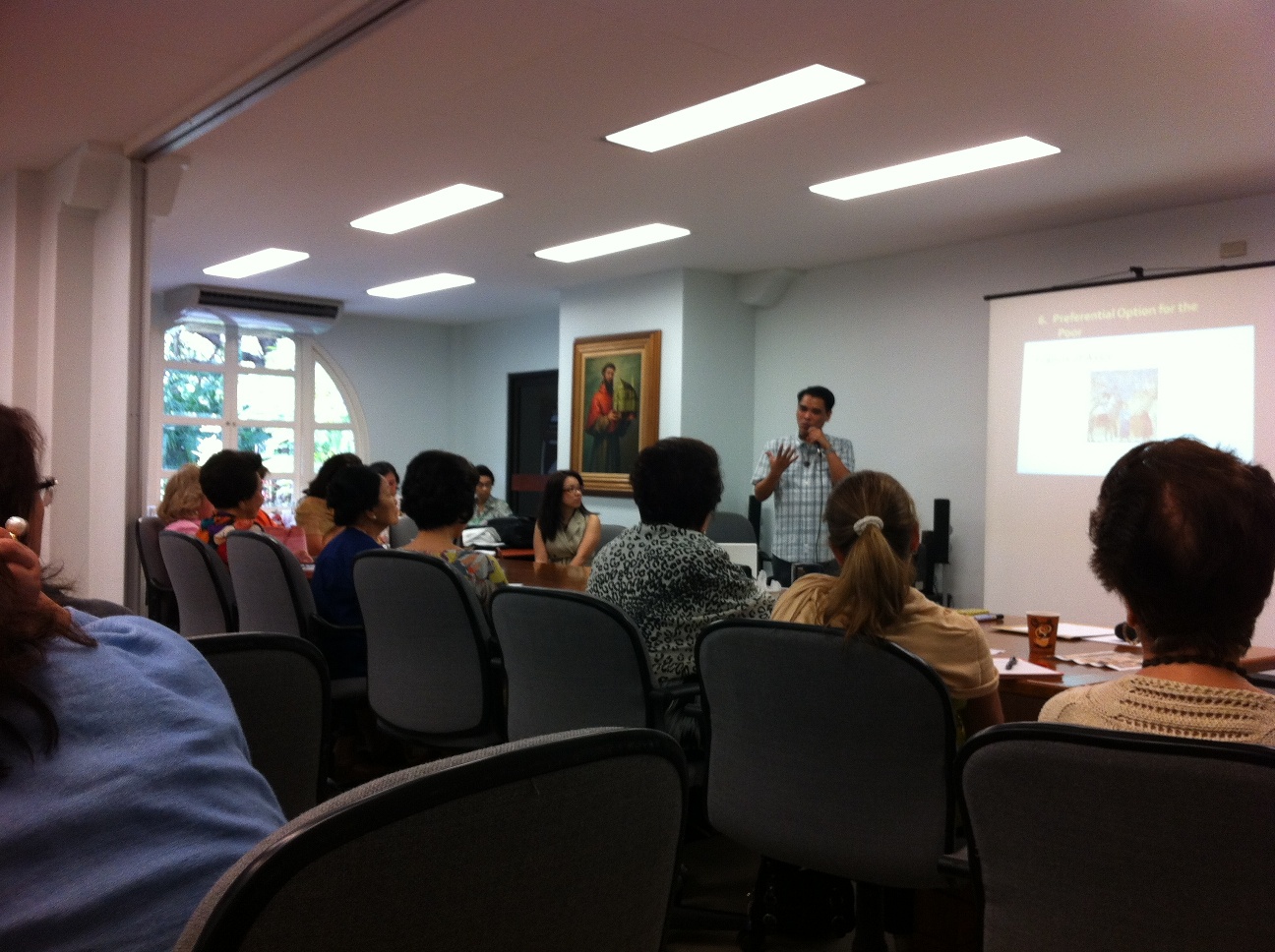
The Family Life Ministry of Santuario de San Antonio organized a half-day Lenten recollection, which was held last Saturday, March 8, at the Parish Center. Its theme was on “Deepening Spirituality through Prayer, Sacrament and Service.” It was facilitated by Fr. Roberto Buenconsejo, SJ, Assistant Director of the Center for Ignatian Spirituality at Loyola Heights, Quezon City. Members of different parish committees, parishioners, as well as some parents and teachers of CCD students attended this activity.

Helping us go through this season of Lent, Fr. Buenconsejo guided us through reflection to recognize God’s presence in our situation in this modern world where we can easily go about our daily routine, live through great problems and maybe forget or question God’s presence in our lives.

There is a form of spirituality that would work for each one of us. Be it as in the Middle Ages – when the pious “left” behind the world to find their way towards God. There is also another spirituality that meant recognizing God and His goodness in the small details of our everyday life – a blooming flower, a beggar on the street, children, nature, etc.

Every year the season of Lent gives us the chance to step back and evaluate our relationship with God and set ourselves back on the right track through prayer, reflection and atonement. How do we make God part of our life? A few minutes several times throughout the day would certainly add up and count for God. Pause in the early morning for 15 minutes in gratitude for a good night’s rest, think of what lies ahead for the day and seek God’s guidance, pause again at noon in gratitude and awareness of God’s presence, and another 15 minutes before bedtime to end the day with God.

Before ending the recollection with the holy Mass, Fr. Buenconsejo reminded us of the feast that comes from fasting, as we recognize the goodness of restraining ourselves from even small acts of ease and comfort. This could be “to fast from complaining” to be able “to feast on appreciation” or “to fast from judging others” and instead “feast on the Christ within them.” For many of us, who are in a secular situation, and in our own way, to offer up the small inconveniences and recognizing the good that could be drawn from them can help us live this Lenten season closer to God. May all of us be blessed this Lent!

Fasting and Feasting

Categories
Articles Pastoral Team Reflections

“Whoever Believes in Me Will Never Die”, by Fr. Jesus Galindo, OFM

Water→Light→Life. There is a steady crescendo, a growing intensity, in the gospels of the last three Sundays—all from St. John. On the third Sunday of Lent, Jesus was portrayed as the living water that gave new life to the Samaritan woman and to her town mates. Last Sunday, fourth of Lent, Jesus was the life-giving light, which opened the eyes of the blind man—and his heart too. Today, Jesus is the resurrection and the life—the Lord and giver of life.

All three gospel events were signs (a favorite term of John’s gospel) meant to bring about faith in Jesus. The Samaritan woman and her town mates believed in Jesus. The blind man bowed down and worshipped him. And in today’s gospel, “many Jews began to believe in him.” Not only did they become believers—in all three instances; they also became apostles: The Samaritan woman brought her town mates to Jesus. The blind man defended Jesus before the Pharisees to the point of being expelled from the synagogue because of that. And Lazarus caused many Jews to believe in Jesus; so much so that the chief priests wanted to kill, not only Jesus but Lazarus as well, “because many of the Jews were turning away and believing in Jesus because of him.” (Jn. 12:10-11).

These three gospels of John were used already in the early Church to instruct the catechumens (those who prepared themselves for baptism) in the faith, telling them that, through baptism, they were to become, not only believers but also apostles—and even martyrs, of Jesus Christ.

Today’s gospel about the rising of Lazarus proclaims above all the divinity of Jesus, the Lord and Master of life and death. It also underlines his humanity; he is a true man, with human feelings. No other gospel passage plays up Jesus’ feelings and emotions as much as this one. Like anyone of us, Jesus developed strong bonds of friendship. He was no cold and detached preacher but a very warm human being: “Lord, the one you love is sick.” No name is given, and no name was needed. Jesus’ love for Lazarus must have been so special that there could be no doubt about his identity.

Further down, in verse 36, the Jews themselves attest to Jesus’ love for Lazarus, “See how he loved him,” they said. Jesus’ love however was not confined to Lazarus; it extended to his two sisters as well: “Jesus loved Martha and her sister and Lazarus.” What a lucky family indeed to have enjoyed the special love and friendship of Jesus!

The gospels are usually silent about Jesus’ feelings and emotions. Verses 33 to 38 however are an exception; they are truly emotion-laden. They bare the humanity of Jesus and reveal how deeply the death of his friend Lazarus affected him—even though he knew that he was about to raise him up from the dead: “Jesus became perturbed and deeply troubled.” “Jesus wept.” “So Jesus, perturbed again, came to the tomb.”

The core and centerpiece of today’s gospel is, of course, the dialogue of Jesus and Martha: “I am the resurrection and the life… Whoever lives and believes in me will never die.” These words of Jesus are the backbone of our Christian religion; they sustain us in our grief over the death of a loved one, with the assurance that death is not the end of it all but rather the beginning of a more beautiful life with the Lord.

Those words of Jesus give us the courage we need to take up our daily cross and to accept illness, and even death, in a spirit of loving submission to the will of God. They dispose us too to enter into the approaching mystery of Christ’s passion, death and resurrection with the firm conviction that suffering, sickness and death will not have the last word. With Martha, we burst into a profession of faith in the promise made by Jesus: “Yes, Lord, we have come to believe that you are the Messiah, the Son of God, the one who is to come into the world.”

More About Fr. Jesus and his reflections.

Categories
Articles Pastoral Team Reflections

“Blindness and Power Play” by Fr. Joel Sulse, OFM

“You were born a sinner and now you teach us!”

This remark by the Pharisees to the man-born-blind is a very paralyzing and belittling statement. This is borne out of a certain bias against him since they believe that his physical disability is a product of a curse or a sin done by his ancestors. The blind man suffers all the more from this merciless cultural bias.

I have been ministering to a few thousands of inmates in my ten years as a priest. I became close to them that I have often seen the others going back and forth to the penitentiary even though their cases had already been dismissed. One of the compelling realities I have discovered which has really surprised me is the common remark from the inmates. I have known of the sad state that they have encountered outside. They have experienced the most difficult and most trying moments in convincing people and the company they apply for in seeking a job. One inmate said “Applying for a job is very difficult than having policemen catch us.” They said it was double agony on their part experiencing rejection from the society where they belong. The bias is so enormous that the rejection is like a two-edged sword slashing them to the bone. Even their closest friends and their families have developed the same kind of prejudice against them. Too sad to think but indeed it is a reality happening every minute of the day in their lives.

The experience of the man-bornblind and the inmates I have known are in no way different. They tell a story of power play at work in our society. The sad thing is that this power play of authority is mostly present in the human heart. It pierces through the brain of every human individual and dictates us to commit and develop a more biased culture amongst us. The reason why Jesus healed the man-born-blind is to shake the authority of the Pharisees regarding their on-going neglect in understanding the very essence of the Sabbath Law, and that is to give and nurture life and not to curtail one’s freedom to experience God’s mercy and compassion. Who is really in control of the situation? To which type of authority do we belong? What other related biases have we done?

Jesus in the gospel would like us to recognize that the spiritual blindnessof the Pharisees is a serious crime far greater than the physical blindness of a person. What is so inspiring in the story is the challenge asked by Jesus to the man-born-blind, “Do you believe in the Son of Man?” And the response He got was “Lord, I believe!” And we were told that he worshiped Him. Indeed “Blessed are the lowly for they will inherit the kingdom of God.”

Superiority separated all God’s creation beyond human imaginings. It divided the world into countless groups. Differences were solidified that instead of experiencing the universality of the innateness in each one of us, it penetrated into the instincts of human and other living beings. It became a culture, and thus, the sufferings of the world are but products of this enormous mistake. Superiority has always been the problem. But a solution has been offered to us in the humanity of Christ himself…that though He is a God, He did not deem equality with God. Rather, He emptied himself and took the form of a slave. This is the humility of God shared to help humankind understand that there is another way to become great in His eyes.

Can we stop belittling others and stop subscribing to the offers of being superior to others? What about choosing the path of the man-bornblind? He believed and worshiped Jesus! Let us continue to move on to this meaningful Lenten journey.

Read More about Fr. Joel and his reflections.

Categories
Articles

“Rediscovering the Power of the Sacraments this Lent” by Javier Luis Gomez

Over the last three Saturdays, the parish has sponsored a series of Lenten talks under the theme “REDEEMED”. Each talk focuses on a different sacrament in the life of the Church and how the sacraments are realities that continue in our lives as Catholics up till this very day.

The first talk was entitled “BLOOD and WATER” and was focused on the sacraments of Baptism and Confirmation. It was given by Javier Gomez, a lay theologian and instructor at Ateneo de Manila University. Following Pope Francis suggestion, he advised us all to “reawaken the memory of our Baptism and Confirmation.” We shouldn’t remember these two sacraments as merely events that took place in the past. Instead, to “remember” our Baptism and Confirmation means that we allow these sacraments to continue to affect our lives as followers of Christ today. Pope Francis says that is important for us to remember the day that we were immersed in the stream of God’s salvation – the day that we became a part of God’s family.

The second speakers were Tony and Dottie Pasya, a married couple who are the chapter heads of the Couples for Christ in Santuario de San Antonio. The title of the talk was “SACRAMENT” which focused on the sacrament of matrimony. Tony emphasized the power of the sacrament and how it gives husband and wife the supernatural grace to be loyal, loving and faithful to each other. Above all, Tony shared about the power of forgiveness and how it is essential to sustaining a marriage. Dottie offered many practical tips to developing not just a God-centered marriage, but a God-fearing family. In our times when the family is subject to so many opposing external forces, fostering a family centered on love is so key.

Our third talk was entitled “MERCY” and was centered on the Sacrament of Reconciliation. During this time of Lent, this theme is especially important to us. Lent is the time for us to return to God. Pope Francis himself has placed so much emphasis on this, designating this very weekend – March 29-30 – as a “24 hour period to come back to the Lord.” The talk was given by Jolly Gomez, who is involved with the parish prison outreach at Makati City Jail. In his talk, Jolly focused on the many ways that the seven deadly sins separate us from God’s love, and how each one can be remedied through the practice of particular virtues. Finally he invited everyone to return to God through the sacrament of reconciliation.

There is still one more yet to come. The fourth and final talk of the REDEEMED series will focus on the most important sacrament in the life of a disciple of Jesus today. This Saturday, the last talk – entitled “BREAD and WINE” will focus on the Eucharist. Our speaker will be Sister Marietta Vega, abbess of the Kidapawan monastery for the Poor Clares. These sisters are famous for their Eucharistic piety and she will share with us her experiences of the power of the Eucharist, both in their tradition and for each and every one of us today. This is definitely a talk you don’t want to miss.

So please join us for the last talk of REDEEMED – this Saturday, April 5 from 9am to 12noon at the Parish Center. It is a blessing and an opportunity that God has given us to deepen our faith and continue our lives of conversion.

***

1509061_10152007647942408_1072999357_n
Javier teaches at the Ateneo de Manila University and is the head of the Evangelization Ministry at Santuario de San Antonio. He continues to work with young people both in and out of the parish.

Categories
Articles

Buling-Buling in Santuario de San Antonio

https://vimeo.com/89723845
The Santuario de San Antonio held its traditional Buling-Buling festivity last March 4, 2014, Tuesday before Ash Wednesday. It is uncertain whether this Buling- Buling is patterned after the BB dance which honors the Sto. Niño in Pandacan, Manila or the Ati-Atihan festival in Kalibo, Aklan. In the latter, barrio-folks dressed in colorful tribal costumes and covered with charcoal marks and soot (buling in the vernacular) parade through the streets of Kalibo, honoring the Sto. Niño.

What is certain though is that the celebration of Buling-Buling in the past was participated in mostly only by the Youth of San Antonio. However, during the term of Joey Soriano as PPC president and every year thereafter, Buling-Buling has become a parish activity where all the different ministries join hands in presenting a program of songs and dances and offering a variety of food for the parishioners. It is a night of revelry and merry- making as it precedes Ash Wednesday, the start of the somber and solemn season of Lent. The theme for this year’s Buling- Buling was “Bayanihan, Haranahan at Sayawan.” It started with the celebration of the Eucharist presided by Fr. Joel Sulse, OFM and ended with the burning of the blessed palms from last year’s Palm Sunday celebration. The ashes were then used for distribution the following day, Ash Wednesday.

The pictures (and video) will show the different ministries who tried to outdo each other in their performances. The friars even joined some of the dances. Two awards were given for best costume, to Ms. Africa Reynoso, 96 years old in a Filipino costume and to Massimo Diego L. Eviota, 7 years old in an Igorot costume.

Our sincere gratitude goes to the different sponsors that evening: to Burger Avenue at the Fort, BMW, Melo’s Restaurant & Mateo’s Kitchen, 30fps Video, Silom Thai Restaurant and Veridian in Greenhills by Ortigas & Co.

This slideshow requires JavaScript.

Categories
Articles Pastoral Team Reflections

“Jesus as the Messiah From Which We Drink Living Water” by Fr. Efren Jimenez, OFM

Jesus declared, “if anyone thirsts, let him come to me and drink. He who believes in me, as the scripture says, out of his heart will flow a river of flowing water.” (John 7:37-38)

Our Country is so blessed with natural beauty, an archipelago of 7,107 Islands, vast oceans from all sides surround it – The Pacific Ocean, the China Sea, Sulu and Celebes seas. Land and water define the Filipino life. But it is a sad fact that greed and ignorance about the living earth resulted in excessive exploitation of natural resources – reminding how its destruction impacts on our lives. (Common to all the readings this Sunday of Lent is an affirmation of God’s benevolent care for those who place their well-being in God’s hand, that is, an affirmation of God’s unconditional love.)

An important symbol of God’s sustaining grace is the element of water. The symbolism of water is ambivalent in the Bible representing both evil and good (Jonah 2:3). We knew the story of the Israelites wandering through the desert, water was critical to their survival. But in the midst of this God was testing them. The dependence of the people on this element becomes a statement concerning their dependence on God, a malicious manner in which they obtain their water stands in the text as a commentary on human pride and arrogance.

The episode in the gospel points to the central role water brings to our longing for life’s fullness. In the context of Lenten struggle and longing for rebirth, we enter into the heart of the conversation between Jesus and the woman by the well. Undaunted Jesus greatly but firmly brings us to a deeper perception of life through a conversation about water.

1. He asks us to give him a drink but only as a lead-in to the central difficulty confronting us, to know Jesus as the Messiah from which we could drink living water.

In the water of Baptism, God uses the sacrament of water to wash away our sin, death, and power in our lives.

It is with deep mystery of faith to experience Jesus’ offering on the cross, where blood and water flows, for our salvation.

2. “I thirst ..!” one of the last words of Jesus on the cross, St. Paul gave a deeper explanation of these haunting words of Jesus: “Each of us is now as part of his resurrection body, refreshed and sustained at one fountain his spirit – where we all come to drink.” 1 Cor. 12:13

We are reminded that each of us in our lives may have a dehydrated heart. In fact our maker wired us with thirst. Stop drinking and see what happens. Physical changes occur in our body – dry mouth, thick tongue, no moisture in the mouth, we can suffer delirium. Deprive your soul of spiritual water, and suffer the consequences. Confusion, waves of worry, instability of thoughts. Jesus declared, “If anyone thirsts, let him come to me and drink. He who believes in me, as the scripture says, out of his heart will flow a river of flowing water .” (John 7:37-38)

This is a challenge for us to drink him often, all the time. Communicate with him, talk to him, listen to him as in this prayerful thought:

“I come thirsty for you, I received your redeeming love on the cross. My sins are pardoned, my death defeated. I received your energy, in the spirit who strengthened me. I received your Lordship, you are mine. St. Augustine reminded me: “My soul is restless, until it rest in thee.”

About Fr. EJ and his other reflections.

Categories
Articles

“First-Time, Buling-Buling and Lent” by Cristina Castillo

Buling-Buling is that once a year event when we come together as a community on the eve of Lent. It’s something that our parish has been doing for a long time, and I have always read about it and heard about it when I go to mass.

Oddly enough, I have never gone before. When I first became active in San Antonio, I didn’t really feel the need to go. As I grew older, especially in the last few years, I never felt compelled to participate in a presentation, or even just attend as a spectator. I kept giving myself excuses, such as “I won’t find parking” or “I don’t want to feel out of place”, and even “I’ll just go next year.”

This year, though, I was asked by members of the Lectors and Commentator’s Ministry, which I recently joined in February, to participate in their presentation. I wasn’t exactly sure at first, since it would not only mean committing to going to Buling-Buling, but to also commit to the time it would take to prepare for said presentation. In the end, after praying a little, I said yes and gave the next week and a half of practice to this medley dance.

I’ll admit it. I was a little hesitant about the dance at first, mainly because it would be a mix of traditional Filipino folk dancing and the LA walk. There were so many elements to remember… the tilt of the head, the position of our hands, the bend of the hips… And that was before we even took a step. And I got a little flick of fear in my stomach when I realized we would be following the Filipino tradition of dancing with props, a malong in my case. And did I mention that I was the youngest in the group? It was a little intimidating to be dancing with the more senior members of the church, especially with them having performed in Buling-Buling before. I was getting nervous as the practices passed, especially when we only had maybe a full hour of practice with the entire group complete.

The day of the fiesta, our group was in our room, getting ready for our number. We had some little girls with us, and they were getting a little restless. Disney-lover that I am, I started to play “Frozen” music, and they treated Tita Baby (Barba) and me to an impromptu performance, as they danced and sang about snowmen and ice around the room, mimic the actual moves from the movie.

In that moment, I came to realize that maybe I should just have fun and enjoy myself on stage, just like the girls did in the room. I should just enjoy my first Buling-Buling, instead of being nervous about messing up my steps.

And, that’s what happened. I had fun. I did my steps. I moved my hands. I may have made some mistakes, but I had fun. And when it was over, I didn’t want to think about having no more practices with the other ladies. I realized that I enjoyed the process.

And I think that’s what Lent is about. The practice and sacrifice is the Lent, and Buling-Buling is our Easter. We may have stumbled along the way; we may have not had the perfect Easter. But, we learned more about ourselves during the process. And I think I learned a little bit more about myself, especially about just enjoying the final product.

This was my first Buling-Buling, and I don’t think it will be my last. Who knows? Maybe next year will be even better.

Crissy
Cristina Castillo or “Crissy” is a member of the Youth Ministry and Music Ministry since 2002. Loves coffee, reading books and watching old tv shows.

Categories
Articles Pastoral Team Reflections

“Transfiguration: A Lenten Journey to Reclaim the Divine Presence in Our Life,” by Fr. Reu Jose C. Galoy, OFM

The essence of transfiguration begins in our fidelity to God’s mission, appreciation of our own humanity, and celebrating life’s potential as God’s gift to all.

Listening to the radio was one of the best pastimes I and my friends usually spent in my home province. We talked about the stories we heard – as if we were active participants and shapers of scenarios in the story. At some other time, debating on a particular topic consumed our entire afternoon. I still can recall vividly one of our most interesting discussions on selecting your future wife or husband. One of us will volunteer to provide the problem or situation. For instance, when you choose your future wife or husband, will it be someone who is good looking or beautiful but with undesirable attitude; or the other way around, ugly but with good character and attitude? After our long discussion and debate, the person who provided the case made his/her position. For this particular case, the answer was, character and attitude can be changed but there is no hope to change an ugly face.

This idea might be true twenty years ago but does not hold true today. The advent of technology, plastic surgery or altering and enhancing some parts of our body can be done easily especially if one has the financial resources. There are pros and cons that go with it; the discussion requires another avenue of expression. My simple point is, there are different ways and means for change to happen. And it should not be limited to the physical aspect of our humanity nor to prioritize the external over the internal dimension of our being.

Michael Kent succinctly put it in this way: Everyone is unimaginably complex; there is always more to us than what is visible. Our purpose in life is to let our complexity unfold. While we all have our own pace, it is our destiny to achieve the fullness of humanity in our lifetime. The possibilities for our development are beyond measure. We become “transfigured” as we achieve more and more our potential and let the best in us shine through. Every day presents a new opportunity to expand our horizons, develop new talents, better ourselves and the lives of the people we love around us. Divine-like qualities of expanded vision, unconditional love, tolerance, forgiveness, and wisdom are waiting to be revealed in us.

Indeed, the transfiguration of Jesus is an invitation for all us to live a meaningful life. This journey might not be easy because it will demand from us the process of self-denial, selfemptying, and self-sacrifice as Jesus did. Paradoxically, it is the means for us to see through these events that by being for others and with others we can uniquely see the divine presence in a humble way. The essence of transfiguration begins in our fidelity to God’s mission, appreciation of our own humanity, and celebrating life’s potential as God’s gift to all.

About Fr. Reu and more of his reflections.

Categories
Articles SYA

“Finding Joy in SYA — My Extended Family, My Second Home” by Marie Tycangco

At some point in our lives we ask ourselves ‘What is it to be truly happy?’. We explore all the possibilities to find things that will give us the joy we have been longing for, but after so many tries, we still can’t seem to find the answer — not in a person, not in our work, not in the hobbies that we enjoy. So, where?

Is happiness the absence of problems?  Is it having a perfect family, having lots of friends, having a huge paycheck, being able to travel the world? Is it even possible to be problem free?

I think being happy is a decision. It is appreciating what life has to offer, seeing the beauty in everything that we do and in everybody that we encounter. It is in knowing that God is with us in every endeavor we face that we find happiness. It is inevitable that we have disagreements within our parents or have conflicts with our brothers or sisters or go through failed relationships or have problems at work. These things should not stop us from being happy.

Back in 2012, I felt that amidst having a complete family, a good set of friends, a growing business and keeping myself busy with lots of activities that I enjoyed, something was missing. Then a friend invited me to join the 23rd Single Young Adult (SYA) Weekend and without hesitation I did, with high hopes that with some divine intervention, I will find the missing piece in my life that will make me happy. True enough, my weekend experience was a starting point to becoming a better me and finding happiness. It strengthened my relationship with God, making each day thereafter a happier day to live. Now, no problem will pull me down, without being able to rise again and seeing the brighter side of things. So many things can go wrong, but with a strengthened faith, I believe that God will not give me anything that I can’t handle.

It all started with one weekend, but the impact of the experience is forever. What was it during the weekend that made me change my perspective of life and continue to serve God through this community? The talks were simple but very relevant and real. It made me reflect on who I am, my relationships with the people around me, what I have been searching for, and the things that are keeping me from growing, among others. The people I met in this community have become my new friends. SYA has become my extended family, my second home. This community has taught me what happiness is all about and what it is to be in the midst of people who share the same happiness. It has made me see things in a different light, allowing myself to live life with more enthusiasm and share the same zest for life with others.

I would then like to invite all those who are single, 21-39 years old to join us for the 27th SYA WEEKEND on March 21 to 23 (Friday evening to Sunday) at the Santuario de San Antonio Parish Center. Sign-up forms and informational brochures are available at the Parish Office. For more details you may also visit the parish website at https://ssaparish.wordpress.com/parish-mininstries/youth-of-san-antonio/sya/.

***

MarieMarie has been a member of the Single Young Adults since 2012. She enjoys traveling, trying out new restaurants, and playing sports like badminton and boxing.

Design a site like this with WordPress.com
Get started