Categories
Fr. Laurian Janicki Reflections

SUNDAY GOSPEL REFLECTION By Fr. Laurian Janicki, OFM

“ Star light, star bright, first star I see tonight: wish I may, wish I might have the first wish I see tonight.” How many countless children have chanted this over the years? Some even take it quite seriously; even though they know that the wish probably won’t come true. The same might be said for making a wish before blowing our birthday candles out. Wishes don’t usually come true. Yet, all of us, young and old alike – make wishes our whole life long. Maybe it’s just a fun game. But, maybe, just maybe, once in a while a wish comes true. Some people wish for simple things of no consequence, maybe like a new toy and others wish for huge things of grave consequences perhaps like a tumor will be benign. In today’s gospel, the leper’s, “If you wish” to Jesus was more than a childhood chant.

When the leper in the gospel says “If you wish,” we can imagine that he is implying more than that Jesus has a choice to heal or not. He is hoping against hope that his own wish to be clean would be fulfilled. Jesus has proven his power.

Jesus was moved with pity. What moved Jesus to make the leper clean? Perhaps the leper’s sorry condition.
Perhaps the leper’s isolation in being an outcast.
Perhaps Jesus, inspite of Jesus’ command to “tell no one anything.”

Jesus knew that the leper would not be able to keep the good news of his healing quiet. And yes, the leper publicizes the whole matter. In our terms, the leper proclaims the gospel. Perhaps Jesus healed the leper because he recognized one who would be a disciple and spread the good news.

Jesus wished that the leper be made clean. And so it was. He had the power to heal. But more important, he had the mercy and Jesus was announced to all by this leper outcast, who now had become a disciple.
Jesus commands the leper to tell no one. The leper tells everyone. Jesus’ commissions to us is tell everyone the good news – do we tell no one? The message of good news in “believing who we are and what we do.”

“A World larger than your heart.”
In John Drinkwater’s play Abraham Lincoln, this exchange takes place between President Lincoln and a northern woman, an anti-confederate zealot. Lincoln tells her about the latest victory by northern forces – the confederate army lost 2700 men while union forces lost 800. The woman is ecstatic, “How splendid, Mr. President!”
Lincoln is stunned at her reaction. “But madam, 3500 human lives were lost!”

“Oh, you must not talk like that, Mr. President. There were only 800 that mattered.” Lincoln’s shoulders drop as he sways slowly and emotionally,” Madam, the world is larger than your heart.”
Connection: Our attitudes and perceptions, our view of the world often reduces others to “lepers” – those we fear, those who don’t fit our image of sophistication and culture, those whose religion or race or identity or belief seem to threaten our own. We exile these lepers to the margins of society outside our gates. We reduce these lepers to simple labels and stereotypes. We reject these lepers as to be “unclean” to be part of our lives and our world.

The Christ who heals lepers comes to perform a much greater miracle – to heal us of our debilitating sense of self that fails to realize the sacredness and dignity of those we demean as “lepers” at our own gates.

We can make them clean by transforming our own attitudes and perspective. We can make them “clean” by reaching out to them as God reaches out to us. We can make them “clean” by the simplest acts of kindness and respect.

About Fr. Laurian and his reflections.

Categories
Calendar of Saints

FEBRUARY 11: Feast of Our Lady of Lourdes/World Day of the Sick

5

On February 11, 1858, the Blessed Virgin Mary appeared to Bernadette Soubirous. This began a series of visions. Bernadette was a sickly child of poor parents. Their practice of the Catholic faith was barely more than lukewarm. But the Blessed Virgin Mary made her an instrument to revitalize the faith of millions of people. In 1862, the Church confirmed the authenticity of the apparitions. Lourdes has become a place of pilgrimage and healing, but even more, of faith. It is Jesus’ healing power performed through the intercession of His beloved mother, the Immaculate Conception.

“For those who believe in God, no explanation is necessary. For those who do not believe, no explanation is possible.”

The message of Mary to Bernadette was a call to personal conversion, prayer and charity. This message still holds true at our present time and age.

February 11 was proclaimed World Day of the Sick by St. Pope John Paul II. For its part, the Health Care Ministry will sponsor a healing mass on Wednesday, February 11 at 7:30 a.m. in the main church.

Sources:americancatholic.org; catholicculture.org

Submitted by the HEALTH CARE MINISTRY

Categories
Fr. Jesus Galindo Fr. Jesus Galindo Reflections

Why Do People Suffer?, A SUNDAY GOSPEL REFLECTION for the 5th Sunday in Ordinary Time by Fr. Jesús Galindo, OFM

In an indirect way, today’s gospel gives us a precious little piece of information about Peter’s marital status. By mentioning his mother-in-law, we come to know that Peter was a married man (no other way to have a mother-in-law!). This is the only reference recorded in the gospels about the marital status of any of the twelve apostles. Too bad her name is not given; she could be the much needed patron saint of all mothers-in-law.

Now, let’s go to the core and message of today’s readings. In the first reading, we heard the loud lament of Job: “I have been assigned months of misery, and troubled nights have been allotted to me… I shall not see happiness again.” Job is just voicing out what millions of people all over the world are going through: hunger, pain, sickness, suffering, starvation, violence. They keep asking: Where is God? Why does he allow this to happen? Why does this happen to me?

The story of Job was written in order to challenge the Old Testament people’s belief that pain, sickness and suffering are punishment for sin. Job is a righteous and holy man; yet he loses all his properties one after the other, his fields, his cattle, and even his children; besides, he is stricken with leprosy. Job professes his innocence, against the accusations of his wife and friends who insist that he must have done something wrong. The book of Job proves that sickness and suffering are not punishment for sin—not always, anyway. But it leaves unanswered the basic question: Why then do people suffer? Above all, why do innocent people suffer? Like in the Old Testament so also today many among us blame God, if not for inflicting pain at least for not doing enough to alleviate it.

Today’s gospel belies such stand. Jesus, the God-made-man spent most of his time healing the sick and alleviating suffering. On this particular day, he cured a possessed man inside the synagogue; then he cured Simon’s mother-in-law; and then, “when it was evening, after sunset, they brought to him all who were ill or possessed by demons. The whole town was gathered at the door. He cured many who were sick with various diseases, and he drove out many demons.” All in a day’s time! Jesus is like a walking hospital; he cannot stand seeing people suffer. What a beautiful gospel to read at the threshold of the World Day of the Sick, three days from now!

We may not know why people suffer, or where suffering comes from. But this much we know: It does not come from God. A lot of suffering is man-made and even self-inflicted, brought about by our own excesses in eating, drinking, smoking, drugs, careless driving, etc. We do know why the Palestinians and the Israelis–and people in Iraq, Afghanistan, Syria, Nigeria, and other war-torn places, are suffering. We do know why the victims of terrorism, corruption and injustice are suffering. Definitely, not God’s doing.

Where did Jesus get the strength needed to carry on his relentless healing and preaching activity? In prayer, that’s where. “Rising very early before dawn, he left and went to a deserted place, where he prayed.” Now we have the complete picture of Jesus’ life and his two points of reference: prayer and action: the Father and the sick. Communion with Father in prayer gave him the strength to remain faithful to his calling. Simon and the others came to him with a tempting proposition: “Everybody is looking for you!” Wow, what a chance to be popular. Jesus could have said: “Now we are in business! Our strategy is working!” But he didn’t go for it: “Let us go on to the neighboring towns…” Prayer kept him focused on and faithful to the Father’s will.

Prayer will do for us what it did for Jesus. It will help us remain faithful to the Father’s will and to overcome the temptations of pride and selfishness. It will give meaning and a sense of direction to our life.

About Fr. Jesús and his reflections.

Categories
Fr. Reu Galoy JPIC

A LUNCHEON IN SHADES OF PURPLE by SSAP JPIC Scho. Prog. Comm. / Jean Chavez

This slideshow requires JavaScript.

In its Annual Fellowship and pot-luck luncheon held last January 7 the SSAP-JPIC Scholarship Committee members honored its Spiritual Advisers Fr. Reu Jose C. Galoy, OFM, Parish Priest of Santuario de San Antonio who celebrated his birthday last January 26 and Sr. Marisa Lichauco, retired Grade School principal of Miriam College.

Sr. Marisa shared Joyce Rupp’s “A Christmas Blessing” by reading the first line, with each member taking her turn in reading aloud the “blessings,” an apt reminder to reflect on the true meaning of Christmas, sometimes overshadowed by commercialism of the season and the rush to making our lists, shopping, gift-giving, food preparations, the party-hopping and family reunions amidst stress from the worsening Metro Manila traffic situation.

“A CHRISTMAS BLESSING”

~ May there be harmony in all your relationships. May sharp words, envious thoughts, and hostile feelings be dissolved.
~ May you give and receive love generously. May this love echo in your heart like the joy of church bells on a clear December day.
~ May each person who comes into your life be greeted as another Christ. May the honor given the Babe of Bethlehem be that which you extend to every guest who enters your presence.
~ May the hope of this sacred season settle in your soul. May it be a foundation of courage for you when times of distress occupy your inner land.
~ May the wonder and awe that fills the eyes of children be awakened within you. May it lead you to renewed awareness and appreciation of whatever you too easily take for granted.
~ May the bonds of love for one another be strengthened as you gather with your family and friends around the table of festivity and nourishment.
~ May you daily open the gift of your life and be grateful for the hidden treasures it contains.
~ May the coming year be one of good health for you. May you have energy and vitality. May you care well for your body, mind and spirit.
~ May you keep your eye on the Star within you and trust this Luminescent Presence to guide and direct you each day.
~ May you go often to the Bethlehem of your heart and visit the one who offers you peace. May you bring this peace into our world.

– Joyce Rupp

Fr. Reu thanked everyone for the opportunity to gather together as one family, one community, and one parish. He talked of a wholistic approach of enriching ourselves in the context of the Ministry we are involved in through a celebration of friendship and community in helping others. Through our get-together, we celebrated not only our spiritual nourishment and social needs but also the care for our physical well-being as we shared in the table of God’s bounty.

The JPIC Scholarship Committee members present were Menchu Bautista, Millette Ocampo, Letty Laurel, Doris See, Girl Velasquez, Bambina Buenaventura, Dely Fernandez and Jean Chavez. Also present were Jackie Macasias, Nimfa Dumago and Alice Loto of the SSAP, our fellow workers in the Lord’s vineyard.

Fr. Reu and Sr. Marisa blew their birthday candles from two round cakes iced in green and lavender fondant. As in previous years, Mariza’s love for all shades of purple was elegantly played up in the decor: a Christmas tree decked in purple trimmings, a beautiful lavender mantle with matching lavender napkins neatly folded in coiled purple beads, a rustic centerpiece of twigs on which were intertwined lavender shades of vandas, other floral varieties in an interplay of purple hues interspersed with green berries to signify prosperity for the New Year. The all too familiar menu was superb — a specialty of each member. A recipe handed down from Mariza’s grandmother to her mother, Mrs. Rosie O. Valencia, the Lady of the House’s Pancit Luglog took center stage, topped with a radish condiment painstakingly diced and marinated in a vinegar–soy mixture, providing a tangy essence and crunchy texture. As we sipped our dalandan granita, Mariza’s efficient staff headed by Maritess kept an eagle eye on everyone’s needs. One couldn’t help but admire the sleek acrylic purple pitcher. “That pitcher was Maritess’ Christmas present to the family,” a beaming Mariza announced.

We were all in familiar surroundings, feeling so much at home, helping ourselves to heart-warming comfort food, with the bonds of friendship renewed “around the table of festivity and nourishment.”

Categories
Random Thoughts by Peachy Maramba

R A N D O M T H O U G H T S Voices from yesterday and today By Peachy Maramba

untitled

ST. BRIGID: Second Patron of Ireland
450 – 525 or 523

One of the most celebrated, popular and beloved saints in Ireland is St. Brigid. She was born in 450 at County Louth near Dundalk, Ireland. She was born of humble prudent Scottish stock. Her father was Duothac, a pagan Druid chieftain, and her mother Brocca, a Christian slave in his court.

Born out of wedlock (which is why she is patroness of children of unmarried parents) her mother was sold just before her birth on condition that the child be returned to him which is why Brigid grew up together with her father’s other children but still as a slave.

Brigid was also called BRIDE of Ireland because of her intense desire to only be Christ’s spouse. Ever since she was a little girl her Christian mother taught her all about Jesus and Mary whom she grew to love very much and longed to serve with her whole heart and being. This is why when her father insisted on her getting married to a poet who enjoyed a great social standing she desperately prayed to the Lord to help her. Aid came in the form of a terrible deformity when one of her eyes split open and melted in her head. Frustrated at being thwarted her father allowed her to take the holy veil which she had desperately wanted.

Meanwhile Brigid had seven good friends who were about her same age (18 years) and had the same longing to belong entirely to God. So Brigid convinced them saying, “Let us live together in community as the monks do.” (At that time in Ireland while St. Patrick had founded many monasteries there was still no convents for girls who longed to consecrate their virginity to God.) “Let us go to Bishop Mel of Armagh. He will receive our vows in Christ’s name.” He did and thus did Brigid found the first convent in Ireland. When she received the veil her deformity miraculously disappeared restoring her original beauty.

Brigid founded so many convents in so short a span of time. It is thanks to her father who in the meantime had come around so completely that he gave her the financial support and political backing she needed. Whether in the end he became a Christian himself is not known for sure but is believed to be so.

It is also thanks to the Irish bishops whom she befriended who encouraged her missionary labours and gave her their backing and support. Through them Brigid got to know how St. Patrick thought and so she strove to imitate him travelling all over Ireland founding numerous convents. The most famous of all the convents she founded was the double monastery she established in about 470 at Cill-Dara called at first The Church of the Oak because it was beside a great oak tree. It later came to be known as The Abbey of Kildare.

A double monastery is composed of nuns and monks living together but in separate quarters. Usually the nuns were of high social standing aided by monks who performed the liturgical services and helped carry out the heavy manual work. This form of monastery was not uncommon in both Britain and Germany.

Brigid who was abbess of the monastery for many years worked hard to develop it into a remarkable house of learning as she loved and encouraged studies. Thus the Abbey became a great center of scholarship, learning and spirituality. Around it grew Kildare, a cathedral city. A famous school of art was also founded by Brigid at Kildare.

It was because of her fame as a spiritual teacher that the place also became a center for pilgrims who sat at her feet and her followers absorbing their spiritual teachings. It is no wonder that Brigid is a patron of scholars.

Brigid died on February 1. Her feast is celebrated all over Ireland, Wales, Australia and New Zealand. Recently her feast day has been proclaimed a national holiday for women in Ireland. While St. Patrick is hailed as the principal patron of Ireland, Brigid is known as Ireland’s second patron.

St. Brigid is the patroness of poetry, healing and metalwork, knowledge, life, wisdom and hearth. She is also patroness of dairy workers and of all the good women in Ireland.

SOURCES of REFERENCE: Butler’s Lives of the Saints – Vol. I – pp 225 – 229; Lives of the Saints – pp. 56 – 57; The Lion Treasury of Saints – pp 104 – 105; and others.

St. Brigid and St. Patrick developed a close friendship sharing a so- called “friendship of charity.” St Patrick is said to even have baptized her.

Categories
Articles

WELCOME TO THE FAMILY, The ABC’s of Catholic Doctrine by Lianne Tiu

Not long ago, people were proud that they had five, seven, or ten children. A large family was a blessing, a source of envy; while a small family was looked upon as a tragedy and sometimes as a sign of selfishness. Catholic thinking has always been that parents are privileged to cooperate with God to bring new life into the world and that children are blessings from Him. The beauty of the family has always been praised and given attention; but there has never been exhortation for people to have as many children as they could possibly have. In fact, Pope Francis recently commented that good Catholics do not have to breed like rabbits. The number of children is to be based on the ability of a couple to bring them into the world, rear them accordingly to Christian principles, and educate them properly.

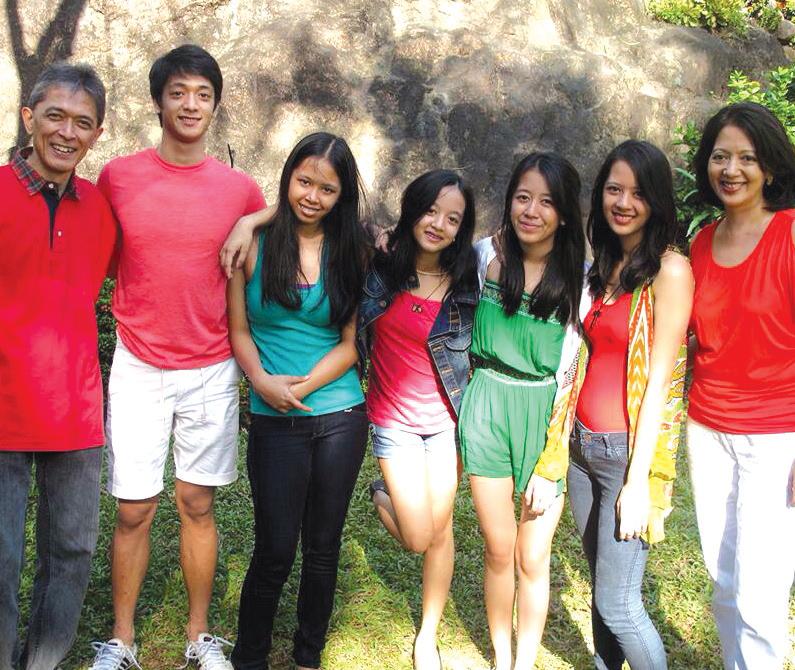
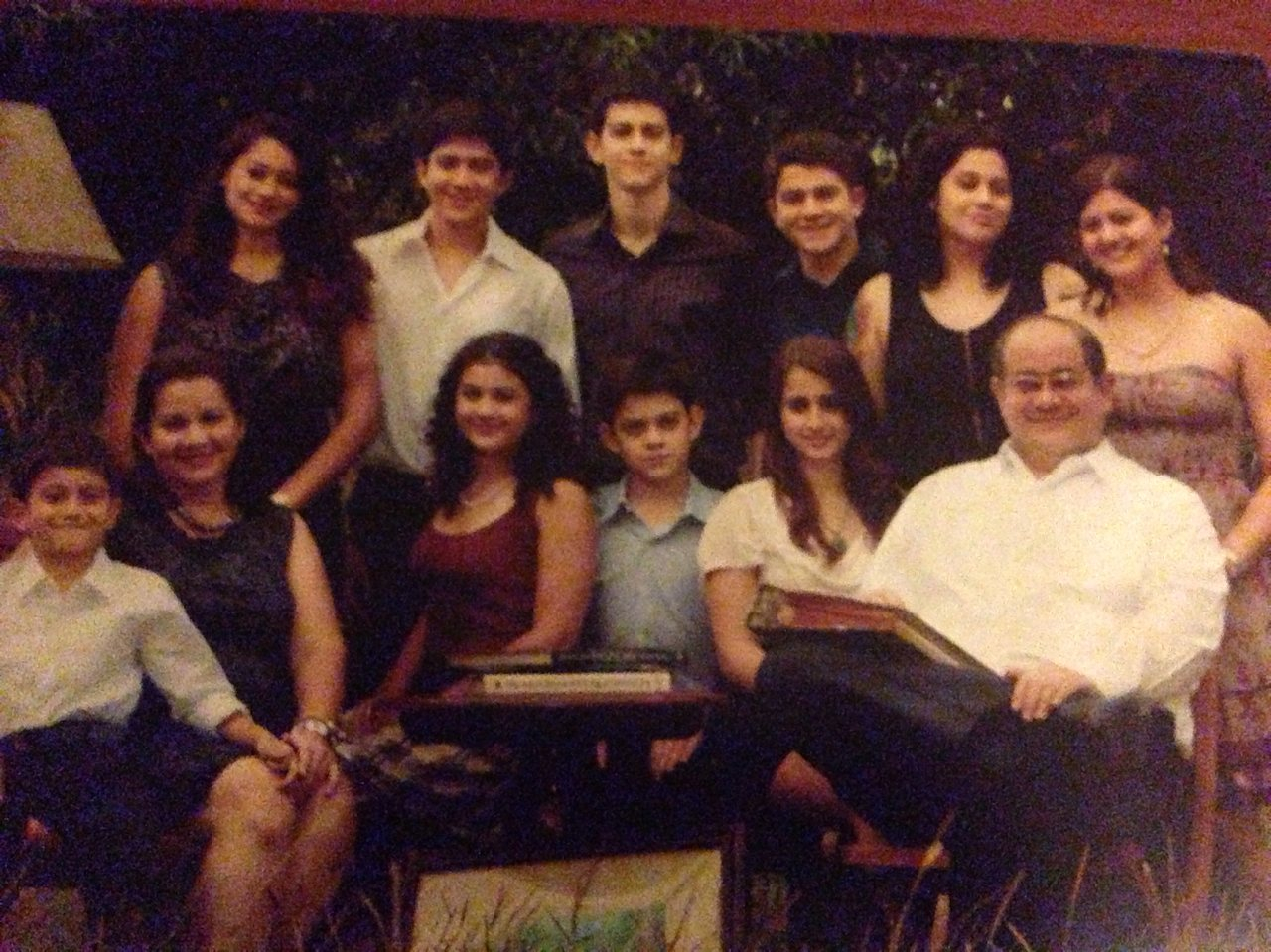
3AI AI AND ROSE GALVEZ WITH THEIR 5 CHILDREN

“Do you think you have all the children GOD intends for you to have?” This is a question couples should ask themselves as they include Father God in their family planning decisions. They have to keep in mind that He has brought them together for the purpose of having children. A couple, who decides to avoid a new birth for the time being, should have grave reasons for choosing so. They may be medical eugenic, social, and economic. (To be discussed in the next issue) The desire to have another car or to have a trip abroad should not necessarily be an issue to the question, “Can we afford another child right now?”

LITO AND APPLE PIE MABANTA WITH THEIR 8 KIDS

Couples should seek good advice (perhaps from a priest who is faithful to the Church’s doctrine) and discern through prayers before deciding to postpone or avoid pregnancy. The use of the Natural Family Planning method to regulate birth is approved by the Church. It monitors a woman’s cycle to avoid intercourse when she is ovulating. Any act of contraception, be it by pills, condoms, withdrawal, ligation, or vasectomy is illicit and is always wrong. If it is done with full knowledge and full consent, it is a mortal sin.

Ernie and Marichu Khan with their 10 children

ERNIE AND MARICHU KHAN WITH THEIR 10 CHILDREN

In this age of anti-child mentality, it is a big boost to learn that Pope Francis praised large families in his weekly audience at St. Peter’s square. He said, “Healthy families are essential to the life of society. It provides us with consolation and hope to see so many large families who welcome children as a gift from God…These families know that each child is a blessing.” For many of us who have a mind-set of having no more than two children, it is about time that we turn the tables on welcoming more children into our families.

(Reference: Pope Paul VI encyclical “Humanae Vitae”; Faith Seeking Understanding “Marriage and the Family” by Fr. Charles Belmonte; “A Marriage Manual for Catholics” by Dr. William Lynch; “Pope Francis has rebooted the debate on family and sexual mores” by John Allen Jr. January 20, 2015; “Pope clarifies ‘good Catholics breeding like rabbits’ comment” RT news January 21, 2015)

Categories
Health Care Ministry

HEALTH CARE MINISTRY NEWS by Barbie Young


The Health Care Ministry had its first activity of the year—a recollection in Taal, Batangas, last January 13, 2015. The group visited some old, ancestral homes at Taal Town, The Heritage Town, which showcased our Filipino heritage. However, the visit to the Taal Basilica of St. Martin de Tours and the Shrine of Our Lady of Caysasay were the highlights of the day. After a boodle-style lunch at one of the local eateries, Fr. Jesus Galindo gave his reflections on the Catholic Bishops’ Conference of the Philippines pastoral message for 2015 as The Year of the Poor. The recollection was very timely since the topic coincided with the Holy Father, Pope Francis’ constant reminder during his recent visit that “the great biblical tradition enjoins on all peoples the duty to hear the voice of the poor, and bids us to break the bonds of injustice and oppression which give rise to glaring and scandalous social inequalities.”

(Source: americamagazine.org)

Categories
Fr. EJ Reflections

Sunday Gospel Reflection for the Fourth Sunday in Ordinary Time by Fr. Efren Jimenez, OFM

2
This column features some messages of Pope Francis taken from his Apostolic Letter, Gaudium Evangelii (2013) from where his messages are taken during his pastoral visit here in the country.

Participation in political life is a moral obligation.
(Paragraph 220) People in every nation enhance the social dimension of their lives by acting as committed and responsible citizens, not as a mob swayed by the powers that be. Let us not forget that responsible citizenship is a virtue, and participation in political life is a moral obligation. Yet becoming a people demands something more. It is an ongoing process in which every new generation must take part: a slow and arduous effort calling for a desire for integration and a willingness to achieve this through the growth of a peaceful and multifaceted culture of encounter.

(Paragraph 224) Sometimes I wonder if there are people in today’s world who are really concerned about generating processes of people-building, as opposed to obtaining immediate results which yield easy, quick short-term political gains, but do not enhance human fullness. History will perhaps judge the latter with the criterion set forth by Romano Guardini: “The only measure for properly evaluating an age is to ask to what extent it fosters the development and attainment of a full and authentically meaningful human existence, in accordance with the peculiar character and the capacities of that age.”

A mother with an open heart.
(Paragraph 46) A Church which “goes forth” is a Church whose doors are open. Going out to others in order to reach the fringes of humanity does not mean rushing out aimlessly into the world. Often it is better simply to slow down, to put aside our eagerness in order to see and listen to others, to stop rushing from one thing to another and to remain with someone who has faltered along the way. At times we have to be like the father of the prodigal son, who always keeps his door open so that when the son returns, he can readily pass through it.

(Paragraph 49) Let us go forth, then, let us go forth to offer everyone the life of Jesus Christ. Here I repeat for the entire Church what I have often said to the priests and laity of Buenos Aires: I prefer a Church which is bruised, hurting and dirty because it has been out on the streets, rather than a Church which is unhealthy from being confined and from clinging to its own security. I do not want a Church concerned with being at the center and which then ends by being caught up in a web of obsessions and procedures. If something should rightly disturb us and trouble our consciences, it is the fact that so many of our brothers and sisters are living without the strength, light and consolation born of friendship with Jesus Christ, without a community of faith to support them, without meaning and a goal in life. More than by fear of going astray, my hope is that we will be moved by the fear of remaining shut up within structures which give us a false sense of security, within rules which make us harsh judges, within habits which make us feel safe, while at our door people are starving and Jesus does not tire of saying to us: “Give them something to eat.” (Mk 6:37)

No to the new idolatry of money.
(Paragraph 55) One cause of this situation is found in our relationship with money, since we calmly accept its dominion over ourselves and our societies. The current financial crisis can make us overlook the fact that it originated in a profound human crisis: the denial of the primacy of the human person! We have created new idols. The worship o the ancient golden calf (cf. Ex. 32:1-35) has returned in a new and ruthless guise in the idolatry of money and the dictatorship of an impersonal economy lacking a truly human purpose. The worldwide crisis affecting finance and the economy lays bare their imbalances and, above all, their lack of real concern for human beings; man is reduced to one of his needs alone: consumption.

No to the inequality which spawns violence.
(Paragraph 59) Today in many places we hear a call for greater security. But until exclusion and inequality in society and between peoples are reversed, it will be impossible to eliminate violence. The poor and the poorer peoples are accused of violence, yet without equal opportunities the different forms of aggression and conflict will find a fertile terrain for growth and eventually explode. When a society – whether local. National or global – is willing to leave a part of itself on the fringes, no political programs or resources spent on law enforcement or surveillance systems can indefinitely guarantee tranquility. This is not the case simply because inequality provokes a violent reaction from those excluded from the system, but because the socioeconomic system is unjust at its root. Just as goodness tends to spread, the toleration of evil, which is injustice, tends to expand its baneful influence and quietly to undermine any political and social system, no matter how solid it may appear. If every action has its consequences, an evil embedded in the structures of a society has a constant potential for disintegration and death. It is evil crystallized in unjust social structures, which cannot be the basis of hope for a better future. We are far from the so-called “end of history,” since the conditions for a sustainable and peaceful development have not yet been adequately articulated and realized.

On the Homily.

Words which set hearts on fire.
(Paragraph 142) Dialogue is much more than the communication of a truth. It arises from the enjoyment of speaking and it enriches those who express their love for one another through the medium of words. This is an enrichment which does not consist in objects but in persons who share themselves in dialogue. A preaching which would be purely moralistic or doctrinaire, or one which turns into a lecture on biblical exegesis, detracts from this heart-to-heart communication which takes place in the homily and possesses a quasi-sacramental character: “Faith comes from what is heard, and what is heard comes from the preaching of Christ.” (Rom 10:17) In the homily, truth goes hand in hand with beauty and goodness. Far from dealing with abstract truths or cold syllogisms, it communicates the beauty of the images used by the Lord to encourage the practice of good. The memory of the faithful, like that of Mary, should overflow with the wondrous things done by God. Their hearts, growing in hope from the joyful and practical exercise of the love which they have received will sense that each word of Scripture is a gift before it is a demand.

(Paragraph 144) To speak from the heart means that our hearts must not just be on fire, but also enlightened by the fullness of revelation and by the path travelled by God’s word in the heart of the Church and our faithful people throughout history. This Christian identity, as the baptismal embrace which the Father gave us when we were little ones, makes us desire, as prodigal children – and favorite children of Mary – yet another embrace, that of the merciful Father who awaits us in glory. Helping our people to feel that they live in the midst of these two embraces is the difficult but beautiful task of one who preaches the Gospel.

About Fr. EJ and his other reflections.

Categories
Photo Gallery

SSAP Welcomes the Pope

Categories
Lectors and Commentators OFS

OFS and LeCom Ministries Celebrate By Cristina Teehankee


We thank our Almighty God for the Christmas gathering last December 4, 2014 of the Order of Franciscan Seculars (OFS) and Lectors and Commentators (Lecom) Ministry. God’s Hand made it happen … for a purpose … and for a reason. The last minute changes of schedule beyond anyone’s control marked the entry of a new beginning … joining the living stones of the Church to put their resources together … paving the way to share and give … more love … peace … joy … and generosity … to our Franciscan circle of friends and brothers in Christ … our Franciscan Friars and the Our Lady of the Angels Seminarians that made the Christmas celebration a wonderful and joyful experience…

The Christmas celebration started with Spiritual thanksgiving: … praying the Franciscan Crown Rosary, Liturgy of the Hours and the joint celebration of the Holy Eucharist by Fr. Tasang Obico, OFM, SSAP Guardian and OFS Spiritual Assistant, and Fr. Jesus Galindo, OFM, MMC Chaplain & Lecom Spiritual Adviser.

The whole evening was filled with energetic pace of parlor games, carolling, eating, dancing and gift giving. The Secular Franciscans and Lectors were happy to have the OLAS Seminarians in full force, together with the Postulants, Student Friars, and OLAS Franciscan Friar Heads: Fr. Cris Pine, Fr. Ireneo Tactac, III and Fr. Mark Adam. We were happy to have the presence of SSAP Parish Priest and Pastoral Team: Fr. Reu Galoy, Fr. Tasang, Fr. Jesus Galindo, and Fr. Serge Santos and other priests and our Parish Pastoral Council Officers Jayme Blanco, President and Edmund Lim, Vice President. Most especially, we were happy to watch Fr. Tasang join the OFS dance number and for being our Santa Claus for the night.

On a similar note, the Secular Franciscans gathered to celebrate Christmas with the friends of St. Francis in the St. Francis Friendship Home Livelihood & Spirituality Center, December 12, 2014. It was good to let our friends experience God’s love through us … loving them.

Our group of friends composed of young families living in West Rembo and surrounding communities started their program understanding God’s Word in their life and with the celebration of the Holy Eucharist at the La Ermita de San Nicolas de Tolentino with Fr. Tasang Obico, OFM presiding. Then after, they started the program prepared for us revealing their singing and dancing skills with gusto … combined with games and gift giving.

We would like to thank the following for making these special Christmas gatherings possible: Unilever Philippines, Sisters Nenette Jalandoni, Loretta Galang, Cecile Tan Teng, Dee Jalandoni Chan, Ria Vergara, Uwa Tambunting, Carms Mantecon, Baby Barba, Fely Dingle, the Lectors and Commentators and the Secular Franciscans.

Indeed … the joy of Christmas is being together and working together … with Jesus…

Design a site like this with WordPress.com
Get started