Categories
The ABC’s of Catholic Doctrine

“All I wanna say is that they don’t really care about us.”, The ABC’s of Catholic Doctrine By Lianne Tiu

8
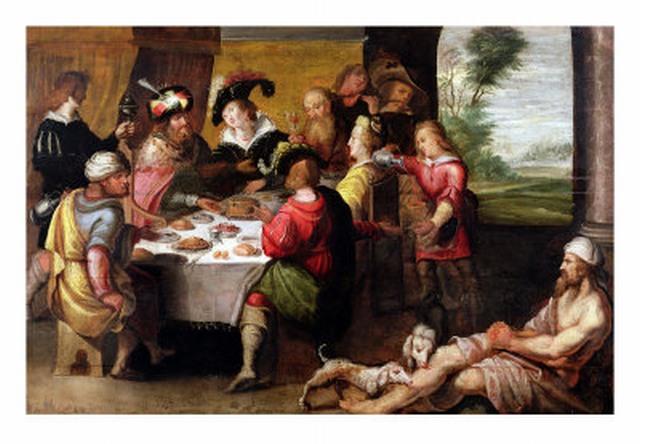
Michael Jackson’s song, “They don’t care about us,” reminds us of Pope Francis’ message for Lent about the “globalization of indifference.” We have become accustomed to the sufferings, poverty, and inequality of others; and they don’t affect or concern us anymore. We fail “to see the Lazarus sitting before our closed doors;” for there are some things in life we just don’t want to see – as the song goes.

In UST, the Pope spoke that today’s world doesn’t know how to cry, how to experience compassion, i.e. suffering with others. He said, “There is a worldly compassion which is useless. It’s a compassion that makes us put our hands in our pockets and give something to the poor” (and walk on). It is possible that some works of charity are done without love. Thus, St. Paul said that even if we give away to the poor all that we have … but have no love, we don’t gain anything. (1 Cor 13:3)
7
True charity is more the giving of what we are than of what we have. It is to go out of our comfort zone, to willingly inconvenience ourselves or make sacrifices for our neighbors for God’s sake. What people really want is a portion of our hearts.

To counter-act the culture of indifference, there are three things we can do. First, we pray together with the Church (in heaven and on earth) for a new era of mercy and compassion for the world. Second, we reach out to others with our acts of charity. Third, we try to have a change of heart. We ask Jesus to ”make our hearts like yours.” We wish to receive hearts, which are firm and merciful, attentive and generous; hearts which are not closed and indifferent.
6
Although poverty and sufferings will never be completely eliminated, love can transform the world and make it a better place to live. Love can change lyrics; for when people experience our kindness, compassion, and selfless love, they can only exclaim, “They DO really care about us!”

(Reference: Message of His Holiness Pope Francis for Lent 2015; Homily of Holy Father Francis, July 8, 2013 (Visit to Lampedusa); “Pope Francis’s Critique of Indifference” by Jonathon Mansell; “The Hidden Power of Kindness” by Lawrence Lovasik)

5

Categories
CCD

Overseas Filipinos Never Forget the Poor Town They Are From by CCD-SSAP

9

Overseas Filipinos Never Forget the Poor Town They Are From
A Pilgrimage Site is Born
A story of faith, loyalty and tireless idealism

After the visit of Pope Francis, I could not help but reflect on the fact that if other countries have the Olympics and the World Soccer Cup, here in the Philippines, we can be proud of the most moving and well-attended Papal Visits.

Wherever Filipinos are, they are some of the most faithful and endearing missionaries of the Catholic Church. With almost 10 million of them around the world, that’s a powerful force.

In this article, I talk about a series of remarkable events that led to the birth of a new pilgrimage site in the Philippines – the Sanctuary of the Holy Face in Nampicuan, Nueva Ecija.

Nampicuan is a small, poor, agricultural community, awkwardly situated in the western corner of Nueva Ecija, closer to Tarlac – a bit like the neglected child of Nueva Ecija, and the adopted child of Tarlac.

Many of Nampicuan’s people have gone abroad in search of a better life, to places in the US and the Middle East. However, through their busy lives of earning a living and raising their families, they nurtured a silent wish, that one day they would find a way to help their “kababayan” in Nampicuan. This wish was first articulated 30 years ago by the late Ernesto Gonzales, former lay minister of the Immaculate Conception Church and husband of Candida Bigting, sister of a former mayor of Nampicuan. This small group kept in touch over the years and in 2013 called themselves, “Dreamers for Nampicuan.”

The story starts with a Filipina emigree in Seattle named Daisy who, like many Filipinos, plan their world travel around religious sites. She had been to Israel 7x, Lourdes 7x, Fatima 8x, Guadalupe 2x, and at least once to Turin, Garabandal, Medjugore, Akita, etc. Daisy liked to keep track of new pilgrimage sites around the world and in 2006, she read about Pope Benedict’s much-publicized visit to the Holy Face of Manoppello in the Apennine mountains. During his visit, the Pope elevated this church to the Basilica di Volto Santo (Holy Face). Five years later in 2011, Daisy made the trip to Manoppello and became one of the most devoted followers and missionaries of the Holy Face.

One summer day in 2013, Daisy found herself in the Carmel Mission church in California, and unbeknownst to her, another Filipina was also paying her respects to Blessed Junipero Serra. Daisy and Lenlen met by chance and struck up a conversation that eventually meandered to the Holy Face of Manoppello. Lenlen, also very religious and used to praying 2000 Hail Mary’s in one day non-stop, was fascinated.
Two weeks later, Lenlen was back in Las Vegas, and met another Filipina named Eugenia in a doctor’s waiting room. Ever friendly, Lenlen found out that Eugenia was from Nampicuan and was in fact selling tickets to a Gala event in California organized by the “Dreamers for Nampicuan.”

Between Daisy, Lenlen, Eugenia and several other Nampicuan “dreamers,” a tour of the Holy Face Relic was organized in the US West Coast and the Philippines for September 2014, with the approval and support of the Guardian of the Relic, Capuchin Fr. Cuccinelli and Italian Archbishop Bruno Forte.

Meanwhile in Nampicuan, a young, newly ordained priest in the parish church of the Immaculate Conception, heard about the coming of the Relic and was overcome with a sudden, burning passion. He asked his parishioners to embark on a prayer crusade for many days and many nights. Social media spread the word here and abroad.
Apart from the initial proceeds from the California Gala, donations poured in from “dreamers” all over the world, from cash to a new chalice, sacristan outfits, microphones, computer, projector, outdoor benches, trucks of gravel, sacks of cement, tiles, prayer cards, leaflets and a 20 foot statue of the Virgin Mary holding the cloth with the Holy Face.

The Relic arrived in the Philippines on September 10, 2014 and was viewed in packed churches in Forbes Park, Makati, EDSA shrine, Quiapo, Sta. Ana, Lipa, Batangas, etc. In Nampicuan, the entire town welcomed the Relic with a three mile parade. On September 16, 2014, the day before the Holy Face Relic was about to leave the Philippines, the Guardian of the Relic, moved by the faith of the people of Nampicuan, gave his permission for its enthronement in the Immaculate Conception Church in Nampicuan, Nueva Ecija. He said, “…this littlest church….deserved to be the home of the Holy Face in the Philippines and in Asia.”

What is the HOLY FACE OF MANOPPELLO?
The burial face cloth or “sudarium” of Jesus, which bears an “acheiropoietos” (ie., not made by the hand of man) image of the Risen Jesus, a partner cloth to the Shroud of Turin.
How do I get there?
From Metro Manila, take the NLEX, then the SCTEX towards Tarlac and continue on the TPLEX. From TPLEX, take Anao exit, follow signs to Sanctuary of the Holy Face (2km).

Suggested HOLY WEEK Itinerary:
The following pilgrimage sites are on the way to Baguio (via TPLEX) and about a one hour drive from each other. Start in Tarlac (2 hours from Manila), go on to Nampicuan (take ANAO exit) and then to Manaoag.
1) Monasterio de Tarlac, San Jose, Tarlac – Piece of the True Cross
Take TPLEX to Tarlac City, take Santa Rosa-Tarlac Road, then P. Burgos St. (22km), then Lubigan Brgy Rd. (25 km).
2) Sanctuary of the Holy Face, Nampicuan, Nueva Ecija
From TPLEX, take Anao exit, follow signs to Sanctuary of the Holy Face (2km).
3) Our Lady of the Rosary, Manaoag, Pangasinan
From TPLEX, take McArthur Road South, take Urdaneta to Manaoag Road, then Milo St.

Categories
Articles

R A N D O M T H O U G H T Voices from yesterday and today . . . by Peachy Maramba

4

ST. LUDGER: UNTIRING WORKER of GOD
744 – 809
March 26

St. Ludger stands out as a model both for the religious and more for busy modern Christian living in today’s frenetic society. He worked for God with untiring zeal and passion all his life till the very last day of his life which happened to be Passion Sunday. After preaching the parish mass that morning at Coesfeld he hurried to Billerbeck to preach and say mass again in spite of the great pain he was already suffering. That evening of March 26, 809 God rewarded him with a peaceful death surrounded by his disciples and sister, the Abbess Gerburgie.

All his life his one most important priority was God. When reprimanded by emperor Charlemagne for not immediately coming when called he calmly said, “Because I believed that the service of God was to be preferred to yours or to that of any man. Such indeed was your will when you invested me with the office of a bishop and therefore I deemed it unseemly to interrupt the service of God, even at the command of your majesty.”

Born of wealthy and noble Frisian parents at Zullen near Utrecht, Netherlands Ludger even at the age of nine already knew what his career was to be: to be a servant of God. It was his meeting with St. Boniface, the great apostle of Germany that sealed his fate.

After studying in England three and a half years under the famous Alcuin who Ludger considered the most learned man and the greatest teacher of the age (and who became Ludger’s life long friend) he returned back to Utrecht.

He was then sent ironically as a missionary to eastern Friesland where St. Boniface was martyred. Here he made many converts and destroyed several pagan shrines. As Ludger was still only a deacon, he was sent to Cologne to be ordained to the priesthood in 777.

Returning back to Friesland Ludger worked incessantly and with great success to continue his work of converting pagans and bad Christians and founding churches.

Tragically all his hard work went up in smoke when the Saxons under Widukind invaded Friesland.

So Ludger left on a pilgrimage to Rome continuing on to visit the Benedictine monks at their great abbey in Monte Casino. It was here he spent three years studying their Rule for future use when he would be able to build his own monastery.

Returning back to Friesland in 785 since Charlemagne had defeated Windukind and reclaimed the land Ludger was introduced to the emperor. He formed such a high opinion of him that he gave him the spiritual charge of 5 provinces in Friesland and later on the province of Westphalia where he became known as “Apostle of Westphalia.”

Though hampered by poor health and lack of men to assist him Ludger with his usual zeal and eagerness went from one place to another teaching, preaching and baptizing. Because he was gentle, persuasive, had an attractive personality and knew the language all of his efforts met with great success. He even built a monastery in Warden which became one of the most important abbeys in Germany.

He made his headquarters at Mimigerneford where he also built a monastery which became his central monastery. The town’s name was later changed to Munster. Since it became necessary for the town to have a bishop because of the large number of its parishioners Ludger was consecrated the first bishop of Munster in 804.

But in spite of all his myriad activities Ludger never neglected his devotions. In fact he was most exacting not only with himself but with others in prayer and spiritual exercises.
Ludger is certainly a man worth imitating.

SOURCES of REFERENCE:
Butler’s Lives of the Saints – Vol. I pp. 686 – 688;
The Book of Saints – p. 84;
A Calendar of Saint – p. 60; and others.

Categories
Cathechism of the Catholic Church

CATECHISM OF THE CATHOLIC CHURCH

Did Jesus work miracles, or are they just pious tales?
Jesus really worked miracles, and so did the apostles. The New Testament authors refer to real incidents.

Even the oldest sources tell of numerous miracles, even the raising of the dead, as a confirmation of Jesus’ preaching: “But if it is by the Spirit of God that I cast out demons, then the kingdom of God has come upon you” (Mt 12:28). The miracles took place in public; some of the persons involved were known by name, for instance, blind Bartimaeus (Mk 10:46-52) or Peter’s mother-in-law (Mt 8:14-15). There were also miracles that in those Jewish circles were considered shocking and outrageous (for example, the cure of a crippled man on the Sabbath, the cure of lepers). Nevertheless they were not disputed by contemporary Judaism.

But why did Jesus work miracles?
The miracles that Jesus worked were signs that the kingdom of God was beginning. They expressed his love for mankind and reaffirmed his mission.

Jesus’ miracles were not self-aggrandizing displays of magic. He was filled with the power of God’s healing love. Through his miracles he showed that he is the Messiah and that the kingdom of God begins in him. Thus it became possible to experience the dawn of the new world: he freed people from hunger (Jn 6:5-15), injustice (Lk 19:8), sickness, and death (Mt 11:5). By driving out demons, he began his victorious advance against the “ruler of this world” (meaning Satan; see Jn 12:31). Nevertheless, Jesus did not remove all misfortune and evil from the world. He directed his attention principally to freeing man from the slavery of sin. His central concern was faith, which he also elicited through miracles.

Why did Jesus call apostles?
Jesus had a large circle of disciples around him, both men and women. From this circle he selected twelve men whom he called apostles (Lk 6:12-16). The apostles were specially trained by him and entrusted with various commissions: “He sent them out to preach the kingdom of God and to heal” (Lk 9:2). Jesus took only these twelve apostles with him to the Last Supper, where he gave them the command, “Do this in remembrance of me” (Lk 22:19b).

The apostles became witnesses of Jesus’ Resurrection and guarantors of the truth about him. They continued Jesus’ mission after his death. They chose successors for their ministry: the bishops. To this day, the successors of the apostles exercise the authority conferred by Jesus: They govern and teach and celebrate the liturgy. The cohesiveness of the apostles became the foundation for the unity of the Church (apostolic succession). Preeminent once again among the Twelve was Peter, on whom Jesus bestowed special authority: “You are Peter, and on this rock I will build my Church” (Mt 16:18). From Peter’s special role among the apostles developed the papal ministry.

Categories
Fr. Jesus Galindo Reflections

“It Is In Dying That We Are Born To Eternal Life”, A SUNDAY GOSPEL REFLECTION for the 5th Sunday of Lent B By Fr. Jesus Galindo, OFM

Those words from the Peace Prayer of St. Francis very aptly express the message of today’s gospel. The incident in today’s gospel took place right after Jesus’ triumphant entry into Jerusalem (which we will recall next Sunday). The authorities were greatly disturbed by the event. “We are getting nowhere; the whole world has gone after him,” bemoaned the Pharisees (Jn 12:19). As if to prove them right, today’s gospel tells us that some Greeks, pagans at that, showed interest in seeing Jesus. They did it in a way very familiar to us: They approached somebody who could help them.

We don’t know whether they actually got to see and talk to Jesus or not; the gospel does not satisfy our curiosity. We don’t know either whether Jesus’ words are addressed to them or not. But we do know that Jesus’ words are valid and relevant for all – including ourselves: “Unless a grain of wheat falls to the ground and dies, it remains just a grain of wheat.” What a simple image, yet so rich and profound.

Jesus was speaking for himself. He was just a few days away from his passion and death, and he understood fully well that he had to give up his own life in order to give life to the whole world. It was not easy. The gospel describes the inner crisis Jesus went through, and how he struggled with the specter of death: “I am troubled now. Yet what should I say? ‘Father, save me from this hour.’ But it was for this purpose that I came to this hour.”This inner struggle is John’s equivalent of Jesus’ agony in the Garden of Gethsemane recorded in the Synoptic Gospels. It was not easy for him, but he submitted to the Father’s will.

The words of Jesus (“unless the grain of wheat…”) remind us, first of all, that we are the fruit and the harvest of other people’s toil and death, both as a nation and as individuals. We are what we are because of the death of the many unknown soldiers and unsung heroes;because of the sweat and toil of our ancestors. They died so that we might live. (See story of the bamboo.)

In the same manner, our toil and self-denial will bring about new and better life for others. Dying does not have to be taken literally, in the sense of losing one’s life. It can also mean dying to pride, selfishness, hatred, drinking, drugs, gambling etc. People “die” to different things for different reasons: Some people “die”to excessive eating and drinking for a better health. Students “die” to leisure and recreation for the sake of honors. Athletes “die” to comfort and pleasure for the sake of honors. And so on.

There was a married young man who had a drinking habit. He spent more time with his drinking buddies than with his family. Eventually, his marriage broke up and he lost his job. As life without his wife and children was unbearable for him, he sought to reconcile, but his wife would agree only if he stopped drinking and got a job. Swallowing his pride, he set on the path of recovery. He took all sorts of odd jobs to earn some money. Little by little he was able to rebuild his life and his marriage. It was by dying to his pride and to his vice that he brought new life to himself and his family.

The only way for us to make our life meaningful and fruitful is to spend it at the service of others. It takes great faith and courage to understand this – and even greater courage to put it into practice. But that is the way it is. That is the way the Lord Jesus did it. And that is the way he wants us to do it! This is what he meant when he said: “Whoever loves his life loses it, and whoever hates his life in this world will preserve it for eternal life.”

About Fr. Jesus and his other reflections…

Categories
Special Events

PASSOVER SEDER MEAL By Cristina Teehankee

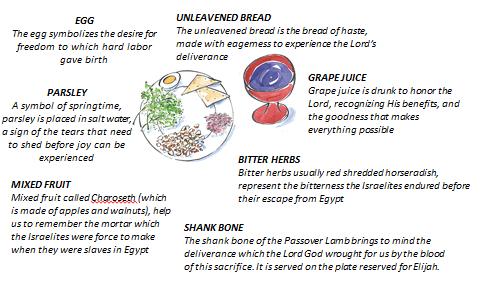
12It is the Lenten season once again and that time of the year where Parishioners offer sacrifices and thank our Almighty God, break bread and celebrate one of the oldest Hebrew Liturgical festival . . . the Passover Seder Meal. Fr. Reu Jose Galoy, OFM, Parish Priest in coordination with the Liturgical Committee headed by Edmund Lim, PPC Vice President and assisted by Crissy Castillo, invite families and friends to the celebration of the Passover Seder Meal on Tuesday, March 31, 2015, after the 6:00 PM Mass at the Parish Center Social Hall. The family of Rafael (Ai-Ai) Galvez, Head of the Extra-Ordinary Ministry of Holy Communion is this year’s lead family.
untitled
The celebration remembers the Passover night when God rescued the children of Israel from slavery in Egypt. Moses explains in Exodus 12:24-27 the significance of observing this perpetual Jewish ordinance as our way of showing our gratitude to our God Almighty for having passed over the houses of the Israelites in Egypt when he struck down the Egyptians but sparing the Jewish houses.

Thus, the Seder Meal is the re-enactment of the exodus of the Jews from Egypt affirming God’s redemptive liberation of Israel from slavery and spiritual misery. The purpose of the Seder Meal and the directed conversation at table is to draw relationships between the Passover and important New Testament truths. It is vital that we recognize that Jesus was a faithful Jew who observed Judaic laws. It was within Judaism that Christianity was born and essential elements of Christian faith founded.

The Passover Seder Meal costs P500.00 per head. We can choose lamb, beef, chicken, or fish for our main dish. We invite all Ministry Heads, Members, Parishioners and friends to attend as part of our Parish Lenten activity. Do not miss this important celebration to understand better the roots of our faith. Reserve a table and bring the entire family! Register now at the Parish Office or your Ministry Head.

Categories
JPIC

JPIC SCHOLARSHIP RECOLLECTION

This slideshow requires JavaScript.


RECOLLECTION THEMES:
“Service is Prayer,” “Making Time” and the “Virtue of Asceticism”
The Justice, Peace and Integrity of Creation Ministry – JPIC Scholarship Program of Santuario de San Antonio Parish Foundation, Inc. recently held its one-day Recollection at the week-end house of member Bambina Buenaventura. In attendance were Menchu Bautista, Dely Fernandez, Doris See, Mert Loinaz, Millette Ocampo, Girl Velasquez, Sister Marisa Lichuaco, Jean Chavez, Bambina’s sister Angela Quila, Mariza V. del Rosario and Jackie Macasias, JPIC Socio- Pastoral Worker.

The “Vision, Mission and Goals” of the JPIC Scholarship Ministry aims to provide Education, Spiritual and Moral Values Formation through scholarships and guidance to indigent youth in order to develop them into responsible Christian Filipino citizens (Kristiyanong Mamamayan).

Fr.Reu Jose C. Galoy, OFM, Parish Priest of Santuario de San Antonio and JPIC Scholarship Program Spiritual Adviser, officiated the Eucharistic Celebration, reminding the members during the homily to be “grateful for the gift of each other” in describing the interplay of roles played by the benefactors / donors and the parishioners through the SSA Parish Foundation, the Ministry members and the beneficiaries/scholars. As we pray in gratitude for the generosity of benefactors, Ministry members are empowered to continue its tasks together with its partner schools, planting the seeds of hope and love to the scholars/beneficiaries as they prepare to face life’s challenges. The Ministry members through their encounters with the beneficiaries give their time and talent nurturing faith in the Ministry. Through this privilege the beneficiaries are given the chance to secure their future and learn to give back to others in a spirit of reciprocity and gratitude. Education is effective when students are able to put into practice learning and skills in their daily lives for the price of the opportunity accorded them is to share with others.

As we sat in the living room overlooking verdant, grassy hills and mountains framed by white “thurnbergia” cascading from the veranda trellis, our attention pleasingly distracted by the melodious chirping of birds, warbling and whistling from the thick foliage, some gliding and soaring and swooping down around strikingly colorful bougainvilleas amidst the noonday sun, only to hide and nest in the towering trees or the leafy “Birds of Paradise,” Fr. Reu’s voice rises above the fresh, gentle breeze: “We serve because we pray. Service is prayer.”

After a sumptuous lunch, a discussion was led by Sr. Marisa about the values of “Making Time” and learning from each other. As mentors and guides, she advised a gentle approach to “correct with love” any misdemeanor or judgement lapses that students may have committed in the course of their learning experiences. In understanding the Filipino psyche in handling conflict situations, Mert Loinaz identified a “culture of silence” prevalent among Filipinos. This “silence” is brought about by fear, shame, lack of confidence or self-esteem, family pressure, the desire to maintain “status quo” or not “to rock the boat” due to lack of education or poverty. This “culture of silence” needs to be rechanneled into the ability to articulate needs and aspirations to create change. In guiding our youth Sr.Marisa stressed that forgiveness is not to “forgive and forget” but also to remember, to be remorseful, and to show sincerity and accountability for the wrong done. As we check each other out in “fraternal correction,” we grow and should not harbor hurt feelings, because we are corrected with love.

In the spirit of the Lenten Season, Sr. Marisa shared an article on “The Virtue of Asceticism” by Nicholas Austin, S.J. Asceticism is defined at a surface level as “the constellation of the practices of voluntary self-denial such as fasting from food.” It is self-denial to attain a higher spiritual level. Lent has often been associated with abstaining from something that one enjoys.

Fr. Austin, instead of focusing on what to give up for Lent (chocolates, sodas, Facebook, alcohol, cigarettes, etc.) expounds on a “second philosophy”in understanding the virtue of Asceticism by asking: “What am I going to do, in a positive way, for Lent?” We must learn to seek space from the hectic modern day life to be with others, to be with God.”

Fr. Austin noted three distortions to the virtue of Asceticism:
1. Excess –“Fasting for long periods can lead to self-inflation and pride at one’s own achievements and end up being counter-productive as it can be followed by a binge.” The doctrine of the “mean” is the recommended approach to excessive fasting, which is the middle-way between too much and too litte, the mid-point between excess and laxity.
2. The distortion of Dualism – This sees the soul as good and the material world as evil, a rejection of the body and the material world as impure. The point “is not to free the soul from the body, nor even to repress the body and its impulses, but to raise these to a truly spiritual level to integrate them into the spiritual journey towards God.
3. The distortion of Empty Religiosity – This is focusing exclusively on external religious practice, losing “the power of religious practice to open the heart to a transformation leading to a deeper love of God and neighbor.”

What are the reasons for Asceticism?
1. Fasting can help us to find a proper authority over ourselves. When we deny ourselves pleasures, “we exercise authority over it, instead of letting it control us.”
2. A time to be alone, to cultivate ‘interiority,” through the Holy Spirit, to trust that even in loneliness, “the Spirit of Jesus is with us, drawing us to the Father.”

Recollection. A tranquility of mind. A religious contemplation.To bring back to the level of conscious awareness. It was a day well-spent in rediscovering our path and pitfalls as we plod on in understanding who God is, and through God, prayer and service as we reach out to others in love and sharing.

SSAP-JPIC Scho. Prog. Comm. / Jean Chavez

Categories
Articles

R A N D O M T H O U G H T S Voices from yesterday and today . . . by Peachy Maramba

1

ST. NICHOLAS of FLUE: Patron of Switzerland
1417 – 1487

March 21

Early Life
The patron saint of Switzerland was named Von Flue because he was born and lived for most of his life on the Flueli, a fertile plain of the Flueli River near Sachsein, Obwalden (Unterwalden) Canton, Switzerland.

He was born on March 21, 1417 to a highly respected peasant couple: his father Henry who held a civil position in the community and Emma Roberto, his devout mother who brought him up as a lover of the spiritual life. She and her two sons were members of a Catholic lay association, a group that fostered daily prayer and meditation on the passion of Christ so as to form a specially close relationship with God.

From childhood he was remarkable not only for his piety and sound common sense but for his love of peace. However at age 22 in spite of his peace-loving disposition, patriotism led him to be a soldier once in the war with Zurich and then fourteen years later he again fought for his canton – this time as captain.

Marriage
But at the age 30 he married a likewise religious-minded girl name Dorothea Wissling who bore him 10 children in their happily married life. This is why Nicholas is also regarded as a patron of large families.
3
Because he was highly regarded as a person of complete moral integrity he was held in such high esteem that during the years that followed he served as magistrate, judge, member of the assembly and councillor – all the while consistently refusing the position of being a governor.

While taking part in the civil and political life of his country he continued his devout practices from his youth in spending whole nights in prayer and rigorous fasting.

Becomes a Hermit
Unfortunately for Nicholas who loved peace, peace of mind seemed to elude him. So in 1465 he decided to withdraw from politics. Two years later after twenty years of married life he received in a vision of the Blessed Trinity what seemed to him to be a call from God to abandon the world completely and spend the entire rest of his life for Him as a hermit.

This he did with the consent of his loving wife and children. So in 1467 he settled in a hermitage in Ranft just a few miles from his home. Soon the people of Obwalden who called him “Brother Klaus” built him a little cell with a chapel attached to it which made him so happy because now he could help serve the mass. It was here in this peaceful haven that he happily spent the remaining 19 years of his life.

He followed a rigid daily schedule as follows: from midnight to midday was spent in prayer and contemplation; afternoons were reserved for the people who came seeking his counsel and advice.

While surprisingly Nicholas could neither read nor write merely using a special seal for his signature he was held in the highest esteem because of his holiness and god-given gift of the spirit of wisdom and counsel and natural good judgment. So people from all walks of life and economic status including kings and high officials came in droves to his cell seeking his wise counsel to solve their problems whether petty of international consequence.

Claim to Fame
In 1481 after the cantos had finally gained their independence by defeating their German king, Charles the bold, a huge disagreement arose between the cantons that posed a threat of a civil war that would affect their new found unity and independence. The argument disagreed upon by the representatives of the cantons at the meeting at Stans was whether to expand their present confederation and include the cantos of Fribourg and Soleure or not.

At an impasse they decided to consult Brother Klaus, who had come to be regarded as the wisest man in Switzerland. Working though the night Nicholas presented them with a set of proposals. Within just an hour after being given the proposal to consider they finally all agreed to admit Fribourg and Soleure into the Confederation. Switzerland had been saved from a disastrous civil war! That date was December 22, 1481 and it marked the foundation of modern united Switzerland.
4
The whole country could not praise or reward Bruder Klaus (as he was affectionately called) enough.

His Death and Canonization
Nicholas suffered his last illness on his 70th birthday just six days after the Council of Stans and after 8 days of painful suffering which he bore with perfect resignation.

This great saint and Father of his country was canonized by Pope Pius XII on 15 May 1947.

This outstanding religious figure in Swiss history died on March 21 in his cell at Ranft which is today a recognized place of pilgrimage.

Because of his holiness and wisdom this great Christian is honoured by Swiss Protestants and venerated by Swiss Catholics.

His Uniqueness
Still existing today is the incredible belief that he solely existed on the Holy Eucharist (the wafer biscuit given at communion) as early in life he had developed some rare gastric ailment that didn’t allow his digestive system any drink or food.

SOURCES of REFERENCE:
Butler’s Lives of the Saints – Vol I – pp 660 – 663
The Book of Saints – p. 81
Pocket Book of Saints – p. 371
The Watkin’s Dictionary of Saints – p. 175
A Calendar of Saints – p. 56
A Year With the Saints – March 21
Illustrated Lives of the Saints – Vol. I pp 124 – 125
Saint Companions – pp 109 – 110
Voices of the Saints – pp 444 – 445
Ordinary People, Extraordinary Lives – Group 1 Class 19

Categories
Cathechism of the Catholic Church

CATECHISM OF THE CATHOLIC CHURCH

Why is Mary a Virgin?
God willed that Jesus Christ should have a true human mother but only God himself as his Father, because he wanted to make a new beginning that could be credited to him alone and not to earthly forces.

Mary’s virginity is not some outdated mythological notion but rather fundamental to the life of Jesus. He was born of a woman but had no human father. Jesus Christ is a new beginning in the world that has been instituted from on high. In the Gospel of Luke, Mary asks the angel, “How can this be, since I have no husband?” (= do not sleep with a man, Lk 1:34); the angel answered, “The Holy Spirit will come upon you” (Lk 1:35). Although the Church from the earliest days was mocked on account of her belief in Mary’s virginity, she has always believed that her virginity is real and not merely symbolic.

Did Mary have other children besides Jesus?
No. Jesus is the only son of Mary in the physical sense.
Even in the early Church, Mary’s perpetual virginity was assumed, which rules out the possibility of Jesus having brothers and sisters from the same mother. In Aramaic, Jesus’ mother tongue, there is only one word for sibling and cousins. When the Gospels speak about the “brothers and sisters” of Jesus (for instance, in Mk 3:31-35), they are referring to Jesus’ close relatives.

Isn’t it improper to call Mary the “Mother” of God?
No. Anyone who calls Mary the Mother of God thereby professes that her Son is God.

As early Christianity was debating who Jesus was, the title Theotokos (“God-bearer”) became the hallmark for the orthodox interpretation of Sacred Scripture: Mary did not give birth merely to a man who then after his birth “became” God; rather, even in her womb her child is the true Son of God. This debate is not about Mary in the first place; rather, it is again the question of whether Jesus is true man and true God at the same time.

Categories
Fr. Baltazar Obico Reflections

The Cross as Symbol of God’s Love and our Sinfulness, Gospel Reflection for the 4th Sunday of Lent (B) John 3:14-21 By Fr. Baltazar Obico, OFM

Introduction: In Greek mythology, the rod of Asclepius is a serpent-entwined rod wielded by Greek god Asclepius, a deity associated with healing and medicine. In modern times the symbol has continued to be used as the symbol of the medical profession. The significance of the serpent has been interpreted in various ways; sometimes the shedding of the skin as symbolizing rejuvenation while others see the serpent as a symbol that unites the dual nature of the work of physicians; life and death, sickness and health. The ambiguity of the serpent as a symbol and the contradictions it is thought to represent and reflect the ambiguity of the use of drugs which can help or harm (drugs as in medicine and drugs as in addiction). Even the ancient meaning of the term “pharmacon” has that ambiguity attached to it; it can be medicinal or poisonous at the same time. Products from bodies of snakes have some medicinal properties and can be prescribed as therapy just as venom can be fatal if it enters the bloodstream.

Gospel: Today’s gospel from John is Jesus’ encounter with a pharisee in Nicodemus. Jesus immediately connects the lifting up of the Son of Man with the story of Moses raising up the serpent in Num. 21. The bronze serpent saves those who look on it after having been bitten by a poisonous serpent; Jesus likewise saves human beings by virtue of being lifted up. Being lifted up refers to the human act of crucifying Jesus. The serpent which caused the death of many became also the source of life for those who believe. To the unbelievers, the cross is foolishness to the Greeks as it is humiliation for the Jews. With the eyes of faith, it is the cause of our salvation. The gospel reminds us of the life giving serpent to demonstrate to us that the cross is the sign not of suffering, not defeat, not humiliation but the depth and breadth of God’s unconditional love. “For God so loved the world that he gave his only begotten son, so that everyone who believes in Him might not perish but might have eternal life.” Try gazing at the cross and linger for a while. Imagine Jesus on the cross. With all the taunting and insults being heaped upon his person, when all the possible cruelty was being thrown at him. Jesus took all of them not in stoic indifference, neither by revengeful spirit but by dignified silence and royal acceptance. He does not elicit sympathy nor exhibit anger. There is serenity and inner strength that can come only from a heart in full communion with a compassionate God. Hang on the cross he has nothing but words of forgiveness, and nothing else. There is something beyond human capacity not only to endure but to exude graciousness in the midst of pain and isolation. In the cross Jesus reveals fully his divinity. God as love reaches its apex when he freely lays down his life to ransom us from death.

If the cross is the fullness of God’s revelation as love, the cross is also symbolic of our refusal to obey God’s command of loving others through self-denial. We refuse to carry our own crosses. It is a chilling reminder of our selfishness, therefore our sinfulness, our rebellion against the will of God. It is humanity’s sin that nailed Jesus on the cross. We likewise continue to nail other people on the cross as we aggressively pursue our selfish interests. The cross reminds us that we have not really loved enough; that we have not really loved like God, ever willing to take the pain that love entails, willing to sacrifice for the sake of the beloved.

This season we are not only reflecting on who Jesus was, the Jesus of history, but who Jesus is, the Jesus of mystery. Jesus at this very moment across the universe.Jesus deep in the hearts if believers. Today we are invited to see the cross being replayed a thousand times in the lives of the outcasts, the marginalized and the excluded, all because the self is the overriding value in our lives…are we timidly silent, nonchalantly watching from the sidelines as we witness suffering being perpetuated by unjust structures and vested interests of the few? The gruesome truth of the crucifixion of Jesus is well known in history. Most evil in the world is done by people thinking they are doing good and doing their best. Today the cross is being reenacted in he stomachs of the children swollen by hunger, in the faces, not so much by soldier combatants in wars, but in the faces of the women and children torn in those war zones, in the indigenous peoples displaced by excessive exploitation of their ancestral lands, in the informal settlers whose makeshift dwellings were demolished by unscrupulous developers, in the underpaid workers and the thousands of able unemployed. To them Jesus of mystery is continuously being crucified because of our love of self.

Brothers and sisters, the cross is not an amulet to ward off evil spirits, not as a sign of resignation to suffering as part of God’s plan, not a mysterious object that can be relied upon in moments of danger. The cross is a sign of our willingness to die to self that others may live.

About Fr. Tasang and his other reflections.

Design a site like this with WordPress.com
Get started