Categories
Fr. EJ Reflections

Ascension Sunday (B) SUNDAY GOSPEL REFLECTION by Fr. Efren Jimenez, OFM

There is much pathos and longing in the story of the ascension which these readings give us twice. The story contains on the one hand the theme of the exaltation of Jesus to the right hand of the Father, as we have preserved it in the creeds – the theme of the indication of Jesus and of all he stood for and all he taught. But the story contains, on the other hand, the sending of the followers of Jesus to continue his mission, to be his presence in the world. That is why there is a gentle irony in the question raised by the assembled disciples in Acts I. Is this the time at which Jesus will establish his Kingdom, restore sovereignty to Israel? It seems that they who are sent have by no means grasped even now what is the nature of Christ’s kingdom and what is the nature of the hope that is offered to them.

The Ascension story really raises all the important questions about the nature of that hope not only for the disciples of those five years, but or all of us even in our own times. The Ascension means that there is no magic answer to the troubles of the world – no answer that can bypass or dispense with true conversion and transformation of our human society with all its distorted values and inauthentic relationships. The Ascension challenges us to realize that the grace of God does not work above or alongside of our own freedom but within it, and to know that what is accomplished within the human freedom of Jesus cannot substitute for our own conversion but must yet come to include it.

Even the apparently simple imagery of the Ascension story is important. Jesus has gathered his disciples about him one last time, giving final instructions and encouragement. Then he was “lifted up” and enveloped in a cloud. It is an image that recalls the presence of God with Israel in the form of a cloud. It also recalls the passing of Elijah (who was expected to return at the end-time) in a fiery chariot. And the two white clad figures are like those at the tomb, exhorting the disciples not to look here into the past, but out to the community and the future, knowing what is the hope in which they live and reach out to others.

The mission of the apostles was a simple one. It was to teach others all that he had taught them. Just as he asked his disciples to obey him, they were to ask that others obey his directions and instructions also. This is like when a doctor puts you on a course of antibiotics. The original sin was a lie. The Spirit is a spirit of truth. One of the rules connected with taking antibiotics is that it is essential to complete the course. Some people begin to feel well after a few days, and they discontinue taking the medicine and, of course, their condition gets worse. The program of redemption and salvation must continue from generation to generation, until the end of time. With all the changes in the church and in society, the two things that have not changed are Jesus himself, and every word of his message. The Message and the Messenger have never, and never will change. People who are bothered about changes in the church today should be reminded that the only two things that matter have not changed at all.

“You write a new page of the gospel each day, through the things that you do and the words that you say. People will read what you write, whether faithful or true. What is the gospel according to you?” Even sharing with another something you heard here today that you find helpful is to give witness. It must seem obvious to anyone who wishes to see, that the evidence of someone who is trying to live the sort of life that Jesus has taught us to live, must be a powerful witness, indeed.

About Fr. EJ and his other reflections…

Categories
Pastoral Team Special Events

Thanksgiving Dinner & Celebration of the Holy Eucharist by Newly Ordained Franciscan Priests, by Cristina Teehankee

This slideshow requires JavaScript.


On behalf of Fr. Reu Jose Galoy, OFM Parish Priest and his Pastoral Team and the Parish Pastor al Council, headed by Jayme Blanco, President and Edmund Lim, Vice President, we congratulate the Order of Friars Minor, Franciscan Province of San Pedro Bautista, Philippines for their three newly ordained Priests: Rev. Fr. Emerson F. Bumagat, OFM from Camiguin Island, Calayan, Cagayan, Rev. Fr. Fernando B. Radin, Jr. OFM from Camotes Island, Cebu City and Rev. Fr. Angelo M. Dizon, OFM from Sampaloc, Manila.

Santuario de San Antonio Parish was fortunate to be one of the Parishes visited by the newly ordained priests for their Thanksgiving Mass, held Monday, May 4, 2015. A Thanksgiving Dinner celebration immediately followed at the Convent Garden attended by Parishioners who have journeyed with them through the years in Spirit . . . in prayer . . . and assistance. Although the Parishioners did not get to know much about the newly ordained priests, their smiles, kind words, prayer and diligent work, sparkled as sons of light.

Categories
Pope Francis

Pope tells priests not to live for their ‘own pleasure’ or act ‘like a peacock’

21
Francis urges new priests to nourish congregations with homilies, while making sure they are not bored

Nineteen men lie prostrate for their ordination as priests for the Diocese of Rome on Sunday Pope Francis presided over the ordination of nearly twenty men to the priesthood on Sunday, where he warned them against being vain priests who live first for their own pleasure rather than for God’s.

“A priest is ugly who lives for his own pleasure,” the pope said, adding that such a priest “acts like a peacock”.

Pope Francis presided over the Mass in St Peter’s Basilica, during which he, as the bishop of Rome, ordained 19 men for the Roman diocese.

During the ordination Mass, the pope delivered the standard homily based on the Italian edition of the Pontificale Romanum for the ordination of priests, but digressed from the text several times to offer advice to the men about to be ordained.

In these remarks, he said priests should nourish God’s people with their homilies, while making sure they are not bored.

Ensure “that your homilies are not boring; that your homilies reach the heart of the people, because they come from your hearts,” he said. “What you say to them is what you have in your heart.”

The pope also warned against proclaiming God’s Word without giving a good example.
“Words without example are empty words,” he said. “They are ideas that do not reach the heart, and may even cause injury.”

Pope Francis gave the men further advice in executing their responsibilities as priests.
In presiding over Mass, he told them not to “rush” through the celebration. Rather: “Imitate that which you celebrate,” because “it is not an artificial rite.”

Speaking of their responsibilities as priests in distributing the Sacraments, the pope said to “never refuse Baptism to whoever asks for it”.

With regard to the sacrament of Penance, he told the new priests the confessional is a place where they are called “to forgive, not to condemn.”

“Imitate the Father who never tires of forgiving”.

After the Mass, Pope Francis delivered his Regina Caeli address from the Papal Palace overlooking Saint Peter’s Square, explaining that the newly ordained priests are called to have a pastoral life based upon the Good Shepherd.

Recalling how the Fourth Sunday of Easter is also known as “Good Shepherd Sunday,” the pope said this day is an occasion to reflect on Jesus’ gift of Self, through His passion, death, and resurrection.

The Good Shepherd, he said, “gives life, has offered his life in sacrifice for all of us”.

Original story: Pope to new priests: Don’t be a peacock
Source: Catholic News Agency
_______________

Categories
Calendar of Saints

Our Lady of Fatima Feast Day May 13

Dedicated to Our Lady of Fatima1
On May 13, 1917, in Portugal, Our Lady of Fatima appeared to three children in a place called Cova da Iria.
2

It was at noon, and the children were shepherding sheep. Suddenly there was lightning, and the children, thinking that it was going to rain, began to run. Then, just above a holm oak tree, they saw a beautiful lady made of light, holding a rosary in her hand.

Our Lady of Fatima spoke to the children and told them not to be afraid. “I come from Heaven,” she said. The oldest of the children was Lucía who was ten years old. She asked Our Lady of Fatima, “Will I go to Heaven?” “Yes,” Our Lady of Fatima answered. “And Jacinta,” who was her seven-year-old cousin, “Will she go to heaven too?” “Yes,” answered Our Lady of Fatima. “And Francisco,” the brother of Jacinta who was nine years old, “Will he go to Heaven?” “Yes,” answered Our Lady of Fatima, but he will have to say many rosaries.”
3
Our Lady of Fatima asked the children if they would pray and make sacrifice for sinners, and if they would come to this same place on the thirteenth of each month for five months. The children agreed and Lucía said “Yes.” Only Lucía spoke to Our Lady of Fatima, the others listened.

This was the beginning of a new life for the children, for their sole purpose in life was to pray and make sacrifices for sinners. They would give their lunch to the sheep as a sacrifice, and perform other acts of mortification.
4
The children noted that the beautiful Our Lady of Fatima was sad, and they were sad also because of Our Lady of Fatima’s sadness. On June 13, Our Lady of Fatima appeared again to the children. The conversation was to pray and make sacrifices and to pray the Rosary.

On July 13, Our Lady of Fatima appeared again and conveyed a secret to the children composed of three parts. The first two parts were revealed by Lucía in her memoirs in 1941 and the third part was released by Pope John Paul II in May 2000.

Regarding the first part, the vision of hell, Sister Lucía writes:
5
“Our Lady showed us a great sea of fire which seemed to be under the earth. Plunged in this fire were demons and souls in human form, like transparent burning embers, all blackened or burnished bronze, floating about in the conflagration, now raised into the air by the flames that issued from within themselves together with great clouds of smoke, now falling back on every side like sparks in a huge fire, without weight or equilibrium and amid shrieks and groans of pain and despair, which horrified us and made us tremble with fear. The demons could be distinguished by their terrifying and repulsive likeness to frightful and unknown animals, all black and transparent. This vision lasted but an instant.

“How can we ever be grateful enough to our kind heavenly Mother who had already prepared us by promising, in the first apparition, to take us to heaven? Otherwise, I think we would have died of fear and terror.
6
“The beautiful Lady proceeded to reveal the second part of the secret. We then looked up at Our Lady who said to us so kindly and so sadly: ‘You have seen hell where the souls of poor sinners go. To save them, God wishes to establish in the world devotion to my Immaculate Heart. If what I say to you is done, many souls will be saved and there will be peace. The war is going to end, but if people do not cease offending God, a worse one will break out during the pontificate of Pius XI.

‘When you see a night illuminated by an unknown light, know that this is the great sign given you by God that he is about to punish the world for its crimes, by means of war, famine and persecutions of the Church and the Holy Father. To prevent this, I shall come to ask for the consecration of Russia to my Immaculate Heart and the Communion of reparation on the First Saturdays.
8
‘If my requests are heeded, Russia will be converted, and there will be peace; if not, she will spread her errors throughout the world, causing wars and persecutions of the Church. The good will be martyred; the Holy Father will have much to suffer; various nations will be annihilated.

‘In the end, my Immaculate Heart will triumph. The Holy Father will consecrate Russia to me, and she shall be converted, and a period of peace will be granted to the world. In Portugal, the dogma of the Faith will always be preserved.’

”After Our Lady had revealed the secret to the children, she asked them to include a special prayer at the end of each decade of the Rosary.

‘Oh my Jesus, forgive us ours sins, save us from the fires of Hell. Lead all souls to Heaven, especially those who are in most need of Thy mercy.”
9
On August 13, 1917, the three children were kidnapped by the mayor of Villa Nova de Ourem to whose district Fatima belonged.

The mayor was atheistic as were many in Portugal. In separate conversations with each of the three children, the mayor threatened death if they did not confess everything as a lie. However, the children did not give in to the mayor and professed the truth of Our Lady of Fatima. As a result, the children could not meet Our Lady of Fatima because they were held in jail with common criminals for the night.

But according to witnesses, the children converted the men in the jail, and they all prayed in the cell.
In a previous apparition, Our Lady of Fatima had promised the children that on October 13, 1917, the final apparition, she would reveal her name and perform a great miracle to vindicate the truth of her apparitions.
10
On August 19, 1917, when Our Lady of Fatima appeared unexpectedly, she told the children that on account of the behavior of the mayor, the miracle would not be as great as was her original intention. However, as we will see, it was truly spectacular.
On September 13, 1917, Our Lady of Fatima appeared over the holm oak tree, the site of the first apparition.

Now, in the final apparition at Fatima, which took place on October 13, 1917, Lucía had publicly announced that Our Lady of Fatima would perform a great miracle to testify to the truth of the apparitions.

From the previous day, many people were traveling toward the area. There were not only those with faith but also the atheistic communists and the secular newspaper reporters who were convinced that they would write a story discrediting the entire event as a hoax. Suddenly, it began to rain. The field where people were gathering turned into a field of mud. Seventy thousand people were present to see the miracle.
11
At 12 o’clock noon, Lucía pointed up at the sky. “The sun appeared as a disc that gave off various colors and could be looked at without difficulty; it spun like a fireball and looked as if it would fall to the earth.” Suddenly, the sun broke free of its orbit and began to plunge to the earth. All seventy thousand people were in panic. Many were heard to say, “God have mercy on me.”

Then the sun stopped and returned to its place in the sky, and it turned into a beautiful day. People become aware that their clothes were dry.
In addition to those present at the event, others far away also saw the prodigal in the sky. Newspapers reported the sun falling from the sky as, “The Sun Danced.”

Lucía says that during this event, Our Lady of Fatima appeared in the sky with Saint Joseph. Our Lady of Fatima was holding a brown scapular, and 
Saint Joseph was holding the Child Jesus. Our Lady of Fatima said, “I am the Lady of the Rosary.”

During one of the apparitions, Our Lady of Fatima foretold that Jacinta and Francisco would die soon but that Lucía would remain longer to spread devotion to her Immaculate Heart. After the events at Fatima, Our Lady of Fatima continued to appear discreetly to each child individually from time to time.

Francisco died in 1919 and Jacinta in 1920, both from disease.
13
When Our Lady of Fatima appeared to Jacinta, she gave her information about her death. “You will die in a hospital, away from your family, alone.” Jacinta’s death was as Our Lady of Fatima said.

Jacinta and Francisco were saints from the first day Our Lady of Fatima appeared to them on May 13, 1917. They gave themselves up to prayer and sacrifice for sinners and prayer for the pope. Once the beautiful Our Lady of Fatima had appeared to them, they lost all interest in the worldly life.

Lucía took the name Sister Maria Lucía of the Immaculate Heart of Mary when she became a Carmelite nun.

In 2000, on May 13 in Fatima, Pope John Paul II beatified Jacinta and Francisco as Blessed of Heaven. Sister Lucía was present.

The third part of the secret given to the children on July 13, 1917, was written by Sister Lucía in 1944, but the text was not revealed until 2000.

On May 13, 1981, there was an assassination attempt on the life of Pope John Paul II. Shortly afterward His Holiness read the third part of the secret of Fatima but chose not to reveal it at that time. Coinciding with the May 13, 2000, Beatification of Jacinta and Francisco, The Holy Father released the third part of the secret.

This part refers to violent hands being laid on a pope and others as well – bishops, priests, men and women religious and various lay people.

Sister Lucía recently said that it now appears ever more clear that the purpose of all the apparitions was to help people to grow more and more in faith, hope and love.

Our Lady of Fatima recalls frequently forgotten values. She reminds us that the future of humankind is in God, and that we are active and responsible partners in creating that future. Our Lady of Fatima wants all of us to stop offending God; the same message as at Lourdes to Saint Bernadette. She reminds us that hell exists.

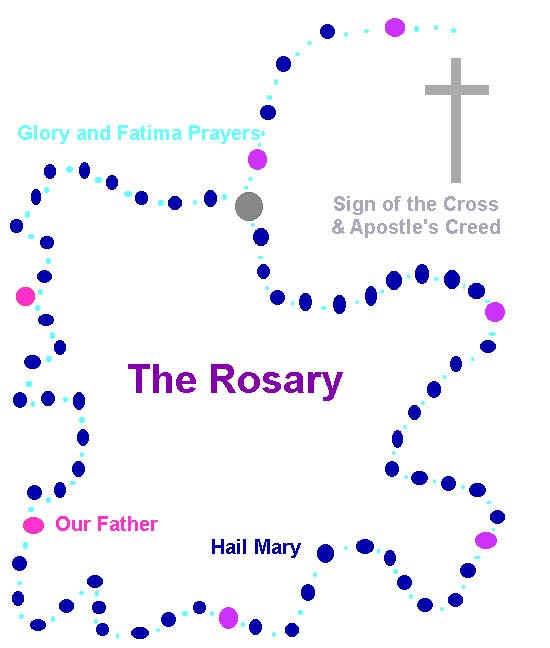
Ultimately, Our Lady of Fatima asks us to fervently pray the Rosary every day, pray for sinners and the pope, and perform sacrifices in reparation for our sins.
14

Arturo Mari-VATICAN

16Sister María Lúcia and Pope John Paul II

Sister María Lúcia of the Immaculate Heart of Mary (nee Lucía de Jesús dos Santos), the oldest of the three children to whom Our Lady of Fatima appeared, died on Sunday, February 13, 2005, at 5:25 P. M. at the age of 97, at the Carmelite Convent of Saint Teresa at Coimbra in Portugal where she was buried for a year at her request so that the nuns could mourn privately. In February, 2006, Sister María Lúcia was reinterred at Fatima.

Pope John Paul II sent a condolence message read at Sister María Lúcia’s funeral attended by hundreds of mourners which said he “…always felt lifted by the daily gift of her prayers, especially in difficult and testing moments of suffering.”

Mel Gibson visited Sister María Lúcia in July of 2004 and gave her a DVD of his movie The Passion of the Christ.

Pope Benedict XVI has fast-tracked Sister Lúcia’s road to sainthood by eliminating the five-year waiting period to start the canonization process.

(from culturalcatholic.org)

Categories
Random Thoughts by Peachy Maramba

R A N D O M T H O U G H T S Voices from yesterday and today. . . by Peachy Maramba

untitled

ST. IGNATIUS of Laconi:
A Sainted Begging Brother

1701-1781
May 11

St. Francis’ Views on Working and Begging
From the Testament of St. Francis of Assisi we get his views on working and begging:
“With all my heart I want all the other friars to be busy with some kind of work that can be carried on without scandal. Those who do not know how to work should learn, not because they want to get something for their efforts, but to give good example and to avoid idleness.

When we receive no recompense for our work, we can turn to God’s table and beg alms from door to door.”

Since the followers of Francis at Cagliari, Italy worked hard but rarely at jobs which paid enough for them to live on St. Francis allowed them to beg under these conditions.

The Story of a Sainted Begging Brother
The path that St. Ignatius of Laconi took to the Franciscans was unusual. Born the second of nine (some say seven) children of Matthew Cadello Peis and Anna Maria Sannu Casu Peis on 10 (some say 17) December 1701 in Laconi on the island of Sardinia, Italy, he was baptized Francis Ignatius Vincent and known at home by his last name. He had 2 brothers and 7 sisters. While his family was very respectable and very pious they were also very very poor.

So Ignatius had to work hard on his father’s land. Because he was a frail delicate boy this work put a severe strain on his health. He also unfortunately grew up to be illiterate.

It was precisely due to his poor health that led Ignatius to “enter religion.” Evidently when he was born his mother is said to have promised him to St. Francis of Assisi. This is why she would always tell him as he was growing up of one day wearing the habit of Il Poverello.

So when he was about seventeen or eighteen years of age and he got very seriously ill when this happened he offered himself to St. Francis of Assisi to become a Capuchin if he recovered. He did. Unfortunately his father could not spare him from the farm. He kept telling him, “Today or tomorrow, this year or next, it’s all the same. There’s no need to keep your promise at once.” So in spite of his recovery Ignatius had in the meantime to ignore his promise.

However when he had an alarming experience with a runaway horse during which he suffered a severe riding accident, Ignatius once again renewed his pledge as he saw the finger of God. Since he was now 20 years of age he promptly acted on his vow.

Becomes a Capuchin Lay Brother
This time notwithstanding his father’s pleas and arguments Ignatius was firmly resolved to keep his promise. So he made his way to St. Benedict’s friary near Cagliari, Italy. On 10 November 1721 Ignatius was accepted as a Capuchin lay brother and was finally clothed in the habit of St. Francis.

Ignatius underwent the usual trials of the novice. However when it was time for his Profession some serious doubts about his capabilities were raised which made his case seem doubtful.

But because Ignatius doubled his efforts working at fulfilling his tasks to perfection by the end of 1772 he was finally allowed to take his vows. Afterwards he worked as a lay brother in the monastery weaving room.

Appointed Official Beggar
It was when Ignatius was sent to the bigger friary at Iglesias that they noticed that when he was sent out to collect alms people not only gave more but gave graciously and even asked him to come again.

But from Iglesias he was sent to the other neighboring house at Cagliari where for fifteen years he worked again in their weaving shed.

It was in 1741 while at another Franciscan house at Buoncammino that set the pattern for the remaining 40 years of his life.

His reputation for self-denial and charity led to his being appointed as the official beggar for the friars in St. Antony’s. While it was no easy task having doors sometimes slammed in your face, be at the mercy of the weather as well as the moods and whims of the people, it was his acceptance of God’s will for him that enabled him to spend the last forty years of his life fulfilling that task even when he became blind the last two years of his life. This “begging son of St. Francis” made of his humbling task a real apostolate.

Other Jobs
But Ignatius’ life was not entirely spent in the menial task of begging. As he made his rounds he would instruct the street children whom he attracted and who loved him. He would teach them how to pray and to know more about God.

Ignatius would also find the time and opportunity to visit the sick who not only looked forward to his visits but even seemed to regain their health after Ignatius spoke to them. He even reproved sinners, reconciled enemies and taught the ignorant. He was consulted by those in difficulties.

Everyone loved Brother Ignatius especially the children whom he loved and was “gentle and caressing” with them. He was described as being “of medium height, white hair and beard, upright in his gait and carrying a forked stick. His simplicity was truly Franciscan and the assuredness of his speech reflected the serene calm of his mind.”

However begging from door to door on top of all these other jobs didn’t leave him much time for praying. So he cut down on his sleeping time (sleeping barely an hour or two on his shake-down bed with a log for a pillow) so he could spend his nights in prayer.

Ignatius lived such an exemplary life of great humility and holiness that he caused many sinners to repent. Many people too were inspired by his kindness and his faithfulness to his work.

His Many Graces
In the process of his beatification there were many accounts given of the many graces Ignatius received from the Lord. An onlooker testified to his being lifted from the ground while at prayer. So many cures of his healing of ill-health were documented that many said that he seemed to be the general practitioner of the whole neighborhood although he kept telling them that he was not a doctor. All he could do he said was to pray. “If it be God’s will, may you be healed.”

Death and Canonization
Ironically Ignatius who was frail and delicate of health in his early youth remained healthy up to his 80th year. However in the early spring of 1781, he visited his beloved sister Mary Agnes, a Poor Clare, and told her that it was the last time they would meet on earth. It was in 1781 that he was confined to his bed. On 11 May of that year at the hour of our Lord’s agony on the cross he finally breathed his last after putting his hands together and murmuring, “It is the Agony!”

He was canonized on 21 October 1951 by Pope Pius XII. His canonization teaches us that even if we are simple but are pure of heart accepting totally the will of God, we too may become saints. The life of Ignatius reminds us that “everything God considers worthwhile does not have a high-paying salary attached to it.”

SOURCES of REFERENCE
May 11

Butler’s Lives of the Saints – Vol. 3 – pp 281 – 284
A Year with the Saints – May 11
Illustrated Lives of Saints – Vol. 2 – pp 229 – 230; Saint Companions – p 170

Categories
JPIC

JPIC SCHOLARSHIP COMMITTEE RECOLLECTION by SSAP-JPIC Scho. Prog. Comm. / Jean Chavez

This slideshow requires JavaScript.


RECOLLECTION THEMES:
“Service is Prayer,” “Making Time” and the “Virtue of Asceticism”
The Justice, Peace and Integrity of Creation Ministry – JPIC Scholarship Program of Santuario de San Antonio Parish Foundation, Inc. recently held its one-day Recollection at the week-end house of member Bambina Buenaventura. In attendance were Menchu Bautista, Dely Fernandez, Doris See, Mert Loinaz, Millette Ocampo, Girl Velasquez, Sister Marisa Lichuaco, Jean Chavez, Bambina’s sister Angela Quila, Mariza V. del Rosario and Jackie Macasias, JPIC Socio- Pastoral Worker.

The “Vision, Mission and Goals” of the JPIC Scholarship Ministry aims to provide Education, Spiritual and Moral Values Formation through scholarships and guidance to indigent youth in order to develop them into responsible Christian Filipino citizens (Kristiyanong Mamamayan).

Fr.Reu Jose C. Galoy, OFM, Parish Priest of Santuario de San Antonio and JPIC Scholarship Program Spiritual Adviser, officiated the Eucharistic Celebration, reminding the members during the homily to be “grateful for the gift of each other” in describing the interplay of roles played by the benefactors / donors and the parishioners through the SSA Parish Foundation, the Ministry members and the beneficiaries/scholars. As we pray in gratitude for the generosity of benefactors, Ministry members are empowered to continue its tasks together with its partner schools, planting the seeds of hope and love to the scholars/beneficiaries as they prepare to face life’s challenges. The Ministry members through their encounters with the beneficiaries give their time and talent nurturing faith in the Ministry. Through this privilege the beneficiaries are given the chance to secure their future and learn to give back to others in a spirit of reciprocity and gratitude. Education is effective when students are able to put into practice learning and skills in their daily lives for the price of the opportunity accorded them is to share with others.

As we sat in the living room overlooking verdant, grassy hills and mountains framed by white “thurnbergia” cascading from the veranda trellis, our attention pleasingly distracted by the melodious chirping of birds, warbling and whistling from the thick foliage, some gliding and soaring and swooping down around strikingly colorful bougainvilleas amidst the noonday sun, only to hide and nest in the towering trees or the leafy “Birds of Paradise,” Fr. Reu’s voice rises above the fresh, gentle breeze: “We serve because we pray. Service is prayer.”

After a sumptuous lunch, a discussion was led by Sr. Marisa about the values of “Making Time” and learning from each other. As mentors and guides, she advised a gentle approach to “correct with love” any misdemeanor or judgement lapses that students may have committed in the course of their learning experiences. In understanding the Filipino psyche in handling conflict situations, Mert Loinaz identified a “culture of silence” prevalent among Filipinos. This “silence” is brought about by fear, shame, lack of confidence or self-esteem, family pressure, the desire to maintain “status quo” or not “to rock the boat” due to lack of education or poverty. This “culture of silence” needs to be rechanneled into the ability to articulate needs and aspirations to create change. In guiding our youth Sr.Marisa stressed that forgiveness is not to “forgive and forget” but also to remember, to be remorseful, and to show sincerity and accountability for the wrong done. As we check each other out in “fraternal correction,” we grow and should not harbor hurt feelings, because we are corrected with love.

In the spirit of the Lenten Season, Sr. Marisa shared an article on “The Virtue of Asceticism” by Nicholas Austin, S.J. Asceticism is defined at a surface level as “the constellation of the practices of voluntary self-denial such as fasting from food.” It is self-denial to attain a higher spiritual level. Lent has often been associated with abstaining from something that one enjoys.

Fr. Austin, instead of focusing on what to give up for Lent (chocolates, sodas, Facebook, alcohol, cigarettes, etc.) expounds on a “second philosophy”in understanding the virtue of Asceticism by asking: “What am I going to do, in a positive way, for Lent?” We must learn to seek space from the hectic modern day life to be with others, to be with God.”

Fr. Austin noted three distortions to the virtue of Asceticism:
1. Excess –“Fasting for long periods can lead to self-inflation and pride at one’s own achievements and end up being counter-productive as it can be followed by a binge.” The doctrine of the “mean” is the recommended approach to excessive fasting, which is the middle-way between too much and too litte, the mid-point between excess and laxity.
2. The distortion of Dualism – This sees the soul as good and the material world as evil, a rejection of the body and the material world as impure. The point “is not to free the soul from the body, nor even to repress the body and its impulses, but to raise these to a truly spiritual level to integrate them into the spiritual journey towards God.
3. The distortion of Empty Religiosity – This is focusing exclusively on external religious practice, losing “the power of religious practice to open the heart to a transformation leading to a deeper love of God and neighbor.”

What are the reasons for Asceticism?
1. Fasting can help us to find a proper authority over ourselves. When we deny ourselves pleasures, “we exercise authority over it, instead of letting it control us.”
2. A time to be alone, to cultivate ‘interiority,” through the Holy Spirit, to trust that even in loneliness, “the Spirit of Jesus is with us, drawing us to the Father.”

Recollection. A tranquility of mind. A religious contemplation.To bring back to the level of conscious awareness. It was a day well-spent in rediscovering our path and pitfalls as we plod on in understanding who God is, and through God, prayer and service as we reach out to others in love and sharing.

Categories
JPIC

SPONSORSHIP APPEAL For Schoolyear 2015-2016

Our SSAP JPIC SCHOlars in our Partner Schools

We thank the Santuario de San Antonio Parish, through its SSAP Foundation Inc., for generously allocating a budget of Php1.3 Million for the JPIC Outreach Ministry’s SCHOlarship Program.

EDUCATION, coupled with faith in God, determination and hard work, is one of the most effective tools that offer equal opportunity for all.
However — the high cost of education and cost of living — limits the number of deserving students from marginalized families who could benefit from this worthwhile program.

The approved budget covers 26 Vocational-Technical scholars who hopefully will become productive Kristianong Mamamayan — and benefit not only from the tuition (partial or full), food and transportation allowances, but more particularly from the Spiritual Moral-Values Formation Program which the SSAP JPIC SCHOlarship Program offers on the 1st and 3rd Saturdays of the month.

Vocational Technical training, skills and conduct development will give the son or daughter of the unemployed, the minimum wage earner, farmer, fisherman, a construction worker, janitress, driver, traffic enforcer, canteen helper, garbage collector and dishwasher a beacon of hope and opportunity that will allow them to uplift their families from the clutches of poverty and despair.

Our partner schools — Don Bosco Technical Institute in Makati for male and females, Manila (formerly Maligaya) Institute for Culinary Arts and Institutional Services (MICARS) in Manilafor females, Punlaan School in San Juan (2nd Year) for females, Monark Foundation in Laguna for males and females, Our Lady of Guadalupe College in Mandaluyong for males and females -produce capable automotive,fitter machinists/seamen, electromechanical technicians, chefs, restaurant staff, and caregivers.

We appeal for sponsorships for an additional ELEVEN (11) Vocational Technicalscholar applicants who have been interviewed and highly recommended by the JPIC SCHOlarship Committee. Our approximate cost for each scholar is Php48,000. Donations to the SSAP Foundation Inc. – FAO JPIC SCHOlarship Fund are pooled together. Any assistance is most welcome – no amount too big or small.

JPIC Socio-Pastoral Worker Ms Jackie may be reached at 843-8830. Members from the JPIC SCHO Committee are available to meet with you should you have any questions or concerns.
The effects of your generosity are far reaching! Helping the youth in one way or another makes a difference in the lives of a family, a community and ultimately, our country.

Help us, kind readers, fellow parishioners and churchgoers, by sharing your abundant blessings with those who have the talent but were not blessed with the means to attain their goals for themselves and their families.

With gratitude and prayers,
The SSAP-JPIC SCHOlarship Committee / MC / MVR

Categories
Fr. Laurian Janicki

Love is beyond “Friendly” Friendship. St. John 15:9-17, 6th SUNDAY OF EASTER SUNDAY GOSPEL REFLECTION By Fr. Laurian Janecki, OFM

Being religious or being spiritual is not necessarily the same as having faith and a life in the church, and being friendly is not the same as friendship. Last week we talked about branches connected to the vine and bearing fruit. There, Jesus told the disciples that to bear fruit we must remain connected to him.

Today Jesus makes it clear that this means remaining in his love – actively continuing in his love. If we keep his commandments, we will remain in his love, loving one another as he has loved us. What is important is that the focus of the command is to the disciples (us) and the church.

We cannot be left on our own in matters of love. Love cannot be a matter of warm, fuzzy and natural feelings towards others. Strangely it comes to us as a command. The question is, “But what good is a command to love someone?” We associate love with passions and feelings, affections rising within us based on likes and dislikes. We certainly say, “If I love someone, it won’t be because somebody gave me a command to do so.”

Jesus’ command to love is more than feelings and inclinations. Christ loves us when we are ugly; he loves us when we lack courage, when we behave hatefully, when we crucify him. When all this can be said about us, Jesus still loves us with the mercy only God can give us.

Husbands and wives are to love one another not just when they like it, but with constancy and fidelity that seeks the other’s good every day. Many have failed at this profoundly but it still remains the vision and demand of marriage. Feelings are never an adequate excuse or reason for not loving – our love must be “acting on behalf of the other’s well-being.” This love says, “I am for you.” Why? Because that is how God in Christ has loved us precisely when we are un-loveable.

This is the love that we should have available to everyone because we learn it from Jesus. The command is to: “Love one another as I have loved you.” This is how we are to love. He commands love from us, but not as a master who commands servants or a general of his soldiers. Jesus makes us his friends. The strength of this command is that it comes to us in extraordinary ways: Jesus made us his friends, and he lets us in on what he himself knows. He includes us in such a way that we share something with him that commands love of us. “For all that I have heard from my Father I have made known to you.”

Christ had made us his friends and therefore he can command us to love one another. How? Loving as he loved us. Our friendship with him makes us friends of one another. Being in him, we are brought together to accomplish what we cannot and would not accomplish on our own.

We Christians believe that friendship is essential to virtuous, good and decent living. We are to see and understand ourselves now through friendships, through Jesus’ friendship and the community of friends to which we belong because of our baptism.

We must learn to live as Christ’s friends and in friendship with him, to become like him. We are learning to love with him, to enjoy loving with him in his friendship – forgiveness, trust, counting on one another, fidelity, telling the truth.

Friends will seek the other’s good event at a cost to themselves. “No one has greater love than this, to lay down one’s life for one’s friends. You are my friends if you do what I command you.”

In the church, a friend of Jesus should be our friend, my friend and your friend. Jesus commands us to love him and one another with the fidelity with which he has befriended us. So we embrace each other with the peace which is his peace regardless of arguments and sentiments of the likes or dislikes. And when we do, it is the Holy Spirit in us and Christ’s command of friendship living in us.

“It is risky to be open to God, realizing how our thinking and acting might be challenged. We need courage to be Christ’s Body and announce to the world the joy of Easter, hope of the Resurrection. With courage in the Risen Lord, we can imagine a better world and cooperate with God in his coming.” Maya Angelou.

“In the Spirit: I Wouldn’t Take Anything for my Journey Now.” Random House, NY, 1993.

We must draw upon the power of the Spirit for our courage and be the light of Christ for a world in need. The Holy Spirit is the creative living memory of the church. God’s spirit unites us and energizes us as we come together to share, relive and learn from the memory of the Risen Christ. Jesus, the wise rabbi, the compassionate healer, the friend of the rich and the poor, the saint and the sinner, the obedient and humble Servant of God – is a living presence among us, a presence that makes us a community of faith, calling us together to offer Christ’s love, support and compassion to one another.”

“This is my commandment: love one another as I love you.”

About Fr. Laurian and his other reflections…

Categories
SYA

PRAYER OF THANKSGIVING, FORGIVENESS AND LOVE, Black Saturday at Taguig City Jail By LC Fernandez and Ria Campos

Photo 1_Group photo

Photos by: Victor Roman and Rocky Chan

As part of the recent Lenten celebration on Black Saturday, a group of more than 30 volunteers of the Single Young Adults (SYA) joined together to answer the call to share God’s love to a hundred selected residents of the Taguig City Jail (TCJ).

LC: It was my first time to go to the jail and spend time with the residents inside. I was actually excited because it was one of the first few SYA activities that I attended after joining the recent 29th SYA Weekend Retreat. I decided to join the activity because I was moved by the note in the SYA invitation to “spend some time with the least, the last, and the lost.”I thought I would get nervous around the inmates residents but I actually felt safe as I know my faith family is there with me and that we were there to share a moment, listen, talk to them, and most importantly, to commemorate Jesus’ suffering and death until his resurrection on Easter Sunday.

RIA: This was my second time in TCJ but have been attending prison ministry events for the last three years. I always come in a little nervous, because I don’t know what to say and am very challenged in Tagalog. We were tasked to talk about the Stations of the Cross and how the different stations were relevant to the residents and then to finally reflect and write a prayer on the station assigned to us.
It’s always a bit stressful and nerve wracking – what will I say? I may say the wrong thing? What if they ask me something about our faith that I cannot answer? However, when we broke into share groups and started explaining the stations, I felt like the Holy Spirit had given me the right words to say for each station and sufficient taglish to be able to communicate.


Two SYA volunteers were assigned to each group of TCJ residents in order to facilitate the discussions and sharing of reflections on each of the 14 stations of the Cross assigned to them, after which a prayer will be prepared. We started asking them how they spend their Holy Week when they were still outside of prison. They were hesitant at first but eventually some of them shared how they did the Way of the Cross. Most of them joined the “Alay Lakad” walked all the way from various places until they reached their destination in Antipolo. Another one was active in the Passion play, and one of them reminisced how she enjoyed cooking suman for her children and spent the quiet time with her family. With their stories, one would think how normal their lives were at that time, it seemed they had no worries, nor problems, and for a brief moment, I forgot we were actually inside an institution where their activities were very limited.

The reflections they shared about the stations were very moving. When the residents started sharing their reactions and their stories, you could see that their reflections were truly coming from the heart and not just words that they were saying that we might like to hear. They expressed how they related themselves to Christ’s sufferings: how they felt humiliated and gave humiliation to their families for the grave mistakes they did, how they tried to stand up and change only to fall back to their previous faults, how they see their families too share the cross they carry by taking care of their children instead of them doing that responsibility, how some of them felt alone, neglected, and forgotten. It was evident how they felt remorse for the reasons they were in jail. Yet when we shared on the station assigned to our group, the 12th station, when Jesus died on the cross, we all felt humbled of God’s love for giving up His life for our salvation from sins; that there is always hope and a new day to live a new life with Him.
Photo 4_Way of the cross
It was almost noon, and amidst the scorching heat, all of us did the Way of the Cross and recited the prayers made by the residents. We truly felt the presence of the Holy Spirit in the share groups as their reflections became evident in the prayers they made. Somehow, Ria and I felt proud that our share group was able to come up with a heartfelt and truly reflective prayer for our 12th station:
Lord, unang-una po, nagpapasalamat kami sa lahat ng biyaya at gabay na binibigay ninyo sa amin. Humihingi po kami ng tawad sa lahat ng kasalanan na aming ginawa na siyang dumagdag sa bigat ng krus na inyong dinadala. Panginoon namin, narito kami sa inyong harapan, humihingi ng katatagan upang malampasan ang lahat ng pagsubok na dumarating at darating pa sa aming buhay. Gabayan po kami ng iyong Banal na Espiritu. Hindi rin po kami nawawalan ng pag-asa upang magbagong buhay. Alam po naming hindi ninyo kami pababayaan at may mga tao kayong ginagamit bilang instrumento upang mabuksan an gaming isipan tungo sa pagbabago. Panginoon, hinihingi po namin ang kalayaan ng bawat isa sa lugar na ito. Amen.
Photo 5_Station 12
RIA: I think the residents felt that although they have committed grave mistakes, they are not abandoned by God. They may not have their families visit them but there are strangers who took the time to sit with them and listen to them. I feel like this was God’s way of reminding them that He loves them and wants them to change for the better. Although we may have more to share with them in terms of money and goods, they have a lot of things to share by their experiences and their words. We never have too little in which we cannot help others. Our small actions, like donating a bar of soap or spending a morning with people who need our time can go a long way.

The activity did not end there. Jerome Capili, a Prison Minsitry volunteer and catechist, who also celebrated his birthday at that time, shared his blessings by taking charge of the residents’ lunch. The SYA volunteers also shared the simple gifts of toiletry items to the residents. I will never forget how thankful the residents were after the activity.
Photo 6_gift giving
LC: Their tears during the sharing became smiles and their eyes were full of hope. Hope for freedom to do the simple things such as being able to share moments with their families, to live a new life outside with God’s guidance, and all the unspoken wishes, are what we pray for them. Hugs and well-wishes were exchanged, but most of all, the experience to remind the residents that they are never forgotten and that they are loved will stay in our hearts.
Photo 7_Chapel

Dearest Parishioners,
We would like to appeal for your help and support in building a “GREEN – MULTI- FAITH CHAPEL” inside the compound of Taguig City Jail. This structure will be of great help to the residents. They can have their weekly masses and other activities there. For pledges and donations in cash or in kind will be much appreciated. Please get in touch with me or with our Social Worker Ms. Nimfa Dumago at the parish office. Thank you very much.
Love and Prayers,
Alli Raval
Prison Ministry Head

Categories
Letty Jacinto-Lopez

“A Mother’s Sorrow” By Letty Jacinto-Lopez

Originally Published by PHILIPPINE STAR and in Father James B. Reuter’s
Mama Mary and her Children, Book 3.

Mama Mary

         “My son, my son, please don’t break my heart, ” cried my friend as she waved goodbye to her child who was off to party that night.  She said this every time he left the house.  I would laugh at her earnestness – short of taunting her for being uber ma-drama yet at the same time, I felt a tinge of sadness because no matter how many times she repeated it, there was no guarantee that he won’t.

         I broke my mother’s heart when I gave up playing the piano.  She didn’t get mad but she walked slowly away and said, “Someday, you’ll regret it.” And she was right.  Again, I broke her heart when I threw caution to the wind and defied her wishes.  Thank goodness, she didn’t give up on me.  Instead, she continued to plead and pray for me until I realized the wisdom of her counsel before it was too late.  How many times did my mother save me?  Maybe, much more than I care to admit.

         You won’t know it yet, but when one becomes a mother, there is a special grace given from above to help you become one.  The moment you lay eyes on this miracle of creation, nestling close to you, you turn into the most gentle, tender person.  You cradle him with utmost care and you become sensitive, loving, patient, generous and tolerant all at once.  The transformation is so pronounced that you’d amaze yourself at how natural it all seemed to be, like second skin that just grew in you.

         But just as fast, the tests begin.  This little person you’ve grown to love unconditionally would be the same person who would hurt you with a pain so intense that it could leave you bone-weary and deprived of life and emotion.

         It begins with an exchange of words that escalate to a heated argument until you are forced to draw up a line where you assert your authority over your child hoping that it would diffuse the tension and the growing coldness and detachment your child feels for you and vice-versa.  That’s when tears well up and you steel yourself to hide the anguish that’s eating up your heart.

         But like any mother, you don’t dwell on it.  You forgive, you move on.  What mother would give anything to shield her child from harm?  Why could not the child see the darkness ahead?  His mother would have caught a moonbeam and throw it across his path to light it.

         Father Domie Guzman SSP, drew a parallel between Abraham and Mama Mary.  When God tested Abraham and asked him to offer his son, Isaac, as a sacrifice, Abraham did not question God but without hesitation, built an altar to perform the sacrifice.  Just when Abraham was about to slay Isaac, God intervened.

         Picture Mary at the foot of the Cross.  God has asked Mary to drink the cup of suffering to fulfill the salvation of man.  She offered her Son as the sacrifice.  Would she have wished God to intervene and stop her just like what God did to Abraham?  Probably, it crossed her mind.  But she was following the will of the Father.  When she said yes to become the mother of Christ, she also said yes to the passion and death of Christ.  The pain that was gnawing at her heart was foretold and still when the time came, her broken-ness was beyond measure.

Blessed Mama Mary

         The challenge to Mary was to follow what Jesus was doing:  To forgive.   Could we have the compassion to forgive just like Mary did?

         I found it quite amusing to compare Mary to some of the film clips we see of hysterical mothers who would be flapping their arms wildly and screaming and wailing at the top of their voices to express their grief.  Mary was the “mater dolorosa”.  She wept in silence.  She showed the serenity of a strong woman.

         In any language, a son without a mother is called an orphan.  But what do you call a mother without a son?  No word can describe the concept of grief and pain.

         My friend, Jopee Valencia-Gueco, passed away a few years ago.  Jopee struggled with poor health complicated by a donor kidney, diabetes, poor eating habits, bad cholesterol and hypertension.  She surprised us all because beyond the constant emergency treatments she underwent, she kept her spirits high.  Her biggest test however was to lose her two sons spaced five years apart.  Her body was limp and numb but she accepted her fate in full resignation and humility.  We tried to steer her away from dwelling on her loss – hard and wrenching as they were – and the fact that she kept her sense of humor helped a lot.  However, in the privacy of her garden, I would catch her praying and lifting her pain to God.

         When she was cremated, I held the bag containing her ashes – still warm – before it was placed in a marble urn.  I felt deep sorrow but it did not weigh me down.  Although Jopee suffered long, she carried her cross with joy.  I suspect that her love for her sons must have been so strong that she didn’t want another day to pass without being with them, and God agreed.

         Another friend was about to be wheeled to the operating theater and I held her hand to reassure her that everything would be fine.  The surgeon came up to her and with a naughty glint in his eyes asked, “Are we ready for some pain?”  She gave a smirk and replied, “Of course, I’m a mother.

         And so I pray, “Holy Mother, cast a gaze of kindness upon those who suffer, upon those who struggle against misfortune and whose lips are ceaselessly tinged with the bitterness of life.  Have mercy upon the loneliness of the heart, upon those who weep, upon those who tremble.  Give hope and peace to all, Amen.”

Design a site like this with WordPress.com
Get started