Categories
Letty Jacinto-Lopez

St. Francis and the Rose without Thorns By Letty Jacinto-Lopez

This slideshow requires JavaScript.

When Father Dave Concepcion of Catholic Travel first organized a visit to the Marian apparition sites in Italy, France and Portugal, he threw in more spiritual and religious sites that heightened our interest plus of course filling us with delight.

In Italy, Father Dave included a visit to the region of Umbria and the charming town of Assisi, famous for its association with Saint Francis of Assisi. Our bus had to navigate the narrow streets filled with ancient buildings and alcoves and corners of interest for first-time pilgrims like us.

The center of activities was the Santa Maria degli Angeli, one of the largest Christian sanctuaries in the world. Part of this sanctuary is the original stone chapel, called the Porziuncola, which is where St. Francis lived and worked after founding the Franciscan Order. It is also where he had his vision in 1216, during which he witnessed the Virgin Mary. Following this vision, the church attracted many pilgrims, and thus the great Baroque church was also built.

Outside the basilica is the Roselo, or Rose Garden. Here, you will find a very special type of rose: one without any thorns. Unbelievable!

The legend said that Saint Francis was being besieged by the devil leaving him feeling inadequate and insecure about his faith and piety. He threw himself naked amongst the thorn bushes thinking that if the thorns will do its job and hurt him and make him suffer, the doubts and temptation will go away. It is then said that on contact with the Saint’s body, thorn-less roses began to bloom, and they still do to this day.

After hearing this story, we all tried to get a good view of the rose garden and snap photos of it. Not easy, for an amateur brownie like me. I decided to rest the lens of my camera on the glass and snapped photos without using the flash.

These special flowers can only be found in this particular rose garden, and are named Rosa Canina Assisiensis. On the wall of the courtyard you can see a mural of St. Francis, surrounded by the modest Porziuncola chapel, olive groves and the thornless red roses. There is also a bronze statue of St. Francis with his hand resting on a sheep, seemingly talking and soothing its anxiety. I thought it was a gentle image of St. Francis and Christ, the sacrificial lamb.

If you chance to be in Italy, include the Porziuncola in Assisi and don’t miss the thornless rose garden of Saint Francis of Assisi.

By the way, no one is allowed to throw oneself on it, anymore.

About Letty and her other articles.

Categories
Random Thoughts by Peachy Maramba

R A N D O M T H O U G H T S Voices from yesterday and today . . . by Peachy Maramba

1

ST. FRANCIS of ASSISI: His Prayer
1181 – 1225
October 4

FIRST RECORDED WORDS of ST. FRANCIS

We have but a few pages of writing, which we can for certain be attributed to St. Francis, one of the most widely loved saints in the world and founder of the largest religious order.

It is interesting to note that his first words we have on record probably dates from 1205-6 when he was already twenty-three years old.

Fittingly his first words are prayers that he is said to have said over and over again.

Prayer of St. Francis
Most High, glorious God
Illumine the darkness of my heart,
Give me a right faith,
a certain hope and
a perfect charity
and grant me insight
and wisdom
so I can always observe your holy and true command.

Prayer

There is no activity that Francis liked better than prayer which became for him always his first concern. Thus Francis ordered his followers to pray regularly. He told them that when they spoke with God in prayer not only were their inner feelings purified but they could attain union with the one true and highest God and even actually hear Him.

Most High, Glorious God

Francis who remains a knight at heart begins his prayer in this chivalrous courteous address of praise. In fact it is said that his prayers almost always begins and ends in praise thus making his prayers one of adoration.

Because praise and adoration makes up the core of Francis’ prayer he is able in this way to unite prayer and love enabling him to put on the mind of Christ.

The words Most High recognizes the infinite distance between God and him and in typical Francis’ humility acknowledges his nothingness before the Most High God.

It is a true humility because Francis is neither looking down upon himself nor even demeaning himself for he knows he has been chosen by God to be simple and unlearned. Rather he is admitting that God is God and he, Francis, is not; so his prayer is for the Most High to take the initiative with him. In time this perspective will affect everything he will do and become.

This deep and earnest prayer of Francis is addressed to the “Most High”, a term that we find him using over and over again the rest of his life.

When he wrote the Rule for the Franciscan order he founded, he ended it saying:

“All powerful, most holy, most high and supreme God. . .
Let all of us. . . magnify and give thanks to the most
high and supreme eternal God. . .
glorious, exalted on high, sublime, most high. . .”
An excerpt from his famous “Canticle of the Sun,” the great poem of his life that he sings in ecstasy and gratitude when he was nearing death says:
“Most High, all-powerful Good Lord,
Yours are the praises, the glory, the honor
and all blessing.

Illumine the darkness of my heart

Francis loved to pray for the light which would shine through the darkness of his heart which would cleanse it and the rest would follow. Thus he was constantly asking God for enlightenment over the darkness and ignorance that causes him not see aright.

In a great moment of enlightenment Francis could put on the mind of Christ and finally see the world as God sees it: That poverty will ultimately bring him the greatest and sweetest joy and content.

Give me a right faith, a certain hope

When Francis dictated the memories of his youth to Brother Leo in the Porziuncula he said:
“And he the Lord gave me such faith in churches that I would simply pray and say: We adore thee O Lord Jesus Christ, here and in all the world. . . after that the Lord gave me and He gives me so much faith in priests . . . I am unwilling to see sin in them because in them I see the Son of God and they are my lords.”

a perfect charity

The priest translated the first passage that Francis had opened at random in the book of the Gospels: “If thou hast an eye to be perfect, go then and sell all that belongs to thee; give it to the poor and so the treasure that thou hast shall be in heaven, then come back and follow me.”

and grant me insight

The mind of Francis was preoccupied with the paradox that in detachment, poverty and penance were perfect joy to be found. True joy derives from seeking first the Kingdom of God.

God gave him also the insight to realize that it is not war that needs to be outlawed but the love of money, the greed of the human heart that is at the root of war.

and wisdom

Untrained, unlettered and with a minimum of knowledge of what a preacher normally should know, Francis prayed unceasingly and continually not trusting in his own strength or wisdom but relying wholly on God; so he was granted the wisdom to grasp that the love of neighbor can only be secured when the Gospel is lived sincerely, when the Word of God moves people to make decisions that radically changes their lives.

Thus Francis instructed all his followers:
“Make all of your time a holy leisure in which to inscribe wisdom in your heart.”

So I can always observe your holy and true command

All the things that Francis prays for in this prayer – light to the darkness of his heart; faith, hope, charity, insight and wisdom are – so he can observe God’s holy and true command.

Francis’ only desire was to be obedient to God’s will in everything. Thus placing God’s will above everything else is a gift of Francis to our world today. So is his simple but eloquent first words.

SOURCES of REFERENCE
ST. FRANCIS of ASSISI
October 4

Butlers Lives of the Saints – Vol. IV pp 22 – 32
The Illustrated World Encyclopedia of SAINTS – pp 148 – 149
Pocket Dictionary of Saints – pp 195 – 196
The Watkins Dictionary of Saints – pp 90 – 92
A Calendar of Saints – p 197
All Saints – pp 432 – 433
A Year With the Saints – October 4
Butler’s Saint for the Day – pp 469 – 412
Illustrated Lives of the Saints – Vol. I pp 448 – 451
My First Book of Saints – pp 232 – 234
Saint Companions – pp 371 – 374
Saints for Our Time – pp 371 – 374
Saints of the Day – pp 266 – 267
Children’s Book of Saints – pp 205 – 210
Saints – A Visual Guide – pp 214 – 215
Voices of the Saints – pp 360 – 361
Ordinary People Extraordinary Lives – Group 7 Card 2
The Everything Saints Book – pp 90 – 91
The Lion Treasury of Saints – pp 140 – 141
The Flying Friar – pp 74 – 77
Servants of God – pp 28 – 29
Best-Love Saints – pp 74 – 79
The Way of the Saints – pp 172 – 173
Book of Saints – Part 6 – pp 20 – 21
Novenas – pp 58 61
Saints Ancient and Modern – p 80 – 87
Francis of Assisi and Teresa Kolkata – pp 13 – 15; pp 22 – 25

Categories
Fr. Jesus Galindo

“He will Lease His Vineyard to Other Tenants”, A Sunday Gospel Reflection 27th Sunday in Ordinary Time by Fr. Jesus Galindo, OFM

A married couple with five children adopted a young boy who had been allowed to go out on parole from a rehabilitation center. First, they took him on probation under their custody. He was a model boy, so they decided to adopt him. They treated him exactly like one of their own children and asked him to follow the same house rules. One house rule was that he be home by 11 in the evening. One night he did not come home on time; he showed up at one in the morning. The adoptive parents gently told him that they had been worrying about him and asked him to come home on time. The boy said nothing and went straight to bed. The next morning, when the father had gone to work and the children to school, the mother went down to the basement to do the laundry. The adopted son followed her, sneaked from behind, and with an iron bar, struck her in the head and beat her to death. Then he left.

This true story resembles Isaiah’s Song of the Vineyard (today’s first reading) and the parable of the vineyard, in the gospel. The goodness, care and attention showered by the owner on his vineyard failed to produce the expected results. We can feel the owner’s pain and disappointment.

The parable of the vineyard is the second of three so-called “rejection parables” addressed by Jesus to the priests and the elders of the Jewish people in order to berate them for refusing to believe in him. Last Sunday’s parable of the two sons was the first, and next Sunday’s parable of the wedding banquet is the third.

The parable is addressed to us too. Like the people of Israel, we too have been blessed, cherished and cared for by God in many ways. As a nation, God has chosen this country from among all other countries in Asia to be the recipient of the Christian faith. God has blessed it also with rich and abundant natural resources.

On the personal level, we have been endowed with manifold gifts and blessings: our life, our health, a sound mind, our family and friends, our livelihood and, above all, our Christian faith. After counting our blessings, we must ask ourselves: What kind of fruits are we yielding? I don’t think I need to describe the situation our country is in: rampant kidnapping, carnappings, hold-ups, criminality, corruption, drug pushing, etc. In short, lots of wild grapes.

What is it that led the tenants to deny the owner his share of the produce and to kill his men and his own son? Nothing but greed: “Come, let us kill him and acquire his inheritance.” Nothing new, really. Even today, greed is the spark that kindles wars around the world – even those euphemistically called “anti-terrorist wars.” Greed is emptying our nation’s coffers. Greed is behind poor roads and substandard infrastructures. Greed is another name for corruption. Greed is behind kidnappings and acts of violence.

The parable of the vineyard reminds us that we are tenants and administrators, not owners, of God’s goods. We have to administer God’s goods and gifts wisely and responsibly, because one day we will be asked to render an account of our administration, We are also expected to share God’s blessings. God’s share of the produce of his vineyard is that which we give to others.

The word of God being proclaimed in our midst today is like one of the servants, or like one of the prophet of old, sent by the divine Owner of the vineyard to remind us to be responsible administrators. May we heed it and act on it!

About Fr. Jesus and his reflections

Categories
OFS

Celebrating the Feast of St. Francis of Assisi by Cristina Teehankee

This slideshow requires JavaScript.


In celebration of the Feast of St. Francis of Assisi, the Secular Franciscans of our Parish invited as their guests of honor their brothers and sisters in Christ . . . the blind . . . the deaf . . . and the disabled . . . gathering them together last Sunday, September 28, 2014 in celebration of the Holy Eucharist.

During this time of the year, the Secular Franciscans look forward to share their time and service and rekindle their friendship with their little friends through the kindness and mission of the family of Bro. Ernie Chua Chiaco, OFS. The gathering in prayer that Sunday, celebrated the Feast of St. Lorenzo Ruiz who like St. Francis of Assisi was proud to be a Catholic, being centered on Christ in doing God’s will. The homily of Fr. Baltazar Obico, OFM, OFS Spiritual Assistant was timely and appropriate, sharing the message of the Gospel to humbly regard others more important than ourselves, looking out for the interests of others.

That day, the Secular Franciscans prayed to our Almighty Jesus to continue to fill the hearts and minds of their little friends with love, peace and joy. That day, the Secular Franciscans were on active duty, opening their arms, joining their friends in Christ for brunch with warmth, hospitality and love at the Convento Garden. That day the Secular Franciscans were moved to action, doing their best . . . serving their disadvantaged brothers and sisters in Christ with love. That day we thanked our Almighty God for His blessings . . .

Categories
The ABC’s of Catholic Doctrine

“What is the Importance of a Beatification or a Canonization?,” The ABC’s of Catholic Doctrine by Lianne Tiu

3
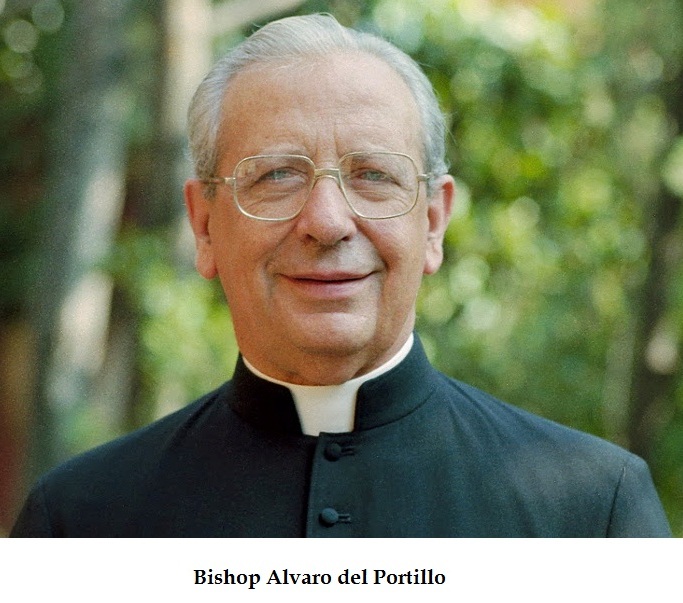
Last April 2014, we witnessed the canonization of two great popes: John Paul II and John XXIII. Today (on Sept. 27), Bishop Alvaro del Portillo, successor to Saint Josemaria and first Prelate of Opus Dei, is to be numbered among the blessed; the ceremony taking place in Madrid, Spain. These events make us ponder on the significance of the beatification and canonization.

Pope Francis, in referring to the saints, said, “God chooses certain people so that we might see more clearly the reality of sanctity, so that we might see that it is He who sanctifies . . . This is the first rule of sanctity: Christ must increase and we must decrease.” (Homily, 9 May 2014).
5

The examples of the saints inspire us to imitate them. The canonization and beatification reminds us that it is possible for us to be like them –SAINTS! We have the mistaken idea that saints are super heroes. Pope Emeritus Benedict XVI wrote: “It is not for me,’ we are led to think, ‘because I do not feel capable of attaining heroic virtue. It is too high a goal.’ Holiness then becomes a thing reserved for some “greats” whose images we see on the altars, and who are completely different from us ordinary sinners. But this is a mistaken notion of holiness…”

A saint is not superior to others; he can be very weak, with many mistakes in his life. What makes him different is that he keeps on struggling – getting up after each fall. He does not live extraordinary life. What makes him holy is the love and care that goes into the ordinary experiences of each day. It is his profound contact with God, becoming His friend. It is letting God work, the Only One who can give him the graces and the help to achieve heaven – to be eternally with the Blessed Trinity and to belong forever to the great family of God.

Today, let us resolve to begin our journey to become saints.

(Reference: “Sanctity: Everyone’s Vocation” an article by Bishop Javier Echevarria published in “Palabra;” “You can become a Saint!” by Mary Ann Budnik; “Letting God Work” an article by Cardinal Joseph Ratzinger, in L’Osservatore Romano, October 6, 2002.)

Categories
Health Care Ministry

WOMEN IN THE CHURCH (Excerpts from Fr. Jesus Galindo’s Recollection To The HCM Ladies) compiled by: Barbie Young

As a daily churchgoer, it is quite evident that women outnumber the men during the Holy Eucharist of the mass. But why is it that women do not hold important positions in the church’s hierarchy?

In Jesus’ day, religious rules regarding women were already written down in the Mishna and the Talmud: women were to be shunned in public social contact, women did not have the right to be public witnesses in court cases, women were restricted from orally communicating the Torah to others, even to children, women were not allowed to be educated in the same schools as men. However, these religious limitations were not always found in the Old Testament. This is why Jesus reacted so strongly against the teachings of the elders because they were not Biblical.

Jesus’ attitude toward women became a liberating factor against these types of religious practices that were accepted in His day. He did the forbidden by ministering to both women and men. He conversed with the Samaritan woman at a well. In the house of Mary and Martha, he commended Mary for a better ministry. He gave the women, who were neglected by the teachers, a place of assurance and hope. Women who were ostracized from society because of immoral practices were restored to righteous living, finding a new devotion to God.

During the hours of Jesus’ Passion, the women were the ones who followed Him to the cross except for John. The women were brave enough to stay there in the open while the men stayed away hidden. Women were not only the last ones at the Cross, they were also the first ones at the tomb during the Resurrection.

Ever since Eve, God has used women in some important roles. A woman was the first to sin. A faithful woman was chosen for Christ’s birth to reverse the sin. Holy women were the last persons to see Jesus on the cross, the first to be at the gravesite, and the first to see the risen Lord and to tell the story to others. They were among the first Christian converts. They received spiritual gifts along with the men and served in them faithfully.

The New Testament does teach that both men and women received the gifts of the Holy Spirit without any distinction to their sex of male or female. God expects women to do ministry as men do ministry. However, it is a matter of in what capacity they serve. There are many Christian churches that forbid women in ministering in any capacity. Then there are many Christian churches that have allowed women in the office of pastors and elders in the church. But Jesus did not select any female apostle. “And He called the twelve to Himself, and began to send them out two by two, and gave them power over unclean spirits.” (Mark 6:7) Paul’s instruction of the leading and teaching ministry in the church also gives the responsibility to men. (Titus 1:5-9)

The Scripture is following the creation order of God from the Genesis account. A pastor has authority over the church as a husband has authority in the home. Women are forbidden to exercise such authority over a man in the Church or home because a reversal of the creation order would take place. Eve was not to watch over Adam but Adam was to watch over Eve. However, both men and women can work harmoniously together in ministry and apostolate. “There is neither Jew or Greek, there is neither slave nor free. There is neither male nor female; for you are all one in Christ Jesus.” (Galatians 3:28)

Categories
Fr. Baltazar Obico

“Conversion as Ongoing Process” A Sunday Gospel Reflection for the 26th Sunday in Ordinary Time By Fr. BaltazarObico, OFM

Introduction: Einstein once said, “Everything has changed but our thinking. The mind is always the last to know. Life flows continuously but the mind lags behind. It holds on to past moments, so it cannot catch the new that is happening. Loyalty to the mind is foolish. Consistent thinking, holding the same position now as we did earlier, has a high price tag. The spiritual adage is: the mind makes a good servant but a poor master. Too often we cling to what we think that it keeps us from attuning to the rhythms of life. (John Shea) “Amen I say to you, tax collectors and prostitutes are entering the kingdom before you.” Today’s Gospel seems to disturb our societal order and undermine the whole reason for being good, living justly and observing standards, if the tax collectors and sinners will be ahead of the righteous. A closer reflection of it however, says it is the ability to change one’s mind that Jesus emphasizes, an ability which the sinners have for they know their true status before God. Conversion in the Scriptures is primarily a change of mind. The word is metanoia.

Gospel.(Mt. 21:28-32) The parable of the two sons is peculiar to Matthew. It is an explanation to Jesus’ adversaries of why the gospel is eventually addressed to the sinners, the “just” having rejected it. It is a justification of the direction of the Gospel now to those who are despised, a new category of the poor. Jesus is actually addressing the high priests and elders. He wants to show those who are scandalized by his preference for sinners; that these are actually closer to salvation if they do penance than the people who considers them just. The targets of the parable then are those who close themselves against the Good news in the name of justice. Jesus gets them to know that God loves the rejected; they are capable of greater penance and obedience than the proud and self-sufficient. (B. Reid)

God did not decide at a definite moment of history to reject the Jews and choose the Gentiles. His salvific will is AT ALL TIMES UNIVERSAL. Not event the scribes or Jewish leaders are excluded from salvation. Their treatment of the Messiah simply meant that they lost the role of mediation that was hitherto theirs. The parable is crystal clear. The Jewish leaders are the people who said they will obey, and then did not. The tax collectors and harlots are those who said they would not but then have a change of mind and then a corresponding change of heart. The key to understanding is that it is really not praising anyone. Neither child had it all together. But the one who had the humility to change their minds and do what was asked was the exemplary one.

Word. Conversion is an ongoing process. We have to admit that on many occasions we promise to be faithful and have broken the same. How easy it is to say yes in the first fervor, but then how demanding it is to live a life of faithful obedience when one is committed in the long haul. But like a good marriage in which the fire of love burns less brightly but more hotly as the members fanned with every loving good deeds, so the infatuation in a disciple is solidified into a habit of being, as it is acted on day after day. Remember the renewal programs of the Church, the cursillo, life in the spirit seminar, the PREX, other regular retreats; how we feel we want to conquer the world by the new found strength! We know how slowly it dissipated. The yes is not something we pronounced only once but embraced anew each day. After years of acting out such transformative love, the words hardly even spoken as loving deeds say it all.

Categories
Articles

Santuario de San Antonio Parish Justice, Peace, and Integrity of Creation Ministry – JPIC Scholarship Program (SY 2014 -2015)

JPIC-logo1

VISION:
A Committee under the JUSTICE, PEACE AND INTREGRITY OF CREATION – JPIC MINISTRY
of the SSAP Parish Foundation, Inc.,
dedicated to provide EDUCATION, SPIRITUAL and MORAL VALUES FORMATION
through SCHOLARSHIP and GUIDANCE
to indigent youth in order to develop them into
responsible CHRISTIAN FILIPINO CITIZENS (Kristianonong Mamamayan).

MISSION:
To contribute to the training of indigent young Filipino men and women and
to provide them with technical skills to become economically self-reliant
so that they can LIVE and WORK with DIGNITY in society,
with JESUS CHRIST as their MODEL and as the CENTER of their lives.

CORE VALUES:
JUSTICE, PEACE and the INTEGRITY OF CREATION (JPIC) are truly FRANCISCAN values and help to keep the program focused and grounded – truly apropos for our Parish’s Outreach Programs, formerly called Social Services.

PRAYER – We start and end our meetings and get-togethers with a Prayer, led by one of our scholars or Committee members. The development of our scholars’ spiritual lives are a primary focus. A collateral benefit is that our spirituality grows alongside theirs.

We are grateful for the support of our Parish Priests who support the Program and who act as the Program’s
Spiritual Adviser, provides the presence of a Religious and gives inspirational talks on the Ten Commandments, the Eucharistic Celebration, The Holy Rosary, Advent, Lent, Easter etc. As Fr. Reu reminded us, we are a parish that shares and cares, because we pray together.

BACKGROUND:
God’s grace inspired the inception of the JPIC SCHOlarship Program during the 1996 FrancisFest when then Parish Priest suggested that a Scholarship Program be established in order to help children of marginalized families. Our thanks to him, and the succeeding parish priests who supported and continue to support this Program, and to the Scholarship Committee who set up and proceeded to provide scholarships for the initial twelve scholars. Some of the founding members continue as members of the current working Committee. A common denominator shared by all volunteer members is a commitment to keep this Program as beneficial as possible to its scholars, while maintaining a responsible accountability to its sponsors and benefactors.

WHAT WE DO:
Assistance with Tuition – Academic and Vocational/Technical Training, Food and Transportation Allowances
and most importantly, the Spiritual Moral/Values Formation of our JPIC Scholars.
Theme: Kristianiong Mamamayan! One of our Committee members conducts a workshop on how to be a better Christian citizen
 at home, in school, at work, in their parish, in their community / our country.
 Maka- Diyos, Maka-Tao, Maka-Bayan.

JPIC SCHOLARS:
Good young men and women, strongly motivated, open and joyful in spite of the many challenges in their lives. Many are driven so they can help their aging parents and their younger siblings finish school. During our kick-off activity, the Orientation, we meet their parents – decent and responsible persons who work hard to keep their children in school and off the streets. Unfortunately, some are sick or ailing, while many families may have lost their father or mother at an early age to sickness, or miss them during their overseas employment. Many have limited means to continue further studies or finish, and therefore will have difficulty finding jobs and establish a life-long profession.

We strive to help provide a Career path – not merely jobs — with a strong Christian work ethic, and try to provide a shift from hand-to-mouth existence to a more secure, stable and balanced life. Our scholar graduates enter the work force with heads held up high with dignity and are encouraged and urged to strive to be the best!
We remind our scholars that the blessings should not stop with them and their immediate families.
They are urged to share whatever knowledge and positive experiences they have learned with others, thus creating a far-reaching ripple effect.

PARTNER SCHOOLS:
Don Bosco Technical Training Institute, Makati; Punlaan School, San Juan; Maligaya Institute for Culinary Arts and Residential Services, Manila; Monark Institute and Foundation, Sta. Rosa, Laguna; Assumpta Technical High School, San Simon, Pampanga (Mother Rosa Memorial Foundation) ; and the Lyceum of the Philippines University, Manila and Cavite.

COURSES AVAILABLE:
1) Vocational / Technical Programs:

For men: Fitter Machinists / Ship Mechanics, Automotive Technology, Electrical Technology, Electronic Technology, Automotive – Light and Heavy Equipment

For women: Industrial Technology, Food and Beverage Preparation/Dual Technology Course,
Culinary Courses (Hot and Cold Kitchen), Caregiving, Medical Transcription

2) College: For men and women: usually 3rd or 4th year College – Highly recommended are service-oriented courses such as Education, Social Service, Accountancy, Law, Nursing, Engineering. Occasionally, exceptions are made to accept exceptional scholars in the first year of college provided there are sponsors.

ANNUAL CALENDAR OF ACTIVITIES:
• Last Monday Monthly Planning Meetings
• 1st and 3rd Saturday Monthly Meetings with JPIC Scholars,
• Twice a Month English Tutorials with our JPIC SCHOlarship Committee Teacher-Mentors — Excellent Mentoring and Tutorials to improve their skills and proficiency in the English language which will give them more confidence and an edge as they seek job placements and move up the career ladder.
• Seminars and Workshops on Kristianong Mamamayan, Time Management, Financial Management, Goals, Commitment, Perseverance, Good Conduct, Courtesy and Good Manners, proper Dress Code,
Health and Hygiene, Good Work Ethics, How to write a Resume and apply for a Job, Care and Love for the Environment – tied in to ECOlogy and the Integrity of Creation.
• Monthly Parish Involvement (8-10 hours per school year) are volunteered by our JPIC Scholars to give them a sense of giving back and to discourage a mendicant attitude.
• Annual Recollection in November, Christmas Party in December, Graduation Picnic in February.
• Continuing Newspaper Drive (Please drop off newspapers, cartons – Container Van in the Parking Lot to the right side of the Adoration Chapel).
• Matched Contribution Grant – Family Counterparts
• Application Period, Interviews with Applicants, Deliberation meetings to finalize List of accepted Scholars for the coming school year.
• Pre-Orientation with Incoming JPIC SCHOlars
• Orientation with JPIC SCHOlars, their Parent or Guardian and Partner School Representatives,
Signing of Kasunduan.

We are most appreciative of the Single Young Adults (SYA) partnering with us – in particular for conducting the 3rd Saturday Monthly Catechism sessions, JPIC SCHOlars’ Annual Recollection and helping with the JPIC SCHOlars’ Christmas Party.

Our JPIC Socio-Pastoral Worker (a licensed Social Worker) monitors our scholars on a weekly basis in school while distributing weekly allowances based on their attendance and during 1st and 3rd Saturday meetings in the Parish. Acts as the Liaison between the Committee, Partner schools and scholars.

JPIC SCHOLARSHIP BUDGET:

We are most grateful to the SSAP Foundation Inc. and to the Parish for the annual allocation of Php1.2MM which covers approximately 30 scholars enrolled in Vocational/Technical courses and 2 College scholars in their last year of College.

School Year 2014-2015: 53 scholars. Last School Year 2013-2014: 83 scholars.

The cost for each Vocational/Technical scholar per School Year (SY) is approximately Php45,000.00. College expenses vary depending on the tuition. The assistance our Program gives goes a long, long way — Tuition assistance, a minimal food allowance to ensure they have a hot meal during the day, and a transportation allowance that will hopefully help minimize dropping out due to lack of funds to get to and from school from the distant places where many of them live.

AFFIRMATION and FAR-REACHING EFFECTS:

And so it is this helping hand that allows our young men and women move a step up, and their families with them. Their future is now filled with hope.

While the material assistance is crucial, Spiritual Moral/Values Formation is a focus. Personal interaction with the scholars is equally important. We hear from our scholars how time spent with them during our Cluster groupings mean so much to them. We have been told, that just by listening to them, we help them find their
voices and give them the affirmation that allows them to improve their lives because they know that other people, aside from their immediate families, believe in them, care for them, and want to see them succeed.

Our lives have been touched and we and our families are truly blessed! As our involvement with our Ministry fills our lives with much fulfillment and hopefully allows us to be better Christians, we accompany our scholars in prayer and in their life’s journey.

OUR HEARTFELT THANKS:

Our deepest thanks to our parish and benefactors for their untiring generosity.

God’s grace inspires a parish community that is so abundantly blessed in human and material resources to extend a helping hand to our less-privileged sisters and brothers, touching and transforming their lives.

God’s grace has allowed our program to grow over the years – in terms of what we have to offer to our scholars, the number of beneficiaries, volunteer members of the JPIC SCHOlarship Program Committee, guest resource persons and the growing number of regular and generous sponsors and donors.
HOW CAN I HELP?
HOW CAN I MAKE A DIFFERENCE?

JOIN the JPIC – SCHOlarship Ministry!
Your involvement is appreciated – time, talent, resources, suggestions.

Please SUPPORT our scholars – partial or full scholarships are accepted.
Your contributions are welcome all year round. No amount is too big or too small.

PRAY.
Please continue to pray for the JPIC SCHOlarship Program that we love so much and for our JPIC scholars, past, present and future.

We implore the Lord’s continuing grace to allow the JPIC SCHOlarship Program to continue for many years to come, centered in Christ, always moving forward in a positive manner.

May our Blessed Mother continue to guide us to do what is best for the Program and for our scholars.

May the Holy Spirit continue to inspire our Parish to do what it does so well — help, reach out and transform lives!

ONE Faith, ONE Parish, ONE Family!
JPIC SCHOlarship Program Committee (9.2014) / Mariza V. del Rosario / Menchu O. Bautista

*** For more information, please call JPIC Socio-Pastoral Worker Ms. Jackie – SSAP Office 843-8830.

Categories
Pope Francis

Pope cites three lessons from Mary: Be joyful, help others, never give up.

3

Carol Glatz Catholic News Service
The Francis Chronicles
Vatican City
September 8, 2014

When a mother has a birthday, children send their greetings and love, so make sure to do the same thing on the feast of the Nativity of Mary, Pope Francis said.

The liturgical feast day Monday “would be her birthday. And what do you do when your mom has a birthday? You send her greetings and best wishes,” the pope said, after praying the Angelus with people gathered Sunday in St. Peter’s Square.

The pope asked people to say “a Hail Mary from the heart” and to not forget to tell her “Happy Birthday!”

Mary has three very important lessons for today’s Christians, the pope said in a written message to Cuban bishops marking Sept. 8 as the feast of Our Lady of Charity of El Cobre, patroness of Cuba.

He said Mary teaches people to experience the joy of Christ and share it with others; to never let adversity beat you down; and always help those in need with love and mercy, he said.

The pope said people should imitate how Mary responded to God’s call with her same joy, haste and perseverance, the pope said.

“Every time I read sacred Scripture, in the verses that talk about Our Lady, three verbs catch my attention,” the pope said.

The three kinds of action — be joyful, help without hesitation and persevere, should be “put into practice” by all Catholics, he added.

Whoever discovers Jesus will be “filled with an inner joy so great that nothing and no one can take it away,” he said.

With Christ in their lives, people find the strength and hope “not to be sad and discouraged, thinking problems have no solution.”

For the second action, people should always rise “in haste,” just like Mary, to help others in need, he said.

“Victory is to those who repeatedly rise up, without getting discouraged. If we imitate Mary, we cannot sit with our arms crossed, just complaining or perhaps avoiding any effort so that others do what is our responsibility,” he said.

Making a difference and helping others does not have to be done on a grand scale, he said, but entails doing everyday things “with tenderness and mercy.”

“The third verb is to persevere,” the pope said.

Mary relied on God and his goodness for the strength and courage needed to stay by Christ’s side no matter what and to encourage his disciples to do the same.

“In this world in which long-lasting values are rejected and everything is changing, in which the disposable triumphs, in which it seems people are afraid of life’s commitments, the Virgin encourages us to be men and women who are constant in their good works, who keep their word, who are always faithful,” the pope said.

Cuban bishops visited the Vatican in late August for the installation of their gift, a replica of the statue of Our Lady of Charity of El Cobre, which was placed in the Vatican Gardens.

Categories
Random Thoughts by Peachy Maramba

R A N D O M T H O U G H T S Voices from yesterday and today . . . by Peachy Maramba

2

ST. HILDEGARD: Medieval Abbess Mystic and Visionary
1098-1179
September 17

Medieval Abbess
One of the most remarkable and outstanding woman of history especially of her age (1098-1179) was known only as St. Hildegard of Bingen. Not only was she an abbess and founder of a Benedictine religious community but also the first of the great German mystics. She was also one of the most creative woman of her time being a poet, painter, visionary, preacher, a physician, pharmacist and a political moralist, a composer of music and writer of books on mystical theology, ecology and herbal medicine. What an amazing nun she truly was! What was even more amazing was that for over 800 years she remained unknown and in relative obscurity.

Such that nowhere could did I find a record of her last name nor the names of her parents who were described as being possibly noble.

Early Years
Of her early years as a child we know very little apart from the fact that in 1098 she was born the tenth child at Bockelheim (some say Bermersheim), in the province of Rhernhessenof Germany. Her father may have been a soldier. Because she was a sickly child afflicted with fragile health at the age of eight she was placed in the care of Count Meginhard’s devout sister, Jutta Von Spanheim to educate and consecrate her to God. Jutta was a reclusive nun who lived in a cottage attached to a nearby Benedictine abbey in Diessenberg, Germany. It is said that this was when Hildegard’s spiritual career began.

It was Jutta who raised and educated Hildegard until she was eighteen years old who when she put on the habit of a Benedictine nun at fifteen a monastic community of religious women had already gathered about Jutta. Up to this point Hildegard seemed an unexceptional nun leading an exteriorly uneventual life.

Abbess Foundress of a Benedictine Convent
When Jutta died in 1136 Hildegard at the age of thirty-eight succeeded her as prioress or director of the hermitage. Eleven years later (about 1147) after receiving a divine call she moved her community of eighteen nuns to Rupertsberg near present day Bingebruck on a hill above the Rhine near Bingen and there founded a convent now called Rupertsberg Convent on Benedictine principles and became the first abbess there. Eighteen years later in 1165 she founded another convent, a daughter-house at Eibingen.

Visionary and Mystic Extraordinaire
Hildegard, the first of the great German mystics, claimed that from infancy (three years old to be exact) God had already given her the gift of visions. She wrote, “These visions which I saw I beheld neither in sleep nor dreaming nor in madness nor with my bodily eyes or ears, nor in hidden places but I saw them in full view and according to God’s will, when I was wakeful and alert, with the eyes of the spirit and the inward ears.” Her soul through this gift of vision was able to behold the “shade of living light in which things, present and future were reflected . . . as well as the revealed word of God – both in Scripture and in the book of nature.” However because of this gift she would often say things that seemed strange to those that heard her.

Understandably Hildegard’s gift so worried her that fearing that people would think her crazy, a fraud or a sorceress only to Jutta did she confide the secret of her visions. But when at age 43 after she became prioress and her visions pressed upon her with greater urgency she decided to confide in and describe them to her spiritual adviser, a monk named Godfrey. It was also because the voice of God seemed to say to her: “I am the living and inaccessible light and I enlighten whomever I will. Write what you see and hear.”

Godfrey instructed Hildegard to write down some of the things God had made known to her since childhood such as “the charity of Christ and the continuance of the Kingdom of God, the holy angels, the Devil and hell.”

He then presented her text to his abbot Canon who in turn when he read them had them examined by a team of theologians. They declared them to be valid and certified their orthodoxy.

Since her visions were declared authentic and good for the church, the archbishop of Mainz then appointed monk Volmar as teacher, confidant and secretary to help Hildegard in preparing a manuscript record of her visions 1141-1150. Because of her powers as seeress and prophetess she is often called “the Sibyl of the Rhine.”

1

Visionary Writing
This best known and major work of Hildegard entitled Scivias (i.e., sciensvias Domini: The Way of Wisdom or Know the Ways of the Lord) was written between 1141 and 1151. It records her 26 visions, prophetic, apocalyptic and symbolic in form. In it she presents human beings as radiating from God’s love which were like “rays of His splendor proceeding from the sun itself.” When the pope, Bd. Eugenius III read it he wrote to Hildegard expressing wonder at the favors she received from God but warned her against pride. He authorized her to publish whatever the Holy Ghost told her to publish.This book took her ten years to complete.

Today it is said that there are many editions of her writings.

Mystic Artist

Besides being an abbess and foundress of a Benedictine religious community, an author, poet, theologian and prophet Hildegard was also an artist. Her text of Scivias was accompanied by her extraordinary mystical symbolic paintings that portrayed human beings and the cosmos as “living sparks” of God’s love.

Holy Preacher
Because Hildegard regarded her visions as a vocation to reform the world she went on several preaching tours through the Rhineland denouncing the vices of society in spite of all her work and continual sickness. Soon her reputation and authority as a holy preacher was widely recognized extending far beyond the borders of her native Germany.

With complete fearlessness and unerring justice she rebuked from the pulpit and through her writing not only lay-folk but especially popes, princes and bishops. Thus she wrote to the loathsome archbishop of Mainz . . . “Turn to the Lord, for your time is at hand.” It was.

Other Writings

With her gift of extremely vivid imagery Hildegard authored 50 allegorical homilies and even wrote a morality play. Besides her visionary writings she also maintained an ongoing voluminous correspondence with notable figures such as 4 popes and 2 emperors wherein she shared her spiritual insights, political morality and occasional criticism where she felt it was needed. Because her letters were full of prophecies and warnings they soon made her notorious and caused some people to denounce her as a fraud, a sorceress and even a demoniac. She also wrote a book on the lives of saints.

She also created a so-called unknown language a sort of Esperanto consisting of a made-up alphabet and about nine hundred words using a mixture of Latin and German.

Doctor and Pharmacist
This multi-talented nun even avidly studied the use of medicinal herbs and the physiology of the human body. She wrote two books on medicine and natural history. Many elements in her visions speak about our ecological age. Her study of the use of medicinal herbs seemed to anticipate our present principles of homeopathy.

Musician and Composer
“Music,” according to Hildegard, “is a bridge of holiness between this world and the World of All Beauty and Music.” In spite of her busy and full schedule Hildegard found the time to compose religious music (hymns, canticles and anthems) of haunting beauty and originality. “Music”, she wrote, “was a symbol of the harmony that Satan disturbed.”

She viewed music as a sacred realm leading to God so she wrote beautiful music that lifts our spirits and souls closer to heaven. Thus if you hear her music it will sound like angels singing about God’s powerful presence in all creation. Today many of her musical compositions have been recorded.

She also wrote one of the earliest musical plays. It is said that full of creative energy Hildegard was one of the earliest composers of music in Europe.

Interdict
In 1179, the year she died, she got into trouble with the ecclesiastical authorities when she allowed a young man who had been excommunicated to be buried in the cemetery adjoining her convent. When they insisted that he be disinterred she refused on the ground that before he died he reconciled with the church and even received the sacraments.

Because of her stand Hildegard was forbidden the celebration or reception of the Eucharist. It was a terrible sanction and Hildegard suffered greatly because of it.

The interdict was eventually lifted allowing her to die peacefully on September 17, 1179 only a few months after its lifting. She was 81 years old, crippled and exhausted from her grueling schedule.

Multiple miracles occurred during her lifetime and at her death.

Never Canonized
While Hildegard was an astonishing remarkable woman of God who accomplished so much it is almost unbelievable and ironic that although 3 attempts were made to canonize her she was never formally canonized. However she has long been venerated as a saint and her name is in the Roman martyrology. Pilgrims go to the parish church in Bingen to venerate her relics.

She was hailed in her lifetime both as a saint and as a fraud and sorceress. Yet for eight hundred years she remained in relative obscurity. It is thanks to contemporary interest in the role of women in history that we know about her today.

Her feast is kept on September 17 especially celebrated by the Benedictines and Anglicans.Her relics are venerated by pilgrims at the parish church at Bingen.

On the eight-hundredth anniversary of the death of this medieval Renaissance woman in 1979 Pope John Paul II described her as “an outstanding saint . . . a light to her people and her time who shines more brightly today.”

She was certainly not only “one of the great figures of the twelfth century but one of the most remarkable of women.”

4

SOURCES of REFERENCE
ST. HILDEGARD
September 17

Butler’s Lives of the Saints – Vol. 3 – pp 580 – 585
The Illustrated World Encyclopedia of Saints – p 144
Pocket Dictionary of Saints – pp 239 – 240
The Watkins Dictionary of Saints – p 114
A Calendar of Saints – p 180
All Saints – pp 405 – 407
Butler’s Saint for the Day – pp 419 – 421
Illustrated Lives of the Saints – Vol. 2 – pp 430 – 433
Children’s Book of Saints – pp 59 – 61
The Big Book of Women Saints – p 280
The Way of the Saints – pp 198 – 199
Voices of the Saints – p 350 – 351
The Everything Saints Book – pp 105 – 107
The Way of the Saints – pp 198 – 199
Book of Saints – Part 9 – pp 4 – 5

Design a site like this with WordPress.com
Get started