Categories
Articles Health Care Ministry

HCM holds Seminar on Stem Cell Therapy in Retinal Diseases and Age-related Eyes Diseases

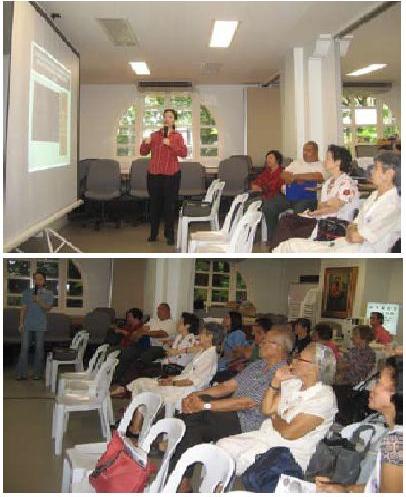
HCMThe Health Care Ministry held a half-day seminar on Stem Cell Therapy in Retinal Diseases and Agerelated Eyes Diseases with free eye check-up and cataract screening for all attendees last Sept. 21 at the St. Bonaventure Room from 8:30 to 12:00 noon. The Pacific Eye and Laser Institute sent their 11-man team, including two of their top eye specialists, Dr.Pik Sha Chan-Uy, MD, who is the first graduate of the Pediatrics and Strabismus Program from the MEE Infirmary of the Harvard Medical School, and Dr. Franz Marie O. Cruz, MD, the first Filipina to finish the Neuro-Ophthalmology Program from the Wilmer Eye Institute of the Johns Hopkins Hospital.

They shared valuable information on Glaucoma , Cataract and other eye diseases, their prevention and mitigation and other topics related to eye care. They also gave away free pouch bags with eye drops from Alcon Laboratories, Inc.

By Chuchi Quevedo

Categories
Articles

“Building at Sixty”, by Letty Jacinto-Lopez

In 1951, on the far, distant side of a flourishing, booming town, a flurry of activities was reaching fever pitch. A family of landowners was laying down the cornerstone of what would become a place of worship to answer the spiritual needs and concerns of a new, emerging community. The family came from the clan of the Ayala/Zobel/McMicking and the church was Santuario de San Antonio in Forbes Park, Makati, an affluent district of the Province of Rizal.Historical Cache in the Time Capsule
In 1951, I was five years old, three years short of receiving the sacrament of Holy Communion and oblivious to the cares of the grown-ups and definitely unmindful of its exalted dreams and goals. Who would ever think that my tiny world would merge with this bigger world, sharing common values that organized religion provides?
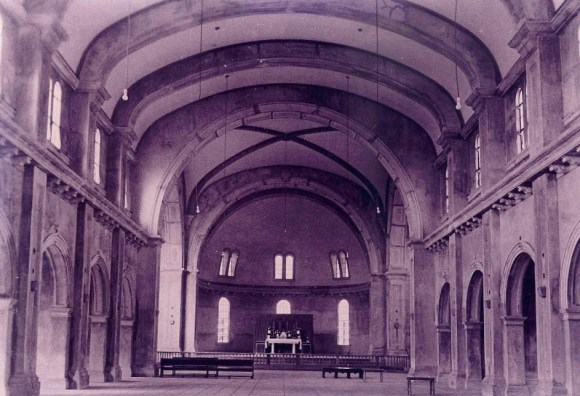
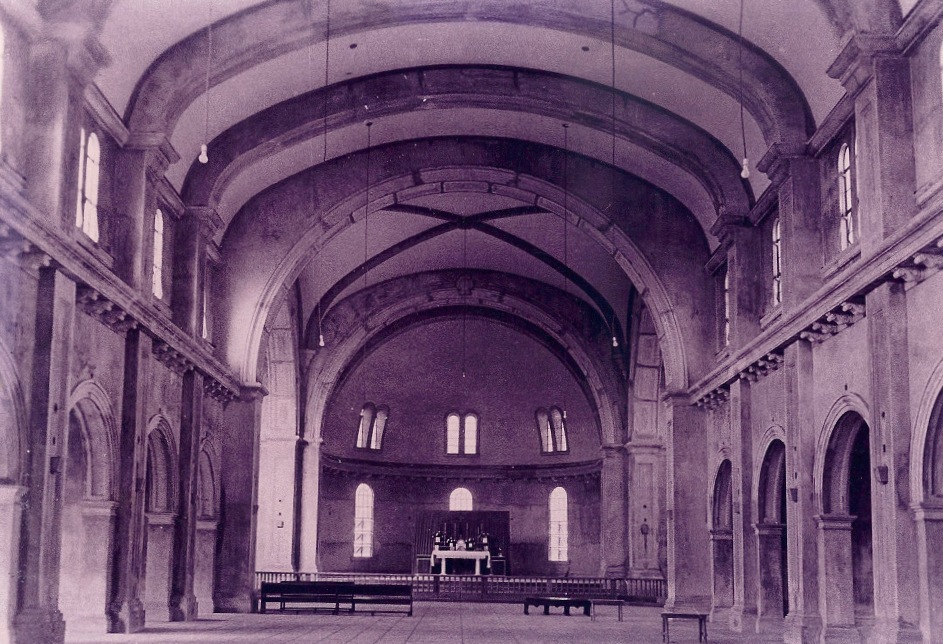
Archive Photo of Santuario de San Antonio Church
Santuario de San Antonio has always been that hallowed place of worship for Catholics. I grew up looking at this revered structure, as a special place to celebrate life’s significant events and milestones like the holy sacraments and of course every girl’s wishful dream of walking down the aisle as a blushing bride.
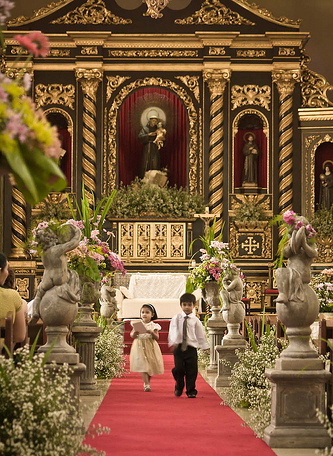
When our family relocated to Makati, we were welcomed into the family of Santuario de San Antonio as brothers and sisters, linked and related spiritually.

Similarly for Jeannie Bitanga. The settling period however became quite challenging for her after having lived abroad. She went from questioning and doubting her faith to strengthening, nurturing and growing it. Jeannie, encouraged by what she saw in the parish, took the initiative to re-learn her Catholic beliefs by reading the Bible and teaching Catechism to young children, one of the outreach ministries available in San Antonio.

“It was a breakthrough,” Jeannie said. Soon, her husband, Doy, joined the Men of the Sacred Heart, where its members promote devotion to the Sacred Heart of Jesus as well as serving as a lay minister of the Holy Eucharist. Jeannie’s participation in San Antonio’s various ministries expanded when the President of the Parish Council, Mike Limpe, asked her to create and manage a website and make it accessible to the public. Something vital in this age of Internet connection for the church to remain relevant keeping up with the technical development and progress of the times.

“My husband and I have, grown spiritually since those days of uncertainty. Santuario de San Antonio made us realize we had untapped potentials,” she remarked. “It was heart-warming to be welcomed in the family of Christ and meet some of the funniest and most dedicated people around the neighborhood.”

For Tina Teehankee, a secular Franciscan, she views life as a journey with its ups and downs. “With God’s grace and guidance, I find comfort in trusting in His grand plan, whether as a servant or as His child.” Parishioners with Tina Teehankee

Sadly, there are those who have relegated the role of the church in their lives as a minor concern, the last in the overall scheme of things, so to speak. I was therefore struck by a prayer that the faithful read in one Sunday service celebrated by our parish priest, Father Joel Sulse: “May no one among us feel so superior as to exclude others or feel so inadequate as not to contribute anything. Instead, may we be mutually enriched by one another”.

The lay community has a crucial importance in fulfilling the mission of the church. While there are many anonymous and faceless volunteers who work hard – silently – preparing each day to celebrate the Liturgy of the Eucharist, there are those who have bravely taken up the cudgels to keep things rolling and rolling. All in answer to God’s call to “Build My Church”.

The mission of the Franciscan Order has made an impact on the lives of the faithful (and the least, the last and the lost) because ordinary people devoted their time, energy, talents and material resources to reach out beyond their boundaries.

Among them,

The Prison Ministry headed by Steve Lopez, who visit the inmates at the Makati City Jail and host regular activities like sports, dance and medical clinics as well as reflective and meditative invocations to give hope and renew the faith of those who were lost and are journeying towards reconciliation, spiritually and socially.

The Scholarship Ministry where indigent or low-income students with great potentials are sponsored giving them the opportunity to excel in fields of learning and thus complete and graduate and have a better chance of making it into the world as an auto mechanic, in the Food and Beverage industry, in shipbuilding, care giving, and others.

The Hospital Ministry with Father Jesus Galindo as hospital chaplain, who visit those confined in hospitals attending to their spiritual, medical, physiological and emotional wellbeing.

The Marian Cenacle and Contemplative Ministries focus on the reach of the third degree of mercy – prayer. It is said that if one cannot show mercy by deeds or words, one can always do so by prayer. Prayer reaches out even there where one cannot reach out physically.

The Music Ministry with Amelita Guevarra. Voices are lifted through song and music engulfing the heart and spirit in a deep and fervent melodious worship to God.

The Catholic Women’s League headed by Betty Roxas-Chua, who sponsors mass baptism, holy communion and wedding every year apart from charitable projects that benefit the deprived and downtrodden.

Advocacies and ministries are in constant need of moral and financial support in order to function, and function well. Every year, Santuario de San Antonio honors the patron saint, San Antonio de Padova with a feast as well as raises funds to support and maintain the various ministries, including the Franciscan Mission.
Randy Limjoco, Fr. Joel, Lita Ascalon
In celebration of the 60th anniversary of the founding of Santuario de San Antonio in 1951, this year’s Francisfest will mount a musical variety show that chronicles Santuario de San Antonio’s evolution as a dynamic and spiritual center. Performers will come from the ranks of our talented parishioners, their family and friends like Joe Mari Chan, and artists on stage and cinema like Cocoy Laurel, Joel Trinidad, etc. Randy Limjoco, this year’s Chairman, promises an evening of entertainment and delight to be held in the main church on Thursday, October 3, 2013 at 8:00 p.m.
1005377_10201479009237679_1445458697_n
Recently, I attended a mass celebrated by Father Jade Licuanan. He spoke about Cardinal Gaudencio Rosales and his Theology of crumbs. Succinctly, “All God wants is small things. Small things put together can start up a miracle. The issue is the love for the poor. Goodness is never complicated.”

I kept repeating Cardinal Rosales’ theology as I left the church. Indeed, Love can be a way of life and not just a one-shot thing.

Francisfest has taken this noble cause to heart. “May the Church and her leaders strive for humble service and simplicity rather than for power, influence and wealth.”

Remember, we leave this world empty-handed.

Let us support Francisfest, heartily and magnanimously, hand in hand and brick by brick.

_______________

For info and tickets and/or donations to Francisfest 2013, please contact the Parish Office (63-2) 843-8830 to 31 or email ssap_info@yahoo.com.

*************

as published on September 29, 2013 The Philippine Star Sunday Magazine
About Letty Jacinto-Lopez and some of her published Articles
Categories
Articles Pastoral Team Reflections

“Make Friends with Dishonest Wealth” by Fr. Jesus Galindo

Make friends with those who, when one day you find yourself in trouble, that is, before God’s throne of justice, will defend and welcome you. These friends, we know, are the poor.

This Sunday’s Gospel presents us with a parable that in some respects has important contemporary relevance: the parable of the dishonest steward. The central character of the parable is the farm manager of a landowner, a well-known figure in our countryside when the sharecropping system was still in existence. Like all good parables, this one is like a miniature play, full of movement and scene changes. The actors in the first scene are the steward and the master and the scene ends with the master firing the steward: “You can no longer be my steward.” The steward does not even try to defend himself. He knows that he is guilty of what the master has discovered.

The second scene is a soliloquy of the steward, who is now alone. He has not yet accepted defeat. He immediately thinks about what he can do to get himself out of this situation and save his future.

The third scene — steward and tenant farmers — reveals to us the plan that the steward has devised. He asks the tenants, “How much do you owe?” “One hundred measures of wheat,” is one reply. “Here is your promissory note,” he says, “take it and write down eighty.” A classic case of corruption and falsehood that makes us think of similar situations in our own society, often on a much larger scale.

The conclusion may seem disconcerting: “The master praised the dishonest steward for acting prudently.” It is the master, not Jesus, who praises the steward’s shrewdness. We need to recall the particular nature of teaching in parables. The moral doctrine that is aimed at is not in the parable taken as a whole, in every detail, but only in that aspect of the parable that the narrator wishes to pick out. And the idea that Jesus intended to bring out with this parable is clear. The master praises the steward for his resourcefulness and for nothing else. It is not said that the master changed his mind about his decision to fire the man.

Indeed, given the initial conduct of the master and the quickness with which he discovers the new scam we can easily imagine the outcome, which the parable does not report. After having praised the steward for his astuteness, the master orders him to immediately restore the fruit of his dishonest transactions or pay it off in prison if he lacks the means.

It is cleverness that Jesus also praises, outside the parable. In fact, he adds: “The children of this world are more clever in dealing with their own generation than are the children of light.” That man, when he was faced with an emergency situation in which his whole future was at stake, showed a capacity for radical decision making and great resourcefulness. He acted quickly and intelligently — even if dishonestly — to save himself. This, Jesus observes to his disciples, is what you too must do, to save yourselves, not for a worldly future but for an eternal future.

Jesus is telling us Christians to be as quick and intelligent and resourceful in doing good as the “children of this world” (the corrupt) are in doing wrong. We are all God’s “stewards,” so we have to act wisely like the man in the parable.

The Gospel itself makes different practical applications of this teaching of Christ. The one that it insists the most on is the one regarding the use of wealth and money: “I tell you, make friends with dishonest wealth, so that when it fails, you will be welcomed into eternal dwellings.” In other words, do as that steward did; make friends with those who, when one day you find yourself in trouble, that is, before God’s throne of justice, will defend and welcome you. These friends, we know, are the poor.

We know this from what Christ says about his being the recipient of what we do for them. The poor, St. Augustine said, are, so to speak, our couriers and porters: They allow us to begin transferring our belongings now to the house that is being built for us in the hereafter. (R. Cantalamessa, ofm cap).

as published on September 22, 2013, Parish Bulletin

More about Fr. Jesus and his Reflections

Categories
Articles Pastoral Team Reflections

“The Parable of the Prodigal Father and The Two Lost Sons”, by Fr. Robert Manansala, OFM

All of us are in need of continuous homecoming to God who is unconditional in his love and who alone can lead us to proper relationships with him and with one another.

Today’s gospel pericope (Luke 15:1-32) is considered by many Biblical scholars as the heart of the gospel of Luke. If one gets the message of this passage, he gets not only the entire message of the Lukan gospel but also the entire message of Jesus Christ. The message is that God does not only love sinners or the lost unconditionally; he persistently seeks after them and welcomes them with joy.

Consisting of a trio of parables (the parable of the lost sheep, the parable of the lost coin and the parable of the lost son), the pericope is regarded as Jesus’ response to the criticism of the scribes and the Pharisees that those who are considered worthless and lost are actually the predilect of the Kingdom of God. The lost sheep, the lost coin and the lost son would have been judged not worth searching for by the scribes and the Pharisees. Patricia Datchuck Sanchez comments: “After all, what logical person would leave a herd of 99 sheep to search for a stray? And who would actually sweep clean a house to find one coin when they had nine others? And who would open him/herself to greater misery by seeking out a prodigal child who had disgraced the family name and disassociated himself from the sacred heritage when you have another fine and upright son at home?”

While the first two parables are given to set the stage for the increase of the pathos of the message of the pericope, all the three of them are actually intended to show the “illogical” ways of God and to challenge the readers to similarly open themselves to an unconditional and forgiving acceptance of and care for others, especially those considered the lost as well as the last and the least by the society.

The third parable has been traditionally called the parable of the prodigal son. This may not be a very appropriate title. The lost son in the story is only recklessly extravagant in wasting his inheritance, but the father is actually the one who shows limitless prodigality in his love for, forgiveness of and patience with both sons. Thus, the story, as some commentators say, may be better renamed as the parable of the prodigal father.

In this reflection, we prefer to call the third story the parable of the prodigal father and the two lost sons. The father’s unconditional love is never diminished by the faults of both sons. His love for his younger son remains despite his going wayward. It is a love that waits for, seeks, welcomes and rejoices at the homecoming of his lost son. His love for his elder son is appreciative and patient. While he recognizes his elder son’s fidelity for always being with him, he tries to lead him to a relationship with him that goes beyond the sense of filial duties and to a relationship with his younger brother that is more embracing, welcoming, forgiving and unconditional. “Son, you are always with me, and all that is mine is yours. It was fitting to make merry and be glad, for this your brother was dead, and is alive; he was lost, and is found.”

An in-depth reflection on the story reveals that both sons are actually lost and in need of conversion and that both need to return to their father and to one another. The younger son’s faults include leaving his father and brother and their home, asking for his inheritance prematurely as his father is still alive, squandering his inheritance and living a disrepute life away from home. The elder son’s faults include seeing himself more as a servant of his father rather than as a son, not truly recognizing his younger brother as his brother (“When this son of yours…”), harboring resentment against his younger brother and his return, and failing to rejoice with his father at the return of his brother.

In the story, the homecoming of the younger son to the welcoming embrace of his prodigal father is accomplished. He gets reconciled with his father who unconditionally and lavishly forgives, welcomes and reinstates him to his status as one of his two sons. We do not really know what happens to the elder son in relation to his father and to his younger brother. The parable is open-ended and is still being told. It continues to be a reminder of the need for everyone to always return to the compassionate God, as represented by the father, and to our brothers and sisters, as represented by the younger son. All of us are in need of continuous homecoming to God who is unconditional in his love and who alone can lead us to proper relationships with him and with one another.

as published on September 15, 2013, Parish Bulletin
About Fr. Robert and his reflections

Categories
Articles Pastoral Team Reflections

“Cost of Discipleship” by Fr. Baltazar Obico, OFM

Following of Jesus confronts us with hard choices and jars any notion that being a Christian leads to social enhancement and personal betterment. Carrying our crosses means to love others by denying ourselves, a life of self-sacrifice.

One of the ten commandments is to honour our parents. The entire Sacred Scriptures, especially the Old Testament, is full of admonitions to children to honour and respect their parents. We can also presume that as a son, Jesus held Mary and Joseph in high esteem. Jesus truly loved his relatives and even told us to love our enemies, so why not our parents? How are we going to understand Jesus’ demand to hate one’s parents?

There are those who think that today’s call for discipleship, with its radical demand of detachment from family ties and possessions, refers only to a group of professed religious and celibates, and does not pertain to all Jesus’ believers and followers. Our experience tells us that many priests, especially the diocesan ones have not left their parents literally and are living with them in the convents. Many relatives also of religious are employed in the institutions like school and hospitals.

GOSPEL: In today’s Gospel, Jesus speaks to the crowd who continues to follow him. It is not addressed to a select few. Luke says a great crowd was with Jesus. Therefore to the large crowd travelling with Him, Jesus delivers these sharp words about the demands and priorities of discipleship. If they are contemplating being more than hangers on and intend to be regular diners at Jesus’ table, they need to know what they are getting into and decide whether they can sign on for the long haul. Jesus is no demagogue, intoxicated with popular success, who incites the crowd to follow him blindly not knowing where he would lead them.

1.First, Jesus asks us to detach from family ties. Hating one’s parents is a Semitic hyperbole to mean preference at once deliberative, absolute and complete. It implies that our family ties need to be purified by making Jesus our priority. Our love for the members of our family must be purged by the self-emptying love of Jesus. We know that what ails us as a nation economically and politically is rooted in strong family ties, as the interest of the family is pursued at the expense of the common good. Foremost of which is graft and corruption. It used to be the husband, now it is the brother-in-law. Political dynasty is another. We here in Makati are not strangers to this political chimera. Another ill that afflicts us is the bloated government bureaucracy to give way to the long list of extended family members. The love of the family members should not be sought in themselves but in order that the love experience within the family should overflow into the greater society.

2. Secondly, Jesus asks us to renounce all material possessions. Material possessions have a seductive appeal that can turn them quickly from being servants to being masters. The whole issue that grips the nation today about pork barrel says it all. Billions of taxes are collected from ordinary people to finance the lavish lifestyle of some of our politicians. Money has a way of making us callous to the cries of the people. Our honourable legislators have brought disrepute to our revered institutions. Those who languished in shame before, look like angels with the magnitude of this pork barrel scam. This danger of possessions and wealth is not only happening in the corridors of power. It is also a danger in the inner sanctum of the Church. One Vat. II official was arrested because of money laundering. Charismatic groups have gone separate ways because of money matters.

3. Lastly, detachment from family and possessions can be summoned up in the invitation to carry our cross. Following of Jesus confronts us with hard choices and jars any notion that being a Christian leads to social enhancement and personal betterment. Carrying our crosses means to love others by denying ourselves, a life of self-sacrifice. There are fundamentalist groups and catholic charismatics preaching prosperity gospel seducing others by promises of riches at hand. A new generation today that calls itself, “SELFIE”, a new breed of young adults who pride themselves without financial dependents and whose typical two year priority is to splurge on lifestyle-related consumer items like gadgets and cars. It is a generation that has made selffulfilment, not self-denial as a goal in life. They are bound to be disappointed for we are creatures of the spirit and only spiritual realities can satiate us.

as published on Sept. 8, 2013 Parish Bulletin

About Fr. Tasang and his reflections

Categories
Articles Pastoral Team Reflections

“The Rude Guest” (Luke 14:1, 7-14) by Fr. Joel Sulse, OFM

…to enrich one’s self and not to think of others is also a crime that we should remind ourselves of every now and then. As Pope Francis said: “Mess yourself up for God!”

The gospel reading this Sunday is part of the critical 14th Chapter, where the action and the setting is mostly set on the Sabbath in the house of a leading Pharisee. The first verse sets the tone… they were watching Jesus closely. Hence, he was invited as a guest. But what type of a guest is he? Verse 3 of this account tells us that he challenged the lawyers and the Pharisees; he lambasted without hesitation those who would like to take the first seats (v.7); and even gave instructions to the host on whom to invite in the next meals (vs. 12-14). One writer says that by any standard, he can be considered as a rude guest.

The thousands of people who attended the “picnic” last Monday in Luneta, including ourselves in the parish, can be considered also rude guests like Jesus. We brought along with us, without hesitation, our firm stand about the issue. We aired out with our presence that enough is enough of the corruption happening in our country, and enough of the greed of those who participated in the horrific crime against our nation and our people. Our presence there is like that of Jesus reminding the Scribes and the Pharisees, but in our case reminding our politicians, to stop the whitewashed tomb prominence incessantly present in our economic, political and cultural systems.

Again, the setting in our gospel is a banquet. This has been part of our life, and is very important. Eating has been an essential element of our existence as human persons. Thus, if one is invited to an occasion, this means that the guest is important, legitimized by his being included in the guest list with a seat assignment. This is the spirituality behind the Sacrament of the Eucharist. Everyone is important in God’s eyes. Everyone has a seat, has a place in the holy banquet of the Lord. It is the only type of banquet where people, standing because the church has run out of pews, are given importance through the holy communion given them. Luke highlighted this meal narrative to give importance to the anticipated role of God inviting everyone “to eat in His Kingdom”. It is in this context that His table becomes an eschatological banquet, where everyone will have his fill, and will always enjoy a sumptuous meal.

There are four incidents that occur in this meal account: (1) the healing of the man with dropsy; (2) the finding of the Council of the Pharisee finding a place in a table; (3) Jesus’ suggestion whom to invite in the meal; and (4) the great dinner parable. Evident however in these incidents is the presence of God who heals, admonishes, exhorts and invites and assures hope to those who are willing to follow his path and his way of life. Jesus may sound like a rude guest but it is the only way to shake a system at hand, whose players are up in an active arena where everyone has a seat to enjoy a very important encounter.

The rude guest therefore has a purpose. It is into this realm of purpose that Jesus opens our minds and hearts into the real meaning of hospitality. That this value is not honorable alone to those who have the capacity to repay goodness with the same chance of inviting them to their future banquets as well. Rather to offer an opportunity to those who have no capacity to repay another person’s good deeds. The Rude Guest urges therefore a type of a social system without reciprocity! What is in the heart of this Guest? It is equality, justice and integrity. These, basically are the reasons why we invited ourselves to the “picnic” in Luneta last Monday. If all the people there will just continue to keep that beautiful and valuable attitude, then we can be like Jesus again, who challenges the social structure leading others to develop a transformative spirit that will bring about change in their lives.

Why did Jesus suggest that the poor, the blind, the crippled and the lame be invited to the banquet? Because they belong to the Kingdom of God! So if we displace them, we would owe God and them the remuneration that they justly should receive. It is like saying, “If we will not do something about the unjust system happening in our times, including that of the Pork Barrel issue, then we have to account for it before God so let us do something while it is not too late yet.”

Therefore, to enrich one’s self and not to think of others is also a crime that we should remind ourselves of every now and then. As Pope Francis said: “Mess yourself up for God!”

as published on September 1, 2013, Parish Bulletin
About Fr. Joel and his reflections

Design a site like this with WordPress.com
Get started