Categories
The ABC’s of Catholic Doctrine

Buried Alive! The ABC’s of Catholic Doctrine By Lianne Tiu

11There is a story in the newspaper about a woman who was buried alive in trash, which she had accumulated for the past thirty years. When she was rescued, she explained that the trash was really her treasure. We may be somewhat like her when we avoid going to confession. The “trash” of our sins keep piling up until we are buried alive in them.

Sometimes we do not want to get rid of our sins because we are attached to those “earthly treasures.” We are afraid the priest will ask us to make changes of our sinful lives.

Moreover, many of us tend to disguise, ignore, or glamorize sins by giving them other names or interpretations. We refuse to see them for what they really are – that sins are the rejection of God and His laws. St. John Paul II said, “learn to call sin, sin. And do not call it liberation or progress, even if the whole of fashion and propaganda are against you.” He tells us “…to rediscover the sense of sin.”
13
Sin weighs us down. It prevents us from soaring high to God. Sin clips our wings spiritually because it clouds our intellect, weakens our will to do good and avoid evil, and prevents us from loving God.

Many of us consider ourselves good people. When asked to go to confession, we believe that we have not committed any sins. This self-assessment is so different from that of the saints. The greatest saints actually considered themselves the greatest sinners. Their humility and love for God made them acknowledge that they were less than perfect and that they needed improvement.
12
We cannot remain buried alive in sin. The first step is to acknowledge that we are sinners! It hurts to admit the truth. Next step is to be sorry for our sins (because they offend God), resolve to change our evil lifestyle, and go to the sacrament of Penance. God’s love and mercy will rescue us from the trash of sins and give us spiritual strength to seek instead heavenly treasures.

(Reference: “You can become a Saint” by Mary Ann Budnik; Pope John Paul II, General Audience, April 1981 and September 1986)

Categories
The ABC’s of Catholic Doctrine

The Church Does Not “Hate” Gay People. The ABC’s of Catholic Doctrine By Lianne Tiu

4When the Church states that marriage is the union between one man and one woman, she is not teaching it out of hatred or discrimination. The Church never “hates” gay people. In fact, she has great compassion for people who are struggling with their sexuality and gender identity. The Catechism of the Catholic Church states that “any sign of unjust discrimination” toward homosexual people is to be avoided. Jesus, who heads the Church, loves all people—especially those whom society scorns, including people who are attracted to the same sex.
3For Catholics, marriage is not only about “intimate association” and “the hope of companionship,” but it is also linked intrinsically to the procreation and education of children. Today, this concept seems foreign to many people. The “contraceptive culture” has made us believe that the main function of our reproductive systems is not for reproduction, but for the pursuit of pleasure or intimacy. Pope Paul VI’s encyclical Humanae Vitae teaches that sex within marriage has two purposes: the unitive and procreative. If we remove one of these purposes—or both, we are left with a physical union of bodies, without any transcendent meaning. Sex and babies are so separated in the modern mind that it is difficult to explain why and how marriage is more than two people who love each other; but that it is a conjugal union that exists in part for the creation and education of children.
5 The Church cannot change the definition of marriage. She continues to teach that marriage is not for two men or two women; because such relationships do not result in the birth of children or allow a child to be raised by his/her biological mother and father. This is not at all a reflection of hatred or bigotry for gay people.
2
(Reference: http://www.catholicnewsagency.com – “What the Catholic Church does (and does not) teach about same-sex marriage” by Jennifer Manning; Catechism of the Catholic Church #2358)

Categories
The ABC’s of Catholic Doctrine

The ABC’s of Catholic Doctrine By Lianne Tiu

abc
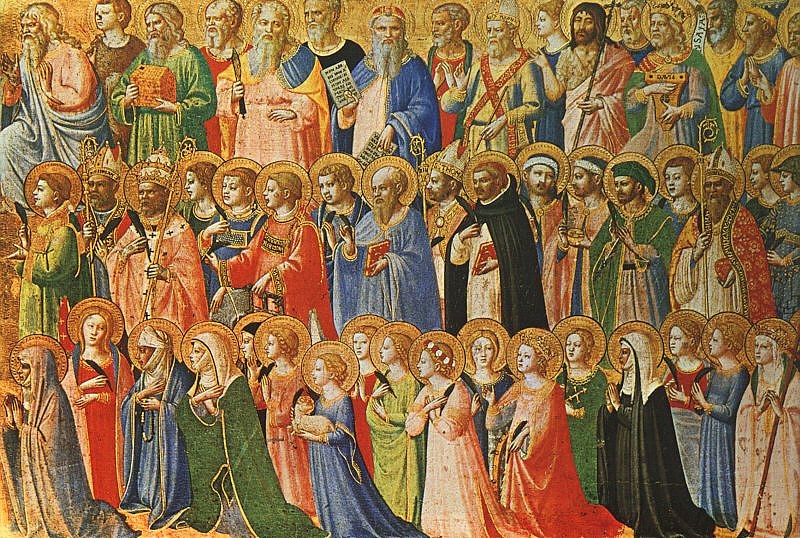
Not all can become rich, wise,famous, … yet, all of us are called to be saints!

Our Lord wants all of us to be saints. He asks all men and women, without exception, to be perfect as His heavenly Father is perfect (Mat 5:48)

To be holy is to be a good Christian. It is to make our actions consistent with the demands of our faith. It is to resemble Christ. It isn’t easy, but it isn’t difficult either. Our Lord gives us graces to achieve it; although He needs us to cooperate with them.
abc1
The main thing we are asked to do is to love: “charity is the bond of perfection” (Col3:14). We are asked to love the Lord with our whole heart, with our whole soul, and with our whole mind. (Mat 22:37)

To love and serve God, there is no need to do anything strange or unusual. Although some of us are called to the religious (or consecrated) life, majority of us are called to be holy in the middle of the world. We try to sanctify ourselves in the midst of our ordinary work and duties, doing them the best we can for love of God.

To love God more, we have to get to know Him through prayers and in reading and contemplating His life in the Gospels.
abc3
We cannot achieve holiness in a stroke. We will commit many mistakes and sins along the way; but this should not discourage us. We begin again each day in our struggle until the moment of our death.

St. Josemaria wrote: “Don’t wait until you are old to start becoming a saint. That would be a great mistake! Begin right now, in earnest, cheerfully and joyfully, by fulfilling the duties of your work and of your everyday life.
Don’t wait until you are old to become a saint. Because — I insist — apart from its being a great mistake, you never know whether you will live as long as that.”
(The Forge # 113)
abc3
(Reference: “On Retreat with St. Josemaria Escriva” by John O’Dogherty; “The Way; Furrow; The Forge” by St. Josemaria Escriva; “Novo Millennio inuente” by St. John Paul II)

Categories
The ABC’s of Catholic Doctrine

Is it a lack of compassion to “deprive” people the “right” to divorce?, The ABC’s of Catholic Doctrine by Lianne Tiu

div
There is a move to legalize divorce in the Philippines. One of the arguments for divorce is the heartbreaking experience of domestic violence.

We sympathize with spouses who are trapped in these dehumanizing marriages. In fact, we must offer them much love and support. Their isolated cases, however, cannot be regarded as general situation to warrant a divorce law.

Compassion for these individuals cannot equal to the true compassion of supporting marriage itself. At its most basic level, marriage is a lifelong union between one man and one woman for the purpose of procreation and mutual support and love. To weaken the institution of marriage (by allowing divorce) for the sake of a few – even if this is for well-meaning intentions – is not compassionate.
div3
It is important that marriage is for life. This is for the good of the two people involved, for the perpetuation of the family, and for the proper rearing of children. Pope Leo XIII wrote: “Truly, it is hardly possible to describe how great are the evils that flow from divorce.” An example is children of divorced parents experiencing deep and lasting emotional trauma.
div2
To allow divorce for exceptional cases, Arch. Socrates Villegas questioned the degree of misery or difficulty on how it can be measured. Who can say which case is worthy of the “relief” of divorce or not? In the United States, most of the divorces do not happen because of spousal physical abuse or serious conflict, but they happen simply because spouses “grow apart.”

If aggrieved spouses and children are in need of help, there are juridical options to address their needs such as legal separation, annulment of voidable marriages, and provision in the law on anti-violence against women and children.
div1
What about giving a second chance for happiness? The sad reality is that unhappy spouses who had divorced and remarried were no happier, on average, than unhappy spouses who stayed married. In fact, very often, their subsequent marriages did not succeed. In the United States, 2 of every 3 second marriages end in divorce, too.
Compassion compels us to protect our homes and families from all forces of destruction by saying “No to Divorce”!

(Reference: “What’s Wrong with Divorce Anyway?” by Alliance for the Family Foundation Philippines, Inc.; CBCP Position Against the Divorce Bill and Against the Decriminalization of Adultery and Concubinage by Archbishop Socrates Villegas {CBCP President} March 25, 2015; How Could Divorce Affect My Kids? By Amy Desai, J.D.; “Does Divorce Make People Happy? Findings from a Study of Unhappy Marriages” http://www.americanvalues.org; “The Sacrament of Marriage” catholicism.about.com)

Categories
Pope Francis The ABC’s of Catholic Doctrine

“Are We Afraid To Touch the Poor?” The ABC’s of Catholic Doctrine By Lianne Tiu

10
Last February, Pope Francis asked pilgrims at St. Peter’s Square to reflect on how to help the needy. It is true we have dropped a few coins for the poor; we have given baskets to them during Christmas season; we have donated food and clothes during disasters; and some of us have organized foundations to alleviate poverty.

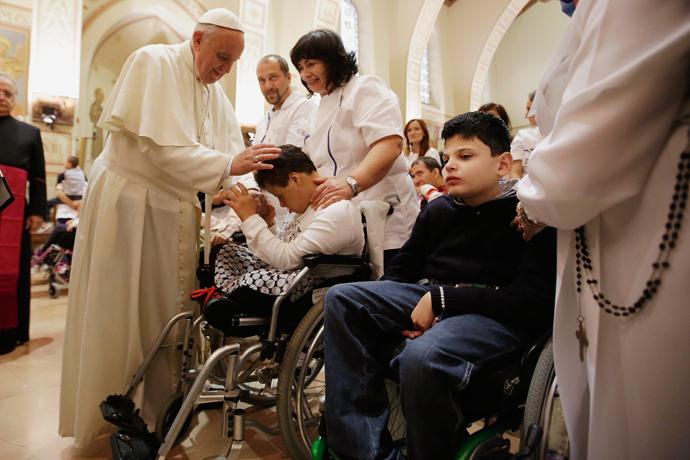
Pope Francis said that those of us who help the poor cannot be afraid to touch them. He said, “If we are to be imitators of Christ before the poor or the sick, we should not be afraid to look the afflicted person in the eye, and be close to the suffering person with tenderness and compassion.”
7
It is possible we have been giving without loving the poor. We give out of obligation. We give to obtain peace. We give to feel good. Let’s be honest, we often think that we are superior, and we look down on them simply because they are poor and weak. We shudder at their external appearances for we are afraid to catch some contagious germs, to get dirty, or to be robbed. We are disturbed by their smell or their unrefined manners.

To love and imitate God, we have to learn to embrace and welcome the poor with compassion. “Contact is the true language of communication,” Pope Francis said, “How many healings can we perform if only we learn this language!”
8
One day St. Francis was riding his horse near Assisi, when he met a leper. He had always felt an overpowering horror of lepers, but he realized that if he was going to devote his life to the poor he had to welcome him as a brother. So he dismounted from the horse, gave him a coin, and kissed him. This encounter with the leper was the turning point of Francis’ life as he became a champion of the poor.

Blessed Mother Teresa wrote, “To serve the poor, we must love them.” Yet we know it is not easy to love them when we are bothered by their distressing outward appearances. Mother Teresa advised us that we have to look into their hearts and see human beings in need of love and understanding. We have to see the face of the crucified Jesus in those who are suffering: the poor, the sick, the prisoners, the abandoned, including the sinners. We will be able to do this only when we look through the eyes of faith and through the eyes of love.
9
Jesus said: “For I was hungry, and you gave me food; I was thirsty, and you gave me drink. I was naked, and you clothed me.” (Matt 25:35,36)

May our whole lives be a concern for others especially the poor. May we fearlessly reach out to help them; for when we look into their eyes, we can only exclaim, “It is You, Lord!”

(Reference: Pope Francis: When you help the sick, are you afraid to touch them? (Feb.16, 2015); Catholic News Story: Pope tells new cardinals to evangelize fearlessly (Feb. 16, 2015); Mother Teresa’s Lessons of Love & Secrets of Sanctity by Susan Conroy; ChristianHistory.net ”Meet St. Francis (Aug. 8, 2008))

Categories
The ABC’s of Catholic Doctrine

“All I wanna say is that they don’t really care about us.”, The ABC’s of Catholic Doctrine By Lianne Tiu

8
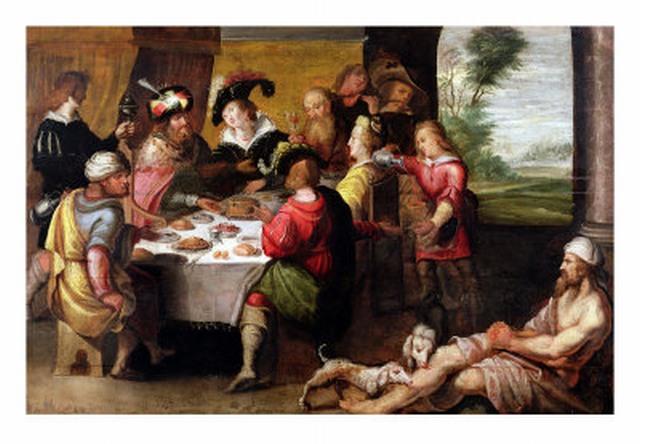
Michael Jackson’s song, “They don’t care about us,” reminds us of Pope Francis’ message for Lent about the “globalization of indifference.” We have become accustomed to the sufferings, poverty, and inequality of others; and they don’t affect or concern us anymore. We fail “to see the Lazarus sitting before our closed doors;” for there are some things in life we just don’t want to see – as the song goes.

In UST, the Pope spoke that today’s world doesn’t know how to cry, how to experience compassion, i.e. suffering with others. He said, “There is a worldly compassion which is useless. It’s a compassion that makes us put our hands in our pockets and give something to the poor” (and walk on). It is possible that some works of charity are done without love. Thus, St. Paul said that even if we give away to the poor all that we have … but have no love, we don’t gain anything. (1 Cor 13:3)
7
True charity is more the giving of what we are than of what we have. It is to go out of our comfort zone, to willingly inconvenience ourselves or make sacrifices for our neighbors for God’s sake. What people really want is a portion of our hearts.

To counter-act the culture of indifference, there are three things we can do. First, we pray together with the Church (in heaven and on earth) for a new era of mercy and compassion for the world. Second, we reach out to others with our acts of charity. Third, we try to have a change of heart. We ask Jesus to ”make our hearts like yours.” We wish to receive hearts, which are firm and merciful, attentive and generous; hearts which are not closed and indifferent.
6
Although poverty and sufferings will never be completely eliminated, love can transform the world and make it a better place to live. Love can change lyrics; for when people experience our kindness, compassion, and selfless love, they can only exclaim, “They DO really care about us!”

(Reference: Message of His Holiness Pope Francis for Lent 2015; Homily of Holy Father Francis, July 8, 2013 (Visit to Lampedusa); “Pope Francis’s Critique of Indifference” by Jonathon Mansell; “The Hidden Power of Kindness” by Lawrence Lovasik)

5

Categories
Articles

So What Happens Now?, The ABC’s of Catholic Doctrine by Lianne Tiu

popeWhen Pope Francis boarded the plane back for Rome, we were filled with mixed emotions: great joy and gratitude for having the chance to see him, at the same time, sadness that he was leaving our country.

At the moment, we are emotionally high and spiritually recharged. Yet soon, the “Pope fever” will gradually die down. So what happens next? Cardinal Tagle said, “The event (of the Pope’s visit) is so deep – so deep.

There is so much to reflect on, so much to pray over, so much to learn. And it is only in meditation, in prayer, in silence, that we can really get to the depths of the profound meaning of this event.” We can reflect on the Pope’s contagious smile, his gestures of humility, kindness and sincerity, and his messages on sanctity of family, caring for the poor, suffering, respecting women, corruption, among others We can reflect on the emotional plea “why God allows children to suffer” of a young girl, the six million people that trooped to Luneta despite the rain, the private plane carrying government officials that skidded off the Tacloban runway, and the father’s acceptance of the death of his daughter from a scaffolding collapse.

We need to make time and find a quiet place to pray each day. As Pope Francis said we need to “rest” in the Lord so that we can hear His voice and understand what He asks of us, especially from the pontiff’s visit. Once we have heard His voice, we must get up and act. This way, we bring God’s love to others through our love and good works. We become witnesses and missionaries of the joy of the Gospel, in Asia and the whole world.

The “Pope fever” will live on when we rest in prayer and use the three languages of the mind, heart and hands in harmony. Pope Francis has brought us “awesome sunshine to last us many lifetimes.”

Reference: Press Conference at Villamor Airbase (January 19, 2015); Pope Francis’ messages at Mall of Asia and UST and (January 16 & 18, 2015); Pope’s homily at Luneta (January 18, 2015); Speech of Archbishop Soc Villegas after the Luneta Mass (January 18, 2015 )

Categories
The ABC’s of Catholic Doctrine

“Pope Francis is coming to town!”, The ABC’s of Catholic Doctrine By Lianne Tiu

1

Four more days to go – as we continue to find ways and means on how we can get close to the Holy Father or be a part in the meetings and Masses that he will be celebrating during his visit to the Philippines.

Pope Francis is the Vicar of Christ on earth, the bishop of Rome, the successor of St. Peter. He is the leader of the 1.2 billion Catholics. He has gained many fans around the world because of his personal holiness and simple living.

We are not, however, to treat the pontiff like some kind of celebrity or rock star. Rather, we are to look at the message he is trying to tell us. He is coming here primarily to comfort our people who have suffered from the typhoons and earthquake that have hit the Visayas. He is imitating Jesus, who after seeing the people, felt compassion for them for they were distressed like sheep without a shepherd. (Matt9:36) We, too, are challenged to imitate Jesus by resolving to make an act of mercy everyday. It may be to visit our lonely grandmother, to adjust the low salary of an employee, to attend a funeral, to lovingly correct a friend who is using contraceptives, or engaging in marital infidelity, or contemplating to undergo in vitro fertilization (IVF).

3

The papal visit is a good time to re-learn and live the corporal and spiritual works of mercy. It is also a good time to meet Jesus in the Tribunal of Mercy, which is the Sacrament of Penance. In Confession, He (in the person of the priest) waits for us with open arms to show his love, mercy, and compassion.

Yes, Pope Francis is coming to town. And he wants to lead us to Jesus Christ, who is Mercy and Compassion.
2
(Reference: papalvisit.ph “Pope Francis Papal Visit 2015 Mercy and Compassion”; “The Faith Explained” by Leo Trese; Vatican Radio)

7 Corporal Works of Mercy:
To feed the hungry
To give drink to the thirsty
To clothe the naked
To visit the imprisoned
To shelter the homeless
To visit the sick
To bury the dead

7 Spiritual Works of Mercy:
To admonish the sinner
To instruct the ignorant
To counsel the doubtful
To comfort the sorrowful
To bear wrongs patiently
To forgive all injuries
To pray for the living and the dead

Categories
The ABC’s of Catholic Doctrine

The ABC’s of Catholic Doctrine: Who is your female role model? by Lianne Tiu

4
Is she Taylor Swift, Kate Middleton (Duchess of Cambridge), Blessed Teresa of Calcutta, Audrey Hepburn, Maria Sharapova, Tessie Sy-Coson, your teacher, your “lola,” or your mother? Sometimes, we will be dismayed to learn that the generation today reveres celebrities who dress around half naked, who are involved in drugs, in pre-marital sex and extra-marital affairs. Our society values status and beauty above true success and values.

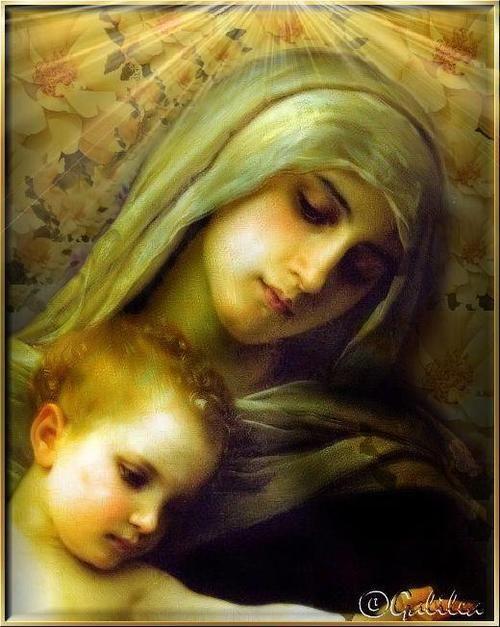
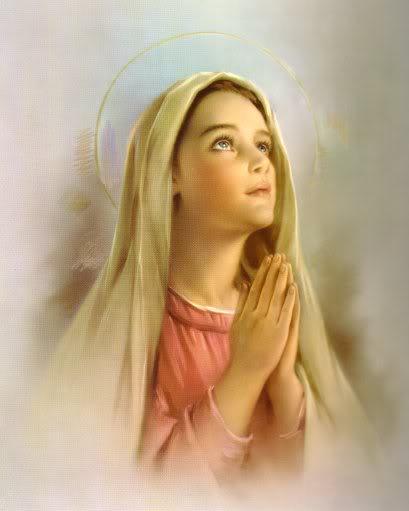
A true role model is one who possesses the qualities that we would like to imitate in our lives. And who would be more perfect for that title than the Blessed Virgin Mary? She is the perfect spouse, parent, friend, and relative. She is a woman of substance as she possesses outstanding virtues such as humility, obedience, detachment, charity, purity, … (name them all). Mother Teresa called Our Lady, “the most beautiful of all women, the greatest, the humblest, the most pure, the most holy… a model for all women.” In fact, one of her great secret of sanctity was her closeness to Mary whom she loved so much. She wrote: “Cling to Mary and ask her to teach you how to love Jesus more and more since no one did the will of God as completely as she did.”

Mary inspired admiration and emulation. She did not gossip. She was serene and at peace in the face of sufferings. She was obedient; unlike many of us “Cafeteria Catholics” who chose what we wanted to believe and what we wanted to disregard on the Church’s teachings. In a twentieth century setting, Mary is not the type who will post a selfie on social media, but who only wants our attention on Jesus. We cannot imagine her wasting so much time on long phone conversations, soap operas, computer games, and some social networking services. Her choice of clothes will be something elegant and modest, avoiding low neckline and short skirts.

We cannot go wrong in choosing Mary as our role model for today’s generation. By imitating and loving her, we have the key in our quest for sainthood. She will lead us straight to her Son, Jesus.

(Reference: “Mother Teresa’s Lessons of Love & Secrets of Sanctity” by Susan Conroy; “Catholic Truths for Our Children” by Patti Armstrong; “You can become a Saint!” by Mary Ann Budnik)
3

Categories
The ABC’s of Catholic Doctrine

The ABC’s of Catholic Doctrine by Lianne Tiu

Do you see Jesus in your housemaids and drivers?

Maids and drivers come in all shapes and sizes. They help us lighten our work; but at times, they can be a burden. As Christians, how should we treat them? Here are some suggestions:
-Give them a fair salary. Amounts can be based on the rates (more or less) offered by recruitment agencies. They can vary depending on each situation, such as if they have dependent spouses and children. Release their salaries on time, as agreed.

-Check on their basic needs. Are their sleeping quarters comfortable and well ventilated? Is there separation for the male and female quarters? Do they have enough and nutritious food? Do they eat and sleep at the right time?

-Be courteous to them. Use words like “Salamat,” “Good Morning,” “Paki—“ (Please). Call them by their names, not “Hoy!” or “Psst!”

– Control your temper when they make mistakes. Do not shout at them. Correct them in private and not in front of others. Explain to them why they are wrong. Be patient with their mistakes and defects. They wouldn’t be working for you with their low salaries if they had better opportunities. Stop criticizing, scolding, and belittling them. Compliment them for a job well done.

-Educate them. Allow them to attend classes on values, home-training skills or catechism. Enroll them in a part-time school if you can afford. Your motive should be to help and not for selfish reason of detaining them. Teach them to dress modestly, to choose wholesome radio/TV programs and magazines, to avoid familiarity with married people, and to have a marriage sanctioned by the church. Teach them proper hygiene.

-Get to know them. Talk with them about their families, interests and problems. Give them advice on their problems.

-Make them a part of your family. Remember their birthdays (give them gifts or prepare a small celebration), help them find good spouses, ask them to pray for your intentions (a small favor which they enjoy doing) – believe me, their prayers are powerful!

-Put yourselves in their shoes. Treat them the way you want to be treated. Are they allowed day-offs or a little self-indulgence like nail polish and make-up (for the maids)?

-Pray for them. Thank God for giving them to you. Allow them to attend Sunday Masses.

-Do not be too sensitive when your kindness is not acknowledged or repaid with gratitude. Rather, dwell on the fact that God is pleased with your good deeds. When they abuse your kindness or go overboard, let them know that they might get dismissed.

-Remember that they deserve equal rights and dignity. They are there to help you, not to be your slaves. Their humble work is not to be looked down. Their work, as long as it does not oppose God’s law, is good and noble, just like any “big time” job.

-Love them, with their flaws. See Jesus in them. By loving them, you are loving Him.

(Reference: St. Josemaria Escriva’s teachings on the value of work)

Design a site like this with WordPress.com
Get started