
Homosexual couples can love children the way heterosexual couples do; but children need more than love. They need the unique qualities and complementary natures of a father and a mother. The wisdom of thousands years and advanced researches conclude that the ideal marital and parental configuration is composed of one man and one woman.

All else being equal, children do best when raised by a married father and mother. They are more likely to have a healthy development – psychologically, mentally, and physically. The differences of men and women provide lifelong benefits to children that cannot be duplicated by same-sex “legal” parents acting out different gender roles or attempting to substitute for the missing male or female role model in the home. Fathers and mothers are simply not interchangeable. Furthermore, children raised by homosexual parents are more likely to experiment with sex, experience sexual confusion, and engage in homosexual and bisexual behavior themselves.

We empathize with homosexuals who long to be married and raise children and who yearn for social and legal recognition of their unions. However, we cannot allow our compassion for them to surpass our compassion for children. Same-sex marriage harms those who are most vulnerable – namely, the children. Pope Francis wrote: “At stake are the lives of many children who will be discriminated against in advance, and deprived of their human development given by a father and a mother and willed by God.” In another occasion, he talked about “the right of children to grow up in a family with a father and a mother capable of creating a suitable environment for the child’s development and emotional maturity.” We only want what is in the best interest of the children. Let us respect and protect their rights.

(Reference: Same-Sex Marriage is Harmful to Children by Trayce Hansen (licensed psychologist); A Warning from Canada: Same-Sex Marriage Erodes Fundamental Rights by Dawn Stefanowicz; Letter of Cardinal Jorge Mario Bergoglio to the Carmelite Nuns of the Archdiocese of Buenos Aires (June 22, 2010); Address of Pope Francis to Members of the International Catholic Child Bureau (April 11, 2014)
Category: The ABC’s of Catholic Doctrine

Opus Dei (Latin for “Work of God”) is an organization of the Roman Catholic Church that emphasizes the belief that everyone is called to holiness and that ordinary life is a path to sanctity.
Opus Dei was founded in Spain in 1928 by the Roman Catholic priest Josemaria Escriva. It was approved by the bishop of Madrid in 1941 and by the Holy See in 1947. Since 1982, it has been a personal prelature* of the Church. It is neither a religious order, like the Dominicans, Franciscans & Jesuits, nor a Secular Institute or religious movement, like Cursillo or Charismatic.
Opus Dei is made up of lay people and priests governed by a prelate, who is appointed by the Pope. Presently it has about 87,000 members, both men and women. 98% are lay persons, most of whom are married. 2% are priests. Its members are in more than 80 countries. About 58% reside in Europe, 34% in Americas, 6% in Asia and the Pacific, and 2% in Africa. Joining Opus Dei requires a supernatural vocation. It is a personal call from God to place one’s whole life at His service.

Opus Dei’s main activity is offering its members and other people, the spiritual means they need to live as good Christians in the middle of the world.

Opus Dei has been called “the most controversial force in the Catholic Church.” It is stigmatized by its opponents (some ex-members and their families, liberal Catholics, secularists, and supporters of liberation theology) because they misunderstand Opus Dei’s ideas (such as the practice of mortification, members’ resistance to dilute Church laws, members’ absence of self-publicity) or they cannot tolerate the ‘return of religion’ of the secularized society. Various popes and Catholic leaders have strongly supported Opus Dei’s innovative teachings. In 2002, St. Pope John Paul II canonized St. Josemaria Escriva and called him “the saint of ordinary life.”

As of today, there are 13 Opus Dei members whose process of canonization has been opened. Some of them are: Bishop Alvaro del Portillo (successor of St. Josemaria), Montse Grases (a teenage Catalan student), Ernesto Cofino
(a pediatrician and father of 5 children), Dora del Hoyo (a professional homemaker), Toni Zweifel (a Swiss engineer), and Tomas Alvira and Paquita Dominquez (husband and wife with 9 children).
Yes, Opus Dei is Catholic. It is fully legitimate and fully recognized by the Church led by the Roman Pontiff.

*Personal prelature – the prelate’s jurisdiction is not linked to a geographic area (diocese, country) but covers the persons (members of Opus Dei), wherever they are.
(Reference: http://www.opusdei.ph/en-ph/; http://www.newworldencyclopedia.org/entry/Opus_Dei; http://www.ewtn.com Fr. John Trigilio explains Opus Dei for CRNET )

It is May, the month of Mary. A Marian pilgrimage can be a wonderful family event. We do not have to go on a journey to Lourdes, Fatima, Guadalupe, or Loreto. The family can make a trip to a Marian shrine or church in the city. We can choose an outdoor shrine or an area in the church which has an image of our Lady.

A pilgrimage is done for different reasons: to show our love for the Blessed Mother, to ask for specific favor, to thank God or Mary for favor granted, or to do penance. A pilgrimage ultimately brings us closer to our Lord.

What does the family do in a pilgrimage? We drive or walk to the destination of our pilgrimage with prayer in mind. A common practice is to say the entire fifteen decades (3 Mysteries) of the Rosary. We “travel” with Jesus and Mary through the mysteries. We pray aloud one of the Mysteries on the way to the pilgrimage site, then pray the Mysteries of the day at the church or shrine. And on the return trip, we pray the other Mysteries. Children can take active roles in the prayers. We may place flowers and light candles at the shrine or in front of the image.

When the family takes a vacation to a different province or country, it will be a beautiful practice if parents make a small pilgrimage a part of the vacation. It teaches the children that love for Jesus and Mary takes priority in family life.
(Reference: “The How-To Book of Catholic Devotions” by Mike Aquilina and Regis Flaherty)
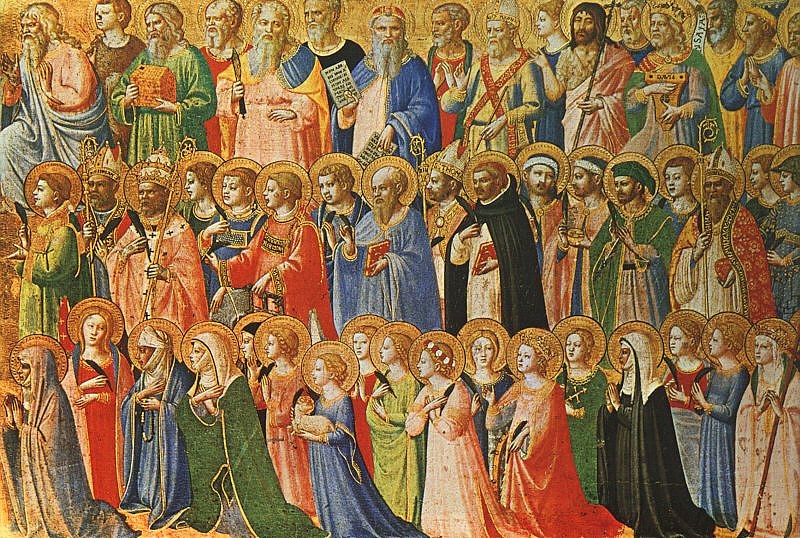
Not all can become rich, wise,famous, … yet, all of us are called to be saints!
Our Lord wants all of us to be saints. He asks all men and women, without exception, to be perfect as His heavenly Father is perfect (Mat 5:48)
To be holy is to be a good Christian. It is to make our actions consistent with the demands of our faith. It is to resemble Christ. It isn’t easy, but it isn’t difficult either. Our Lord gives us graces to achieve it; although He needs us to cooperate with them.

The main thing we are asked to do is to love: “charity is the bond of perfection” (Col3:14). We are asked to love the Lord with our whole heart, with our whole soul, and with our whole mind. (Mat 22:37)
To love and serve God, there is no need to do anything strange or unusual. Although some of us are called to the religious (or consecrated) life, majority of us are called to be holy in the middle of the world. We try to sanctify ourselves in the midst of our ordinary work and duties, doing them the best we can for love of God.
To love God more, we have to get to know Him through prayers and in reading and contemplating His life in the Gospels.

We cannot achieve holiness in a stroke. We will commit many mistakes and sins along the way; but this should not discourage us. We begin again each day in our struggle until the moment of our death.
St. Josemaria wrote: “Don’t wait until you are old to start becoming a saint. That would be a great mistake! Begin right now, in earnest, cheerfully and joyfully, by fulfilling the duties of your work and of your everyday life.
Don’t wait until you are old to become a saint. Because — I insist — apart from its being a great mistake, you never know whether you will live as long as that.”
(The Forge # 113)

(Reference: “On Retreat with St. Josemaria Escriva” by John O’Dogherty; “The Way; Furrow; The Forge” by St. Josemaria Escriva; “Novo Millennio inuente” by St. John Paul II)

There is a move to legalize divorce in the Philippines. One of the arguments for divorce is the heartbreaking experience of domestic violence.
We sympathize with spouses who are trapped in these dehumanizing marriages. In fact, we must offer them much love and support. Their isolated cases, however, cannot be regarded as general situation to warrant a divorce law.
Compassion for these individuals cannot equal to the true compassion of supporting marriage itself. At its most basic level, marriage is a lifelong union between one man and one woman for the purpose of procreation and mutual support and love. To weaken the institution of marriage (by allowing divorce) for the sake of a few – even if this is for well-meaning intentions – is not compassionate.

It is important that marriage is for life. This is for the good of the two people involved, for the perpetuation of the family, and for the proper rearing of children. Pope Leo XIII wrote: “Truly, it is hardly possible to describe how great are the evils that flow from divorce.” An example is children of divorced parents experiencing deep and lasting emotional trauma.

To allow divorce for exceptional cases, Arch. Socrates Villegas questioned the degree of misery or difficulty on how it can be measured. Who can say which case is worthy of the “relief” of divorce or not? In the United States, most of the divorces do not happen because of spousal physical abuse or serious conflict, but they happen simply because spouses “grow apart.”
If aggrieved spouses and children are in need of help, there are juridical options to address their needs such as legal separation, annulment of voidable marriages, and provision in the law on anti-violence against women and children.

What about giving a second chance for happiness? The sad reality is that unhappy spouses who had divorced and remarried were no happier, on average, than unhappy spouses who stayed married. In fact, very often, their subsequent marriages did not succeed. In the United States, 2 of every 3 second marriages end in divorce, too.
Compassion compels us to protect our homes and families from all forces of destruction by saying “No to Divorce”!
(Reference: “What’s Wrong with Divorce Anyway?” by Alliance for the Family Foundation Philippines, Inc.; CBCP Position Against the Divorce Bill and Against the Decriminalization of Adultery and Concubinage by Archbishop Socrates Villegas {CBCP President} March 25, 2015; How Could Divorce Affect My Kids? By Amy Desai, J.D.; “Does Divorce Make People Happy? Findings from a Study of Unhappy Marriages” http://www.americanvalues.org; “The Sacrament of Marriage” catholicism.about.com)

Last February, Pope Francis asked pilgrims at St. Peter’s Square to reflect on how to help the needy. It is true we have dropped a few coins for the poor; we have given baskets to them during Christmas season; we have donated food and clothes during disasters; and some of us have organized foundations to alleviate poverty.
Pope Francis said that those of us who help the poor cannot be afraid to touch them. He said, “If we are to be imitators of Christ before the poor or the sick, we should not be afraid to look the afflicted person in the eye, and be close to the suffering person with tenderness and compassion.”

It is possible we have been giving without loving the poor. We give out of obligation. We give to obtain peace. We give to feel good. Let’s be honest, we often think that we are superior, and we look down on them simply because they are poor and weak. We shudder at their external appearances for we are afraid to catch some contagious germs, to get dirty, or to be robbed. We are disturbed by their smell or their unrefined manners.
To love and imitate God, we have to learn to embrace and welcome the poor with compassion. “Contact is the true language of communication,” Pope Francis said, “How many healings can we perform if only we learn this language!”

One day St. Francis was riding his horse near Assisi, when he met a leper. He had always felt an overpowering horror of lepers, but he realized that if he was going to devote his life to the poor he had to welcome him as a brother. So he dismounted from the horse, gave him a coin, and kissed him. This encounter with the leper was the turning point of Francis’ life as he became a champion of the poor.
Blessed Mother Teresa wrote, “To serve the poor, we must love them.” Yet we know it is not easy to love them when we are bothered by their distressing outward appearances. Mother Teresa advised us that we have to look into their hearts and see human beings in need of love and understanding. We have to see the face of the crucified Jesus in those who are suffering: the poor, the sick, the prisoners, the abandoned, including the sinners. We will be able to do this only when we look through the eyes of faith and through the eyes of love.

Jesus said: “For I was hungry, and you gave me food; I was thirsty, and you gave me drink. I was naked, and you clothed me.” (Matt 25:35,36)
May our whole lives be a concern for others especially the poor. May we fearlessly reach out to help them; for when we look into their eyes, we can only exclaim, “It is You, Lord!”
(Reference: Pope Francis: When you help the sick, are you afraid to touch them? (Feb.16, 2015); Catholic News Story: Pope tells new cardinals to evangelize fearlessly (Feb. 16, 2015); Mother Teresa’s Lessons of Love & Secrets of Sanctity by Susan Conroy; ChristianHistory.net ”Meet St. Francis (Aug. 8, 2008))

Michael Jackson’s song, “They don’t care about us,” reminds us of Pope Francis’ message for Lent about the “globalization of indifference.” We have become accustomed to the sufferings, poverty, and inequality of others; and they don’t affect or concern us anymore. We fail “to see the Lazarus sitting before our closed doors;” for there are some things in life we just don’t want to see – as the song goes.
In UST, the Pope spoke that today’s world doesn’t know how to cry, how to experience compassion, i.e. suffering with others. He said, “There is a worldly compassion which is useless. It’s a compassion that makes us put our hands in our pockets and give something to the poor” (and walk on). It is possible that some works of charity are done without love. Thus, St. Paul said that even if we give away to the poor all that we have … but have no love, we don’t gain anything. (1 Cor 13:3)

True charity is more the giving of what we are than of what we have. It is to go out of our comfort zone, to willingly inconvenience ourselves or make sacrifices for our neighbors for God’s sake. What people really want is a portion of our hearts.
To counter-act the culture of indifference, there are three things we can do. First, we pray together with the Church (in heaven and on earth) for a new era of mercy and compassion for the world. Second, we reach out to others with our acts of charity. Third, we try to have a change of heart. We ask Jesus to ”make our hearts like yours.” We wish to receive hearts, which are firm and merciful, attentive and generous; hearts which are not closed and indifferent.
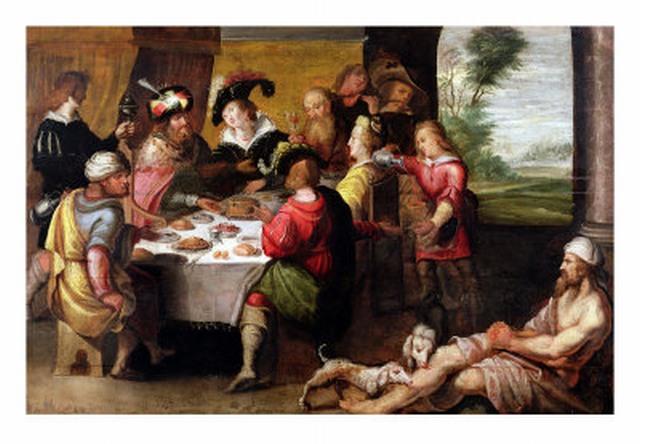
Although poverty and sufferings will never be completely eliminated, love can transform the world and make it a better place to live. Love can change lyrics; for when people experience our kindness, compassion, and selfless love, they can only exclaim, “They DO really care about us!”
(Reference: Message of His Holiness Pope Francis for Lent 2015; Homily of Holy Father Francis, July 8, 2013 (Visit to Lampedusa); “Pope Francis’s Critique of Indifference” by Jonathon Mansell; “The Hidden Power of Kindness” by Lawrence Lovasik)


Our natural response is that we would like to feast. We want to enjoy life and avoid any sufferings. Yet, Jesus tells us: “If anyone wants to be a follower of mine, let him deny himself and take up his cross every day and follow me.” (Luke 9:23) We find it strange that God, who loves us so much, would want us to suffer by denying ourselves.

God is not opposed to our happiness. When God created us, he had our good and our happiness in mind. But because of original sin, there exists in us the seeds of evil which prevent us from reaching true happiness. Self-denial (or mortification) is the means to fight and remove these seeds.

The Church, our wise mother, encourages us to practice constant and generous mortification. We are asked to fight against our vices, sinful habits, and our self-centered tendencies. The real end of mortification is union with God. We struggle against our evil inclinations in order to subject them to God’s will. We die to ourselves in order to live the life of Christ, the life of God.

The Church has built into the liturgical year certain seasons, like Lent, obligatory days of fasting and abstinence. Very often, we are quick to complain and to find all kinds of excuses to be exempted from them. Yet how many of us undergo great sacrifices to remain fit or to look good? How many athletes make countless sacrifices to win a game? And we are quick to call these efforts good and worthwhile.

To practice self-denial, we do not have to always make great sacrifices. We can make little conquests, such as getting up early, drinking one glass of wine instead of two, keeping our room in order, switching TV channels from indecent scenes, controlling our sarcastic comments on the maids, limiting our time on Facebook or computer games, controlling our roving eyes on scantily-dressed women, being punctual, smiling, listening to others…
Ordinary life offers us innumerable opportunities to offer sacrifices to God. Our little renunciations can be united to Christ’s sacrifice on the Cross: to make up for our sins and the sins of others. Our small mortifications can purify our souls and draw us closer to God.

Let us not be afraid to choose the door of mortification instead of the door of comfort. The sacrifices that are asked of us are very little compared to the rewards that we will gain. With mortifications, we lose life but only to gain Life Himself… God.
(Reference: “What is Mortification Anyway?” by Father John Bartunek (Source: Catholic.net); “Why Mortification?” by Francisco Luna; “The Spiritual Life” by Adolphe Tanquerey)

We know the rich has much to give to the poor. And we were taken by surprise when Pope Francis told those who give others to allow themselves to receive. At UST, he said: “Become a beggar. This is what you still lack. Learn how to beg. This isn’t easy to understand… Do you know you too are poor? Do you know your own poverty and you need to receive? Do you let yourselves be evangelized by those you serve?… Do you ask the poor to give you the wisdom they have?”

Blessed Teresa of Calcutta said: “The poor people are great people. They can teach us so many beautiful things. Maybe they have nothing to eat, maybe they have no home in which to live, but they are great people.” They teach us by their faith in God, their humility, and their patience in suffering. Mother Teresa often told the story about a man whom the Sisters picked up from the drain, half eaten with worms. He was dying, but he was not bitter. Rather, he was happy and grateful, knowing that he was going to die at least with someone loving him when he was brought to the Home for the Dying. Mother Teresa said, “It was so wonderful to see the greatness of that man who could speak like that, who could die like that without blaming anybody, without cursing anybody, without comparing anything. Like an angel – this is the greatness of our people.”

St. Josemaria considered the sick and the poor his “treasures.” When he had to start Opus Dei, he was only twenty-six years old and without money. He went to the hospitals and poor districts of Madrid and begged those people to offer up their sufferings, their hours in bed, and their loneliness to God for his apostolate. And because of their prayers and mortifications, the Lord has taken Opus Dei all over the world!

The poor people are God’s gift to us. They provide us the experience to put our love into action. They allow us to help them. And in doing so, we are serving Him. “Every work of love brings a person face to face with God,” Mother Teresa said, “Only in heaven will we see how much we owe to the poor for helping us to love God better because of them.” We owe a debt of gratitude to them.
Mother Teresa said, “We call them poor, but they are rich in love!” The poor people do certainly have much to share. We should never look down on them.

(Reference: Pope Francis’ speech at UST, January 18, 2015; “Mother Teresa’s Lessons of Love & Secrets of Sanctity” by Susan Conroy; “Msgr. Josemaria Escriva de Balaguer: a profile of the Founder of Opus Dei” by Salvador Bernal)
 Pope Francis was surprised and saddened that his words on responsible parenthood were misunderstood by some people.
The concept of “responsible parenthood” appeared for the first time in the Vatican II document Gaudium et Spes , no. 50. Later, it was explained in depth by Blessed Paul VI (whom Pope Francis praised at Mall of Asia) in the Encyclical Humanae Vitae. The Philippine government, however, has distorted its meaning and introduced the phrase “Responsible Parenthood” in the title of the Reproductive Health (RH) bill. The main purpose of the bill is to enable couples to limit family size based on their means of livelihood by giving them the right to choose the birth control methods they want, including artificial birth control drugs and devices.
For Catholics, responsible parenthood means that when married couples engage in sex, they must be open to life. Should they decide to postpone or avoid birth for an indefinite time, there must be well-grounded reasons for choosing so. In spacing births, they may take advantage of the natural family planning methods – engaging in sex only during those times that are infertile. This will require dialogue, respect and self-control. The use of contraception, however, is immoral. In fact, the Church uses a very strong term, describing all forms of contraception as “intrinsically evil.” (CCC 2370) Contraception is every action that impedes the union of egg and sperm before, during, or after sexual intercourse. Examples are condom, spermicidal jelly, pill, ligation, vasectomy, and withdrawal.

Responsible parenthood is not to keep on having children. Rather, it means having more children if God sends them. Married couples need to be open to His will. Saying “Yes” to the possibility of children is actually saying “Yes” to God Himself, the author of sex, the Creator of life. As Blessed Mother Teresa said, “The child is the beauty of God present in the world, the greatest gift to a family.”
(Reference: Faith Seeking Understanding Volume 2: “Marriage and the Family” by Fr. Charles Belmonte; Encyclical Letter Humanae Vitae by Blessed Pope Paul VI; Familiaris Consortio by St. John Paul II; Catechism of the Catholic Church; “Pope Francis surprised by misunderstanding of his words on family” CNA/EWTN News Jan. 24, 2015; “A Law Each Day (Keeps Trouble Away)” by Jose Sison, The Philippine Star January 26, 2015; Mother Teresa by Susan Conroy)
 Santuario de San Antonio Parish