Categories
Random Thoughts by Peachy Maramba

R A N D O M T H O U G H T S Voices from yesterday and today By Peachy Maramba

untitled

ST. BRIGID: Second Patron of Ireland
450 – 525 or 523

One of the most celebrated, popular and beloved saints in Ireland is St. Brigid. She was born in 450 at County Louth near Dundalk, Ireland. She was born of humble prudent Scottish stock. Her father was Duothac, a pagan Druid chieftain, and her mother Brocca, a Christian slave in his court.

Born out of wedlock (which is why she is patroness of children of unmarried parents) her mother was sold just before her birth on condition that the child be returned to him which is why Brigid grew up together with her father’s other children but still as a slave.

Brigid was also called BRIDE of Ireland because of her intense desire to only be Christ’s spouse. Ever since she was a little girl her Christian mother taught her all about Jesus and Mary whom she grew to love very much and longed to serve with her whole heart and being. This is why when her father insisted on her getting married to a poet who enjoyed a great social standing she desperately prayed to the Lord to help her. Aid came in the form of a terrible deformity when one of her eyes split open and melted in her head. Frustrated at being thwarted her father allowed her to take the holy veil which she had desperately wanted.

Meanwhile Brigid had seven good friends who were about her same age (18 years) and had the same longing to belong entirely to God. So Brigid convinced them saying, “Let us live together in community as the monks do.” (At that time in Ireland while St. Patrick had founded many monasteries there was still no convents for girls who longed to consecrate their virginity to God.) “Let us go to Bishop Mel of Armagh. He will receive our vows in Christ’s name.” He did and thus did Brigid found the first convent in Ireland. When she received the veil her deformity miraculously disappeared restoring her original beauty.

Brigid founded so many convents in so short a span of time. It is thanks to her father who in the meantime had come around so completely that he gave her the financial support and political backing she needed. Whether in the end he became a Christian himself is not known for sure but is believed to be so.

It is also thanks to the Irish bishops whom she befriended who encouraged her missionary labours and gave her their backing and support. Through them Brigid got to know how St. Patrick thought and so she strove to imitate him travelling all over Ireland founding numerous convents. The most famous of all the convents she founded was the double monastery she established in about 470 at Cill-Dara called at first The Church of the Oak because it was beside a great oak tree. It later came to be known as The Abbey of Kildare.

A double monastery is composed of nuns and monks living together but in separate quarters. Usually the nuns were of high social standing aided by monks who performed the liturgical services and helped carry out the heavy manual work. This form of monastery was not uncommon in both Britain and Germany.

Brigid who was abbess of the monastery for many years worked hard to develop it into a remarkable house of learning as she loved and encouraged studies. Thus the Abbey became a great center of scholarship, learning and spirituality. Around it grew Kildare, a cathedral city. A famous school of art was also founded by Brigid at Kildare.

It was because of her fame as a spiritual teacher that the place also became a center for pilgrims who sat at her feet and her followers absorbing their spiritual teachings. It is no wonder that Brigid is a patron of scholars.

Brigid died on February 1. Her feast is celebrated all over Ireland, Wales, Australia and New Zealand. Recently her feast day has been proclaimed a national holiday for women in Ireland. While St. Patrick is hailed as the principal patron of Ireland, Brigid is known as Ireland’s second patron.

St. Brigid is the patroness of poetry, healing and metalwork, knowledge, life, wisdom and hearth. She is also patroness of dairy workers and of all the good women in Ireland.

SOURCES of REFERENCE: Butler’s Lives of the Saints – Vol. I – pp 225 – 229; Lives of the Saints – pp. 56 – 57; The Lion Treasury of Saints – pp 104 – 105; and others.

St. Brigid and St. Patrick developed a close friendship sharing a so- called “friendship of charity.” St Patrick is said to even have baptized her.

Categories
Random Thoughts by Peachy Maramba

R A N D O M T H O U G H T S Voices from yesterday and today . . . by Peachy Maramba

13

BLESSED JOSEPH VAZ: MISSIONARY EXTRAORDINAIRE
1651 – 1711
January 16

His Dream
Can you imagine wanting to go to a place where there was not a single Catholic priest for halfa century because they were all expelled by the authorities, no Catholic churches and you were forced to send your children to Dutch Calvinist school? Well this was the situation in Ceylon, now called Sri Lanka that Blessed Joseph Vaz wanted to correct.

This situation came about in the sixteenth century through an arrangement with the papacy known as the Padroadao whereby the (Catholic) Portuguese crown enjoyed extensive jurisdiction over the local churches. But by the following century the Protestant Dutch came and seized most of Portugal’s Asian properties and the Catholic priests were expelled and fled.

Early Life
Joseph Vaz was born on April 21, 1651 at Benaulim, Goa (India) one of the few Portuguese enclaves left. His Parents who belonged to the Brahmin (upper) caste were Catholic converts who brought him up loving God. Because he loved to tend the village’s poor backward children his mother called him her “little saint.”

After Ordination
After ordination as a priest in 1676 because he was considered a “native” he could not join the mainstream religious orders who preferred priests of European blood.

So he travelled all over Goa barefoot as an Indian sanyasi. Because of his austere life style, perennially steeped in prayer, reflection and self-denial he was much sought after not only as a priest, confessor and preacher but as a friend. His great regard and respect for local customs endeared him to the people that he brought nearer to God.

So he could better be understood he learnt the local language Sinhala and so that his companions could do the same he compiled a dictionary (English – Singhala). Because his practice of the Christian faith drew rather than repulsed non-Christians to the faith his whole life came to be regarded as “an object lesson in missionary methods.” And because he treated all people the same irregardless of their rank or race he earned the distinction of being regarded as “the perfect model of an apostle.”

Devotion to Virgin Mary
He also earned another title as being the perpetual slave of the Virgin Mother of God” which he himself wrote in his “Letter of Bondage” a year after his ordination to express his phenomenal devotion to Our Lady. It was while in front of her statue that he wrote this letter pledging himself to be Mary’s slave and to do whatever her son Jesus wanted.

Pursuing His Dream
But Joseph never forgot his dream of going to Sri Lanka where the ruling Dutch Calvinists were attempting to eradicate Catholicism. So he asked permission from his superior to allow him to go and help rescue them. Unfortunately his request was denied and he was instead sent to the Capital Kanara (now called Colombo) as vicar apostolic where there was already a vicar apostolate occupying the seat hired by the Propaganda Fide. To solve the problem Joseph asked the vicar apostolate for conditional jurisdiction. When the archbishop died he asked to be relieved of his post.

Founds Institute of the Oratory, India
When he returned to Goa on September 25, 1685 he decided to join a group of Goanese clergy seeking to lead an ascetical life at the Church of the Holy Cross of Miracles. After helping them to adopt the Rule of the Oratorians founded by St. Philip Neri he became its superior and the founder of the Institute of the Oratory in India, the first ever indigenous institute in the Third World. This pioneering effort of his not only ensured Goa of a steady supply of priests but actually helped Joseph to continue his work in reviving the church in Sri Lanka and save it from complete extinction.

Leaves for Sri Lanka
Since the burning desire to serve the Catholics in Sri Lanka never left his soul fired by the Holy Spirit in 1606 he resigned his post as superior and left for Sri Lanka at the risk of his life. On the long dreadful crossing he learnt to speak Tamil. With a former family servant named John Vax they managed to enter Jaffna in the north of Sri Lanka where the Dutch East India Company controlled the ports and allowed no Catholic priests to land on the island.

In Sri Lanka
Disguised first as coolies (porters) then as beggars they went looking for surviving Catholics. When he found them he was impressed by how they had managed to preserve their faith through all kinds of hardships. By keeping him hidden in their homes and having secret meetings in the dead of night they managed for ten years to have the only priest in Sri Lanka. Going barefoot all over the island with a rosary round his neck he was priest, confessor, preacher and friend.

Imprisoned
In 1692 Joseph entered the capital city of Kandy as he had received a permit from King Vimaldharna Surya II. Unfortunately he was denounced by a Calvinist who accused him as being a spy and was thrown into prison for four years. There he learnt Sinhala. Because of the leniency showed him he even managed to set up a church dedicated to Our Lady in the prison grounds.

Accomplishments
When a serious drought took place in 1696 the Buddhist monks tried to obtain rain through their prayers but failed. So the King called on Joseph who erected an altar with a cross and placed it in front of the palace and began to pray. Torrential rains begun pouring down. Gratefully the Kind allowed Joseph to preach the Gospel everywhere and urged the Ceylonese to convert to Christianity.

Soon Oratorian missionaries began arriving from Goa. When an epidemic of small pox broke out they helped Joseph care for the sick. Once more the King and later his son gratefully allowed Joseph to establish the Catholic Church everywhere in Sri Lanka.

12

Working till his last breath Joseph was able to build 15 churches, 400 chapels with schools, dispensaries and hospitals all over Sri Lanka.

To communicate the truths of the faith Joseph translated the Church’s books and catechism into the native language. He also composed hymns and prayers in Singhalese and Tamil. He reached out humbly to communicate with the leaders of Buddhism and Islam. His work even reached the ears of Pope Clement XI who offered him a bishopric which he politely refused.

His Death
Tragically on a return trip to Kandy Joseph fell from the carriage and became seriously ill and died on January 16, 1711. The king declared a three-day mourning for him.

It is due to Joseph Vaz that there is a strong Catholic presence in Sri Lanka. The Catholic bishops said, “When humanly speaking there was no help possible from any quarter, God in his mercy sent us assistance in a most unexpected manner. He sent us an “apostle from India.”

His Beatification
The cause of his beatification began a mere two years after his death but because of politics, etc. it did not become a reality until 284 years later in 1995 when Pope Paul II himself beatified him in a special papal visit to Sri Lanka. Blessed Joseph Vax is indeed “one of the greatest missionaries Asia has ever produced.”

SOURCES of REFERENCE:
Butler’s Saint for the Day – pp 23 – 24;
Saint Companions – pp 30 -32;
Saints for Our Time – pp 36 – 37;
Lives of Saints – Part 2 – pp 120 – 125;
Saints of Asia – pp 23 – 24.

Categories
Random Thoughts by Peachy Maramba

R A N D O M T H O U G H T S Voices from yesterday and today . . . by Peachy Maramba

untitled

BLESSED ANDRE BESSETTE
1845 – 1937
January 6

St. Joseph’s Oratory

If you are ever in the great city of Montreal, Canada be sure to visit the magnificent basilica of St. Joseph’s Oratory on Mount Royal of that city. Join the millions of pilgrims from all over the world to visit the world’s principal shrine in honor of St. Joseph, the Spouse of the Virgin Mother of God and foster father of Jesus.

It’s hard to believe that this great basilica had its humble beginnings as a simple humble wooden chapel built by an even simpler and more humble lay brother of the Congregation of the Holy Cross in Montreal. With only a mere $200 which Frere Andres himself earned by cutting the hair at five cents each of the students at the College of Notre Dame where he was assigned as a mere doorkeeper, sacristan, infirmarian, laundry worker, gardener, messenger, lamplighter, etc., he was able to build this wonderful edifice.

Its Founder

Unbelievably its founder was not a rich man but the son of a lowly carpenter. Alfred Bessette or Frere Andre as he was fondly called was of French parentage in rural Quebec, Canada. Orphaned at the age of 12 he was adopted and tried his hand at farming, being a shoemaker, baker, blacksmith, etc. He even went to the United States where he worked for a few years. But he never seemed to hold a job for long because of his poor health and frailty which dogged him all his life.

Becomes a Holy Cross Brother

Thankfully this did not stop him from spending long periods praying. So when he returned to Canada he decided to apply as a brother at the Congregation of the Holy Cross. Bringing with him a letter from his pastor which said, “I am sending you a saint for your congregation,” he was admitted as a novice.

Once again he almost didn’t make it because towards the end of his year’s novitiate they were thinking of rejecting him again because of his weakness and frailty. Begging the local bishop to help he told him how convinced he was that God really wanted him to be a Holy Cross brother. Because of Bishop Bourget’s intervention and insistence Brother Andre was allowed to make his religious profession on August 22, 1872.

He was sent to the brother’s Notre Dame College in Montreal. Because of his lack of skills and because he could hardly read or write because of his erratic schooling due to his poor health he was assigned all kinds of menial tasks such as janitor, sacristan, laundry worker, messenger, etc., but foremost of which was being doorkeeper. Frere Andre humorously said of his job, “When I joined this community the superiors showed me the door and I remained there 40 years.”

Everyone grew to love this kind and helpful doorkeeper. Students, parents and visitors alike would all seek his advice, prayers, help and especially healing. By rubbing on their afflicted parts some of the oil which he had collected from the lamp hanging before the statue of St. Joseph in the college chapel Andre was able to help them. Or sometimes he would massage men (not women) with a St. Joseph medal wrapped in cloth.

It is no wonder that people would come in droves asking his help. But this humble brother would constantly tell them, “It is St. Joseph who cures, I am only his little dog.” Some day the saint will be honoured in a special way on Mount Royal, the hill above the college.

Ever since a child Andre had developed a great devotion to St. Joseph. He would spend long hours before a little status of St. Joseph which he had put on his window sill facing Mount Royal.

For many years the Holy Cross authorities had tried unsuccessfully to buy land on Mount Royal. One day Brother Andre and others climbed the steep hill and there planted medals of St. Joseph. Suddenly and surprisingly the owners yielded.

The Building of the Oratory

When Andre asked permission to build a small chapel in honor of St. Joseph (to whom the congregation itself had a great devotion) he was granted it on the condition that he could not incur any debt with the project.

So gathering all the coins he had saved over the years he used the $200 as nucleus money to build a small wooden chapel. Of course everyone helped either in money or labor.

As the donations came in Andre was able to expand the chapel several times and its popularity grew as well. Finally in 1917 using the donations from the thousands of people that came Andre was able to build a crypt church able to seat 1,000 people. Plans were made to even build a basilica over it.

However in 1931 the money ran out and construction was delayed for several years due to the Depression. So somebody said, “Put a statue of St. Joseph in the middle. If he wants a roof over his head, he’ll get it.” Got it he did but it took 50 years to build the magnificent Oratory on Mount Royal.

It now houses the mortal remains of Andre Besset, St Joseph’s most ardent devotee who unfortunately died in 1937 years before the grand minor basilica was completed. But the standing pile of crutches, canes and braces are testament of Frere Andre’s work through his beloved St. Joseph. The sickly boy died at 92 years old!

By the time he died the frail boy who could never hold a job for long needed a staff of four secretaries to answer the eight thousand letters he received annually.

He was declared Blessed in 1982 by Pope John Paul II.

4

SOURCES of REFERENCE
BL ANDRE BESSETTE

January 6

Pocket Dictionary of Saints – p 77
Illustrated Lives of the Saints – Vol. I – pp 24 – 25
Saint Companions – pp 20 -22
Saints for Our Time – pp 29 – 30
Saint of the Day – pp 9 – 11
Voices of the Saints – pp 712 – 713
Saints of the Roman Calendar – pp 9 – 10
Saints for Our Times – pp 9 – 13

Categories
Random Thoughts by Peachy Maramba

R A N D O M T H O U G H T S Voices from yesterday and today. . . by Peachy Maramba

10

ST. JANE FRANCES de CHANTAL:
CO-FOUNDRESS of the VISITATION ORDER

1572 – 1641
December 12 (Aug. 5, 12, 18, 21)

Born in Dijon, France on January 23, 1572, Jane (Jeanne) Frances de Chantal was the daughter of Benigne Fremyot, wealthy prominent aristocratic lawyer who was the president of the French Parliament of Burgundy. Her name is the feminine version of John which in Hebrew means “God has mercy.” She was barely 18 months old when she lost her mother Marguerite de Berbisey. Her loving father who was an upright man of absolute integrity brought her up with the occasional help of an aunt. Thus it was he who “structured her character upon a strong bold framework.”

When she was 20, she married Christopher de Rabutin, Baron de Chantal and an officer in the French army. They had seven children, three of whom died soon after birth. Tragically, nine (some say seven) years later in 1601 her beloved husband was accidentally shot by a cousin in the thigh while hunting and died a week later. After his death Jane fell into a three-year depression. It took her that long to forgive her husband’s assailant.

Jane and her four young children then went to live with her father-in-law, an ill-tempered man when he threatened to disinherit her children. Despite the added responsibility and ill treatment from servants she cheerfully spent the next nine years raising them.

A visit to her father when she was 32 years of age changed her life completely during a Lenten service in 1604, she heard St. Francis de Sales, the visiting bishop from Geneva, preach a powerful sermon. This was a turning point in her life. She was greatly inspired and impressed by the homilies of this man she recognized as the spiritual director she not only had longed for but had actually seen in an earlier vision. Francis, already a renowned preacher, presented a spirituality that was accessible to everyone capable to be lived out in the world.

Jane successfully convinced him to be her spiritual father. Asked if she intended to remarry she was advised to trim back her lavish lifestyle when she answered in the negative. So Jane devoted herself to caring better for her children and visiting the sick and dying.

But when in 1607, she asked his opinion if she should join a nearby Carmelite order, he, impressed by her practical spirituality, advised against it saying he had a new project for her: a new congregation he wished to found. He wanted to create “a community where girls and widows who were not equal to the rigors of other convents because of health, age or other circumstances might learn to lead the religious life.”

So together on 10 June in 1610, they founded at Annecy, the Congregation of the Visitation or the Order of the Visitation of Our Lady (or the Holy Mary). They gave it that name to commemorate the Blessed Mother’s visit to her cousin Elizabeth. The order would foster the virtues shown by Mary at the Visitation and engage in spiritual and corporal works of mercy.

How Jane welcomed the proposed project with joy!

After her eldest daughter married in 1610 and after providing for her 14-year old son by leaving him in the care of her father and of tutors she took her two remaining daughters to Annecy where she herself intended to become a nun.

But before she could leave, her son in an attempt to make her change her mind, threw himself to the ground and sprawled across the doorway. Unfortunately, Jane had already made up her mind so she merely stepped over his body and went outside.

However her aged father who was waiting in the porch blessed her before she left by laying his hands on her head and saying “I offer you to God. Go where God calls you. I shall be happy knowing you are in His house. Pray for me.”

Jane Frances, Mary Favre, Charlotte de Brechard a servant and Anne Coste became the first members of the order Jane and St. Francis de Sales founded in 1614. They were soon joined by ten others.

Despite numerous difficulties the order based on the two sister virtues of humility and meekness spread all over France. Pope Paul V approved the order in 23 April 1618. St. Francis de Sales then wrote his famous spiritual classic On the Love of God specifically for the guidance of Jane and her sisters.

Although for a few years the nuns under the Rule of St. Augustine were restricted to a contemplative life in a cloistered community by the Archbishop of Lyon later they were allowed to visit the sick and the poor.

Because they opened boarding schools for upper class girls that became very popular, the order rapidly grew. However it was not easy because many of the young girls felt their high birth gave them the right to reject any bothersome discipline. Many of the widows also were “irritatingly self-centered.” However the order grew in number under Jane’s special gift for organization and management and her prudent guidance and Francis de Sales and prospered in holiness and good works. She even opened a convent in Paris in the face of open hostility and much opposition. This convent she governed superbly for three years aided by St. Vincent de Paul who directed it at the request of St. Francis.

However in 1622 Jane’s closest friend and adviser – St. Francis – died leaving her terribly sad and bereft. Then a few years later, her son was killed in war and plague ravaged the region.

It was no wonder that for a time during those last years of her life Jane experienced periods of spiritual aridity compounded by spiritual doubts and depression and the torments of the dark night of the soul, which she finally overcame by losing herself in God. This is why her advice to those suffering like she did was: “To live no more in oneself but lost in God is the most sublime perfection which the soul can reach.”

Yet in spite of it all more and more convents were founded until there were over sixty-five! These convents, which numbered 80 at that time Jane visited all in 1635-36 some of which had never seen their spiritual director.

Death and Canonization
In 1641 at the age of sixty-nine, Jane was honored in Paris by Queen Anne of Austria. Unfortunately, she became ill on the way home and died in her convent at Moulins on December 13, 1641.

She was buried at Annecy at the Visitation House near her best friend, Francis de Sales. St. Vincent of Paul said of her: “She was full of faith and yet all her life long she had been tormented by thoughts against it. Nor did she once grow lax in the fidelity God asked of her. And so I regard her as one of the holiest souls I have ever met on this earth.” Francis de Sales called her “the perfect woman.”

There were a total of 164 houses of the Visitation order she founded when she was canonized in 16 July 1767 by Pope Clement XIII. Her feast day is now celebrated on December 12.

Let us listen and follow Jane’s advise to us: “Hold your eyes on God and leave the doing to Him. . . . Be content to remain an empty vessel, simply receiving whatever the holy charity of the Savior may wish to pour in . . . To live no more in oneself, but lost in God, is the most sublime perfection which the soul can reach.”

“Give yourselves entirely to God and you will experience this martyrdom (of love) or sufferings that are a thousand times greater than the sufferings they would incur if they died a thousand times to bear witness to their faith, charity and fidelity.”
12

SOURCES of REFERENCE:
Butler’s Lives of the Saints – Vol. III pp. 369 – 373 (Aug. 21)
The Illustrated World Encyclopedia of Saints – p. 250 (Dec. 12)
The Book of Saints – p. 208 (Aug. 12)
Pocket Dictionary of Saints – pp. 116 – 117 (Dec. 12)
The Watkins Dictionary of Saints – p. 124 (Aug. 21)
A Calendar of Saints – p. 239 (Dec. 12)
All Saints – pp. 357 – 358 (Aug. 18)
A Year With the Saints – December 12 (Dec. 12)
Butler’s Saint for the Day – pp. 585 – 587 Dec. 12)
Illustrated Lives of the Saints – Vol. I p. 369 (Aug. 18)
My First Book of Saints – pp 300 – 301 (Dec. 12)
Saint Companions – pp. 471 – 472 (Dec. 12)
Saints for Our Time – pp. 174 – 175 (Aug. 18)
Saint of the Day – pp 210 – 211 (Aug. 18)
The Big Book of Women Saints – p. 233 (Aug. 5)
Voices of the Saints – pp. 540 – 541 (Dec. 12)
Best Loved Saints – pp. 139 – 141 (Dec. 12)
The Way of the Saints – pp. 218 – 219 (Dec. 12)
Book of Saints – Part 7 – pp. 18 – 19 (Aug. 18)

Categories
Random Thoughts by Peachy Maramba

R A N D O M T H O U G H T S Voices of yesterday and today . . . By Peachy Maramba

2

SAINT BARBARA
3rd or 4th Century: December 4

It is amazing how a saint who was once one of the most popular and venerated saints of the Greek and Roman Catholic churches during the early Middle Ages is today believed to not having ever existed at all. Maybe it’s because the original Greek accounts of her martyrdom are nowhere to be found. However the Syriac, Latin and other versions are still extant.

Our saint became very popular when her story appeared in great detail in the book The Golden Legend which became a best seller during that time. Because of her fame she became venerated as one of the 14 Auxiliary Saints or Holy Helpers especially as the patroness of artillerymen and firemen among many others such as architects, builders, masons, armorers, gunsmiths, miners and even gravediggers. She is also invoked as protection in times of lightning, thunderstorms, fire, artillery bombardments, explosions, injustice, violence and against sudden death. She is even believed to bring Holy Communion to the faithful at times of death.

It was no wonder that her statue was to be found in almost every home and business as a talisman or protection against all sorts of evil happenings. Like our beloved Michael the Archangel she assured the people of universal protection and justice.

And yet despite her widespread popularity so that she became one of the greatest saints of the Eastern Orthodox Catholic Church because of doubts about the historical accuracy of the accounts about her, her feast on December 4 was removed from the universal liturgical calendar in 1969.

Once again we have to rely on tradition and legend to reproduce the story of this saint who to this day has a set of loyal followers.

Her Story
It is believed that she lived and died during the 3rd or 4th century in either Rome, Heliopolis, Antioch, Tuscany or Nicomedia. While many chroniclers disagree on her time and place they agree on several important details of her life.

According to an elaborate legend Barbara was the beautiful daughter of Dioscuros, a wealthy pagan or non-Christian official in the time of Emperor Maximian who was placed by her father to live guarded in a high tower.

The reason for his doing this is varied. Some say that it was because Barbara rejected her many suitors and resisted her father’s demand that she marry. Some say that as she was an only child her father wanted no man to see her. Others believed it was to protect and isolate her against the considerable social upheaval and growing Christian movement that was taking place at that time.

Whatever the reason was Barbara was committed to live in that tower. However it was no prison or dungeon nor was she forced to live in total isolation. One writer said she even entertained her friends and got a great education tutored by excellent teachers.

Because she had so much time for meditation and contemplation she begun to question the necessity of worshipping a pantheon of gods instead of just one. As her father was away on a business trip she sent to Alexandria for the famous teacher Origen to give her religious instruction. It was due to his teaching that Barbara was converted and became a Christian.

As her father was then having constructed as a gift to Barbara a new bathhouse on the grounds of the tower Barbara changed the design and ordered a third window be installed to symbolize the Holy Trinity. All pagan statues and images she had taken out and replaced by a simple cross.

So when her father returned and saw what had happened, he demanded to know the reason for the changes. Bravely Barbara admitted that she had the third window installed because “Grace comes to us through three channels, the Father, the Son and the Holy Spirit.” The three windows were like the Holy Trinity which brings light to the world.

On hearing this her father became so enraged on knowing that his worst fear had happened. His beloved daughter Barbara had become a Christian!

Dragging her to the provincial prefect the fanatical father denounced her as such. She was immediately tortured for refusing to sacrifice to the pagan gods.

Some say that the judge then condemned her to die by beheading. Others say that it was the infuriated father who not satisfied with her punishment decided to mete out his own justice. Taking her up the mountain he took out his sword and himself beheaded her.

On coming down from the mountain he was struck by lightning and consumed by fire.

Because Barbara prayed fervently before her death she was believed to be an intercessor for those about to die without the sacraments.

In the Philippines we have many towns, churches and girls named after her.
1

SOURCES of REFERENCE
St. Barbara
December 4
Butler’s Lives of the Saints – Vol. IV – pp. 487 – 489
The Illustrated World Encyclopedia Saints – p. 100
The Book of Saints – p. 302
Pocket Dictionary of Saints – p. 61
The Watkins Dictionary of Saints – p. 27
A Calendar of Saints – p. 234
Illustrated Lives of the Saints – Vol. II 549 – 550
Saints for Our Time – pp. 245 – 246
The Big Book of Women Saints – p. 364
Saints – A Visual Guide – pp. 126 – 127
The Everything Saints Book – p. 223
Book of Saints – Part 4 – pp. 28 -29
Novenas – pp. 82 -83

Categories
Random Thoughts by Peachy Maramba

R A N D O M T H O U G H T S Voices from yesterday and today. . . by Peachy Maramba

10

ST. CATHERINE of ALEXANDRIA:
Patroness of Philisophers, Maidens and Preachers

d. c. 310: November 25

A Saint Who Never Was

It is almost unbelievable that the feast day of a saint long venerated in the East and one of the most popular saints of the Middle Ages so that she has been a favorite subject of canvases and icons through the ages has been erased from the calendar of the church. This came about as an aftermath of Vatican II, which reformed the universal liturgical calendar by dropping out what they considered in all likelihood to be nonexistent saints.

St. Catherine of Alexandria was one such saint demobilized from active service even if her cult had flourished since as early as the eighth century. Since the church could find little or no evidence to connect her to her supposed adventures in Roman times it was with great reluctance that the church concluded that no such person ever existed. Amazing!

While it is attested that it was Catherine’s voice that was one of the heavenly voices that Joan of Arc supposedly heard encouraging her to defend the faith in France and empowering the peasant maid to defy every authority, there is little historical proof of this.

7

And yet to this day her reputed “remains” located in a monastery on Mt. Sinai, still annually attracts great numbers of pilgrims to this holy site.

Whether she really actually existed or not her story remains till the present day a source of inspiration and she a model of fearless devotion that we can all very well emulate.

Her Story
According to the legend, which exists in various versions Catherine (Aikaterine) of Alexandria, Egypt was an extremely learned young daughter of a noble family sometime in the third century during the Roman era. It was through her study of philosophy that she became so convinced of the truth of Christianity, that she converted to the faith even if it was illicit at that time and its believers persecuted.

Another version that dates from the late middle ages says that she became a Christian when immediately after her baptism she had a mystical vision of her marrying Christ.

Whatever the reason for her conversion she became an eloquent fearless preacher of the Word of God who by word and example inspired many to be baptized. After Catherine bravely denounced Emperor Maxentius for his persecution of the Christians he had her converts burned to death and had her seized.

11

At her trial the 18 year old highly educated virgin underwent intense examination by fifty of the leading philosophers of the court. She not only managed to confound them in a religious debate defeating the most eminent scholars in argument but also in fact persuaded all to convert. Consequently they too were burned to death.

As for Catherine because she so impressed the emperor with her beauty and brilliance the Emperor actually tried to persuade her to be his consort if only she would renounce her faith. Only Catherine staunchly declined. She would rather be imprisoned and tortured.

But she put her time behind bars to good use. She befriended the Emperor’s wife and managed to convince her along with many of her household to convert to Christianity. Even her jailer and two hundred of the imperial guards took up the Faith and became Christians.

On the Emperor’s return from a camp inspection he found what had happened and consequently put to death all the new converts including his wife.

Enraged the Emperor condemned dangerous Catherine to be starved and then tortured on a spiked wheel. This is why the spiked wheel is the famous emblem of Catherine and she is the patron saint of wheelwrights.

9

Once strapped to a wheel of spikes the machine miraculously broke apart killing many onlookers. In exasperation the Emperor or his son Maxentius had the unharmed virgin beheaded on November 24 or 25, 304.

Supposedly after her death angels took her body to Mt. Sinai where it was discovered about AD 800.

Veneration for Catherine extended to Rome by the 8th century and by the 11th century had become one of the most popular saints. However as earlier mentioned her feast on November 25 was dropped from the universal liturgical calendar in 1969 because of doubts about her existence.

But Catherine as I said earlier continues to “inspire and illumine us with her edifying story, like the light emanating from a distant star which no longer exists.”

She is one of the 14 auxiliary saints or Holy Helpers and served for centuries as “the patroness of maidens and women students, of philosophers, preachers and apologists, of wheelwrights, millers and others.”

9

SOURCES of REFERENCE
ST. CATHERINE of ALEXANDRIA
November 25; 28

Butler’s Lives of the Saints – Vol. IV pp. 420 – 421
The Illustrated World Encyclopedia of Saints – p. 112
The Book of Saints – p. 291
Pocket Dictionary of Saints – pp. 109
The Watkins Dictionary of Saints – p. 49
A Calendar of Saints – p. 227
All Saints – pp. 513 – 514
A Year With the Saints – November 25
Illustrated Lives of the Saints – Vol. I pp. 528 – 529
Saint Companions – pp. 444 – 445
Saints for Our Time – pp. 241 – 242
Saint of the Day – pp 329 – 330
Children’s Book of Saints – p. 48
The Big Book of Women Saints – p. 355
Saints – A Visual Guide – pp. 142 – 143
The Everything Saints Book – pp 223 – 224
The Lion Treasury of Saints – p. 216; 134 – 13
Book of Saints – Part 7 – pp. 30 – 31

Categories
Random Thoughts by Peachy Maramba

RANDOM THOUGHTS Voices from yesterday and today… by Peachy Maramba

18

ST. MARGARET of SCOTLAND: PATRONESS of SCOTLAND
1045-93:November 16

It is interesting to note that the patroness of Scotland was not even born there but probably in Hungary. Granddaughter of the Anglo-Saxon King Edmund Ironside and daughter of an English prince – Edward Aetheling and a German princess, Agatha, Margaret was raised at King St. Stephen of Hungary’s court where her father was in exile.

When she was twelve years old the whole family returned to England where they lived and her father died at the court of King Edward, the Confessor. However, after the battle of Hastings in 1066, the family fled for safety to Scotland where they found refuge with King Malcolm III Canmore.

In spite of her leanings toward a religious life, Margaret at 24 married Malcolm in 1070 and became Queen Margaret of Scotland.

An Ideal Mother
She proved to be an ideal mother for their eight children – six sons and two daughters. Not only did her sons become Kings of Scotland but her daughter Matilda became Queen Maud of England when she married King Henry I. Thus uniting the Anglo Saxon line with The Normans.

A Perfect Queen
Because she was able to soften the rough temper of her husband and to exert her great influence over him and his court she was able to incite him to works of justice and charity.

She worked hard for her adoptive country by promoting the arts and improving education. Thus she established schools with the best possible teachers to come and teach in Scotland.

Margaret is also said to have elevated and refined the manners of the Scottish court and to have personally set a role model and noble example to the people. Even her husband’s slovenly manners improved.

The interests of the English population conquered by the Scots in the previous century were promoted and safeguarded.

Her Piety
But it was for her great personal piety, religious influence and activities that she was best known. Always deeply pious, she followed a strict spiritual life made up of not only ascetical practices and fasting but of constant prayer and austere self-denial.

Her spiritual practices rubbed off on her husband so that he even began to join in her spiritual devotions even in her midnight devotions during her Lenten seasons.

Margaret uniquely observed not one but two Lents. Besides the common one before Easter she also had her own Lent of 40 days before Christmas. At these times she would rise at midnight to hear matins with the monks.

17

Even the poor knew of her nightly vigils as they knew that before returning to bed it was her practice to choose six of them, wash their feet and give them alms.

Her Service to the Church
Margaret was also reknown for her service to the Church. Not only did she promote the spiritual renewal of the clergy, arranging for the best priests to come to Scotland but she built several churches foremost of which was the Holy Trinity Church at Dumfermline.

She made the observance of holidays obligatory and even formed a guild composed of virtuous ladies to provide for the Church’s liturgical needs.

It was largely through her great efforts and influence with the king that the Scottish Church was brought into conformity with the Gregorian reform of England and Europe.

As she was against the abuses prevalent at the time such as simony and usury, she supported synods to reform them. She also regulated degrees of relationship in marriage and rules for the Lenten fast and Easter Communion.

Her Charity
Always known for her great concern for the poor and needy, it was said that a beggar never went away from her empty handed.

A royal benefactress she was a role model in the great love she had for the poor. Thus Margaret won a great reputation among the Scots not only for her piety but also for her charity.

Her Death
Unfortunately, while Margaret was at her deathbed in 1093, she heard the alarming news that her husband and son Edward were killed when their castle was attacked by enemies.

It was only four days later that Margaret of Scotland died at the young age of forty-seven. She was buried in the Holy Trinity Church of Dunfermline which she herself had founded.

She was canonized in 1250.

SOURCES of REFERENCE
ST. MARGARET of SCOTLAND
November 16 ( June 10)

Butler’s Lives of the Saints – Vol. II pp. 515 – 517
The Illustrated World Encyclopedia of Saints – p. 138
The Book of Saints – p. 285
Pocket Dictionary of Saints – pp. 235 – 236
The Watkins Dictionary of Saints – pp. 153 – 154
A Calendar of Saints – p. 222
Butler’s Saint for the Day – pp. 538 – 539
Illustrated Lives of the Saints – Vol. I pp. 517 – 518
My First Book of Saints – p. 272
Saint Companions – pp. 429 – 430
Saints for Our Time – pp. 236 – 237
Saint of the Day – pp 315 – 315
The Big Book of Women Saints – p. 346
Voices of the Saints – pp. 336 – 337
The Lion Treasury of Saints – p. 216; 134 – 135
The Way of the Saints – pp 303 – 304

Categories
Random Thoughts by Peachy Maramba

RANDOM THOUGHTS Voices from yesterday and today. . . by: Peachy Maramba

2

St. JOSAPHAT KUNSEVICH of POLOTSK
The Martyr of Ecumenism-First Eastern Saint

1580-1623
Nov. 12

The first priest of the Eastern Church to be canonized by the Western Church was St. Josaphat because he was martyred for his great efforts to reunite the Orthodox Church with Rome.

Early Years
Josaphat was born John Kunsevich at Vladimir, Ukraine in 1580. While working for a merchant at Vilna in what is now Poland he was offered not only a partnership in the business but also one of his master’s daughters in marriage.

But John turned down the offer because he had already made up his mind to become a monk together with his good friend Joseph Rutsky. In 1604 they entered the Monastery of the Holy Trinity at Vilna where they were ordained priests of the Byzantine rite in 1609. It was then that John took the name Josaphat.

From the beginning both Josaphat and his friend Joseph were intent on reforming the Ruthenian church which now covers the area of the present day Belorussia and Ukraine.

Rise in Church
Soon they had worked their way up in the Church with Joseph becoming the abbot of Holy Trinity and Josaphat sent to Poland to found new houses. Upon his return in 1614, he was named abbot of the monastery while Joseph made metropolitan of Kiev.

In 1617 Josaphat was appointed bishop of Vitebsk, Russia. Eight months later when the Archbishop of Polotsk died, he took over the sec. Unfortunately, he found the diocese in a terrible state: laymen controlling church lands, lax discipline among the orders of monks, general decadence with churches in a rundown state and the secular clergy marrying several times. (According to the Eastern Canon Laws a married man may be ordained a priest but cannot marry again if his wife dies).

Josaphat called synods to put into effect his reforms which by 1620 became effective. So successful was he in his efforts that he enraged several sectors such as the monks at the famous Caves monastery near Kiev.

Overriding Goal
However besides working tirelessly intent on reforming the abuses they saw in the Church, Josaphat and Joseph had one overriding goal: to unite the Ukrainian Church with Rome. This was a very hot and controversial topic at that time.

There was widespread opposition to Rome because both the church leaders and lay people were worried that the pope and the cardinals would arbitrarily interfere in their lives. Besides they were Westerners and thus were unfamiliar with their Eastern Europeans religious customs, spiritual traditions and folk beliefs based on centuries of ancient native cultures. So simply and basically this was their one prime argument against union: “Roman Catholicism was not the traditional Christianity of the various indigenous peoples living in that area between Europe and Asia.”

So they insisted and declared vehemently that Roman Catholicism was NOT for the Ruthenian people.

A group of dissident bishops of the Orthodox church then began to sow seeds of dissension claiming that Josaphat was not only “turning Latin” but was in actuality a Latin priest and a “robber of souls.”

Soon riots broke out as people chose sides.

No Catholic Support
Unfortunately, Josaphat was not given the support he should have received from the Latin bishops of Poland because while he advocated unification with Rome he insisted on maintaining Byzantine rites and customs. So the Catholic Chancellor of Lithuania, Leo Sapieha, fearing that the discord and dissension that Josaphat created might make the area politically unstable allowing the neighboring Cossacks to invade, falsely accused Josaphat of fomenting trouble and of using violence and closing down non-Catholic churches. Naturally this stirred up further dissent.

3

In the meantime the followers of the bishop of Polosk, Meletius Smotrisky, who had been elected by the group of dissident bishops hatched a plot against Josaphat to drive him from the area.

The Plot Against Josaphat
A priest named Elias was sent to harass Josaphat several times. After many warnings he was finally arrested and locked up by one of Josaphat’s deacons on November 12, 1623. However, he was set free shortly after an angry mob assembled, stormed the grounds and broke in demanding his release. They then seized Josaphat shouting, “Kill the papist!”

After hitting Josaphat on the head with a halberd and shooting him with a bullet they dragged him from his home and threw him into the Divina River at Vitebsk, Russia.

Canonized
He was canonized in 1867, the first Eastern saint to be formally canonized for furthering religious unity especially among Christian Churches.

SOURCES of REFERENCE
ST. JOSAPHAT KUNSEVICH of POLOTSK
November 12

Butler’s Lives of the Saints – vol. IV pp 337 – 340
The Illustrated World Encyclopedia of Saints – p. 250
The Book of Saints – p. 281
Pocket Dictionary of Saints – pp. 285 – 286
A Calendar of Saints – p. 220
A Year with the Saints – Nov. 12
Butler’s Saint for the Day – pp. 532 – 533
Illustrated Lives of the Saints – Vol. I pp. 511 – 512
My First Book of Saints – pp 269 – 270
Saint Companion – pp 424 – 425
Saint of the Day – pp. 309 – 310
Voices of the Saints – p. 534
The Way of the Saints – pp. 257 – 259

1

Prayer of St. Josephat
From the Catholic Encyclopedia

Lord, fill your Church with the Spirit that gave Saint Josaphat courage to lay down his life for his people. By his prayers may your Spirit make us strong and willing to offer our lives for our brothers and sisters. We ask this through our Lord Jesus Christ, your Son, who lives and reigns with you and the Holy Spirit, One God, forever and ever.

Categories
Random Thoughts by Peachy Maramba

RANDOM THOUGHTS Voices from yesterday and today… By: Peachy Maramba

6

BLESSED JOHN DUNS SCOTUS:
Franciscan Theologian & Philosopher

1226-1308
Nov. 8

Father John Duns of Scotland – the Blessed John Duns Scotus – was a great Franciscan theologian and philosopher of the Middle Ages who has been one of the most influential Franciscans through the centuries.

He was identified as John Duns Scotus to indicate where he was born – at Duns in the county of Roxborough, Scotland (Scotia being the Latin name for Scotland). Born in 1226 of a wealthy Irish farming family who had settled in Scotland, John was educated by the Franciscans.

He entered the order at the age of fifteen and in 1280 received his habit of the Friars Minor at Dumfries where his uncle Elias Duns was superior. Because he possessed one of the keenest and most penetrating minds, even before his ordination he already taught theology to his brethren.

After novitiate John studied at Oxford and Paris and was ordained a priest on St. Patrick’s Day, March 17, 1291. It was only after some eight years of continuing his studies at Paris and Oxford that he began to lecture first at Cambridge in 1301 and a year later at the Sorbonne, Paris.

However at that time in 1303, French King Philip IV (the Fair) tried to enlist the University of Paris on his side in a disgraceful quarrel with Pope Boniface VIII. When he fearlessly refused to sign the petition of King Philip, he was banished-forced to flee from the country thus interrupting his teaching at Paris continuing it at Oxford.

In 1305 he finally obtained his doctorate at the University of Paris by using his dialectical skill in contention with the Dominican upholders of the teaching of Thomas Aquinas. He continued teaching in Paris. Wherever he taught, students came in droves to learn from him, having heard of his genius and learning. He became the most famous teacher during the first decade of the 14th century.

4

The Subtle Doctor
He was given the title of the Subtle Doctor (Doctor Subtilis) because “there was nothing so recondite; nothing so abstruse that his keen mind could not fathom and clarify; nothing so knotty that he, like another Oedepies, could not unravel; nothing so fraught with difficulty or enveloped in darkness that his genius could not expand.” John Duns Scotus, considered the greatest medieval British philosopher and theologian, was indeed sharp and subtle of the intellect.

Doctor of Mary
In a sense it is to Father John that the Catholic Church owes its dogma on the Immaculate Conception because Pius IX who solemnly defined the Immaculate Conception of Mary in 1854 drew heavily on his work. Up to this time the dogma had always been accepted as an article of the faith by the faithful. They believed that “ at the first moment of her conception, Mary was preserved free from the stain of original sin in view of the merits of Christ.” It was when Father John returned to Paris in 1306 that he refuted all the objections of the scholars at that time to this prerogative of Our Lady. Because he championed Mary so he came to be known as the Doctor of Mary. In 1307, even the University of Paris officially adapted his position, which was once called a “Scotish opinion.”

Scotism
Because Father John had so many admirers of his doctrine and they began to teach it, even during his lifetime he became and has remained the leader of the Franciscan school of philosophy and theology called “Scotist” after him and his philosophy known as Scotism.

5

The Scotist views were followed by the Jesuits.
The Thomists, followers of Thomas Aquinas, were opposed to the Scotists. They coined the word “dunce” as a term of contempt against a Dun’s man.

However because of the depth of his thought and the sharpness of his mind, Scotus remains among the highest place as philosopher and theologian.

Philosophy
Duns Scotus belonged to the school of philosophy called Scholastic Realism which maintains that there is a world outside the human mind which man is able to perceive directly without recourse to the senses.

Like Anselm, he tried to present a philosophical “proof” for the existence of God.

The proper object of the human intellect is not essence of material things as Aquinas teaches but being as being.
Scotism sees creation as primarily an act of the will of God so that things exist and are true and good because God wills them. However, God wills always “in a most rational and orderly way.”

Ethics and Theology
Scotus’ ethics maintains that goodness and duty are meaningful only inasmuch as they are related to supreme goodness and duty.

However the theology of Scotus centers on the definition of God as infinite Love. Creation is the effect of God’s love. He communicates His goodness to creatures so that they will love Him freely. Man’s heavenly happiness will consist primarily in the love of God.

Divine love shines particularly in the Incarnation of the Word. This would have taken place even if Adam had not sinned.

Several of Scotus’ doctrines have gained wide recognition even among theologians outside his school.

An Ideal Franciscan Student
Though Father John was brilliant, sharp and subtle of intellect he was amazingly a very humble, prayerful and religious man who was a close follower of St. Francis of Assisi.Since he followed the Franciscan school, which gave the primacy to love and to Christ, therefore he had the exact combination St. Francis wanted in any friar who studied.

His Death
Toward the end of 1307 he became professor at the Franciscan school in Cologne where he died prematurely at the age of 42 on November 8, 1308.

He lies buried in the church of the Franciscans near the famous Cathedral of Cologne. Though his name is included in the Franciscan martyrology and he is venerated in many places, Father John remains “blessed” awaiting canonization.

However he is honored as a saint to a large number of the faithful who have visited his tomb for centuries.

SOURCES OF REFERENCE:
The Book of Saints – p. 279
All Saints – pp. 487 – 488
Butler’s Saint for the Day – pp. 525 – 527

Categories
Random Thoughts by Peachy Maramba

RANDOM THOUGHTS Voices from yesterday and today . . . by Peachy Maramba

16

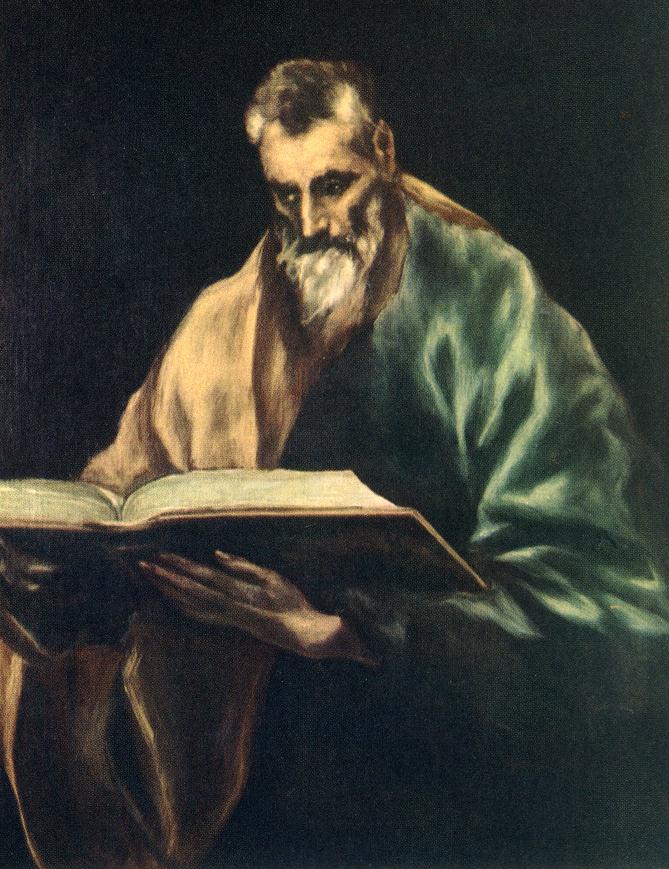
ST. SIMON, the APOSTLE
First Century A. D.
October 28

Least Known Apostle
One of the twelve men called by Jesus to be his Apostle was Simon. Thus he was one of the original followers of Christ that formed the inner 12. Other than this fact that he is almost verified as an apostle in the Holy Scriptures New Testament we know practically nothing for certain about him making him perhaps the least known of the apostles. However it is most probable that he was born in Galilee in the first century A.D.

His Name
Both Matthew (Mt. 10:4) and Mark (Mk 3:18) include him in their list of the apostles calling him a Canaanite. However they do not mean that he came from Cana. The book Who’s Who in the Bible explains that it is a Greek translation of “qan’an”, an Aramic word meaning “zealous one.”

This is why Luke in his (Lk 6:15) and (Acts 1:13) refers to Simon as the Zealot.

Because of this nickname many scholars link him with the Zealot faction or party of zealous patriots who were a radical first – century revolutionary party pledged to overthrow the hated Roman rule by terrorism (which in fact they did with the destruction of Jerusalem in A.D. 70).

However other scholars disagree because its philosophy hardly fits with Christian principles.

Another possible explanation is that he earned that nickname because of his dedication and zealous support of the Lord and as a lawyer for his strict, rigid and fervent adherence to the Jewish and Canaanite law.

He is said to have been surnamed the Cannanean and the Zealot to distinguish him from Simon Peter which is also why he is referred to as Simon the Less.

He is however not to be confused either with St. Simeon, brother of St. James of Less.

14

Legends and Traditions About Him
Because of the lack of solid evidence about him, a lot of what we know about him especially about his later life comes from the many legends and traditions which have long been venerated in the East.

One such tradition held by the Greeks and the Copta is that Simon was actually the bridegroom at the marriage feast in Cana in Galilee. This is where Our Lord is said to have performed his first miracle in public.

According to Western Tradition
Simon does not appear in the New Testament after Pentecost when the Holy Spirit granted him and the other followers of Christ the gift of tongues.

After the resurrection of Christ tradition and legend in the West first made him the successor of James as bishop of Jerusalem Then it places him in Egypt where he is supposed to have proclaimed the Gospel.

He then travelled to and preached Christianity in Carthage, Spain and even to Britain. Because of this Simon is said to have been the first of the apostles to carry the Gospel from one end of the known world to the other.

15

Meeting up with Jude, another of Christ’s apostles, they went on missionary journeys together to Syria, Mesopotamia and Persia (now Iran) which they reached around the year 66.

It is here where the two were martyred on the same day by being slaughtered by pagan priests who greatly resented their having converted thousands to Christianity. Finally mustering a mob they stoned them to death.

However others say that if you see Simon with a falchion – a short sword bent like a sickle – it is because that was the instrument by which he was put to death.

This is why the Church in the West celebrates the feasts of Simon and Jude jointly by honouring them on the same day on which they were martyred – October 28.

Another version has Simon dying in battle when he was the bishop of Jerusalem. Others say that he was stabbed to death. Others has him trekking across North Africa until he was 120 years old and then was finally martyred.

An interesting ending to the story of their martyrdom is that when the mob was approaching them Jude turned towards Simon and prophetically said, “The Lord is calling us.”

According to Eastern Tradition
However in the East they believe that Simon lived to a ripe old age dying peacefully at Edessa. He is venerated alone in the East on May 10.

Patron
Simon is he patron of wood cutters and tanners.

17

SOURCES of REFERENCE
ST. SIMON the APOSTLE
October 28

Butler’s Lives of the Saints – Vol. IV – pp. 213 – 214
The Illustrated World Encyclopedia of Saints – p. 66
Pocket Dictionary of Saints – p. 457
The Watkins Dictionary of Saints – p. 221
A Calendar of Saints – p. 211
Butler’s Saint for the Day – pp. 508 – 509
Illustrated Lives of the Saints – Vol. I pp. 490 – 491
My First Book of Saints – pp 256 – 257
Saint Companions – p. 407
Saints for Our Time – pp. 227 – 228
Saint of the Day – pp. 296 – 297
Saints – A Visual Guide – pp 54 – 55
Book of Saints – Part 8 pp. 26 – 27
Who’s Who in the Bible – p 402

Design a site like this with WordPress.com
Get started