Categories
Pope Francis

Put your gifts at the service of others, Pope Francis exhorts.by Elise Harris, Catholic News Agency

untitled

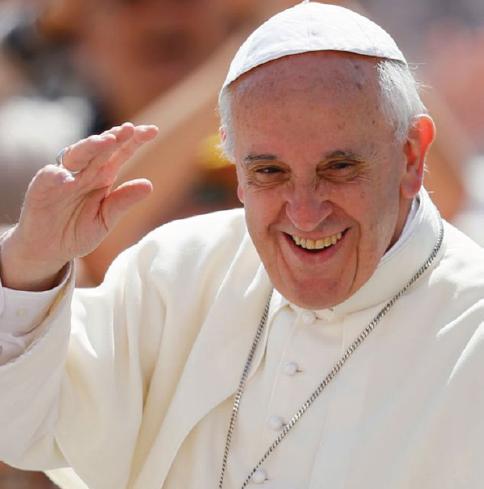
Pope Francis dedicated his weekly general audience to the seven gifts of the Holy Spirit, saying that rather than making us better than others, they commission us to serve our brothers and sisters.

“A charism is more than a talent or personal quality. It is a grace, a gift that God gives through the Holy Spirit. Not because someone is better than the others, but rather so that he puts it at the service of others with the same gratitude and love with which he has received it.”

Pope Francis began his address by drawing the attention of the thousands gathered in St. Peter’s Square to “the manifold gifts of the Holy Spirit,” saying that they “enliven and enrich the Body of Christ.”

First received at one’s baptism, the seven gifts of the Holy Spirit are traditionally referred to as wisdom, understanding, counsel, fortitude, knowledge, piety and fear of the Lord. They are brought to fruition through the sacrament of confirmation, during which the already-baptized individual receives a particular outpouring of the Holy Spirit.

Among each of these gifts are also charisms, the pontiff noted, which he described as “the graces which the Spirit freely bestows upon the faithful for the benefit of the whole community,” and which can also be defined in a more general sense as any good gift that God gives to man.

“A charism is more than a talent or personal quality. It is a grace, a gift that God gives through the Holy Spirit,” he said, adding that “These gifts, while granted to individuals, are discovered and acknowledged within the wider ecclesial community.”

“As a sign of God’s superabundant love for his children, they are rich and varied, yet each is meant to serve the building up of the Church as a communion of faith and love.”

Going on, the Bishop of Rome explained that the diversity of these gifts “invites us to share them generously for the good of all, and never to let them become a source of division.”

“Diverse charisms and gifts with which the Father fills the Church are to grow in harmony, in faith and in his love, as one body only, the Body of Christ, where we each need the other, and where every received gift is fully verified when it is shared with (our) brothers.”

It is in this way that the “Supernatural beauty and strength of faith shines” forth, so that “together we may enter the heart of the Gospel and follow Jesus,” he observed.

Questioning those present, the Roman Pontiff encouraged each to ask themselves “What charism has the Lord given me? How do I live this charism? Do I assume it with generosity, placing it at the service of all, or have I perhaps neglected or forgotten it?”

“Let us ask the Lord to help us recognize with gratitude this great outpouring of spiritual gifts which enables the Church to persevere in faith, to grow in grace and to be an ever more credible sign and witness of God’s infinite love,” he said.

Pope Francis concluded his address by encouraging all to “consider the special gifts he or she has received, and how we choose to use those gifts to advance the Church’s unity, life and mission in the world.”

Categories
Random Thoughts by Peachy Maramba

RANDOM THOUGHTS Voices from yesterday and today . . . by Peachy Maramba

16

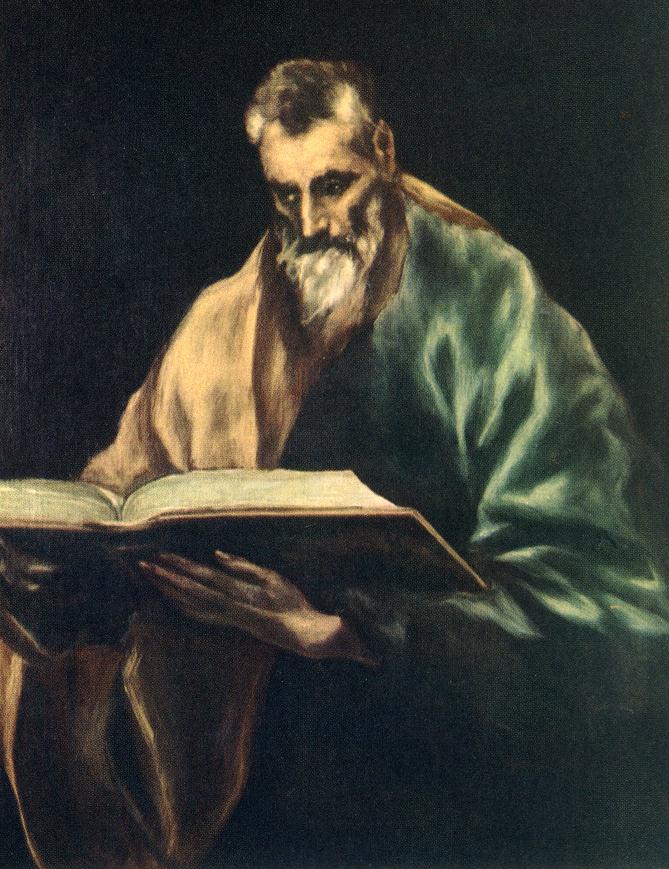
ST. SIMON, the APOSTLE
First Century A. D.
October 28

Least Known Apostle
One of the twelve men called by Jesus to be his Apostle was Simon. Thus he was one of the original followers of Christ that formed the inner 12. Other than this fact that he is almost verified as an apostle in the Holy Scriptures New Testament we know practically nothing for certain about him making him perhaps the least known of the apostles. However it is most probable that he was born in Galilee in the first century A.D.

His Name
Both Matthew (Mt. 10:4) and Mark (Mk 3:18) include him in their list of the apostles calling him a Canaanite. However they do not mean that he came from Cana. The book Who’s Who in the Bible explains that it is a Greek translation of “qan’an”, an Aramic word meaning “zealous one.”

This is why Luke in his (Lk 6:15) and (Acts 1:13) refers to Simon as the Zealot.

Because of this nickname many scholars link him with the Zealot faction or party of zealous patriots who were a radical first – century revolutionary party pledged to overthrow the hated Roman rule by terrorism (which in fact they did with the destruction of Jerusalem in A.D. 70).

However other scholars disagree because its philosophy hardly fits with Christian principles.

Another possible explanation is that he earned that nickname because of his dedication and zealous support of the Lord and as a lawyer for his strict, rigid and fervent adherence to the Jewish and Canaanite law.

He is said to have been surnamed the Cannanean and the Zealot to distinguish him from Simon Peter which is also why he is referred to as Simon the Less.

He is however not to be confused either with St. Simeon, brother of St. James of Less.

14

Legends and Traditions About Him
Because of the lack of solid evidence about him, a lot of what we know about him especially about his later life comes from the many legends and traditions which have long been venerated in the East.

One such tradition held by the Greeks and the Copta is that Simon was actually the bridegroom at the marriage feast in Cana in Galilee. This is where Our Lord is said to have performed his first miracle in public.

According to Western Tradition
Simon does not appear in the New Testament after Pentecost when the Holy Spirit granted him and the other followers of Christ the gift of tongues.

After the resurrection of Christ tradition and legend in the West first made him the successor of James as bishop of Jerusalem Then it places him in Egypt where he is supposed to have proclaimed the Gospel.

He then travelled to and preached Christianity in Carthage, Spain and even to Britain. Because of this Simon is said to have been the first of the apostles to carry the Gospel from one end of the known world to the other.

15

Meeting up with Jude, another of Christ’s apostles, they went on missionary journeys together to Syria, Mesopotamia and Persia (now Iran) which they reached around the year 66.

It is here where the two were martyred on the same day by being slaughtered by pagan priests who greatly resented their having converted thousands to Christianity. Finally mustering a mob they stoned them to death.

However others say that if you see Simon with a falchion – a short sword bent like a sickle – it is because that was the instrument by which he was put to death.

This is why the Church in the West celebrates the feasts of Simon and Jude jointly by honouring them on the same day on which they were martyred – October 28.

Another version has Simon dying in battle when he was the bishop of Jerusalem. Others say that he was stabbed to death. Others has him trekking across North Africa until he was 120 years old and then was finally martyred.

An interesting ending to the story of their martyrdom is that when the mob was approaching them Jude turned towards Simon and prophetically said, “The Lord is calling us.”

According to Eastern Tradition
However in the East they believe that Simon lived to a ripe old age dying peacefully at Edessa. He is venerated alone in the East on May 10.

Patron
Simon is he patron of wood cutters and tanners.

17

SOURCES of REFERENCE
ST. SIMON the APOSTLE
October 28

Butler’s Lives of the Saints – Vol. IV – pp. 213 – 214
The Illustrated World Encyclopedia of Saints – p. 66
Pocket Dictionary of Saints – p. 457
The Watkins Dictionary of Saints – p. 221
A Calendar of Saints – p. 211
Butler’s Saint for the Day – pp. 508 – 509
Illustrated Lives of the Saints – Vol. I pp. 490 – 491
My First Book of Saints – pp 256 – 257
Saint Companions – p. 407
Saints for Our Time – pp. 227 – 228
Saint of the Day – pp. 296 – 297
Saints – A Visual Guide – pp 54 – 55
Book of Saints – Part 8 pp. 26 – 27
Who’s Who in the Bible – p 402

Categories
Pope Francis

Pope: Family needs Scripture to move forward in faith, hope. By Ann Schneible, Catholic News Agency

13

Pope Francis rides through St. Peter’s Square.

“In order for the family to proceed well, with faith and hope,” said Pope Francis to crowds in St. Peter’s Square for the weekly Angelus address, “it needs to be nourished by the Word of God.”

Helping to illustrate the Holy Father’s words, all the pilgrims gathered in the Square had the opportunity to take home a copy of the Bible, courtesy of the Pauline Brothers who this year are celebrating the centenary of their foundation.

The Bible, he said, is not meant to be kept on a shelf, but rather carried, “read often, every day, be it alone or together, husband and wife, parents and children, perhaps in the evening, especially on Sunday.”

In this way, he said, “the family grows, walks, with the light and strength of the Word of God!”

Delivering his Angelus address following the inaugural Mass for the Extraordinary Synod on the Pastoral Challenges on the Family in the Context of Evangelization, the Pope emphasized the importance of there being “a Bible for every family!”

Recalling the images conveyed in the readings for the day, Pope Francis said that, “like a vineyard,” people need to be cared for, and require a love that is “patient and faithful.” Just as God takes care of his people, the Pope said, “we pastors are also called to do.”

Care for the family is also a “way of working in the vineyard of the Lord, because it produces fruits for the Kingdom of God,” the Pope said.

Just before leading the faithful in praying the Angelus in Latin, the Holy Father invited everyone to support those involved in the Synod on the Family, particularly by invoking the “maternal intercession of the Virgin Mary.”

After reciting the Angelus, Pope Francis recalled that on Saturday, Oct. 4, Sr. Maria Teresa Demjanovich of the Sisters of Charity of Saint Elizabeth was beatified. He offered his thanks to God for “this faithful disciple of Christ,” who led an “intense spiritual life.”

Pope Francis went on to welcome the various pilgrims in the Square including a group of cyclists from Milan, who had come in honor of the wife and mother, Saint Gianna Beretta Molla. As witnesses for the Gospel of Life, he said, he encouraged them to “continue in their initiatives for solidarity” on behalf of the “most defenseless”.

Finally, the Pope reminded the faithful once again to pray to Our Lady for the intentions of the Synod on the Family.

Categories
Fr. Sergio Santos Reflections

LOVE GOD WITH YOUR WHOLE BEING A Sunday Gospel Reflection for the 30th Sunday in Ordinary Time By Fr. Sergio Santos, OFM

God has a Divine Plan from the very beginning of time. The Divine Plan of God is like a “tele-drama”. In the “tele-drama”, God, the Father, our Creator is the Producer, Jesus Christ, the Son of God and our Savior, is the Director, the Holy Spirit, the Love that binds God, the Father and Jesus Christ, is the Scriptwriter, The Actors were the Old Testament and New Testament people, and now in this digital generation, the actors are us, Christians.

The Old Testament and New Testament actors had 613 precepts, rules or commandments, including the Ten Commandments to act out. The first three of the Ten Commandments pertain to the love of God and the last seven commandments pertain to love of neighbor. With the coming of Jesus Christ, these were simplified when the Pharisees in the Gospel today asked Jesus Christ as to the greatest commandment. The answer was “You shall love the Lord your God with all your heart, with all your soul, and with all your mind. The second is like it”. This clear-cut answer was not only for the Pharisees but an answer and a rule of life for all of us for all time.

What Jesus Christ is saying is that the love of God and neighbor fulfills all of a person’s obligations and carries out all the duties that God’s self-revelation in “the law and the prophets” requires. God in the Old Testament is revealed as our Creator and Divine Benefactor. Out of God’s infinite goodness, God is sharing with humanity the eternal kingdom of bliss; this is the reason why we were created. That is why out of God’s love for humanity, God became flesh and blood in the personhood of the Son Jesus Christ through the Incarnation. In 1 John 4:9-11, it states: “God’s love was revealed in our midst in this way: He sent his only Son to the world so that we might have life through him. Love, then, consists in this: not that we have loved God but that he has loved us and sent His Son as an offering for sins. Beloved, if God has loved us so, we must have the same love for one another”. Through the Incarnation, we have been raised to the status of children of God.

What exactly is this love of God? This means our whole being is directed towards God. All that we say, and do is leading us towards God and none other. And this means also we are open to the inspiration of the Holy Spirit who will teach us and sustain us with resources to fulfil this commitment of love. Thomas Merton said that if one is committed to God, resources are provided. “God provides”. This, I have personally experienced in my life as a Franciscan religious. Divine Providence is around us.

And what is this loving your neighbor as yourself about? The measure of that love of neighbor is the love one bears toward oneself. The law of fraternal charity, the obligation to love a neighbor, was ordered by God on the Israelites from their very beginning as the chosen people.

Recall that this commandment is like the first. Love of neighbor is a very important obligation toward God. It is a sacred duty. And if we fail to love our neighbor, we also fail in our love for God.

Can we ask ourselves today how seriously we take this law of fraternal charity? Whatever spiritual, psychological, or material help given out of true charity to a neighbour in need, is given to God, and whatever is given to God will be rewarded a hundredfold, including one’s name written in the Book of Life.

About Fr. Serge and his other reflections.

Categories
Special Events

2nd Living Rosary at SSAP By Karen C. Limpe

This slideshow requires JavaScript.

In celebration of the month of the Holy Rosary, CWL hosted another Living Rosary last October 17 at the main church. The Living Rosary is a very beautiful practice which began in Lyon, France in 1826 by Venerable Pauline-Marie Jaricot. It is a powerful devotion dedicated to Our Lady and Her Immaculate Heart.

Our parish community, headed by Fr. Efren Jimenez, OFM, gathered together for this meaningful service to pray for peace and unity. Special thanks to overall chairperson Zari Poe and members of the Altar Environment Ministry for organizing this event; Anton Barretto for the beautiful floral arrangements; Cathy Floro, Miguel Santos and Brielle Rodriguez for lending us their musical talents and also to Amb. & Mrs. Ma. Paz Bautista, Petrona Lim, Bel Poe, Beth Santos, Tina Teehankee and Jeanette Zulueta for providing the simple salu-salo after the service.

Categories
Special Events

Magnifikids

This slideshow requires JavaScript.


The Family Life Ministry would like to announce the start of Magnifikids, a special children’s liturgy. There will be 3 sessions this year Oct 26, Nov 23 and Dec 14. This will be held weekly beginning on Jan 11, 2015.

Magnifikids is a celebration of the Liturgy of the Word that is designed for children ages 4-7. It is not catechism class nor is it childcare; it is a liturgical celebration. At the 10:30am Sunday mass, the priest presider calls the children forward and then they are sent forth to hear the Word of God. The children proceed to rooms in the Parish Center where they gather with a trained lay presider. The same Scripture readings proclaimed to the larger assembly in the Church are read to the children, using the Children’s Lectionary. This lectionary shortens the readings and uses language and vocabulary that is easily understood by children.
 The lay presider shares the homily, leads the children in a shared discussion, activity, and reflection of the readings. The children share their own understanding of what they heard and how to relate it to their everyday lives. Our purpose is for the Church to show special concern for baptized children who have yet to be fully initiated thru sacraments of Eucharist and Confirmation. Also to ensure that the assembly’s children (ages 4-7) experience meaningful, inspirational, and spiritual celebrations of the Liturgy of the Word through careful, reflective planning, and preparation by our lay presiders.

If you would like more info or would like to volunteer in this ministry, please call Shelli at 09175322839 or email at shelliaway@yahoo.com

Categories
Pope Francis

POPE FRANCIS: Don’t ‘overdramatize’ your complaints to God.

Pope

Pope Francis greets pilgrims in St. Peter’s Square.

Pope Francis said complaining to God in times of suffering can be a prayer, but cautioned not to exaggerate our difficulties in front of those undergoing major tragedies.

“Our life is too easy, our complaints are overdramatized,” the pontiff told those in the Vatican’s Saint Martha house.

“Faced with the complaints of so many people, of so many brothers and sisters who are in the dark, who have almost lost all memory, almost lost all hope – who are experiencing this exile from themselves, who are exiled, even from themselves, (our complaints are) nothing!”

The Holy Father noted how Job’s prayer in the first reading seems to be a curse after having lost everything, and “his body had become a plague, a disgusting plague.”

“He had lost all patience and he says these things. They are ugly! But he was always accustomed to speak the truth and this is the truth that he feels at that moment,” the pontiff said, noting how the prophet Jeremiah also cursed the day in which he was born.

“But is this man blaspheming? This is my question: Is this man who is so very alone, blaspheming? Is it blasphemy when Jesus complains – ‘Father, why have You forsaken me?’ This is the mystery.”

Pope Francis then said he has listened to many “who are experiencing difficult and painful situations, who have lost a great deal or feel lonely and abandoned and they come to complain and ask these questions: Why? Why?”

When he encounters these people, who often rebel against God, Pope Francis said he tells them: “Continue to pray just like this, because this is a prayer. It was a prayer when Jesus said to his father: ‘Why have You forsaken me!'”

Prayer means being truthful before God, he said, adding that we should all “pray with reality” because “true prayer comes from the heart, from the moment that we are living in.”

The pope observed how many are in the same situation as Job who “do not understand what has happened to them, or why”, and there are “many brothers and sisters who have no hope.”

“Just think of the tragedies, the great tragedies, for example, of these brothers and sisters of ours who because they are Christians were driven out of their homes and left with nothing: ‘But, Lord, I have believed in you. Why? Is believing in you a curse, Lord?’”

Pope Francis also drew attention to the elderly, the sick and the many lonely people in hospitals, assuring that the Church constantly offers prayers to all who walk in darkness.

“The Church prays! She takes this pain upon herself and prays,” he said.
There are even some who are angry with God who refuse to go to Mass over some trifling complaint with the Lord, the pope noted.

Pope Francis compared these difficulties in prayer to those had by Saint Therese of Lisieux, who celebrates her feast day on Oct. 1. Sick with tuberculosis at the end of her life, the saint struggled to keep her thoughts on God despite serious doubts that emerged in her heart.

“We all go through this situation, we experience this situation. There are so many people who think it all ends in nothing. Yet Saint Therese prayed and asked for strength to persevere in the dark. This is called entering into patience.”

Bringing to mind the many who have lost everything or live in exile, the Pope explained that “Jesus walked this path: from sunset on the Mount of Olives to the last word from the Cross: ‘Father, why have you forsaken me!”

Pope Francis concluded his homily by giving two suggestions, which can help us in moments of darkness, the first being “to prepare ourselves for when the darkness comes.”

Secondly, we should “Pray, pray as the Church prays; pray with the Church for so many brothers and sisters who suffer exile from themselves, who are in darkness and suffering, without hope at hand.”

This, he said, “is the prayer of the Church for these Suffering Jesus’ who are everywhere.”

By Elise Harris
Catholic News Agency

Categories
Supplemental articles

Parish Bulletin Supplemental Articles


R A N D O M T H O U G H T S …ST. Chad
By Peachy Maramba1

_________________________________________________

CATECHISM OF THE CATHOLIC CHURCH
What is the soul?
From where does man get his soul?
Why did God create man male and female?
What about people who feel they are homosexual?
Read the answers to all these questions…

_________________________________________________


Would you feast or fast?,
The ABC’s of Catholic Doctrine

By Lianne Tiu6

_________________________________________________

Categories
Articles

Mater Dolorosa – Sorrowing Mother

4
5

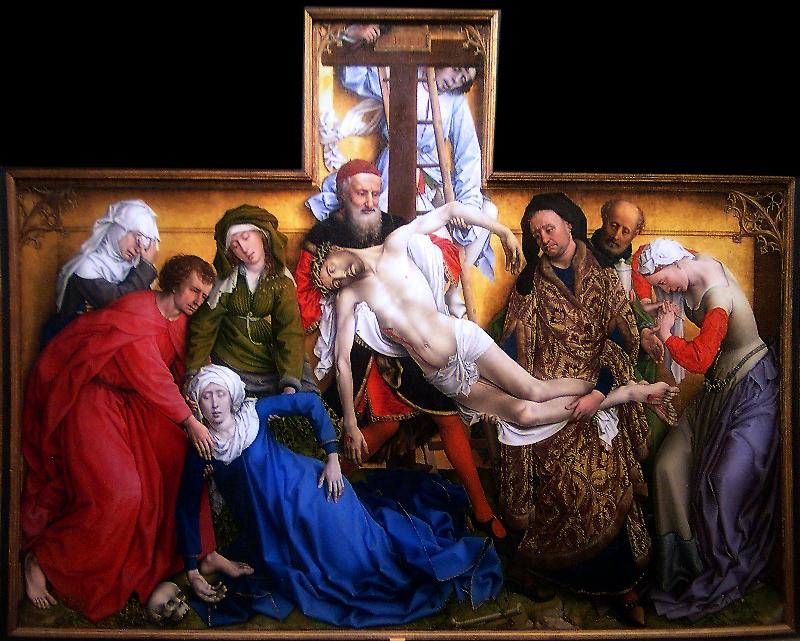
Mater Dolorosa – Sorrowing Mother
Roger van der Weyden – c. 1435 (oil on oak panel)
Museo del Prado, Madrid

Stabat Mater Dolorosa
Sequence Hymn

Bruised, derided, cursed, defiled,
she beheld her tender child
all with scourges rent.

For the sins of His own nation,
saw Him hang in desolation,
till His spirit forth He sent.

O sweet Mother fount of love!
touch my spirit from above,
make my heart with thine accord.

Make me feel as thou hast felt;
make my soul to glow and melt
with the love of Christ, my Lord.

Holy Mother! Pierce me through,
in my heart each wound renew
of my savior crucified.

At the cross her station keeping
stood the mournful Mother weeping,
close to Jesus to last.

At the cross her station keeping
stood the mournful Mother weeping
close to Jesus to the last

Through her heart, His sorrow sharing,
all His bitter anguish bearing
Now at length the sword had passed.

Oh, how sad sore distressed
was that Mother highly blessed,
of the sole-begotten One!

Christ above in torment hangs,
she beneath beholds the pangs
of her dying, glorious Son.

Is there one who would not weep,
whelmed in miseries so deep,
Christ’s dear Mother to behold?

Can the human heart refrain
from partaking in her pain,
in that Mother’s pain untold?

Contributed by J’net B. Zulueta,
president of the Catholic Women’s League (CWL).

Categories
Fr. Reu Galoy Reflections

Giving What Is Due Is Transforming Conflict Into Connection, A Sunday Gospel Reflection for the 29th Sunday In Ordinary Time By Fr. Reu Jose C. Galoy

Today’s gospel is so rich – there are several issues that can lead us to deeper reflection. For instance, when does our responsibility to society and to God begin and end? Do we really have to put our social and religious obligation in opposition with each other? The Catholic Church Catechism points out that there are three circumstances where citizens are obliged in conscience to refuse obedience to civil authorities. These are in situations when the laws are “contrary to the moral order, to the fundamental rights of persons and to the teachings of the gospel.” The principle is clear. However, its application may not be so simple when there is apparent clash of rights.

The realities of life and relational dynamics are not simple black and white categorization. There are aspects that require better comprehension due to inherent complexities. The question put before Jesus whether it is permissible for Jews to pay tribute to Caesar sheds light into the mind and strategy of the Pharisees. They were trying to bring Jesus into a political trap that would set him at odds with the Roman authorities who were the rulers of Israel at that time or else, when this fails, it would discredit him before his own people. To avoid giving rise to suspicion of their intention, they decided not to get themselves involved personally. They sent some of their disciples to Jesus instead. It is quite likely that the leaders of the Pharisees stayed in the background because they wanted the followers of Herod, the Roman appointed tetrarch of Galilee, to take part also in the plot against Jesus even though these Herodians, who openly advocated cooperation with the Romans, were their most bitter enemies. It appears to be a truth-seeking inquiry with malicious intent, to say the least. The religious leaders wanted to hide behind their manipulative action at the expense of Jesus. But we know that any ill intent will never produce good fruit.

For our reflection on this Sunday’s gospel, I wish to humbly invite you to look into the aspect where we try and maybe attempt unconsciously to separate our actions as belonging either to the private or to the public sphere. Such is the case with the social responsibility like paying tax which we might consider as belonging to the public realm, while our relationship with God is considered a private matter and has no significance or no connection to our public life. This dichotomy is an act of denying that everything is a gift from God and belongs to God, including Caesar. This is so because to give to Caesar what is Caesar’s means also fidelity to God since God wills that we be concerned for our society. This in turn is a partial fulfilment of our basic duty, that is, to give to God what is his. Relegating God into the private space of our life and social relationships indicates that social obligation is of greater importance than God – it is tantamount to committing idolatry (a worship of money and power).

To give what is due is to recognize one’s role in promoting the common good. In like manner, it shows the centrality of God in one’s own existence as the Alpha and Omega of everything we do in this life. God establishes connection rather than create conflict. In God there are is no category of private and public for God is all in all.

Design a site like this with WordPress.com
Get started