Categories
The ABC’s of Catholic Doctrine

“All I wanna say is that they don’t really care about us.”, The ABC’s of Catholic Doctrine By Lianne Tiu

8
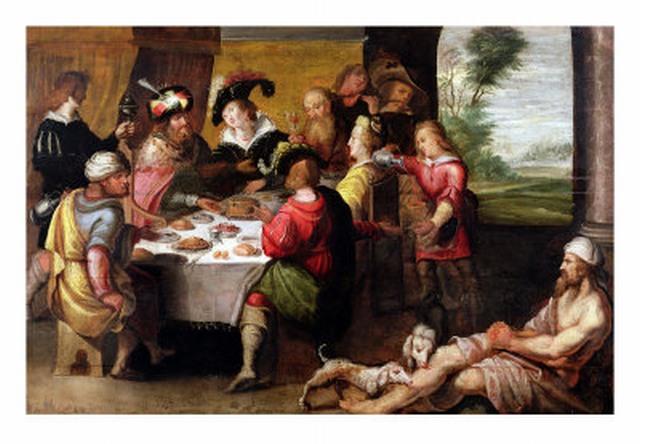
Michael Jackson’s song, “They don’t care about us,” reminds us of Pope Francis’ message for Lent about the “globalization of indifference.” We have become accustomed to the sufferings, poverty, and inequality of others; and they don’t affect or concern us anymore. We fail “to see the Lazarus sitting before our closed doors;” for there are some things in life we just don’t want to see – as the song goes.

In UST, the Pope spoke that today’s world doesn’t know how to cry, how to experience compassion, i.e. suffering with others. He said, “There is a worldly compassion which is useless. It’s a compassion that makes us put our hands in our pockets and give something to the poor” (and walk on). It is possible that some works of charity are done without love. Thus, St. Paul said that even if we give away to the poor all that we have … but have no love, we don’t gain anything. (1 Cor 13:3)
7
True charity is more the giving of what we are than of what we have. It is to go out of our comfort zone, to willingly inconvenience ourselves or make sacrifices for our neighbors for God’s sake. What people really want is a portion of our hearts.

To counter-act the culture of indifference, there are three things we can do. First, we pray together with the Church (in heaven and on earth) for a new era of mercy and compassion for the world. Second, we reach out to others with our acts of charity. Third, we try to have a change of heart. We ask Jesus to ”make our hearts like yours.” We wish to receive hearts, which are firm and merciful, attentive and generous; hearts which are not closed and indifferent.
6
Although poverty and sufferings will never be completely eliminated, love can transform the world and make it a better place to live. Love can change lyrics; for when people experience our kindness, compassion, and selfless love, they can only exclaim, “They DO really care about us!”

(Reference: Message of His Holiness Pope Francis for Lent 2015; Homily of Holy Father Francis, July 8, 2013 (Visit to Lampedusa); “Pope Francis’s Critique of Indifference” by Jonathon Mansell; “The Hidden Power of Kindness” by Lawrence Lovasik)

5

Categories
Fr. Robert Manansala

Lenten Recollection Alert! By Javier Gomez

OLYMPUS DIGITAL CAMERA
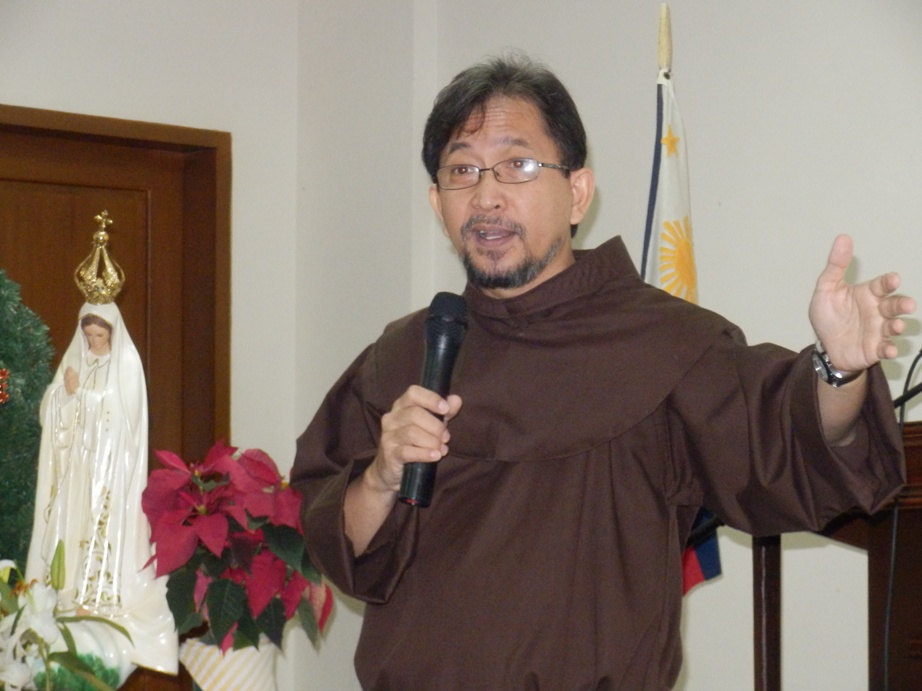
We would like to invite anyone interested to a short Lenten Recollection this coming Saturday, March 7 from 10am to 12noon to be given by Fr. Robert Manansala OFM.

Our goal for this brief talk is to take some time to reflect a little on the seeds that have been sown by Pope Francis. We’re soon approaching the two-month mark since Pope Francis’ historic visit to the Philippines. For most of us by now, the spiritual euphoria that everyone felt has subsided and we’ve gone back to our everyday routines. There is a danger then that we will start to treat the graces of this visit like lightning in a bottle – something that happened once and we cannot recapture ever again. Certainly this is not the goal of Pope Francis himself! It would be more fruitful to think of the graces we have received as seeds – planted deep down by Francis the laborer. Thus, these seeds need to be nurtured, cared for and allowed to grow and blossom.

Our vinedresser will be Father Robert, and he will guide us in nurturing the seeds of Pope Francis’ visit. He will lead us in reflecting on the wisdom that Pope Francis gave us while he was here. Together, let us explore the words of Francis to use the language of the mind, the heart and of the hands in our Christian lives. “To think – To Feel – and to Do.” This is the wisdom that Pope Francis has given us.

Let us reflect on these words together, and see how we can apply them to our lives during this season of Lent. Again, March 7 from 10am to 12nn at the Parish Center. We hope to see you there!

Categories
The ABC’s of Catholic Doctrine

What can the poor share with the rich?, The ABC’s of Catholic Doctrine By Lianne Tiu

poor
We know the rich has much to give to the poor. And we were taken by surprise when Pope Francis told those who give others to allow themselves to receive. At UST, he said: “Become a beggar. This is what you still lack. Learn how to beg. This isn’t easy to understand… Do you know you too are poor? Do you know your own poverty and you need to receive? Do you let yourselves be evangelized by those you serve?… Do you ask the poor to give you the wisdom they have?”
poor1
Blessed Teresa of Calcutta said: “The poor people are great people. They can teach us so many beautiful things. Maybe they have nothing to eat, maybe they have no home in which to live, but they are great people.” They teach us by their faith in God, their humility, and their patience in suffering. Mother Teresa often told the story about a man whom the Sisters picked up from the drain, half eaten with worms. He was dying, but he was not bitter. Rather, he was happy and grateful, knowing that he was going to die at least with someone loving him when he was brought to the Home for the Dying. Mother Teresa said, “It was so wonderful to see the greatness of that man who could speak like that, who could die like that without blaming anybody, without cursing anybody, without comparing anything. Like an angel – this is the greatness of our people.”
poor2
St. Josemaria considered the sick and the poor his “treasures.” When he had to start Opus Dei, he was only twenty-six years old and without money. He went to the hospitals and poor districts of Madrid and begged those people to offer up their sufferings, their hours in bed, and their loneliness to God for his apostolate. And because of their prayers and mortifications, the Lord has taken Opus Dei all over the world!
poor3
The poor people are God’s gift to us. They provide us the experience to put our love into action. They allow us to help them. And in doing so, we are serving Him. “Every work of love brings a person face to face with God,” Mother Teresa said, “Only in heaven will we see how much we owe to the poor for helping us to love God better because of them.” We owe a debt of gratitude to them.
Mother Teresa said, “We call them poor, but they are rich in love!” The poor people do certainly have much to share. We should never look down on them.
poor4
(Reference: Pope Francis’ speech at UST, January 18, 2015; “Mother Teresa’s Lessons of Love & Secrets of Sanctity” by Susan Conroy; “Msgr. Josemaria Escriva de Balaguer: a profile of the Founder of Opus Dei” by Salvador Bernal)

Categories
The ABC’s of Catholic Doctrine

What really is Responsible Parenthood?, The ABC’s of Catholic Doctrine By Lianne Tiu

fam planningPope Francis was surprised and saddened that his words on responsible parenthood were misunderstood by some people.

The concept of “responsible parenthood” appeared for the first time in the Vatican II document Gaudium et Spes , no. 50. Later, it was explained in depth by Blessed Paul VI (whom Pope Francis praised at Mall of Asia) in the Encyclical Humanae Vitae. The Philippine government, however, has distorted its meaning and introduced the phrase “Responsible Parenthood” in the title of the Reproductive Health (RH) bill. The main purpose of the bill is to enable couples to limit family size based on their means of livelihood by giving them the right to choose the birth control methods they want, including artificial birth control drugs and devices.fam planning5

For Catholics, responsible parenthood means that when married couples engage in sex, they must be open to life. Should they decide to postpone or avoid birth for an indefinite time, there must be well-grounded reasons for choosing so. In spacing births, they may take advantage of the natural family planning methods – engaging in sex only during those times that are infertile. This will require dialogue, respect and self-control. The use of contraception, however, is immoral. In fact, the Church uses a very strong term, describing all forms of contraception as “intrinsically evil.” (CCC 2370) Contraception is every action that impedes the union of egg and sperm before, during, or after sexual intercourse. Examples are condom, spermicidal jelly, pill, ligation, vasectomy, and withdrawal.
fam planning4
Responsible parenthood is not to keep on having children. Rather, it means having more children if God sends them. Married couples need to be open to His will. Saying “Yes” to the possibility of children is actually saying “Yes” to God Himself, the author of sex, the Creator of life. As Blessed Mother Teresa said, “The child is the beauty of God present in the world, the greatest gift to a family.”

(Reference: Faith Seeking Understanding Volume 2: “Marriage and the Family” by Fr. Charles Belmonte; Encyclical Letter Humanae Vitae by Blessed Pope Paul VI; Familiaris Consortio by St. John Paul II; Catechism of the Catholic Church; “Pope Francis surprised by misunderstanding of his words on family” CNA/EWTN News Jan. 24, 2015; “A Law Each Day (Keeps Trouble Away)” by Jose Sison, The Philippine Star January 26, 2015; Mother Teresa by Susan Conroy)

Categories
The ABC’s of Catholic Doctrine

“Pope Francis is coming to town!”, The ABC’s of Catholic Doctrine By Lianne Tiu

1

Four more days to go – as we continue to find ways and means on how we can get close to the Holy Father or be a part in the meetings and Masses that he will be celebrating during his visit to the Philippines.

Pope Francis is the Vicar of Christ on earth, the bishop of Rome, the successor of St. Peter. He is the leader of the 1.2 billion Catholics. He has gained many fans around the world because of his personal holiness and simple living.

We are not, however, to treat the pontiff like some kind of celebrity or rock star. Rather, we are to look at the message he is trying to tell us. He is coming here primarily to comfort our people who have suffered from the typhoons and earthquake that have hit the Visayas. He is imitating Jesus, who after seeing the people, felt compassion for them for they were distressed like sheep without a shepherd. (Matt9:36) We, too, are challenged to imitate Jesus by resolving to make an act of mercy everyday. It may be to visit our lonely grandmother, to adjust the low salary of an employee, to attend a funeral, to lovingly correct a friend who is using contraceptives, or engaging in marital infidelity, or contemplating to undergo in vitro fertilization (IVF).

3

The papal visit is a good time to re-learn and live the corporal and spiritual works of mercy. It is also a good time to meet Jesus in the Tribunal of Mercy, which is the Sacrament of Penance. In Confession, He (in the person of the priest) waits for us with open arms to show his love, mercy, and compassion.

Yes, Pope Francis is coming to town. And he wants to lead us to Jesus Christ, who is Mercy and Compassion.
2
(Reference: papalvisit.ph “Pope Francis Papal Visit 2015 Mercy and Compassion”; “The Faith Explained” by Leo Trese; Vatican Radio)

7 Corporal Works of Mercy:
To feed the hungry
To give drink to the thirsty
To clothe the naked
To visit the imprisoned
To shelter the homeless
To visit the sick
To bury the dead

7 Spiritual Works of Mercy:
To admonish the sinner
To instruct the ignorant
To counsel the doubtful
To comfort the sorrowful
To bear wrongs patiently
To forgive all injuries
To pray for the living and the dead

Categories
Pope Francis

Are you Catholic? Then stay in the Church, Pope says.

7

Pope Francis said that those waiting at the threshold of the Church without going inside are not true members of the Church, which Jesus established and on whom it is built.

“We are citizens, fellow citizens of this Church. If we do not enter into this temple to be part of this building so that the Holy Spirit may live in us, we are not in the Church,” the Pope said.

Rather, “we are on the threshold and look inside…Those Christians who do not go beyond the Church’s reception: they are there, at the door: ‘Yes, I am Catholic, but not too Catholic.’”

The Pope centered his reflections from St. Paul’s Letter to the Ephesians and the Gospel, taken from Luke, Chapter 6.

St. Paul explains to the Christians of Ephesus that they are no longer strangers, but have become fellow members of the house of God, which is built on the foundation of the apostles and prophets, and has Jesus himself as the “capstone.”

The Gospel reading recounts how Jesus, after spending the night in prayer, comes down from the mountain and calls the Twelve Apostles by name.

By reflecting on the gospel reading, there are three clear actions that Jesus carried out when founding the Church, the Pope observed, saying that the first action is prayer, the second was choosing his disciples, and the third was welcoming and healing the crowds.

“Jesus prays, Jesus calls, Jesus chooses, Jesus sends his disciples out, Jesus heals the crowd. Inside this temple, this Jesus who is the corner stone does all this work: it is He who conducts the Church,” the pontiff noted, explaining that the Church is built on the apostles.

However, despite the fact that the Twelve were chosen by Jesus, they were all still sinners, the Pope said, explaining that although no one knows who sinned the most, there could have been one that sinned more than Judas did.

“Judas, poor man, is the one who closed himself to love and that is why he became a traitor. And they all ran away during the difficult time of the Passion and left Jesus alone. They are all sinners. But (Jesus) chose (regardless).”

And Jesus, the Pope added, wants everyone to be inside of the Church he founded, not as strangers passing through, but rather with the “rights of a citizen” where they have roots.

The person who stands at the threshold of the Church looking in but not entering has no sense of the full love and mercy that Jesus gives to every person, Francis said, adding that proof of this can be seen in Jesus’ relationship with Peter.

Even though Peter denies the Lord he is still the first pillar of the Church, the pontiff explained. “For Jesus, Peter’s sin was not important: he was looking at (Peter’s) heart. But to be able to find this heart and heal it, he prayed.”

It is Jesus who prays and heals, Pope Francis noted, saying that it is something he does for each one of us.

“We cannot understand the Church without Jesus who prays and heals,” he said, praying that the Holy Spirit would help all to understand that the Church draws her strength from Jesus’ prayer which can heal us all.

By Elise Harris
Vatican City, CNA/EWTN News

Categories
Articles

The Pope’s 10 tips for Happiness By Jay Parini Reprinted from CNN Aug. 5, 2014

3

Just when I thought my amazement with Pope Francis had run its course, he did it again. In a long interview with an old friend who was writing for an Argentine magazine, the pope put forward a 10-point plan for happiness. From where I sit, it seems, well, pretty good if not perfect. Here are Pope Francis’ tips for a happy life and my comments on them:

1. Live and let live. It’s an echo of the Pope’s earlier remark on gays: “Who am I to judge?” Moreover, it’s what Jesus said in the Sermon on the Mount: “Judge not, unless you want to be judged yourself.” (Matthew 7:1)

2. Give yourself to others. That is, give your money and your time to those in need. Don’t just sit around like stagnant water. Give all you have and then some.

7

3. Move quietly in the world. The Pope quotes from a favorite novel by an early 20th-century Argentine writer, Ricardo Guiraldes, in which the novelist writes that in one’s youth, a person is “a rocky stream that runs over everything,” but as one gets older, one becomes “a running river, quietly peaceful.” It’s very like the Native American suggestion that one should walk “in balance and beauty” on the ground, making the least disturbance.

4. Enjoy leisure. The Pope says that consumerism has brought with it unbearable anxieties. So play with your children. Take time off. And don’t spend all your time thinking about your next acquisition. Spend your time well, not your money.

5. Sunday is for families. This is actually one of the Ten Commandments. Honor the Sabbath. (Exodus 20:8) Once a week, give a whole day to meditation, worship, family life, tending the needs of the spirit. This is healthy living.

6. Find jobs for young people. Who would have guessed that job-creation would be on a list for happiness? But the Pope is right. Honest, simple work for young people is essential to their well-being. Somewhat surprisingly, in this moment in the interview, the Pope connected job creation to the degradation of our environment: “the tyrannical use of nature.” He links the lack of good jobs to the lack of respect for ourselves and the Earth itself.

5

So creating jobs doesn’t mean ruining the environment. It doesn’t mean, as the politicians chant, “jobs, jobs, jobs.” Good and productive labor is valuable, and it doesn’t mean you have to have a fancy job description. You don’t have to become rich. You can be ordinary. Happiness lies there. Do good work, create good work for others.

Writer: ‘What would Jesus do in Gaza?’

Pope Francis to visit U.S. in 2015

Pope meets death sentence Christian
7. Respect nature. This follows from No. 6. “Isn’t humanity committing suicide with this indiscriminate and tyrannical use of nature?” the Pope wonders. Not surprisingly, this is what Henry David Thoreau, a founding father of the environmental movement, said. “Most people live lives of quiet desperation,” he said. He went into the woods, to Walden Pond, because he wanted “to live deliberately” and to “front only the essential facts of life.”

A proper respect for nature means that you can’t pollute the air, poison the rivers and chop down the forests indiscriminately without suffering greatly. I suspect that a huge amount of the anxiety and suffering that we see around can be closely traced to our wanton misuse of our resources. Just look at any garbage dump and see what is wasted. In a sense, we’ve wasted our souls.

8. Let go of negative things quickly. The Pope tells us not to complain about people who annoy or frustrate us, to let go of things as rapidly as we can. I have an old friend who used to say, “Put the bad things in your back pocket and leave them there.” This may sound like escapism or putting your head in the sand, but it’s more interesting than that. Life throws rotten things our way each day. People say nasty things to us, often about others. This stuff makes them miserable, of course. It makes us miserable, too. Flush it.

9. Don’t preach your religion too forcefully. Proselytism brings on paralysis, the Pope tells us. Wow. I’m a Christian myself, and I don’t mind saying so. But each person sees the world before them in his or her own way. The Pope says this. As a teaching, it seems to run counter to the so-called Great Commission (Matthew 28:16-20). Jesus said to get out there and spread the word. But the Pope takes a relaxed view of this activity, preferring that we should teach by example. Perhaps that really is what Jesus would do?

10. Work for peace. The Pope has preached this message from the beginning of his time as pontiff. He has gone to Jerusalem and worked to bring together Jews and Palestinians. He has prayed for peace and worked for peace. He has listened closely to Jesus, who said, “Blessed are the peacemakers.”

The Pope asks us to take in refugees, to think innovatively about how to create peace in the world. Jesus, of course, invites us to turn the other cheek when struck. This is a complex teaching. But it’s essential to Christian faith. The Pope, once again, calls on us to take the teachings of the Sermon on the Mount seriously. This is very hard but crucial work.

Pope Francis has, in this unlikely venue, given us his own Sermon on the Mount, his Ten Commandments for happiness and inner peace. One can only be grateful for his wisdom, which is rooted in a sincere faith, in hard-earned wisdom, and a very practical knowledge of human needs and potentials.

Editor’s note:Jay Parini, a poet and novelist, teaches at Middlebury College in Vermont. He has just published “Jesus: The Human Face of God,” a biography of Jesus. Follow him on Twitter @JayParini. The opinions expressed in this commentary are solely those of the author.

Categories
Articles

Five Tips for Parishes from Pope Francis:

3Everything Pope Francis says is always so heartfelt, so quotable, so real. Reading through all of the speeches, homilies and messages that he gives is a real treat. If you don’t already, I recommend reading up on his activities at the Vatican website. Or check out news on Vatican Radio, News.Va or get the free Pope App.

Whatever way you choose to do it, it is worth reading Pope Francis’s direct words instead of getting what he says second-hand from the media. There are so many treasures, most of which are not filtered down to us through other news sources.

One such treasure is the words that Pope Francis has given us on parish life. He has real, applicable advice and it is based on his inspiring vision of a Church that goes out of itself, a Church that is missionary, a Church that is merciful and a Church that evangelizes, even in its everyday activities.

I thought I would share some of the gems I have found in my perusal of the Vatican web site.

1. DON’T Be Like A Custom’s Office:
Pope Francis is pretty clear in this, Jesus “instituted seven sacraments” it is not the place of the parish office to institute an eighth sacrament – “the sacrament of the pastoral customs office.” In other words, the parish office should not close doors for people.

And yet most of us can think of times when we have felt more like we are at the DMV rather than our parish office because of the way we were treated or the business-like approach that was used. Attitudes like this attempt to “control faith rather than facilitating it.” Instead, Pope Francis prays that “all who approach the Church find doors open to encounter Jesus’ love”.

2. DON’T Be Tarantulas:
Pope Francis says that when people go to their parish, they should feel like they are entering their mother’s home. He says, “Being parish secretary means opening the front door of the mother’s home, not closing it! And one can close the door in many ways. In Buenos Aires there was a famous parish secretary: they called her the “tarantula”… I’ll say no more! To know how to open the door in the moment: welcome and tenderness.”

3. DO Put Those Who Are “Distant” First:
I have often heard grumbling about families who only come to their parish for baptisms, weddings and funerals. These people are often treated like a last priority, but Pope Francis urges us to put those distant from the Church first. Why? Because we want these people to become regulars.

Pope Francis says, “It is about assuming missionary dynamism in order to reach everyone, putting first those who feel distant and the most vulnerable and forgotten people. It means opening the doors and letting Jesus go forth. Many times we keep Jesus closed inside the parishes with us, and we do not go out and we do not let Him leave! Open the doors so He can go out, at least Him! It is about a Church which “goes forth”: a Church which always goes forth.”

4. DO Get the Laity Involved:
Pope Francis is pretty clear on this, the laity need to be involved in their parishes. Parishes do not belong to priests or to the parish office, they belong to everyone. This is why parishes need laity on councils, advising and helping in the running of everyday matters. In fact, Pope Francis very sternly has said that “a parish that does not have a pastoral Council and a Finance Council, is not a good parish: it lacks life.”

5. DON’T Gossip Or Cause Division:
If only our parishes were exempt from ordinary, sinful human behavior. Alas, they are not. But we can examine our part in making a parish a place of unity and communion or creating division.

Pope Francis urges us, “Let each one ask him- or herself today ‘do I increase harmony in my family, in my parish, in my community or am I a gossip. Am I a cause of division or embarrassment? . . . Gossip does harm! Gossip wounds. Before Christians open their mouths to gossip, they should bite their tongue! To bite one’s tongue: this does us good because the tongue swells and can no longer speak, cannot gossip. Am I humble enough to patiently stitch up, through sacrifice, the open wounds in communion?’”

– See more at: http://www.ignitumtoday.com/2014/08/02/5-pieces-advice-parishes-pope-francis/#sthash.VehrK8s2.dpuf

Categories
Articles

Pope Francis Reveals 10 Secrets to Happiness

8Pope Francis has offered several tips for finding happiness in life.

During his conversation with Argentinian weekly “Viva” to commemorate the anniversary of his early pontificate, the 77-year-old pope of the Catholic Church said that one should let everyone be themselves and it’s the first step peace and happiness, the Huffington Post reported.

He said that people should give themselves tirelessly to others, and if one gets tired, one runs the risk of being egoistic and stagnant water is the first to be corrupted and people should also walk softly.

According to Pope Francis, one should be available to their kids and family, and even though consumerism has led to the anxiety of losing, which has pushed people to spend less time at home and more time pursuing wealth, people should invest more time in “healthy leisure”.

He added that people should spend their Sundays or any other day of rest with their family, work toward empowering young people, care for the environment, move on after negative experiences, respect others’ opinions and actively strive for peace.Washington, Aug 4 (ANI)

Categories
Articles

“Communication at the Service of an Authentic Culture of Encounter,” MESSAGE OF POPE FRANCIS 
FOR THE 48TH WORLD COMMUNICATIONS DAY

Dear Brothers and Sisters,

Today we are living in a world which is growing ever “smaller” and where, as a result, it would seem to be easier for all of us to be neighbors. Developments in travel and communications technology are bringing us closer together and making us more connected, even as globalization makes us increasingly interdependent. Nonetheless, divisions, which are sometimes quite deep, continue to exist within our human family. On the global level we see a scandalous gap between the opulence of the wealthy and the utter destitution of the poor. Often we need only walk the streets of a city to see the contrast between people living on the street and the brilliant lights of the store windows. We have become so accustomed to these things that they no longer unsettle us. Our world suffers from many forms of exclusion, marginalization and poverty, to say nothing of conflicts born of a combination of economic, political, ideological, and, sadly, even religious motives.

In a world like this, media can help us to feel closer to one another, creating a sense of the unity of the human family which can in turn inspire solidarity and serious efforts to ensure a more dignified life for all. Good communication helps us to grow closer, to know one another better, and ultimately, to grow in unity. The walls which divide us can be broken down only if we are prepared to listenand learn from one another. We need to resolve our differences through forms of dialogue which help us grow in understanding and mutual respect. A culture of encounter demands that we be ready not only to give, but also to receive. Media can help us greatly in this, especially nowadays, when the networks of human communication have made unprecedented advances. The internet, in particular, offers immense possibilities for encounter and solidarity. This is something truly good, a gift from God.

This is not to say that certain problems do not exist. The speed with which information is communicated exceeds our capacity for reflection and judgment, and this does not make for more balanced and proper forms of self-expression. The variety of opinions being aired can be seen as helpful, but it also enables people to barricade themselves behind sources of information which only confirm their own wishes and ideas, or political and economic interests. The world of communications can help us either to expand our knowledge or to lose our bearings. The desire for digital connectivity can have the effect of isolating us from our neighbors, from those closest to us. We should not overlook the fact that those who for whatever reason lack access to social media run the risk of being left behind.

While these drawbacks are real, they do not justify rejecting social media; rather, they remind us that communication is ultimately a human rather than technological achievement. What is it, then, that helps us, in the digital environment, to grow in humanity and mutual understanding? We need, for example, to recover a certain sense of deliberateness and calm. This calls for time and the ability to be silent and to listen. We need also to be patient if we want to understand those who are different from us. People only express themselves fully when they are not merely tolerated, but know that they are truly accepted. If we are genuinely attentive in listening to others, we will learn to look at the world with different eyes and come to appreciate the richness of human experience as manifested in different cultures and traditions. We will also learn to appreciate more fully the important values inspired by Christianity, such as the vision of the human person, the nature of marriage and the family, the proper distinction between the religious and political spheres, the principles of solidarity and subsidiarity, and many others.

How, then, can communication be at the service of an authentic culture of encounter? What does it mean for us, as disciples of the Lord, to encounter others in the light of the Gospel? In spite of our own limitations and sinfulness, how do we draw truly close to one another? These questions are summed up in what a scribe – a communicator – once asked Jesus: “And who is my neighbor?” (Lk 10:29). This question can help us to see communication in terms of “neighborliness”. We might paraphrase the question in this way: How can we be “neighborly” in our use of the communications media and in the new environment created by digital technology? I find an answer in the parable of the Good Samaritan, which is also a parable about communication. Those who communicate, in effect, become neighbors. The Good Samaritan not only draws nearer to the man he finds half dead on the side of the road; he takes responsibility for him. Jesus shifts our understanding: it is not just about seeing the other as someone like myself, but of the ability to make myself like the other. Communication is really about realizing that we are all human beings, children of God. I like seeing this power of communication as “neighborliness”.

Whenever communication is primarily aimed at promoting consumption or manipulating others, we are dealing with a form of violent aggression like that suffered by the man in the parable, who was beaten by robbers and left abandoned on the road. The Levite and the priest do not regard him as a neighbor, but as a stranger to be kept at a distance. In those days, it was rules of ritual purity, which conditioned their response. Nowadays there is a danger that certain media so condition our responses that we fail to see our real neighbor.

It is not enough to be passersby on the digital highways, simply “connected”; connections need to grow into true encounters. We cannot live apart, closed in on ourselves. We need to love and to be loved. We need tenderness. Media strategies do not ensure beauty, goodness and truth in communication. The world of media also has to be concerned with humanity. it too is called to show tenderness. The digital world can be an environment rich in humanity; a network not of wires but of people. The impartiality of media is merely an appearance; only those who go out of themselves in their communication can become a true point of reference for others. Personal engagement is the basis of the trustworthiness of a communicator. Christian witness, thanks to the internet, can thereby reach the peripheries of human existence.

As I have frequently observed, if a choice has to be made between a bruised Church, which goes out to the streets and a Church suffering from self-absorption, I certainly prefer the first. Those “streets” are the world where people live and where they can be reached, both effectively and affectively. The digital highway is one of them, a street teeming with people who are often hurting, men and women looking for salvation or hope. By means of the internet, the Christian message can reach “to the ends of the earth” (Acts 1:8). Keeping the doors of our churches open also means keeping them open in the digital environment so that people, whatever their situation in life, can enter, and so that the Gospel can go out to reach everyone. We are called to show that the Church is the home of all. Are we capable of communicating the image of such a Church? Communication is a means of expressing the missionary vocation of the entire Church; today the social networks are one way to experience this call to discover the beauty of faith, the beauty of encountering Christ. In the area of communications too, we need a Church capable of bringing warmth and of stirring hearts.

Effective Christian witness is not about bombarding people with religious messages, but about our willingness to be available to others “by patiently and respectfully engaging their questions and their doubts as they advance in their search for the truth and the meaning of human existence” (BENEDICT XVI, Message for the 47th World Communications Day, 2013). We need but recall the story of the disciples on the way to Emmaus. We have to be able to dialogue with the men and women of today, to understand their expectations, doubts and hopes, and to bring them the Gospel, Jesus Christ himself, God incarnate, who died and rose to free us from sin and death. We are challenged to be people of depth, attentive to what is happening around us and spiritually alert. To dialogue means to believe that the “other” has something worthwhile to say, and to entertain his or her point of view and perspective. Engaging in dialogue does not mean renouncing our own ideas and traditions, but the claim that they alone are valid or absolute.

May the image of the Good Samaritan who tended to the wounds of the injured man by pouring oil and wine over them be our inspiration. Let our communication be a balm, which relieves pain and a fine wine which gladdens hearts. May the light we bring to others not be the result of cosmetics or special effects, but rather of our being loving and merciful “neighbors” to those wounded and left on the side of the road. Let us boldly become citizens of the digital world. The Church needs to be concerned for, and present in, the world of communication, in order to dialogue with people today and to help them encounter Christ. She needs to be a Church at the side of others, capable of accompanying everyone along the way. The revolution taking place in communications media and in information technologies represents a great and thrilling challenge; may we respond to that challenge with fresh energy and imagination as we seek to share with others the beauty of God.

From the Vatican, 24 January 2014, the Memorial of Saint Francis de Sales.

FRANCIS

Design a site like this with WordPress.com
Get started