Categories
Random Thoughts by Peachy Maramba

R A N D O M T H O U G H T S Voices from yesterday and today . . . by Peachy Maramba

23

ST. ANTHONY ZACCARIA:
Founder of the Clerks Regular of St. Paul

1502 – 1539
July 5

Thanks to His Mother
It is to his mother AntoniettaPescaroli who was widowed at the very early age of 18 that our saint of the day – Anthony Zaccaria-owes his spiritual growth. It was she who not only instilled in her only child compassion and mercy for the poor but also the virtue of practical Christian charity by sending him personally to distribute all her alms.

Compensating for the loss of his father while still very young his mother assiduously saw to it that he received a solid training. Choosing to be a doctor he trained for and studied medicine at the University of Padua in Italy the country of his birth.

Becomes a Doctor
By the time he reached the age of twenty-two (some say 25) he returned home to Cremona where he, a full-fledged physician, set up his practice. For a couple of years he practiced his profession treating all sorts of sick people. In doing so he found that he was treating not only their bodies but their souls as well – ministering not only to the sick and afflicted but also to the dying and the bereaved.

Becomes a Priest
Not content in doing this and teaching catechism to the youth even as he practiced medicine devoted Anthony decided to study theology that he might learn more comfort and ways of God. By the year 1528 Anthony who was by then only 26 years of age received Holy Orders and was ordained a secular priest.

Soon he moved to Milan where he was encouraged to go as there were greater opportunities for serving his fellowman. At Milan putting himself completely at the service of everyone he joined the Confraternity of Eternal Wisdom as the purpose of the organization was to carry out various works of mercy.

Then thanks to the help of the Countess of Guastella-LuigiaTorelli, he helped co-found a community called the Angelicals – a female congregation dedicated to the rescue of fallen women and girls and those in danger of falling into sin.

Two years later he turned his attention to something else. With the help of two fellow zealous priests Anthony founded a congregation this time of priests dedicated to reviving spirituality by helping to regenerate and revive the love of Divine worship and a truly proper Christian way of life. How? By frequent preaching and the frequent faithful worthy administration of the Sacraments.

Congregation of Clerks Regular of St. Paul
This was the Congregation of Clerks Regular of St. Paul (so named by Pope Clement VII) approved by Pope Clement VI in 1533 with Anthony as its first provost general.

Together the members ministered unceasingly night and day to the people of Milan and Cremona working to overcome the deplorable conditions of the people who had been stricken by frequent wars fought on their soil resulting in famine and plagues.

Apostle of Milan
Inspired by a zeal like that of St. Paul Anthony crammed each day with an amazing record of works of charity and mercy among the sick and the poor. For his success in achieving his goal he was aptly named the “Apostle of Milan”.

Crucifix in hand Anthony was a familiar and often seen figure going through the city’s streets at all times of the day or night preaching on Our Lord’s Passion and death. Stressing on the need for repentance and for performing penance of one’s sins, Anthony made up for the neglect of the clergy by preaching whenever and wherever he could.

Because the headquarters of the group was the St. Barnabas Church which Anthony had bought for his society they were popularly known as Barnabites.

In 1536 Anthony resigned as provost general so that he might help to spread the community. The Angelicals of St. Paul which he had earlier founded was a congregation of nuns who greatly helped him to raise moral standards and strict observance in several communities of nuns.

His Death and Canonization
Worn out by his excessive and tireless labors Anthony died at the very early age of 37 on July 15, 1539.

He was canonized by Pope Leo XIII in 1897.

Lesson from St. Anthony
Anthony left us this valuable lesson when he used to say: “That which God commands seems difficult and a burden, but all God’s commands are made easy by love. The way is rough; you draw back; you have no desire to follow it. Yet do so and you will attain glory.”

SOURCES of REFERENCE
ST. ANTHONY ZACCARIA

July 5

Butler’s Lives of the Saints – Vol. III pp 19 – 20
Pocket Dictionary of Saints – p 514
A Calendar of Saints – p 128
A Year With the Saints – July 5
Butler’s Saint for the day – pp 311 – 312
Illustrated Lives of the Saints – Vol. I – pp 290 – 291
My First Book of Saints – pp 143 – 144
Saint Companions – pp 245 – 246
Saint of the Day – pp 158 – 159
Voices of the Saints – pp 466 – 467

Categories
The ABC’s of Catholic Doctrine

Is Opus Dei Catholic? The ABC’s of Catholic Doctrine By Lianne Tiu

7
Opus Dei (Latin for “Work of God”) is an organization of the Roman Catholic Church that emphasizes the belief that everyone is called to holiness and that ordinary life is a path to sanctity.

Opus Dei was founded in Spain in 1928 by the Roman Catholic priest Josemaria Escriva. It was approved by the bishop of Madrid in 1941 and by the Holy See in 1947. Since 1982, it has been a personal prelature* of the Church. It is neither a religious order, like the Dominicans, Franciscans & Jesuits, nor a Secular Institute or religious movement, like Cursillo or Charismatic.

Opus Dei is made up of lay people and priests governed by a prelate, who is appointed by the Pope. Presently it has about 87,000 members, both men and women. 98% are lay persons, most of whom are married. 2% are priests. Its members are in more than 80 countries. About 58% reside in Europe, 34% in Americas, 6% in Asia and the Pacific, and 2% in Africa. Joining Opus Dei requires a supernatural vocation. It is a personal call from God to place one’s whole life at His service.
3

Opus Dei’s main activity is offering its members and other people, the spiritual means they need to live as good Christians in the middle of the world.
q
Opus Dei has been called “the most controversial force in the Catholic Church.” It is stigmatized by its opponents (some ex-members and their families, liberal Catholics, secularists, and supporters of liberation theology) because they misunderstand Opus Dei’s ideas (such as the practice of mortification, members’ resistance to dilute Church laws, members’ absence of self-publicity) or they cannot tolerate the ‘return of religion’ of the secularized society. Various popes and Catholic leaders have strongly supported Opus Dei’s innovative teachings. In 2002, St. Pope John Paul II canonized St. Josemaria Escriva and called him “the saint of ordinary life.”
9
As of today, there are 13 Opus Dei members whose process of canonization has been opened. Some of them are: Bishop Alvaro del Portillo (successor of St. Josemaria), Montse Grases (a teenage Catalan student), Ernesto Cofino
(a pediatrician and father of 5 children), Dora del Hoyo (a professional homemaker), Toni Zweifel (a Swiss engineer), and Tomas Alvira and Paquita Dominquez (husband and wife with 9 children).

Yes, Opus Dei is Catholic. It is fully legitimate and fully recognized by the Church led by the Roman Pontiff.
8
*Personal prelature – the prelate’s jurisdiction is not linked to a geographic area (diocese, country) but covers the persons (members of Opus Dei), wherever they are.

(Reference: http://www.opusdei.ph/en-ph/; http://www.newworldencyclopedia.org/entry/Opus_Dei; http://www.ewtn.com Fr. John Trigilio explains Opus Dei for CRNET )

Categories
Random Thoughts by Peachy Maramba

R A N D O M T H O U G H T S Voices from yesterday and today . . . by Peachy Maramba

st2

ST. ALOYSIUS GONZAGA: Patron of Catholic Youth
1568 – 1591
June 21

His Father’s Great Plans for Him
When Aloysius (Luigi or Louis) Gonzaga, the eldest son and heir of Marquis Ferdinand of Castiglione, Duke of Mantua, Prince of the Roman Empire was born on 9 March 1568 at the family castle in Castiglione near Mantua in Lombardy, Italy his father had great plans for him.

An army man himself his father had dreams of Aloysius who was handsome, charming and clever as well as being brave being honored as a great statesman or military hero. Thus to satisfy his father’s ambitions for him he grew up in army camps, trained in the art of war and attended military parades.

His Own Plans
So Aloysius who even at the early age of seven already had a spiritual awakening, had other plans for himself. Probably greatly influenced by his very pious mother Marta Tana Santena who became his first teacher in holiness, Aloysius developed a love for prayer with which he began his day including the Office of Mary and the Psalms. He began to think about his soul and God and decided he wanted to devote himself heart and soul to God his creator.

His Training and Education
But as sons of a princely family he and his brother were sent to be educated at the age of eight to spend two years at the court of Francesco de Medici, Grand Duke of Tuscany, in Florence, Italy. Already absorbed in spiritual matters he took a vow of perpetual chastity.

Nevertheless from Florence he was sent to the court of the Duke of Mantua. Here he continued his self-imposed pitiless austerities and severe fasts. On his return he taught catechism to the poor of Castiglione.

At the age of twelve he received Jesus in First Holy Communion from the hands of his illustrious relative Charles Borromeo who was then the Archbishop of Milan and who later became a saint.

When he was thirteen he traveled with his parents and the Empress of Austria to Spain. Here Philip II made him page of honor to the royal heir, Don Diego. A brilliant scholar, handsome and polite Aloysius was well-liked by everyone. However he managed to remain pure and chaste amidst the vices of the royal court.

The more he saw of court life the more he sought relief by reading about lives of saints.
st1
It was when he read a book about the experiences of Jesuit missionaries in India that he got the idea of entering the Society of Jesus.

“I forbid you to become a priest!” was the violent reaction of his father on being informed of his son’s request.

His Father’s Efforts to Thwart his Plans
To make his son change his mind his father recalled him from the Spanish court and sent him on various missions as his representative to different cities to expose him to plenty of temptations and make him love the things of this world. He enlisted the aid of eminent people to try to change the mind-set of his obstinate son. But to no avail.

Allowed to Join Jesuits
After a four-year struggle and persistent effort his father finally relented and allowed him to join the Jesuits in 1585. At twenty Aloysius signed away forever his right to the title and considerable lands of the Gonzagas and became a Jesuit novice at Rome.

He was then sent to Milan to the Jesuit seminary to study philosophy with renowned theologian Saint Robert Bellarmine as his spiritual adviser.

But because of poor health he was recalled to Rome where he finally made his first vows in 1587.
St
Aloysius was a model of perfection from the beginning of his religious life. “I am a twisted piece of iron, and have entered religion in order to get straightened out” is what he often said to himself in great humility. Because of his delicate health he was forbidden to pray except at certain times, made to eat more and take more recreation as he wanted to suffer like Jesus who suffered on the cross to the detriment of his health.

Death
In 1590 a great famine broke out in Italy. It was followed the following year by a terrible epidemic of the plague. Because the hospitals were already filled to overflowing the Jesuit Fathers immediately opened an emergency hospital of their own.

But because they hardly had any money with which to feed themselves let alone their patients Aloysius, a nobleman himself, went around the city begging for money for food and medicine from his wealthy friends.

Besides being a begging religious he helped in the hospital as well even tending and dressing the patients’ wounds and sores himself. When he saw a man so diseased that no one wanted even to approach him Aloysius immediately told himself, “This is Jesus.”

So tenderly carrying him in his arms he brought him to the hospital and personally cared for him. Of course being of frail health himself he contracted the disease at once.

For three months his fellow Jesuits did everything they could to alleviate his patient suffering. Two years before when he had a premonition of his approaching death he turned over to his rector his beloved priceless theological and spiritual notes.

After being a Jesuit for only six years Aloysius aged hardly twenty-three years of age went peacefully to meet his Maker on 21 June 1591 while gazing at the crucifix that had given him the strength to suffer. He received the last rites from St. Robert Bellarmine.

He was canonized in 1726 by Pope Benedict XIII who in 1729 declared him the special protector and patron of youth especially of young Catholic students. This title was reaffirmed by Pope Pius XI in 1926. Aloysius had certainly lived up to his motto: “I was born for greater things.” At the same time he had fulfilled his father’s ambition for him to be brave and honored but not in the way he intended. Ironically he died shortly before being ordained so he never reached the priesthood he so desired.

On June 21, St. Aloysius’ feast day the Church prays: “O God, author of all heavenly gifts, You gave Saint Aloysius both a wonderful innocence of life and a deep spirit of penance. Through his merits grant that we may imitate his penitence.”

He is one of the most venerated of modern saints especially for his intense love of chastity and his all-absorbing love for God.

SOURCES of REFERENCE
ST. ALOYSIUS GONZAGA

June 21

Butler’s Lives of the Saints – Vol. II – pp 603 – 606
The Illustrated World Encyclopedia of Saints – p 177, 249
Pocket Dictionary of Saints – pp 217 – 218
A Calendar of Saints – p 115
A Year With the Saints – June 21
Butler’s Saint for the Day – pp 286 – 288
Illustrated Lives of the Saints – Vol. 1 pp 261 – 262
My First Book of Saints – pp 128 – 129
Saint Companions – pp 222 – 223
Saints for Our Times – pp 128 – 129
Saint of the Day – pp 138 – 140
Saints – A Visual Guide – pp 260 – 261
Voices of the Saints – pp 524 – 525
Best – Loved Saints – pp 145 – 148
33 Saints for Boys and Girls – pp 7 – 14
Book of Saints – Part 2 – pp 12 – 13

Categories
Special Events

HAPPY FIESTA 2015!

This slideshow requires JavaScript.

Thank you to all who made all the Fiesta activities possible especially to our sponsors, volunteers and those who attended the different events! Thanks also to all who submitted their photos:
Crissy Castillo
Bingbing Quiros
Jayme and Karen Blanco
Cres Rodriguez Yulo
Rocky Chan
Doy and Jeannie Bitanga
Alli Raval
Chuchi Quevedo

Categories
Fr. EJ

SUNDAY GOSPEL REFLECTION By Fr. Efren Jimenez, OFM

The new encyclical of Pope Francis about the Environmentspeaks of the church thinking on the value of care for creation, since, “it cries out to us because we have inflicted on her by our irresponsible use and abuse of the goods with which God has endowed us.”

It is characteristic of God to give life, to sustain life and to desire not death but the fullness of life (Gospel of Thirteenth Sunday B).

We feature in this section some relevant themes of life from the encyclical Laudato Si.

Paragraph 8 – The statement of ecumenical patriarch Bartholomew, with whom we share the hope of full ecclesial communion has spoken in particular of the need for each of us to repent of the ways we have harmed the planet, for, “in as much as we all generate small ecological damage,” we are called to acknowledge “our contribution, smaller or greater, to the disfigurement and destruction of creation.” [14] He has repeatedly stated this firmly and persuasively, challenging us to acknowledge our sins against creation: “For human beings…to destroy the biological diversity of God’s creation; for human beings to degrade the integrity of the earth by causing changes in its climate, by stripping the earth of is natural forests or destroying its wetlands; for human beings to contaminate the earth’s waters, its land, its air, and its life – these are sins.” [15] For “to commit a crime against the natural world is a sin against ourselves and a sin against God.” [16]

Paragraph 9 – At the same time, Bartholomew has drawn attention to the ethical and spiritual roots of environmental problems, which require that we look for solutions not only in technology but in a change of humanity; otherwise we would be dealing merely with symptoms. He asks us to replace consumption with sacrifice, greed with generosity, wastefulness with a spirit of sharing, an asceticism which “entails learning to give, and not simply to give up. It is a way of loving, of moving gradually away from what I want to what God’s world needs. It is liberation from fear, greed and compulsion.” [17] As Christians, we are called to “accept the world as a sacrament of communion, as a way of sharing with God and our neighbors on a global scale. It is our humble conviction that the divine and the human meet in the slightest detail in the seamless garment of God’s creation, in the last speck of dust of our planet.” [18]

Paragraph 25 – Climate change is a global problem with grave implications: environmental, social, economic, political and for the distribution of goods. It represents one of the principal challenges facing humanity in our day. Its worst impact will probably be felt by developing countries in coming decades. Many of the poor live in areas particularly affected by phenomena related to warming, and their means of subsistence are largely dependent of natural reserves and ecosystemic services such as agriculture, fishing and forestry. They have no other financial activities or resources, which can enable them to adapt to climate change or to face natural disasters, and their access to social services and protection is very limited. For example, changes in climate, to which animals and plants cannot adapt, lead them to migrate; this in turn affects the livelihood of the poor, who are then forced to leave their homes, with great uncertainty for their future and that of their children. There has been a tragic rise in the number of migrants seeking to flee from the growing poverty caused by environmental degradation. They are not recognized by international conventions as refugees; they bear the loss of the lives they have left behind, without enjoying any legal protection whatever. Sadly there is widespread indifference to such suffering, which is even now taking place throughout our world. Our lack of response to these tragedies involving our brothers and sisters points to the loss of that sense of responsibility for our fellow men and women upon which all civil society is founded.

Paragraph 29 – One particularly serious problem is the quality of water available to the poor. Everyday, unsafe water results in many deaths and the spread of water-related diseases, including those caused by microorganisms and chemical substances. Dysentery and cholera, linked to inadequate hygiene and water supplies, are a significant cause of suffering and of infant mortality. Underground water sources in many places are threatened by the pollution produced in certain mining, farming and industrial activities, especially in countries lacking adequate regulation or controls. It is not only a question of industrial waste. Detergents and chemical products, commonly used in many places of the world, continue to pour into our rivers, lakes and seas.

Paragraph 48 – The human environment and the natural environment deteriorate together; we cannot adequately combat environmental degradation unless we attend to causes related to human and social degradation. In fact, the deterioration of the environment and of society affects the most vulnerable people on the planet: “Both everyday experience and scientific research show that the gravest effect of all attacks on the environment are suffered by the poorest.” [26] For example, the depletion of fishing reserves especially hurts small fishing communities without the means to replace those resources; water pollution particularly affects the poor who cannot buy bottled water; and rises in the sea level mainly affect impoverished coastal populations who have nowhere else to go. The impact of present imbalances is also seen in the premature death of many of the poor, in conflicts sparked by the shortage of resources, and in any number of other problems, which are insufficiently represented on global agendas. [27]

About Fr. EJ and his reflections…

Categories
Fr. Laurian Janicki

12 Ordinary 2015 Mk: 4:35-41 SUNDAY GOSPEL REFLECTION By Fr. Laurian Janicki, OFM

Falling asleep in the middle of chaos/problems has never come naturally to me…nor do I think it comes naturally to most people. In today’s reading from St. Mark, Jesus takes a nap while crossing the Sea of Galilee in a boat with the disciples. Then the storm brings high winds and rough seas, the boat fills with water and the disciples panic, waking Jesus to ask if he cares if they all drown. Instead of answering, Jesus speaks to the wind and the sea, calming them. In the safety and stillness that follows, Jesus asks the disciples why they were afraid and whether they have any faith at all. Instead of answering the question, the disciples respond with another question, asking who Jesus is that the wind and the sea obey him.

Nature can be terrifying because it is so clearly beyond our power to control storms, typhoons, tornadoes, hurricanes. The disciples are literally in danger from the wind and rain, these forces of nature, and it challenges them to trust in Jesus – to trust in Jesus’ trustworthiness and protection. He seems to be sleeping, but he wakes quickly to answer their call for help.

In many passages of scripture, when humans perceive God to be inattentive or far off, they feel that God is indeed sleeping. Jesus does mediate God’s loving concern to the disciples by waking up to calm the storm. Seeing Jesus asleep in such a crisis, the disciples feel neither Jesus nor God is paying attention to them. St. Mark’s gospel was written for a community besieged by persecutions. St. Mark’s audience, community, may well have identified with the disciples’ outraged cry that Jesus wakes up and shows his concern, and most likely have been comforted that Jesus responds as they asked.

But! It is easy to misread Jesus’ question, “ Why are you so afraid? Have you no faith? Notice that Jesus calms the storm before asking the questions.

Lessons of the story. The fact that the Master is aboard their little boat does not prevent a wicked storm from brewing up. The apostles strive to cope with the storm on their own but it proves too much for them. They awaken the Master and he speaks to the wind and there comes a great calm.

If only it were like that in real life! If only the Lord would intervene when we are caught in the middle of some storm, and with a simple command, restore calm to our troubled lives! Let’s take a closer look to see if we can grasp what the story is really saying to us.

We encounter various kinds of storms – bad situations of one kind or another which disrupts our lives and sometimes even threatens to sink us. But this should not surprise us. The mere fact that we are trying to follow Jesus is no guarantee that we will be spared the storms.

Christ never promised his followers that their lives would be a Caribbean cruise. Rather he hinted we would have to pass through stormy waters. Therefore, when the storm hits us, we shouldn’t feel that God has abandoned us…much less that he is punishing us for our sins.

In some of these storms we may feel that we can no longer cope on our own. Our own resources and strengths are clearly not enough. The waves of anger, fear, pain and despair rise up and threaten to overcome us. It is then that we must believe that Christ is with us and that his help is available to us.

If our faith is strong we will know that Christ is sleeping in our boat, that all we have to do is call to him in faith and prayer. With his help we will survive any storm. Our fears will subside and peace and calm will return to our troubled hearts.

And if we should be faced with death and there is no escape for anyone – then we should realize that Christ is there to help us negotiate the dark and threatening waters of death. What St. Mark is really saying to his community, today we are the community, make sure that Christ is a familiar traveling companion of yours on the journey of life..

He also asks each of his followers to do the same for each other. To make ourselves available to another person who is caught in the middle of the storm of their life. We have no magical words to offer, really, nothing except our presence and our availability. And these are indeed precious moments – these are the things that calm the storm – no magic words, but loving, supportive and calming presence.

Lastly, a disciple is grateful when the storms of our lives are calmed. A perfect reason to come to mass and say – THANK YOU.

A final word of wisdom: The storm, the people that you get along with and don’t get along with, your work load and responsibilities, your sick parents, your sick children, whatever it is – will be there when you wake up from your sleep. Life is hard and rest is critical, for Jesus and for all of us.

Lesson – God is near – just reach out.

About Fr. Laurian and his other reflections…

Categories
Hospital Ministry

PGH Flores de Mayo By Sabrina Soriano- Sy

This slideshow requires JavaScript.


For the month of May, the PGH Hospital Ministry held a Flores de Mayo for the Pediatrics Wards. It was a simple procession participated in by the patients, parents, students, and volunteers through the wards and ending in Migi’s garden where they offered flowers to Mama Mary. We offered a prayer for healing for the patients, aside from the regular giving out of meds, juice, and crackers. We were also able to give out clothes, books, and toys, donations given by our donors/parishioners.

Our next activity in June will be a healing mass to be held at the PGH Chapel on June 16, Tuesday. If you would like to know more or join this activity, you can drop by the parish office or contact Nimfa Dumago at 8438830.

Categories
Family and Life Ministry

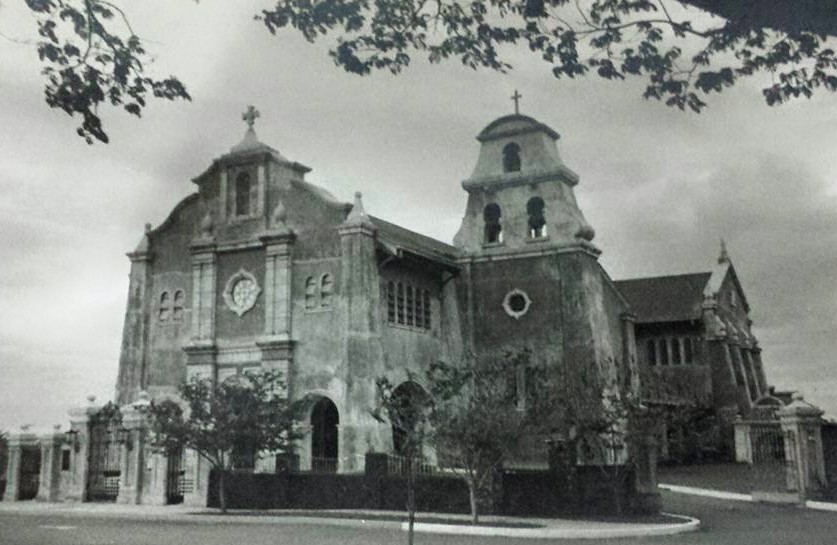
“Santuario de San Antonio Then” by Carina C. Lebron

ssap
Shortly after Fr. Hugh Raymond Zurat, O.F.M., was designated Parish Priest of Santuario de San Antonio in the early 1980s, he visited me at my place on Palm Avenue. It was a surprise but he was then getting to know the parishioners. He also invited me to be a member of the Education Committee of the Parish Pastoral Council which was being organized.

After expressing a few reservations, I felt honored and, thus, I accepted the invitation.

Thereafter, we were introduced to the bigger membership of the Parish Council who were parishioners / residents of the area: Susan and Rene Concepcion (†), Winnie and Christian Monsod, Amelita and Cards Guevara (†), Ito and Bill Velhagen, Marilou and Manny Arteficio, Eddie Elegir (†), Sebe Ledesma (†), Linda Villanueva, Ellie and Tony Esteban (†) and many others.

The office was manned capably by Bernadette Andulte and Petronilo Palomo (†). They operated from a counter and a desk did their best to respond to the demands of parishioners. Some of us in the Council “worked” in the office, as needed, with enthusiasm and dedication in the various committees to which we were assigned. There was no air-conditioning but there were electric fans. The “office” was cool enough because the back of the office was open and led to the garden.

The first weekly Parish Bulletins were written by Sebe Ledesma (†) and mimeographed on newsprint at my place.

Parish Renewal Weekends drew many parishioners to re-learn how to appreciate the importance of keeping one’s faith alive and centric in their daily lives.

Not only were parents involved in many team building and actual renovation projects, our children were often with us, their school schedules permitting. Inevitably, they also became good friends, members of one big, happy family with many “titas” and “titos”. Family and church life blended so closely together that it was difficult to think of one without the other. After Masses, parishioners lingered a bit to talk happily with new-found friends.

Winnie Monsod was into everything that needed to be done, such as being a lector, organizing the first group of singers for the choir. They sang from the choir loft with their voices wafting into the church.

Amelita Guevara, then and now, organized the first honest-to-goodness choir like it was a professional group. There were rewards and recognition for the excellence of their music in the parish and in other places.

Big projects were successful because cooperation was pervasive. The Parish Center was built in record time during the term of Rene Concepcion as President of the Parish Council. It served the community as a suitable and well-located town hall during the time when there was much clamor for changes in government. Topics of great interest, both in religion and in socio-civic concerns, were discussed in the Center by well-known and respected resource persons invited by the Education Committee.

Linda Villanueva and Susan Concepcion were tasked with looking after the finances of the church. Susan also managed the construction of the first crypts and the mortuary.

It was a time to remember for us, many delightful memories that are too numerous to recall now. Until now, we can sit together and endlessly reminisce joyfully about those days and thank God that under the stewardship of Fr. Hugh, we were called to serve in Santuario de San Antonio and have become participating members of the Parish Family.

Categories
Family and Life Ministry

FLORES DE MAYO by Karen Blanco

This slideshow requires JavaScript.


Flores de Mayo in Santuario de San Antonio parish had children and young people offering their flowers to The Blessed Virgin Mary, our Mama Mary. After the 6pm daily mass, the children, with flower offerings in hand, walked up to the altar and to the statue of Our Blessed Lady to lay down the flowers at her feet.

Categories
Fr. Jesus Galindo

“Let’s work for the growth of God’s Kingdom” 11th Sunday in Ordinary Time B Reflection by Fr. Jesus Galindo, OFM

Exactly three years ago now, we watched on TV the four-day Diamond Jubilee celebration of Queen Elizabeth II of England. It was a spectacular display of pomp and pageantry with horse-drawn carriages, soldiers, flags, boat parades, music bands, concerts… you name it. We got a glimpse of royalty’s gold and glitter. Shows that shape our idea of a monarchy and a kingdom, namely, an institution of power, wealth and pageantry.

With this in mind, we might be inclined to imagine the Kingdom of God somehow similar to earthly kingdoms. Nothing further from the truth. Jesus often spoke of the Kingdom of God. In fact, from the very first moment of his public ministry, that was the core of his preaching: “Repent, the Kingdom of God is at hand.” Jesus spoke of God’s Kingdom using terms and images which were familiar to his audience, composed mostly of farmers, fishermen, and shepherds: the seed, the fold, the dragnet, the vineyard…

In today’s gospel, he first compares the Kingdom of God to the seed that is sown in the field and then grows by itself, without the sower knowing it. With this parable Jesus is telling us that our task is to sow the seed of the gospel, the seed of goodness, of honesty, of truth and of justice, without worrying about the outcome. Our task is to sow, not to harvest. Others will reap what we sow—just as we reap the fruits of what our predecessors planted.

Then Jesus goes on to compare God’s Kingdom to a mustard seed—the smallest of all seeds. What a disappointment! God’s Kingdom, like a mustard seed, tiny, insignificant, devoid of all glitter, pomp and pageantry? Well, God already warned us, many centuries ago, through the prophet Isaiah, “My thoughts are not your thoughts, nor are my ways your ways.” (Is. 55:8) We have to learn to understand God’s ways and God’s thoughts.

The gospel parables about the seed express, first of all, the inner vitality and dynamism of God’s Kingdom. Like the seed, it has life within itself. Once the seed is sown in the ground, no one can stop its growth. Same with the Kingdom, once it is sown in the heart of men, it keeps growing and expanding. The seed sown in the hearts of 12 fishermen has now spread to the whole wide world.

Like the seed, so also God’s Kingdom grows slowly and quietly, unlike the swift and noisy way of earthly kingdoms. God is patient; he takes his time; he respects growth’s natural process. We have much to learn from Him: We are impatient; we want instant results; we live in a world of “instant” products: instant coffee, instant soup, instant communication. When starting new projects or plans, we are fond of noisy and impressive beginnings—which often end up in “ningas kogon” We have so much to learn from the slow and humble way of the mustard seed; and from Jesus himself, who spent 30 long years of quiet, hidden life in Nazareth before starting his public ministry.

In some places, God’s Kingdom has grown into a big tree; in others, it is still a tiny mustard seed. As Christians, it is our task to pray and to work for the growth of God’s Kingdom, in our own personal life, in our family, in our profession, and in all the sectors of our society. A big challenge lies ahead of us! “Your kingdom come on earth as it is in heaven.”

About Fr. Jesús and his other reflections…

Design a site like this with WordPress.com
Get started